
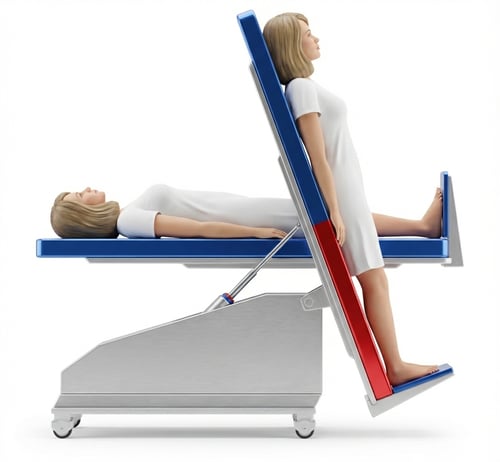
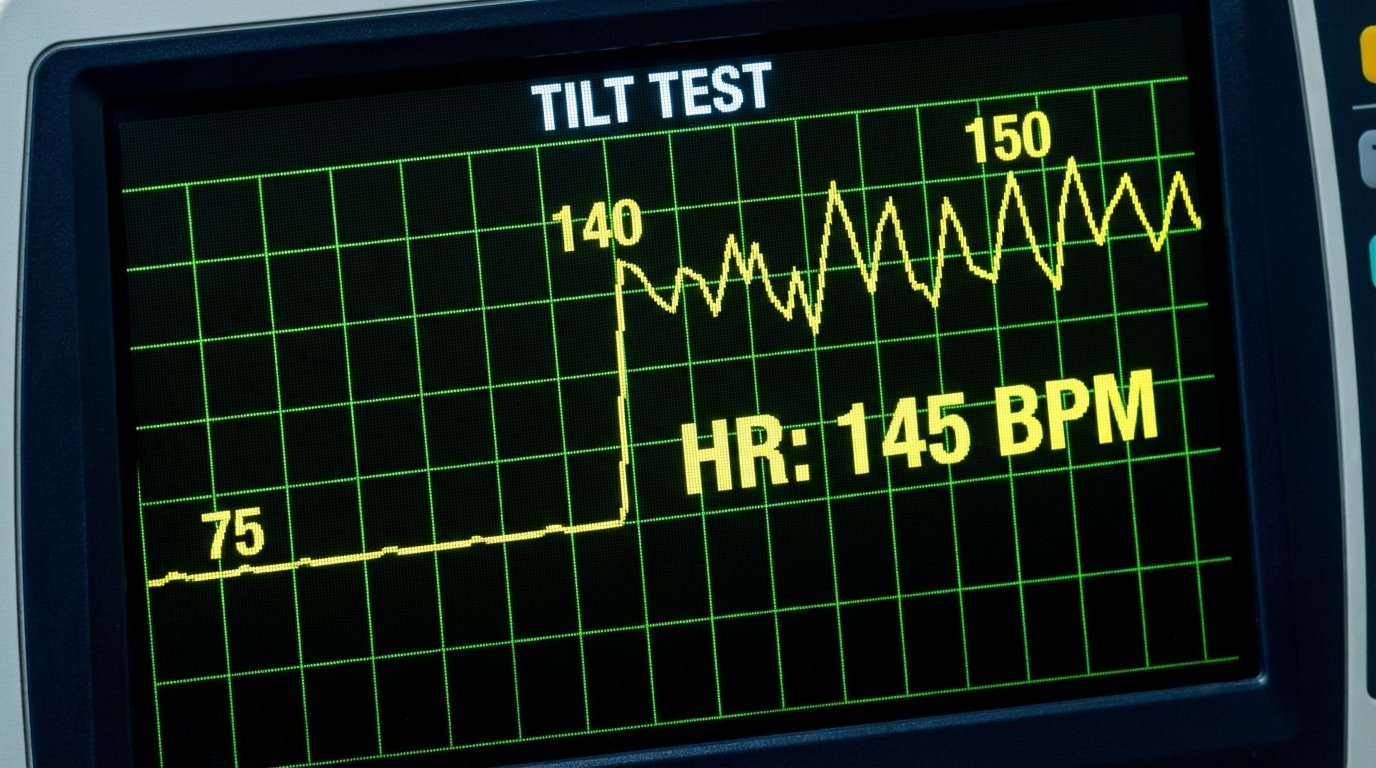
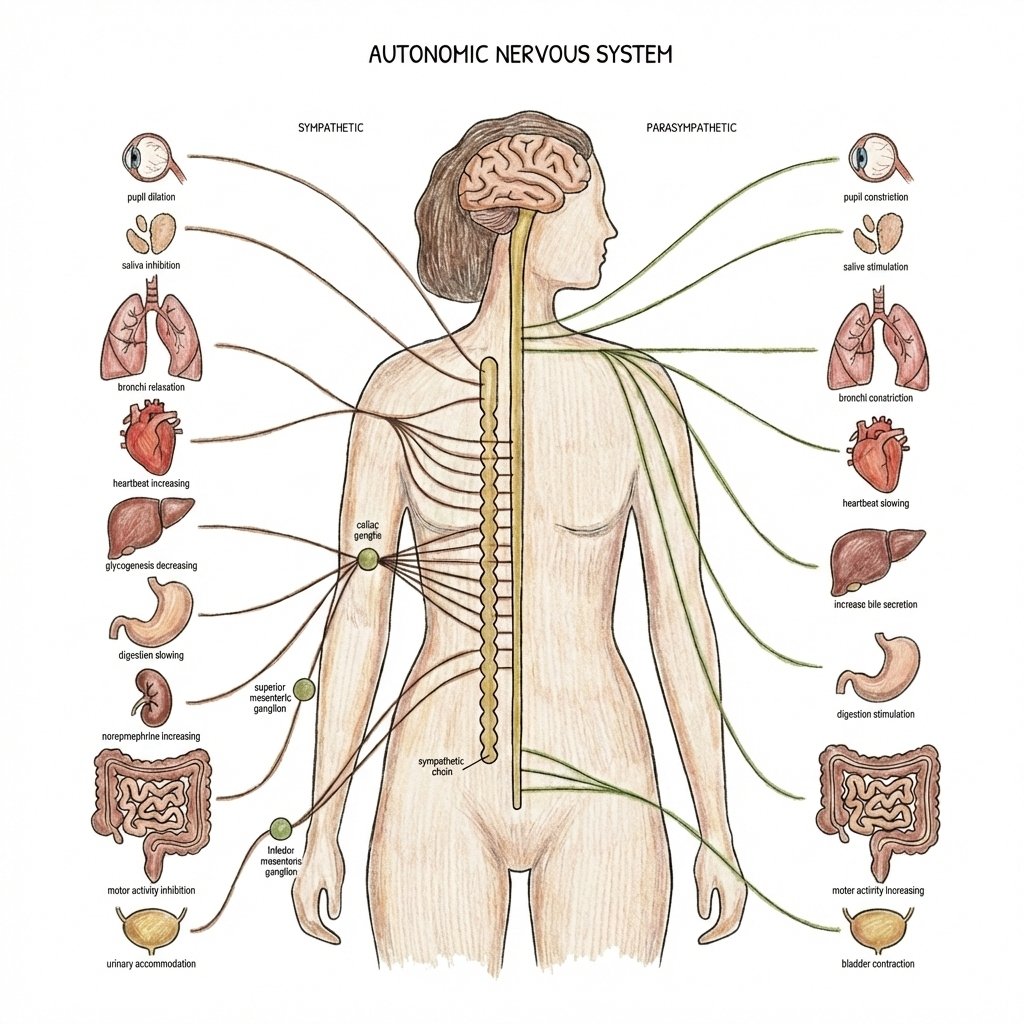

We add work on the regulation problem itself
Compression socks, salt loading, and slow cardio reconditioning help you cope with dysregulation, and they stay in your plan. We add training aimed at the autonomic nervous system that regulates your heart rate and blood pressure.
Our approach targets the brainstem and autonomic centers that are causing the exaggerated heart rate and blood pressure responses. We're recalibrating the thermostat, not just adjusting to a room that's always too hot.
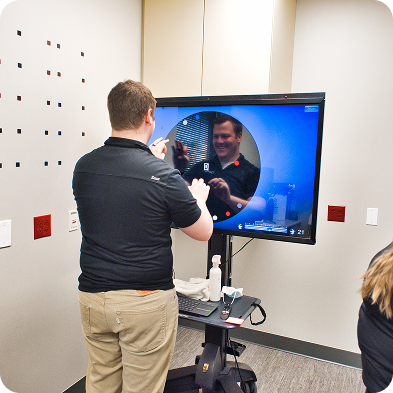
We use tools that most POTS programs don't even consider

Therapeutic CO₂ use - CO₂ breathing work and a CO₂ recovery suit build your CO₂ tolerance and help you recover after training.

Vestibular recalibration - Your inner ear sensors tell your brain about position changes. When these are miscalibrated, your nervous system overreacts to standing. We retrain how your brain processes these signals.

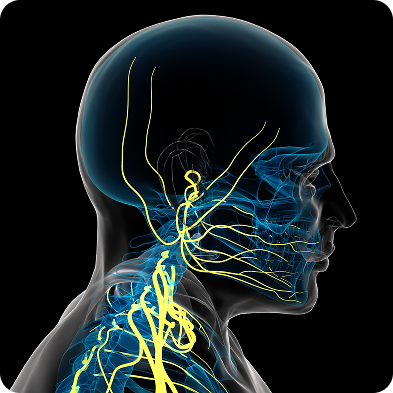
Cranial nerve activation - Strategic use of taste, smell, and sensory inputs to influence the brainstem centers that control heart rate and breathing in real-time.
Our interval-recovery method teaches your nervous system to switch gears
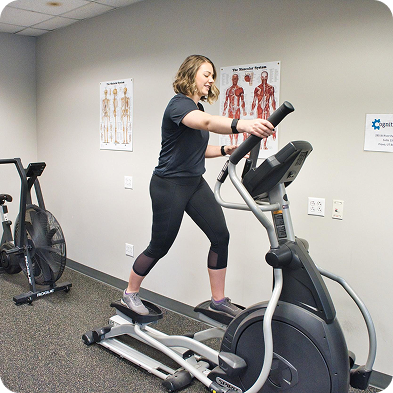
Standard reconditioning keeps you in moderate zones for long periods. Our Neuro-Cardio Training uses brief rounds working through all heart rate zones, including higher and lower, along with precise recovery. This teaches your sympathetic (gas pedal) and parasympathetic (brake pedal) systems to work together again, which is the core problem in POTS.
The goal is to retrain the autonomic reflexes along with building stamina.
We have a specific origin story: concussion patients with POTS
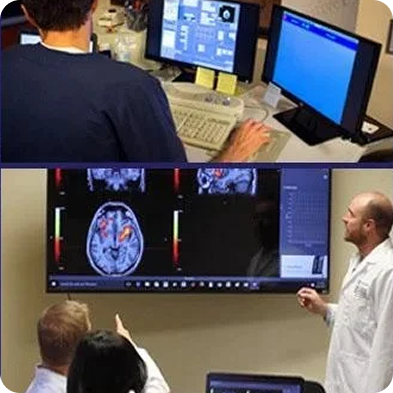
This protocol came out of our work with patients with post-concussion syndrome (PCS). We noticed our PCS patients with POTS symptoms were recovering their autonomic function through neurological rehabilitation. We then refined and formalized what was working into a dedicated POTS program.
That history is why concussion-related POTS is a large part of what we see.
Five days of intensive, supervised recalibration vs. months of trial-and-error at home
Home exercise plans can take months of trial and error. We provide 5 days of hands-on, real-time adjustment of your treatment based on how your nervous system responds. Then you leave with a personalized protocol that's already been tested and refined on your specific dysregulation pattern.
The bottom line:
If you've tried cardiovascular reconditioning, medication management, and lifestyle modifications without lasting improvement, our program may help because it works on a different layer of the problem: how your nervous system regulates your heart rate and blood pressure.
| Most Healthcare Providers |

|
||
|---|---|---|---|
| Primary Focus | Cardiovascular deconditioning: aims to gradually rebuild exercise tolerance through low-to-moderate steady-state cardio. | Neurological retraining: targets the autonomic nervous system (ANS) to restore proper regulation of heart rate, blood pressure, and breathing. | |
| Underlying Theory | Often managed mainly through cardiovascular and volume strategies. | POTS is a form of dysautonomia: an ANS and regulation issue that manifests as cardiovascular symptoms. | |
| Treatment Tools | Salt tablets, high water intake, compression garments, medications, and gradual recumbent-to-upright cardio. | Multi-modal neurological retraining: Neuro Cardio Training, vestibular recalibration, cranial nerve activation, breathing mechanics, and carbon dioxide therapy. | |
| Cardio Method | Long-duration, low-intensity cardio focused on conditioning. | Neuro-Cardio Training, developed at Cognitive FX, which teaches the sympathetic and parasympathetic nervous systems to work together again and respond appropriately to exercise. | |
| Vestibular Work | Sometimes included, often as general balance work. | Targeted vestibular recalibration (especially saccule/vertical orientation) to reduce orthostatic overreaction. | |
| Breathing Approach | Basic relaxation or endurance breathing. | Retrains nasal/diaphragmatic mechanics and CO₂/O₂ balance to directly influence ANS function and blood flow. | |
| Cranial Nerve Integration |
Not typically part of standard programs. | Activates smell/taste/trigeminal inputs to influence brainstem centers that regulate HR and breathing. | |
| CO₂ & Oxygen Use | Not typically targeted. | Uses CO₂ therapeutically (CarboHaler inhalation pre-cardio, CO₂ suit recovery) to build CO₂ tolerance and support recovery. | |
| Role of Medication | Central: used to manage HR, BP, and volume (beta blockers, fludrocortisone, midodrine, etc.). | Your medications stay under your prescribing doctor's direction. Our goal is to strengthen your own regulation. | |
| Program Goal | Manage symptoms and maintain functionality. | Retrain autonomic control and improve long-term quality of life. | |
| Duration of Program | Ongoing home program; indefinite. | 5-day intensive (evaluation + 4 treatment days of 4 to 6 hours) plus structured home continuation plan. | |
| Outcome Focus | POTS symptom stabilization. | System regulation and sustainable improvement in exercise tolerance and daily function. |
Most Healthcare
Providers
Cardiovascular deconditioning: aims to gradually rebuild exercise tolerance through low-to-moderate steady-state cardio.
Neurological retraining: targets the autonomic nervous system (ANS) to restore proper regulation of heart rate, blood pressure, and breathing.
Most Healthcare
Providers
Often managed mainly through cardiovascular and volume strategies.
POTS is a form of dysautonomia: an ANS and regulation issue that manifests as cardiovascular symptoms.
Most Healthcare
Providers
Salt tablets, high water intake, compression garments, medications, and gradual recumbent-to-upright cardio.
Multi-modal neurological retraining: Neuro Cardio Training, vestibular recalibration, cranial nerve activation, breathing mechanics, and carbon dioxide therapy.
Most Healthcare
Providers
Long-duration, low-intensity cardio focused on conditioning.
Neuro-Cardio Training, developed at Cognitive FX, which teaches the sympathetic and parasympathetic nervous systems to work together again and respond appropriately to exercise.
Most Healthcare
Providers
Sometimes included, often as general balance work.
Targeted vestibular recalibration (especially saccule/vertical orientation) to reduce orthostatic overreaction.
Most Healthcare
Providers
Basic relaxation or endurance breathing.
Retrains nasal/diaphragmatic mechanics and CO₂/O₂ balance to directly influence ANS function and blood flow.
Most Healthcare
Providers
Not typically part of standard programs.
Activates smell/taste/trigeminal inputs to influence brainstem centers that regulate HR and breathing.
Most Healthcare
Providers
Not typically targeted.
Uses CO₂ therapeutically (CarboHaler inhalation pre-cardio, CO₂ suit recovery) to build CO₂ tolerance and support recovery.
Most Healthcare
Providers
Central: used to manage HR, BP, and volume (beta blockers, fludrocortisone, midodrine, etc.).
Your medications stay under your prescribing doctor's direction. Our goal is to strengthen your own regulation.
Most Healthcare
Providers
Manage symptoms and maintain functionality.
Retrain autonomic control and improve long-term quality of life.
Most Healthcare
Providers
Ongoing home program; indefinite.
5-day intensive (evaluation + 4 treatment days of 4 to 6 hours) plus structured home continuation plan.
Most Healthcare
Providers
POTS symptom stabilization.
System regulation and sustainable improvement in exercise tolerance and daily function.
Comprehensive POTS Evaluation
-
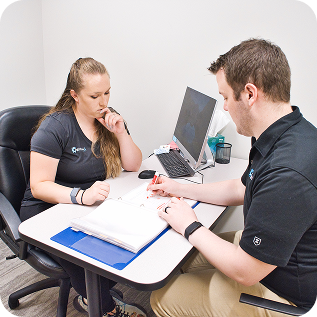
Functional testing of orthostatic response, vestibular function, cranial‑nerve inputs, and breathing mechanics.
-
Education about POTS, how neuro training helps, and how we’ll customize your treatment plan.
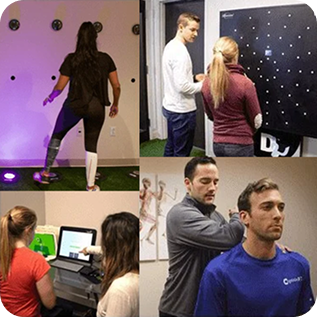
Multi-Modal Treatment (4–6 hours/day)
-
Neuro-Cardio training to teach the ANS to switch gears.
-
Vestibular recalibration exercises that improve vertical‑change sensing and reduce orthostatic overreactions.
-
Breathing mechanics work to influence ANS function and blood flow.
-
Cranial-nerve stacking to steer autonomic tone.
-
End‑of‑day CO₂-based recovery suit for relaxation and tissue perfusion.
-
Planned rest blocks to protect tolerance.
Home program: You leave with daily drills and a repeatable interval‑recovery framework.
Your program is run by our clinical team in Provo. Neuro-occupational therapists and speech-language pathologists join your care as needed.

Dr. Alina K. Fong, PhD
Co-Founder, Clinical Neuropsychologist, and Clinical Director
Completed her PhD internship at the VA Salt Lake City Healthcare System.

Dr. Lynn M. Gaufin, MD
Director of Neurosurgery
Cornell medical school, former Army surgeon, and residency at UCLA.

Sotero Perigo, MS, ATC
NeuroMuscular Therapist
Master's in Athletic Training. Works with you on supervised exercise and interval training.

Annie Morgan, RN
Director of Patient Care
Registered nurse with 13 years of experience who handles your medical needs and concerns while you are in the clinic.
Safety during treatment
Every exercise session is supervised, and we track your heart rate and blood pressure with monitors. We pace each session to how you are doing that day and do everything we can to reduce your risk of fainting.
Parents and family
Parents can attend or be present for most therapies.