

A clearer picture of your brain. A personalize treatment plan to help you recover.
Tell us what you're experiencing and what you've already tried. About five minutes.
Take the Treatment Fit Quiz
About 5 minutes. You'll answer questions about your symptoms and history. At the end you choose whether you want a free call with our clinical team — if you do, you pick a time right there. Treatment is self-pay; we don't bill insurance. See prices
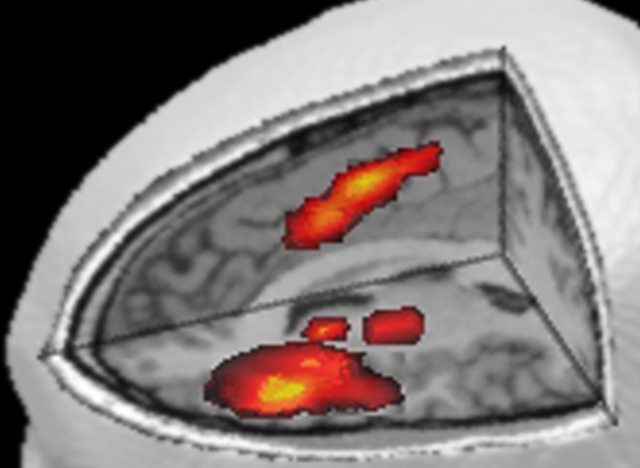
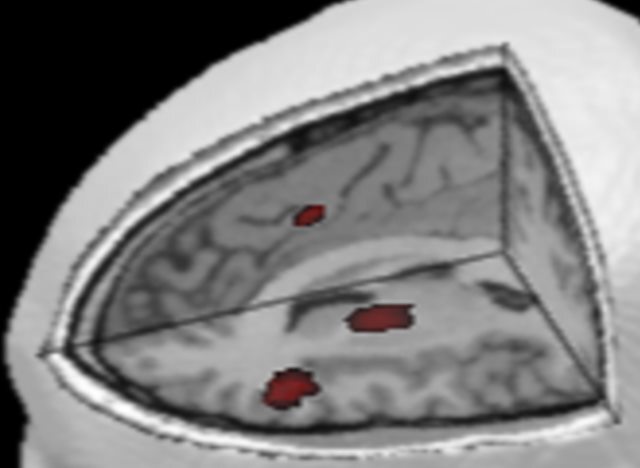
If your MRI or CT came back normal, this is the difference those scans can't show. They look at structure. This looks at function which areas respond when the brain is put to work, and which stay quiet.
Does it work and does it last?
77% had a meaningful, measurable drop in symptom burden in an independent study of 64 patients run by Amsterdam UMC and University Medical Center Groningen. See both published studies →
What happens next
Tell us about your symptoms.
Answer questions about your injury, symptoms, and history. It's free and there's nothing to commit to.
Choose whether you want a free call.
At the end of the questions you decide whether you want to talk with us. If you do, you pick a time on the spot. Ask anything cost, travel, insurance, whether this can help your case.
Get a straight answer about your case.
On the call our clinical team tells you whether your case looks like one we treat, what a scan and treatment would involve, and what it would cost. You don't have to decide about treatment on the call.
What treatment costs
The questions and your consultation are free. You decide about treatment after the call, not before.
- Start with a brain scan$1,500 The full $1,500 credits toward treatment if you proceed within 6 months — so scanning first costs you nothing extra.
- EPIC Treatment 1 week$13,000 5 days, 6–8 hours a day. 35+ hours of therapy with 12 different types of specialist. Includes before-and-after scans.
Other programs & longer treatment
- EPIC Treatment 2 weeks$24,700 10 treatment days. We only recommend it when your evaluation calls for it.
- POTS / Dysautonomia 5 days$4,500 What's included →
- fMRI-guided Accelerated TMSfrom $3,000 1-day intensive $3,000 · 5-day program $9,900. For depression and anxiety. What's included →
Different programs, different lengths — that's why the prices differ. EPIC is a full week of evaluation and treatment; the others are shorter and narrower.
We don't bill insurance. Patients with can submit out-of-network benefits get part of payment back patient report on average $8,200 of a $13,000 treatment being covered. Amounts vary by plan and nothing is guaranteed, so call your insurer if you have questions.
Here about something else? Depression / Anxiety → TIA / stroke → Long COVID / post-viral →
How your scan becomes a treatment plan
Cognitive FX uses advanced functional brain imaging to uncover patterns that may be contributing to your persistent symptoms then builds a treatment plan around what your scan actually shows.
See it
Advanced fMRI imaging (fNCI) shows which brain regions aren't working the way they should — even when other scans come back "normal."
Understand it
Your scan is compared against a database of 100's of healthy brains to map where your dysfunctional brain regions are.
Treat it
A multidisciplinary team of 12 different types of specialists builds an intensive treatment plan targeting those specific regions, not just your symptoms.
What an independent study found
Researchers at Amsterdam UMC and University Medical Center Groningen followed 64 patients through Cognitive FX treatment measuring them before, one month after, and six months after treatment. Cognitive FX did not run this study or fund it or collect any of the data..
See the numbers
| Measurement | Symptom score (0–132) |
|---|---|
| Before treatment | 59.5 |
| One month after | 32.9 |
| Six months after | 31.2 (no significant change from month 1) |
| n=64 at baseline, n=52 at six months | |
More from this study — cognition, mood, sleep and methodology
What this study can and can't tell you: it followed patients through treatment without a comparison group. Results vary by patient, and no outcome is guaranteed.
Source: van Doorn E, Oosterlaan J, van der Naalt J, et al. Cognitive FX-behandeling voor aanhoudende klachten na een hersenschudding: Observatie van verandering in functioneren. Tijdschrift voor Neuropsychologie 2024;19(2). Read the full study → (published in Dutch)
Our own research: what happened when patients tried standard treatment first
Fifteen patients in this study put off Cognitive FX treatment and continued with conventional care medication, vestibular therapy, cognitive rehab, talk therapy, physiotherapy. Their brain function was scanned before and after. Then they came in for treatment at Cognitive FX.
See the numbers
| Measurement | Brain function score |
|---|---|
| First scan | 3.1 |
| After 264 days of standard care | 3.0 (not statistically significant, p=0.15) |
| After one week of treatment | 0.3 (p<0.0001) |
| Healthy 0–0.8 · Borderline 0.8–1.5 · Injured 1.5+ · n=15 | |
The comparison was stacked against the clinic: patients spent roughly nine months in standard care and five days in treatment. If time alone healed persistent concussion symptoms, the long stretch would have had every advantage.
Source: Epps CT, Johnson ML, Fong AK, Allen MD. Functional Neuroimaging Guided Active Rehabilitation for PCS: A Retrospective Comparative Study of an NVC-Targeting Therapeutic Approach. Brain Disorders & Therapy 2019;8:255.
Cost, insurance & honest answers
How much does treatment cost?
What's the least expensive way to get started?
Will my insurance cover it?
What if treatment doesn't work for me?
Will I be able to do treatment with my symptoms?
How is Cognitive FX different from other clinics?
The clinicians who will be on your call

Dr. Alina K. Fong, Ph.D.
Co-Founder. Doctorate in clinical neuropsychology with an emphasis in neuroimaging, Brigham Young University. Has guided thousands of patients through scan-based recovery.
Full profile →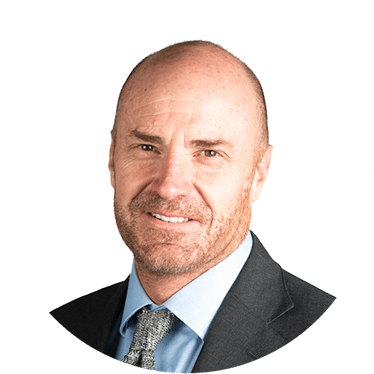
Dr. Mark D. Allen, PhD
Co-Founder. Doctorate in cognitive science, Johns Hopkins; post-doctoral training in functional neuroimaging at the University of Washington. Developed the fNCI protocol behind every treatment plan.
Full profile →
Dr. Lynn M. Gaufin, MD, FACS
Director of Neurosurgery. Cornell University Medical College; neurosurgery residency at UCLA Medical Center. Board certified in neurological surgery since 1977. Consults on complex cases.
Full profile →You've read enough. Get your answer.
No article can tell you whether treatment will work for your brain. Five minutes of questions starts that answer — and a free call with our clinical team finishes it. There's no cost and no obligation at either step.
Take the Treatment Fit QuizYou don't have to decide about treatment today.
Most patients saw 3+ doctors before finding us bring us everything they couldn't explain.