For depression after 2 or more antidepressants
fMRI-guided accelerated TMS for treatment-resistant depression
Five days of TMS, aimed with a scan of your own brain. Our program fits a full course into one week in Provo, Utah. Your treatment target comes from a functional MRI of your brain, taken on our own scanner the Friday you arrive.
About 2 minutes of questions, then pick a time for your free consult.
- Price
- $9,900 all-inclusive
- Scan
- Friday, on our own MRI
- Treatment
- Mon to Fri, about 50 sessions
- Also included
- CBT, PT, massage, light therapy
- Pay with
- HSA, FSA, CareCredit
4.8 on Google from 400+ reviews, most of them from our concussion program.
At a glance
fMRI-guided accelerated TMS at Cognitive FX
Cognitive FX in Provo, Utah, offers a 5-day accelerated TMS program for adults and teens (14 and up) whose depression hasn't improved after two or more antidepressants. Each patient's treatment target is chosen from their own resting-state fMRI scan, taken on the clinic's MRI. The program costs $9,900, all-inclusive, and is self-pay.
- What it is
- About 50 short intermittent theta-burst TMS sessions over 5 days (10 a day), aimed with your own fMRI and tracked by neuronavigation at every session.
- Who it's for
- Depression that hasn't lifted after two or more antidepressants. Ages 14 and up (14 to 17 with a parent or guardian). Over 65 needs a consult and doctor visit first.
- Schedule
- Arrive Friday for the scan. Treatment Monday to Friday, about 7 AM to 5 PM. Home Friday night or Saturday.
- Price
- $9,900 for the week, including the fMRI scan, targeting, TMS, CBT, physical therapy, massage, photobiomodulation and follow-up. Travel and lodging are extra.
- Insurance
- Not billed. HSA, FSA and CareCredit are accepted.
- FDA status
- TMS is FDA-cleared for depression in adults. Our accelerated 5-day schedule, and treating teens, are off-label.
- Evidence
- Built on published research on accelerated and fMRI-targeted TMS. Our exact protocol has not been tested in a clinical trial.
- Not SAINT®
- Cognitive FX does not offer SAINT® and is not affiliated with Stanford University or Magnus Medical.
- First step
- A 2-minute screening form, then a free 30-minute consult by video or phone.
Where most people are when they find us
What can I try when antidepressants haven't worked?
When two or more antidepressants haven't helped, the usual next options are another medication change, standard TMS, Spravato (esketamine) or ECT. Accelerated TMS is a newer option that fits a course of TMS into days instead of weeks. Your psychiatrist can help you weigh them.
Most people who come to us have tried two, three or more antidepressants. Each one took weeks to judge. Some left you flat or numb, some did nothing you could feel, and the advice was usually the same: give it a few more weeks.
Up to 14 weeks to judge each medication, as in the STAR*D study. Three tries can take most of a year.1
What another round of the usual path asks of you
What are the odds with another antidepressant, or with standard TMS?
Each medication works for fewer people
Share of people reaching remission at each step of STAR*D
Rush 2006, QIDS-SR scores. A 2023 reanalysis of the same data found lower rates at every step.1,2
Later wins are less likely to last
Out of every 100 people in remission, about 34 relapsed within a year after a first medication worked, and about 50 after a fourth.3
Standard TMS means weeks of daily visits
A typical course is about 36 visits over 6 to 9 weeks. Most clinics aim the coil by measuring from landmarks on the head. In one study, the common 5-cm rule reached the intended brain area in 7 of 22 people.4
Each square is one day at a clinic. Typical schedules, which vary by clinic. Every option here helps some people.5,6
Picture the other version of this
What if a full course of TMS took one week?
If a full course of TMS took one week instead of nine, what would you not have to put on hold?
And if the first step of treatment were a scan of your own brain, would you feel better about where the coil is aimed?
That is the program we built. You fly in on a Friday and get a resting-state fMRI on our scanner. Over the weekend, our team picks your treatment target from that scan. Monday through Friday you get about 10 short TMS sessions a day in a private suite, with CBT, physical therapy, massage and light therapy planned around them. You leave with a targeting report you can share with your psychiatrist.
Our own protocol, delivered off-label on an FDA-cleared TMS system. It draws on published research but was not tested in those trials, and their results are not Cognitive FX results.
Is Your TMS Target Actually in the Right Place?
See why the difference between a population average and your exact brain coordinate can determine whether treatment works
What Most Clinics Do
- Uses skull measurements or EEG landmarks
- No brain imaging — one coordinate for everyone
- Target can land up to 3cm from your actual circuit
- If it doesn’t work, most clinics have no way to know why
What CFX Does
- fMRI maps the specific circuit driving your depression
- Finds your exact DLPFC coordinate — not a population average
- Accounts for how your anatomy differs from everyone else
- If the first treatment doesn’t land perfectly, we can adjust
Standard TMS protocols use a single coordinate derived from population averages. That coordinate may be centimeters away from the specific spot in your prefrontal cortex that connects to your depression circuit. When the target is off, the magnetic pulse stimulates tissue that isn’t driving your depression — and treatment fails, not because TMS doesn’t work, but because it didn’t treat your brain.
This is likely the most common reason people try TMS and feel like it “didn’t work.” The technology worked. The address was wrong.
Look at the dots on the brain above. The spread between the population-average targets and any custom coordinate you place represents real anatomical variance — variance that determines treatment outcome.
Before your first pulse, Cognitive FX runs a resting-state fMRI scan. That scan maps the connectivity between your prefrontal cortex and the subgenual cingulate — the specific circuit that drives depression. We find the exact voxel in your DLPFC with the strongest connection to that circuit. That voxel becomes your treatment coordinate.
No other clinic in Utah does this. Most TMS providers pick a coordinate from a chart and apply the same protocol to every patient. We treat the brain in front of us.
Use the panel on the left to enter approximate coordinates and see where your target might fall — or schedule a consultation and we’ll find your exact location with imaging.
How the week works
How does the 5-day TMS program work?
Treatment days run about 7 AM to 5 PM. A Monday-morning scan is sometimes possible.
Scan
A resting fMRI shows how your brain regions work together. It runs on our own MRI in Provo, so there's no outside imaging center to schedule.
Target
Your team chooses your treatment spot from your scan. Navigation software then tracks the coil against that spot at every session.
Treat
Intermittent theta-burst sessions of about 10 minutes, with rest between them and supportive therapies during the day.
- Scanner
- TMS system
- Navigation
- Our own MRI, on site
- Magstim, FDA-cleared for depression
- ANT Neuro Visor 2, every session
The evidence
Does accelerated fMRI-guided TMS work?
The research is promising and still early. Trials show that short theta-burst sessions work as well as standard TMS sessions, and that stacking many sessions into a few days can bring remission for some people. Results on aiming TMS with each person's fMRI, instead of standard targeting, are mixed. One recent trial found a benefit, and a larger one did not. No trial has tested our exact protocol, and these results are not Cognitive FX results.
Shorter sessions held up
In the THREE-D trial of 414 people, 3-minute theta-burst sessions matched standard 37-minute sessions: 32% vs 27% remission.7
Stanford stacked sessions and aimed them by fMRI
In the Stanford randomized trial, 11 of 14 people on active treatment (78.6%) met remission at some point in the month after treatment, vs 2 of 15 on sham (13.3%). A 2026 trial from the same group found 50.0% vs 20.8% remission at the one-month visit.8,9
Scan-chosen targets: two trials, two answers
We aim with your own scan because we think it's the best information available about your brain. The evidence is still growing, and no trial has tested our exact protocol.
Price
How much does fMRI-guided accelerated TMS cost?
$9,900 for the 5-day program, all-inclusive and self-pay. That covers the fMRI scan, your personal target, about 50 TMS sessions and the supportive therapies. Travel, lodging and meals are extra.
- fMRI scan and personal targetingIncluded
- About 50 TMS sessions with neuronavigationIncluded
- CBT, physical therapy, massage, photobiomodulationIncluded
- Private treatment suiteIncluded
- Targeting report to keepIncluded
- Follow-up after you go homeIncluded
- To book
- A deposit holds your dates. The balance is due when you arrive.
- Pay with
- HSA or FSA funds, CareCredit (subject to credit approval), or card.
- Insurance
- We don't bill insurance, and most plans don't cover accelerated TMS. If your plan covers standard TMS and 6 to 9 weeks of daily visits works for you, that is a reasonable place to start. Our sister clinic, Neural Effects, offers standard TMS that many insurance plans cover.
- If you need more later
- Booster courses and returning patients receive discounted pricing.
- Why one price
- We own our MRI scanner, run fMRI in-house and don't bill insurance, so we can post a single self-pay price.
How does Cognitive FX compare with standard TMS and SAINT®?
Cognitive FX does not offer SAINT®. We include it here because people often compare the two.
| Cognitive FX 5-day | Standard TMS | SAINT® providers | |
|---|---|---|---|
| Self-pay price | $9,900, posted | $6,000 to $15,000 | $30,000 to $36,000 |
| Sessions | About 50, 10 a day | About 36, 1 a day | 50, 10 a day |
| Time in treatment | 5 days plus a scan day | 6 to 9 weeks | 5 days |
| How the target is found | Your own fMRI, read by our team | Usually a scalp measurement | fMRI, with licensed software |
| CBT, PT, massage, light therapy | Included | Varies by clinic | Varies by clinic |
| Insurance | Not billed. HSA, FSA, CareCredit accepted | Often covered | Medicare at some hospital sites |
| FDA status | FDA-cleared TMS device; the 5-day schedule is off-label | FDA-cleared for depression | FDA-cleared system (2022) |
Other prices are published estimates and vary by clinic.12 SAINT® is a registered trademark of Stanford University, exclusively licensed to Magnus Medical. Cognitive FX does not provide SAINT® and is not affiliated with either. The programs differ and shouldn't be assumed to have the same results.
More than TMS
What else is included besides TMS?
Your team plans supportive therapies around your sessions. Which ones you get, and how often, depends on your plan. They support TMS and don't replace it or your current care.
Cognitive behavioral therapy
One-on-one with a therapist. You practice spotting the thought and behavior patterns that keep depression going, and leave with skills you can keep using at home.
Physical therapy
Depression drains energy and makes it hard to stay active. A physical therapist helps you move again at a level that fits you, and gives you a routine to continue.
Massage
Treatment days are long. Massage for the neck, shoulders and scalp eases the tension some people feel during TMS.
Photobiomodulation
Painless low-level red and near-infrared light. It's being studied for brain health and mood. We include it as supportive care, not as a treatment for depression on its own.
Is it a fit?
Am I a candidate for accelerated TMS?
| Tried 2 or more antidepressants and still depressed | Often a fit |
| Can be in Provo from a Friday to the following Friday or Saturday | Often a fit |
| Paying yourself (HSA, FSA or CareCredit is fine) | Often a fit |
| Teen ages 14 to 17, with a parent or guardian involved | Talk with us first |
| Over 65 | Consult and doctor visit first |
| History of seizures, or a pacemaker, implant or metal in the head or neck | Talk with us first |
| Need insurance to pay | Standard TMS may fit better |
| Haven't tried an antidepressant yet | Start with your doctor |
If you are in crisis or thinking about suicide, call or text 988 now.
Your clinical team
Who will treat me?
Your consult, your target, your prescription and your week are each handled by a named clinician.
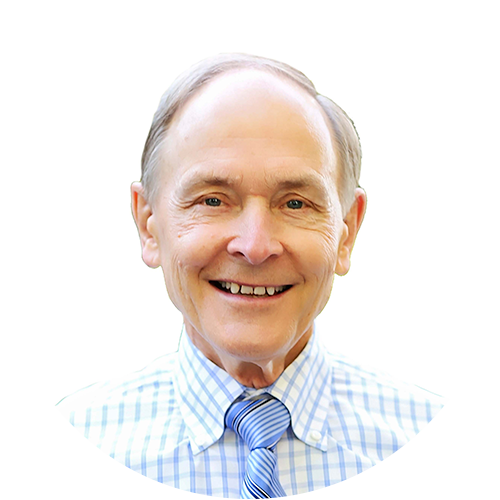
Dr. Lynn M. Gaufin, MDPrescribes your TMS and sets your treatment target from your fMRI.
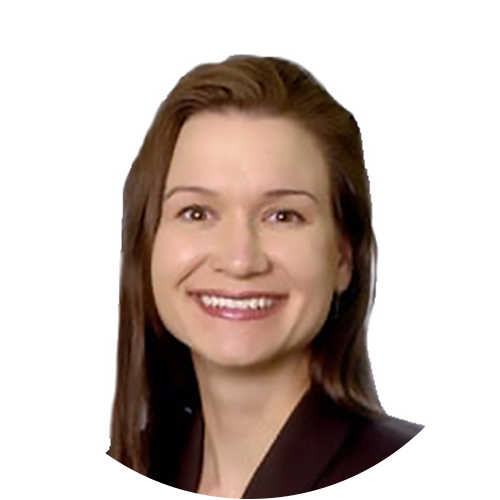
Dr. Diane Spangler, PhDPsychologist. Oversees your treatment week.
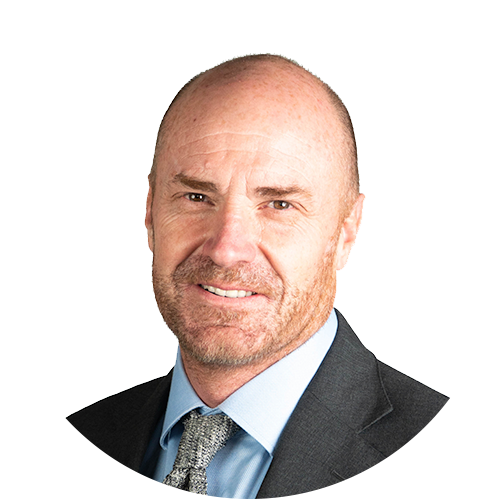
Dr. Mark D. Allen, PhDSets your treatment target from your fMRI and leads free consults.
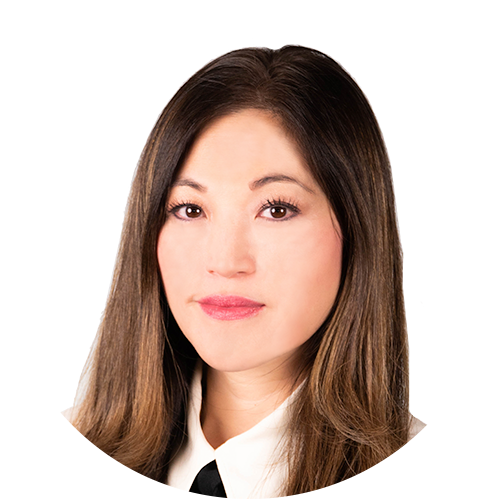
Dr. Alina K. Fong, PhDCo-founder and clinical neuropsychologist. Leads free consults.Planning the trip
Where is the clinic, and how do I plan the trip?
- Getting here
- Fly into Provo (PVU), 15 minutes from the clinic, or Salt Lake City (SLC), about 45 minutes away.
- Where to stay
- Lodging isn't included. Several nearby hotels offer our patients discounted rates, and our team sends you the list.
- Nights
- Plan on arriving Friday and leaving the next Friday evening or Saturday.
- Bringing someone
- A spouse, parent or friend is welcome in Provo and at the clinic, though some treatment areas are for patients only.
- Working that week
- Some light remote work is fine. Keep it small so you have energy for treatment.
- Teens
- We treat patients from age 14, with a parent or guardian involved all week.
Questions
Questions people ask before they book
Does insurance cover this?
Can I keep taking my medications?
Is TMS safe? What might I feel?
How soon will I know if it helped?
How long do results last?
I already tried TMS and it didn't help. Why would this be different?
Can teenagers be treated?
I'm over 65. Can I be treated?
I also have anxiety. Can I still come?
Is this SAINT®? How is it different?
Where can I get SAINT® TMS?
Is fMRI-guided TMS better than standard TMS?
Is accelerated TMS FDA-approved?
What happens on the free consult?
See if the 5-day program fits you
Answer a few questions about your history. It takes about 2 minutes and doesn't commit you to anything. Then book a free 30-minute consult by video or phone with one of our clinicians, who will tell you whether TMS is right for you.
Or call (385) 332-3908 and talk to a person.
Deciding with someone? Send them this summary.
I found a 5-day TMS program for depression at Cognitive FX in Provo, Utah. It's for depression that hasn't improved after two or more antidepressants. They scan your brain with fMRI first, aim the treatment from that scan, and give about 50 sessions over 5 days with therapy included. It's $9,900 self-pay plus travel, and HSA, FSA and CareCredit are accepted. The first step is a free consult.
TMS is FDA-cleared to treat major depressive disorder in adults. Our accelerated 5-day schedule and treatment of teens under 18 are off-label uses. This page is general information, not medical advice, and screening questions are not a diagnosis. A clinician decides whether TMS is right for you. In crisis? Call or text 988.
SAINT® is a registered trademark of Stanford University, exclusively licensed to Magnus Medical. Cognitive FX does not provide SAINT® and is not affiliated with, endorsed by or licensed by Stanford University or Magnus Medical. Study results cited on this page come from published trials of other protocols and are not Cognitive FX patient results.
Sources
- Rush AJ et al. Acute and longer-term outcomes in depressed outpatients requiring one or several treatment steps: a STAR*D report. Am J Psychiatry. 2006.
- Pigott HE et al. Reanalysis of the STAR*D study's patient-level data. BMJ Open. 2023.
- Rush AJ et al. STAR*D: revising conventional wisdom. CNS Drugs. 2009.
- Herwig U et al. The navigation of transcranial magnetic stimulation. Psychiatry Res. 2001.
- Spravato prescribing information and REMS program.
- American Psychiatric Association. What is ECT?
- Blumberger DM et al. Theta burst vs high-frequency rTMS in depression (THREE-D). Lancet. 2018.
- Cole EJ et al. Stanford Neuromodulation Therapy (SNT): a double-blind randomized controlled trial. Am J Psychiatry. 2022. FDA 510(k) K220177 summary.
- Kratter IH et al. Stanford neuromodulation therapy for treatment-resistant depression: a randomized sham-controlled trial. World Psychiatry. 2026.
- Taylor JJ, Siddiqi SH, Fox MD et al. Randomized trial of fMRI connectivity-guided vs scalp-based targeting for accelerated TMS. JAMA Psychiatry. 2026.
- Morriss R et al. Connectivity-guided intermittent theta burst vs repetitive TMS for treatment-resistant depression (BRIGhTMIND). Nature Medicine. 2024.
- Published self-pay price estimates for standard TMS and SAINT® providers, 2026.