

TIA Rehabilitation for Memory, Fatigue and Focus Problems That Stay After a Mini Stroke
Your TIA was over in hours. If your memory, energy or focus still are not back weeks or years later, Cognitive FX treats those lingering symptoms in one intensive week, starting with a functional MRI that shows how your brain is working.
For adults weeks to years past a TIA or minor stroke who are considering a five-day, $13,000 program in Provo, Utah. The consult is free, and we will tell you honestly whether our program fits.
New stroke symptoms right now? Call 911. This program is for symptoms that stayed after your medical care.
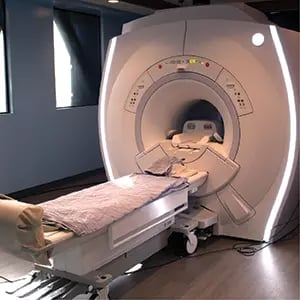
The scanner in our Provo clinic. Your week starts with an fNCI functional MRI.
TIA rehabilitation at Cognitive FX in Provo, Utah: the facts
Medically reviewed by Lynn M. Gaufin, MD, Director of Neurosurgery. Last reviewed October 16, 2026.
- Who it is for
- Adults whose memory, focus, processing speed, energy or mood has not recovered weeks, months or years after a transient ischemic attack (TIA) or minor stroke, and whose stroke prevention plan is already in place.
- Where
- 280 W River Park Drive, Suite 110, Provo, Utah 84604. Most patients fly in; Provo Airport is 15 minutes away.
- What treatment is
- A functional MRI scan (fNCI), then four full days of cognitive, cardiovascular, vestibular, neuromuscular and counseling therapy in one building, planned from your scan. A second scan on Day 5 measures what changed.
- How long
- Five days, with rest breaks built into each day, followed by a home program.
- Cost
- $13,000 for the five-day program, the same as our standard EPIC week. Includes before and after fNCI scans, therapy and a home program. A stand-alone fNCI scan is $1,500. CareCredit, HSA and FSA accepted.
- Insurance
- Out-of-network; we give you paperwork to submit to your plan. On Medicare? Our sister clinic Neural Effects accepts Medicare.
- What we do not do
- Emergency stroke care or stroke prevention. Those stay with your neurologist and primary care doctor.
- First step
- A free video consult. You answer a few questions about your TIA first, so the clinician on your call already knows your history.
For people ready to consider treatment in the next few months. We will tell you honestly whether our program fits.
Is it normal to still have symptoms after a TIA?
It is common. A TIA ends within 24 hours, but research that followed people for months and years after a TIA or minor stroke keeps finding problems with memory, attention, processing speed and planning, often in people whose scans looked normal.1–4
Names slip, sentences trail off, and you forget why you walked into a room.
Memory and word-findingConversations move faster than you can follow, and reading takes longer.
Slower processingYou lose the thread in meetings, and background noise wears you out.
Attention and focusYou sleep, but you do not wake up rested, and the day runs out by mid-afternoon.
FatiguePlanning, juggling tasks and switching between them take more effort than before.
Executive functionYou worry about another stroke, and your mood has not been the same.
Anxiety and low mood
These problems can affect work, driving and family life long after the ER visit. One study using functional MRI found altered brain connectivity and cognitive changes four years after a TIA or minor stroke.4 Read more in the after-effects of a TIA, post-TIA fatigue and cognitive problems after a TIA.
Could TIA rehabilitation help me?
Tick what is true for you. Nothing is saved or sent. This is not a diagnosis.
Who treats lingering symptoms after a TIA?
Your neurologist and primary care doctor prevent the next stroke. Keep all of that care. Memory, focus, fatigue and mood problems that stay afterward usually need rehabilitation, and most post-TIA plans do not include it.
The usual path after a TIA
- Emergency room
- Neurologist
- Blood thinners and blood pressure control
- Follow-up visits
- “Your scans look fine”
Built to prevent the next stroke. Lingering memory, focus and fatigue problems often go untreated.
TIA rehabilitation at Cognitive FX
fNCI scanOne plan for the whole team
- Cognitive therapy
- Cardiovascular work
- Vestibular and eye-movement therapy
- Neuromuscular therapy
- Counseling
One building. Five full days. Your prevention plan stays with your doctors.
| Standard post-TIA care | TIA rehabilitation at Cognitive FX | |
|---|---|---|
| Main goal | Prevent another stroke | Treat the symptoms that stayed |
| Imaging | CT or MRI to rule out a bleed or stroke | Functional MRI that shows how 56 brain regions work during thinking tasks |
| Treatment | Blood thinners, blood pressure and cholesterol control, lifestyle advice | Cognitive, cardiovascular, vestibular, neuromuscular and counseling therapy |
| Schedule | Follow-up visits every few weeks or months | Five full days, then a home program |
| Measures change | Risk factors such as blood pressure | A second scan on Day 5 |
| Insurance | Usually billed to insurance or Medicare | Out-of-network; Medicare patients can ask about Neural Effects |
Who is a good fit for TIA rehabilitation?
On your free consult we go through your history and tell you honestly whether the program fits, before anyone books travel.
- A TIA or minor stroke more than a few weeks ago, with symptoms still affecting work or daily life
- Memory, focus, processing speed, fatigue or mood problems that have not improved on their own
- A completed medical workup and a stroke prevention plan from your doctors
- Able to travel to Provo and take part in full therapy days
- New or worsening symptoms: call 911 or see your doctor first
- A TIA in the last few days with the medical workup still underway
- Major weakness or trouble with self-care after a larger stroke: a stroke rehabilitation unit near home is the better first step
- Medicare as your only coverage: ask about our sister clinic, Neural Effects
How does TIA rehabilitation at Cognitive FX work?
A standard MRI shows structure. Our fNCI functional MRI measures how brain regions work together while you do thinking tasks, and your therapy is planned from those results.
- From homeTIA questionsAbout 10 minutes on your history and symptoms, then you pick a consult time.
- Video callFree consultA member of our treatment team tells you honestly whether the program fits and, if it does, picks dates with you.
- Day beforeFly inCheck with your neurologist that travel is safe for you.
- Day 0fNCI scan56 brain regions measured; results reviewed with you.
- Days 1 to 4Full days of therapyChosen from your scan, with rest built in.
- Day 5Re-scan and home planA second scan shows what changed.
- AfterHome programExercises to keep the gains going, with follow-up from our team.
What does the fNCI scan show?
fNCI is a functional MRI protocol. While you do thinking tasks in the scanner, it measures activity in 56 brain regions and how well they work together. Your therapists use the results to choose what to work on each day.
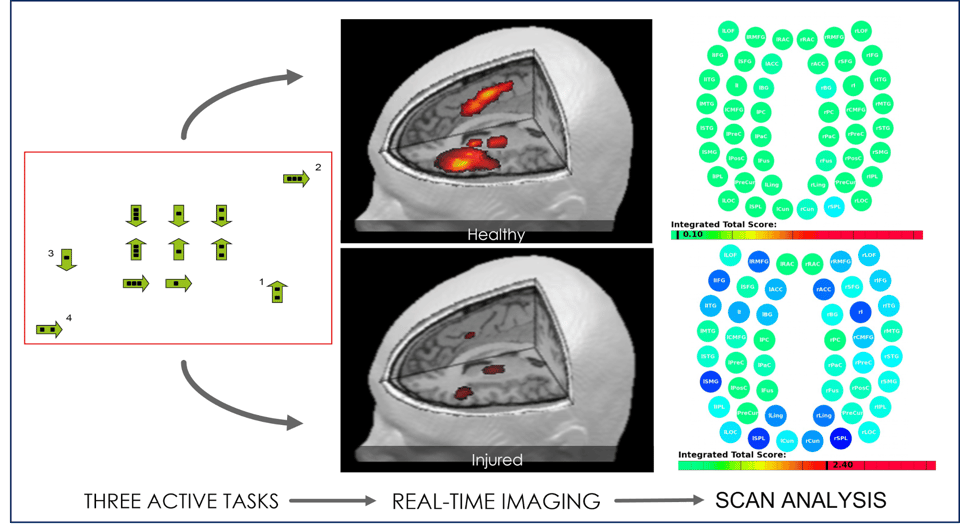
How the scan works: thinking tasks, real-time imaging, then analysis.
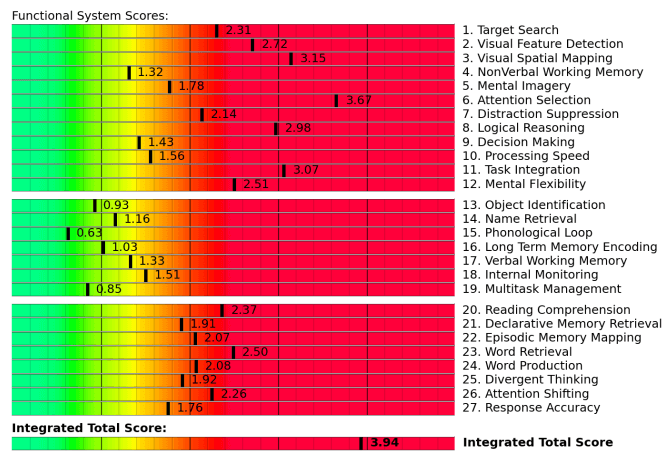
A page from a real fNCI report: color-coded scores for each brain system.
My MRI after the TIA was normal. Why would this scan show anything?
The MRI or CT you had after your TIA looked at structure, to rule out a bleed or a completed stroke. fNCI looks at function: how regions activate and coordinate while you think. Research has found altered functional connectivity years after a TIA in people whose standard scans were clean.4 fNCI is not a stand-alone diagnosis; we use it to plan and measure your treatment.
A sample treatment day
Illustrative sample day. Your actual schedule is set from your scan and paced to what you can tolerate.
Which therapies are part of the TIA program?
- Cognitive therapy
- Targeted work on memory, attention, processing speed and planning.
- Cardiovascular and neurovascular work
- Structured aerobic intervals paired with thinking tasks, aimed at the brain regions your scan flagged.
- Vestibular and eye-movement therapy
- For dizziness, balance changes and visual motion sensitivity after the event.
- Neuromuscular therapy
- Hands-on work on muscle tension and movement patterns.
- Counseling
- Support for the anxiety, low mood and fear of another stroke that often follow a TIA.
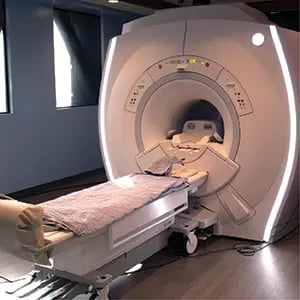
Your fNCI scan
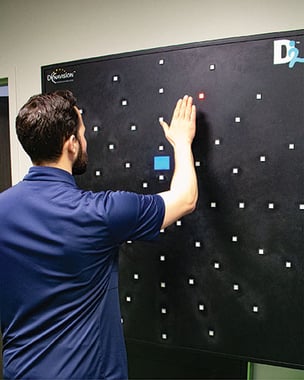
Full days of targeted therapy
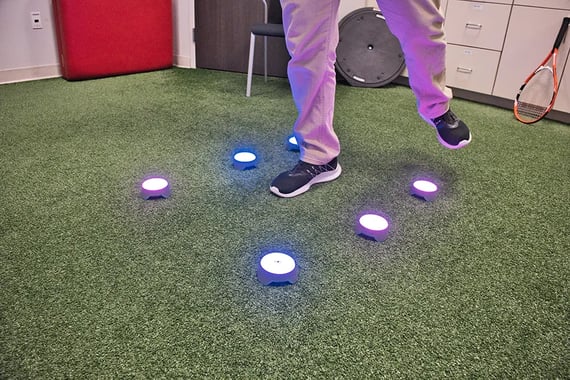
Re-scan and home plan
What does the research say about recovery after a TIA?
Researchers have documented thinking problems after TIA for years. A 2024 review in Stroke described cognitive impairment after TIA as common and often missed.1 A Dutch cohort found persistent cognitive impairment in TIA patients.2 A robotics study tracked motor and cognitive changes over the first year.3 A functional MRI study found altered connectivity and cognition four years after a TIA or minor stroke.4
Our own published outcome studies are in people with persistent post-concussion symptoms, including an independent university study. We use the same fNCI scan and therapy methods for TIA, and every TIA patient is scanned before and after the week, so you see your own measured change. Individual results vary.
Sources
- Tomek et al. Not so transient? A narrative review on cognitive impairment after transient ischemic attack. Stroke, 2024. DOI
- van Rooij et al. Persistent cognitive impairment after transient ischemic attack. Stroke, 2014. PubMed
- Simmatis et al. Quantifying changes over 1 year in motor and cognitive skill after transient ischemic attack (TIA) using robotics. Scientific Reports, 2021. PubMed
- Nicolas et al. Altered functional connectivity and cognition persists 4 years after a transient ischemic attack or minor stroke. Frontiers in Neurology, 2021. PubMed
- Johnston et al. Short-term prognosis after emergency department diagnosis of TIA. JAMA, 2000.
How much does TIA rehabilitation cost?
TIA rehabilitation program
Five days. Before and after fNCI scans, four full days of therapy and a home program. Same price as our standard EPIC week.fNCI scan only
A first step if you are unsure. Ask for it on your call.Is TIA rehabilitation covered by insurance or Medicare?
Cognitive FX is out-of-network and does not bill insurance or Medicare. We give you the paperwork to submit to your plan yourself; reimbursement varies and is not guaranteed. We accept CareCredit, HSA and FSA. If Medicare is your coverage, our sister clinic in Provo, Neural Effects, accepts Medicare for memory and cognitive care. See all Cognitive FX prices.
Who treats patients at Cognitive FX?
A multidisciplinary clinical team, led by the clinic’s co‑founders. You meet them, not a franchise.

Dr. Alina K. Fong, PhDCo‑founder. Clinical neuropsychologist and clinical director.

Dr. Mark D. Allen, PhDCo‑founder. Neuroscientist, Johns Hopkins PhD, 10,000+ clinical fMRI assessments.

Dr. Lynn M. Gaufin, MDDirector of Neurosurgery.
.png?width=144&height=144&name=Dr.%20Spangler%20(2).png)
Dr. Diane Spangler, PhDClinical psychologist.

Annie Morgan, RNDirector of Patient Care.
TIA rehabilitation at Cognitive FX: frequently asked questions
Is it normal to still have symptoms weeks or months after a TIA?
It is common. A TIA ends within 24 hours by definition, but studies that tested people weeks, months and years later found ongoing problems with memory, attention, processing speed and planning in a share of patients, even when scans looked normal. Fatigue, anxiety and low mood after a TIA are also well documented. If your symptoms have lasted more than a few weeks, they are worth a proper evaluation.
Why do I still feel off if my MRI after the TIA was normal?
A standard MRI shows brain structure. It is used after a TIA to rule out a bleed or a completed stroke. It does not show how well brain regions work together while you think. Research using functional MRI has found altered connectivity years after a TIA or minor stroke in people whose standard scans were clean. Our fNCI scan is a functional MRI that measures activity in 56 brain regions while you do thinking tasks.
Who treats lingering symptoms after a TIA?
Your neurologist and primary care doctor handle stroke prevention: blood thinners, blood pressure, cholesterol and finding the cause of the TIA. Keep all of that. Lingering memory, focus, fatigue and mood problems usually need rehabilitation, which is a different specialty. Cognitive FX is an outpatient rehabilitation clinic in Provo, Utah that treats those lingering symptoms in an intensive week, alongside your existing medical care.
How long after a TIA can rehabilitation still help?
There is no hard cutoff. Starting earlier is generally better, but people also make gains months and years after their event. If your TIA was a year or more ago and you still have symptoms, book a free consult. We will look at your history and tell you honestly whether treatment makes sense now.
Is this program only for TIA, or also for a mild stroke?
We also see people after a minor ischemic stroke whose physical recovery went well but whose thinking, energy or mood has not returned to normal. Your free consult will tell you whether your history fits. People who need help with walking, arm use or daily self-care after a larger stroke are usually better served by an inpatient or outpatient stroke rehabilitation unit near home.
Will treatment lower my risk of another stroke?
No. Stroke prevention stays with your neurologist and primary care doctor. About 1 in 10 people who have a TIA have a stroke within 90 days, which is why the medical workup and prevention plan come first. Cognitive FX treats the symptoms that remain after that plan is in place.
What happens during the treatment week?
Day 0 is your fNCI functional MRI scan. On Days 1 to 4 you have full days of therapy chosen from your scan results: cognitive therapy, cardiovascular and neurovascular work, vestibular and eye-movement therapy, neuromuscular therapy and counseling, with rest breaks built in. On Day 5 you are re-scanned so you and your team can see what changed, and you leave with a home program.
How much does TIA rehabilitation at Cognitive FX cost?
The five-day TIA program is $13,000, the same as our standard EPIC week. It includes your before and after fNCI scans, four full days of therapy and a home program. A stand-alone fNCI scan is $1,500. The consult is free. We accept CareCredit, HSA and FSA. Cognitive FX is out-of-network and does not bill insurance, but we give you the paperwork to submit to your plan yourself; reimbursement varies and is not guaranteed.
Does Medicare cover TIA rehabilitation at Cognitive FX?
Cognitive FX does not bill Medicare. Our sister clinic in Provo, Neural Effects, accepts Medicare and other insurance for memory and cognitive evaluation and care. If you are on Medicare, ask about Neural Effects on your call, or contact them directly at neuraleffects.com.
Is it safe to travel to Utah after a TIA?
Most patients fly in. Ask your neurologist whether travel is safe for you before you book, especially if your TIA was recent. Provo Airport is 15 minutes from the clinic, and Salt Lake City International is about 45 minutes away.
Has Cognitive FX published outcomes for TIA patients?
Our published outcome studies are in people with persistent post-concussion symptoms, including an independent university study. We use the same fNCI scan and the same therapy methods for TIA. Every TIA patient is scanned before and after the week, so you see your own measured change rather than relying on group averages. Individual results vary.
What should I do if my symptoms are new or getting worse?
Call 911. New weakness, numbness, facial droop, trouble speaking, vision loss or sudden severe headache can be a new stroke and need emergency care right away. Our program is for symptoms that have stayed after your medical workup, not for new ones.
Book your free TIA consult
For adults considering the five-day, $13,000 program in Provo. We will tell you honestly whether it fits.
About 10 minutes of TIA questions. Your history, symptoms, and the care you have had so far.
Pick your consult time. The calendar opens at the end of the questions.
A straight answer on a video call. A call with a member of our treatment team: yes with a plan and dates, or no with better options for your situation.
Want to start with just the $1,500 scan? Ask on your call.
We ask about your TIA first so the clinician on your call already knows your case and can give you a real answer.
Your answers go directly to our clinical team and are kept confidential. No spam, no sales list. Not ready to book yet? Send this page to yourself for the morning.
Prefer to talk first? Call (385) 375‑8590, 9–5 Mountain, and ask for the patient care team.