You did everything right.
You found the tick and recognized the rash. You went to the doctor immediately and took antibiotics as prescribed. Maybe you even did a second round. Or a third.
Your blood tests came back clear and your doctor said the infection was gone. You were supposed to get better.
But here you are, six months later. Maybe a year or even longer and you’re still exhausted by noon and forgetting words mid-sentence. Still dealing with headaches that won't quit and wondering if this fog in your brain will ever lift.
And the worst part? The looks you get when you try to explain that you're still sick. The subtle (or not so subtle) suggestions that maybe it's stress or depression. Maybe it's all in your head.
If this is your story, please hear this: You are not imagining this and you are not crazy. You are not alone.
What you're experiencing has a name, a biological explanation, and most importantly, treatment options that work differently than anything you've tried before.
You're Not Alone (And You're Definitely Not Crazy)
Roughly 10 to 20 percent of patients who receive prompt, appropriate antibiotic treatment for Lyme disease never fully recover. One prospective cohort of patients who were diagnosed early and treated quickly found that 14% still went on to develop Post-Treatment Lyme Disease Syndrome, or PTLD. That's not a tiny fraction. That's one in every seven people who do everything "right."
If you've spent the past several months (or years) being told that your symptoms don't make sense, that the infection is gone so you should be fine, that there's nothing more that can be done. However, these results tell a very different story. What you're experiencing is well-documented, medically recognized, and shared by hundreds of thousands of people.
The problem isn't that your symptoms aren't real. The problem is that the medical system hasn't caught up to the science of why they persist.
Why Antibiotics Worked But You Still Feel Terrible
The antibiotics did their job. They killed the Borrelia bacteria that cause Lyme disease. Your doctor was right about that. The infection, in the traditional sense, is gone. But here's what most patients are never told: killing the bacteria doesn't automatically undo the damage they caused.
Recent research has shed new light on exactly why this happens. When Lyme bacteria are killed by antibiotics, they don't simply disappear. Instead, fragments of their cell walls — peptidoglycans — can persist in tissues like the liver and joints for weeks to months after the living bacteria are gone. These bacterial fragments have unusual chemical properties that allow them to stick around. The immune system continues to react to these remnants long after the living bacteria are gone, which may explain why the inflammatory response persists even when the infection has been cleared.
Think of it like this. Imagine someone breaks into your house and your security alarm goes off. The police arrive, catch the intruder, and take them away. The threat is gone. But somehow, the alarm system got damaged in the process. Now it won't stop sounding. Day after day, the alarm keeps blaring, even though there's no intruder anymore.
That's essentially what's happening in your body. The "intruder" (the bacteria) is gone. But your immune system's alarm (the inflammatory response) is stuck in the "on" position.
This is why more antibiotics don't help. A systematic review of eight randomized controlled trials found no benefit of extended antibiotic treatment on quality of life, depression, cognition, or fatigue, while showing statistically significantly more adverse events. The problem shifted from an active infection to a downstream inflammatory response, and additional antibiotics can't address that.
This isn't because antibiotics are bad. They were necessary and appropriate for treating the active infection. But once the infection is cleared, you're dealing with a different problem entirely. And that problem requires a different solution.
What's Actually Happening in Your Brain Right Now
If you've experienced the cognitive symptoms of PTLD, you already know something is wrong with your brain. The word-finding difficulties. The mental fatigue that hits after simple tasks. The feeling of trying to think through wet concrete. The short-term memory that used to be sharp and now struggles to hold onto information. For years, patients describing these symptoms were often dismissed. "The tests look normal." "There's no infection." "Maybe try some stress management."
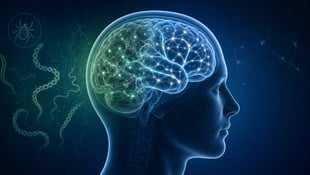
Advanced PET imaging has visualized what's happening inside the brains of PTLD patients: elevated markers of neuroinflammation across eight brain regions in patients with persistent Lyme symptoms. The marker measured — the translocator protein, or TSPO — is a well-established indicator of brain inflammation. In other words, the inflammation can be seen. It can be measured. It can be proved.
As the Johns Hopkins Lyme Disease Research Center summarizes the combined imaging evidence: "Lyme-disease-associated cognitive symptoms are biologic and measurable, not psychosomatic."
That line is worth reading twice. Your symptoms are biologic and measurable. They are not psychosomatic, they are not imagined, and they are not 'just stress.'This neuroinflammation explains so much of what PTLD patients experience. When your brain is inflamed, it can't function properly. Neural pathways that should fire quickly become sluggish. The brain's energy resources get diverted to fighting inflammation instead of supporting normal cognitive function. Blood flow patterns change and neurotransmitter signaling gets disrupted.
The result is exactly what you've been experiencing: fatigue that sleep doesn't fix, cognitive difficulties that make you feel like you've aged decades overnight, and a general sense that your brain is working at a fraction of its former capacity.
The Treatment Shift Nobody Told You About
If PTLD isn't an active infection problem anymore but rather a brain inflammation and function problem, then the treatment approach needs to change accordingly. You don't need more antibiotics. You need brain rehabilitation.
This concept might sound unusual if you've never heard it before. Brain rehabilitation is typically associated with traumatic brain injuries, strokes, and concussions. But the overlap between PTLD and these conditions is significant and increasingly recognized.
The Johns Hopkins Lyme Disease Research Center now specifically recommends this approach: "People with persistent Lyme disease may find relief for their neurological symptoms at interdisciplinary clinics that specialize in brain rehab." They note that "these clinics generally use concussion and mild traumatic brain injury guidelines" because the symptoms and underlying dysfunction are remarkably similar.
Why does this work? Because regardless of what originally caused the brain inflammation, whether it was an impact injury, an infection, or something else, the path to recovery involves similar principles:
- Reducing inflammation through targeted interventions.
- Restoring healthy blood flow to affected brain regions.
- Retraining neural pathways that have become dysfunctional.
- Addressing the autonomic nervous system dysregulation that often accompanies neuroinflammation.
- Rebuilding cognitive stamina and function through structured rehabilitation.
This represents a fundamental paradigm shift. Instead of continuing to chase an infection that's already gone, brain rehabilitation targets the actual problem: a brain that's been damaged by inflammation and needs help healing.
What Brain Rehabilitation Actually Looks Like for PTLD
If you've been living with PTLD for months or years, you might be skeptical of anything promising improvement. You've probably tried supplements, special diets, various medications, and maybe even some alternative treatments. Some might have helped a little, but most probably didn't.
Brain rehabilitation is different because it's not trying to kill something or add something to your body. It's working directly with your brain's own capacity for recovery and adaptation.
At specialized clinics that treat neurological conditions like PTLD, the approach typically begins with understanding exactly what's happening in your individual brain. Not everyone with PTLD has the same pattern of dysfunction. Some patients have more issues with blood flow regulation. Others have more significant problems with the connection between brain regions. Some struggle primarily with autonomic function (the system that controls heart rate, blood pressure, and other automatic processes). Many have some combination of all of these.
Advanced imaging techniques can map out which areas of your brain are underperforming and which pathways aren't communicating properly. This allows treatment to be targeted rather than generic.
Brain rehabilitation often includes:
- Neurovascular Coupling Exercises: These help restore the relationship between brain activity and blood flow. When a brain region works harder, neurons and astrocytes signal local blood vessels to deliver more oxygen and glucose. In many PTLD patients, this coupling is impaired, meaning the brain doesn't get the resources it needs when it needs them.
- Autonomic Nervous System Rehabilitation: This addresses dysregulation that can cause symptoms such as heart rate abnormalities, temperature dysregulation, and exercise intolerance. Many PTLD patients describe feeling as though their “fight-or-flight” system is constantly activated. Research has found significantly higher autonomic symptom scores in PTLD patients than in healthy controls, with a subgroup meeting the criteria for orthostatic tachycardia. This isn’t imaginary; in some patients, it’s a measurable dysfunction that can be targeted through rehabilitation.
- Cognitive Rehabilitation Exercises: These progressively challenge the brain in specific ways to rebuild function. In post-COVID patients, a structured neuropsychological rehabilitation programme produced meaningful gains in memory, attention, and executive function that were largely maintained at six-month follow-up — evidence that targeted cognitive training can rebuild neural pathways and cognitive stamina in post-infectious conditions.
- Vestibular and Visual Therapies: In CFX's clinical experience, many PTLD patients present with the same kinds of vestibular and visual-processing dysfunction documented in post-concussion syndrome and long COVID. When the brain struggles to integrate balance and visual information, the result can be dizziness, difficulty concentrating, and the "foggy" feeling many patients describe.
- Carefully Calibrated Physical Therapies: These are designed to avoid the post-exertional malaise that many PTLD patients experience. The goal is to gradually increase capacity without triggering setbacks.
The intensive, interdisciplinary nature of this approach is important. These aren't isolated treatments delivered once a week over many months. They're coordinated interventions delivered by a team of specialists who understand how each piece fits together. Multimodal rehabilitation combining physical, cognitive, and psychological approaches consistently produces stronger outcomes than isolated or spaced weekly therapy, because it makes better use of the brain's adaptive plasticity.
The Path Forward: What Recovery Actually Looks Like
Let's be honest and realistic about what brain rehabilitation can and cannot do for PTLD patients.
This is not a magic cure. No responsible treatment center would promise that. Your journey with Lyme has likely taught you to be skeptical of anyone promising overnight miracles, and that skepticism is healthy.
What brain rehabilitation offers is the potential for meaningful, measurable improvement in how your brain functions. In independent peer-reviewed analysis of Cognitive FX's outcomes — reviewed by researchers at the University Medical Center Groningen — 77% of patients reported meaningful symptom reduction after treatment, with improvements sustained at six-month follow-up.
In our clinical experience, patients treated for post-infectious cognitive dysfunction typically report:
- Reduced severity and frequency of brain fog episodes
- Improved ability to sustain cognitive effort without crashing
- Better word-finding and verbal fluency Decreased fatigue
- Improvement in headaches
- Better tolerance for physical activity
- Reduced anxiety and improved mood
- A general feeling that their brain is "coming back online"
The degree of improvement varies from person to person depending on factors like how long symptoms have persisted, what other health conditions are present, and individual biology. But the central point is this: improvement is possible. Your brain has not been permanently broken by Lyme disease, and neuroplasticity — the brain's capacity for structural and functional change — persists throughout adult life.
Many patients describe the experience of brain rehabilitation as finally addressing the right problem. After years of treating an infection that was already gone, or being told nothing was wrong when clearly something was, receiving treatment that actually targets the dysfunction in their brain feels like a turning point.
How EPIC Treatment Addresses Persistent Lyme Symptoms
The evidence that PTLD is a neuroinflammation and brain-function problem — not an active infection problem — points toward a specific kind of solution. If the dysfunction is measurable, localized, and driven by immune activation across specific brain regions, then the treatment with the best chance of working is one that maps that dysfunction and targets it directly. EPIC Treatment was built on exactly that principle.
The program is a one-week intensive in Provo, Utah, designed for patients whose cognitive and neurological symptoms have persisted six months or longer without meaningful improvement. It rests on three ideas that fit the PTLD picture well.
Mapping the dysfunction before treating it
Every EPIC week begins with an fNCI brain scan — a specialised fMRI that measures blood flow and activity across multiple brain regions while the patient performs cognitive tasks. For a PTLD patient whose routine imaging has always come back "normal," this is often the first objective evidence that something specific is happening in specific places, and that they have been telling the truth about their symptoms all along. The scan identifies which regions are hyperactive, which are hypoactive, and where the coordination between neuronal activity and local blood flow has fallen out of sync.
That map becomes the treatment plan. Rather than working through a generic cognitive-rehab protocol and hoping the right circuits get engaged, the therapy team knows on day one which areas to prioritise.
Intensive, multidisciplinary, one week
EPIC compresses months of conventional therapy into five full days. Patients rotate through neuromuscular therapy, cognitive therapy, occupational therapy, vision and vestibular work, sensory integration, and psychology sessions — all calibrated to the dysfunction patterns visible on the initial scan. The daily structure follows a Prepare–Activate–Rest cycle: aerobic work first to lift cerebral blood flow and prime BDNF release, then targeted cognitive and sensory-motor challenges, then planned recovery to consolidate neuroplastic change. A team of roughly 14 doctors, therapists, and technicians moves through each patient's schedule during the week.
The concentrated format matters because neuroplasticity responds better to repeated, structured demand than to weekly appointments spread over months. This is the same rationale behind intensive rehabilitation for stroke and traumatic brain injury, and it applies to post-infectious brain dysfunction for the same reason — the underlying repair mechanism is neuroplasticity in both cases.
Measuring what changed
The week ends with a second fNCI scan. Rather than relying on how the patient feels — which is often unreliable after years of being unwell — the second scan is compared directly against the first, quantifying which regions changed and by how much. Patients leave with a documented picture of what improved, plus a personalised at-home program built from what the therapy team observed during the week. The care team follows up periodically for months afterwards.
Why this approach fits PTLD
EPIC was developed for post-concussion syndrome, but the mechanism it targets — impaired neurovascular coupling, disrupted network communication, and inflammation-related metabolic changes — is the same mechanism now documented in PTLD brains. The overlap is why the Johns Hopkins Lyme Disease Research Center specifically recommends interdisciplinary clinics that use concussion and mild TBI rehabilitation guidelines for PTLD patients, and why the same protocol is offered at Cognitive FX to patients with viral and post-infectious brain injury — Post-Treatment Lyme, long COVID, and post-encephalitic syndromes.
Across all patients treated, independent peer-reviewed analysis of Cognitive FX's outcomes by researchers at the University Medical Center Groningen found that 77% of patients reported meaningful symptom reduction after treatment, with improvements sustained at six-month follow-up. The average patient reduces symptoms by roughly 60% by the end of the treatment week and continues improving in the months afterwards as the home program compounds.
Who this is right for
EPIC is designed for patients who match a specific profile: PTLD symptoms persisting six months or longer without meaningful improvement, cognitive difficulties severe enough to affect work or daily life, and normal or near-normal results on routine imaging and lab work. It's not the right first step for a patient still in early antibiotic treatment, or for someone whose primary problem is pain or fatigue without significant cognitive involvement.
If persistent symptoms after Lyme treatment have kept you from working, thinking clearly, or living the life you had before infection, EPIC Treatment may be worth considering. Start with a free consultation with one of our practitioners, or take the Good Fit Quiz to see whether treatment is right for you.
References
- Aucott JN, Yang T, Yoon I, Powell D, Geller SA, Rebman AW. Risk of post-treatment Lyme disease in patients with ideally-treated early Lyme disease: A prospective cohort study. International Journal of Infectious Diseases.2022;116:230-237. doi:10.1016/j.ijid.2022.01.033. https://pubmed.ncbi.nlm.nih.gov/35093553/
- Rebman AW, Bechtold KT, Yang T, Mihm EA, Soloski MJ, Novak CB, Aucott JN. The clinical, symptom, and quality-of-life characterization of a well-defined group of patients with posttreatment Lyme disease syndrome. Frontiers in Medicine. 2017;4:224. doi:10.3389/fmed.2017.00224. https://pubmed.ncbi.nlm.nih.gov/29312942/
- Berende A, ter Hofstede HJM, Vos FJ, van Middendorp H, Vogelaar ML, Tromp M, van den Hoogen FH, Donders ART, Evers AWM, Kullberg BJ. Randomized trial of longer-term therapy for symptoms attributed to Lyme disease. New England Journal of Medicine. 2016;374(13):1209-1220. doi:10.1056/NEJMoa1505425. https://pubmed.ncbi.nlm.nih.gov/27028911/
- Klempner MS, Hu LT, Evans J, Schmid CH, Johnson GM, Trevino RP, Norton D, Levy L, Wall D, McCall J, Kosinski M, Weinstein A. Two controlled trials of antibiotic treatment in patients with persistent symptoms and a history of Lyme disease. New England Journal of Medicine. 2001;345(2):85-92. doi:10.1056/NEJM200107123450202. https://pubmed.ncbi.nlm.nih.gov/11450676/
- Dersch R, Torbahn G, Rauer S. Treatment of post-treatment Lyme disease symptoms—a systematic review. European Journal of Neurology. 2024;31(7):e16293. doi:10.1111/ene.16293. https://pubmed.ncbi.nlm.nih.gov/38606630/
- McClune ME, Ebohon O, Dressler JM, Davis MM, Tupik JD, Lochhead RB, Booth CJ, Steere AC, Jutras BL. The peptidoglycan of Borrelia burgdorferi can persist in discrete tissues and cause systemic responses consistent with chronic illness. Science Translational Medicine. 2025;17(795):eadr2955. doi:10.1126/scitranslmed.adr2955. https://pubmed.ncbi.nlm.nih.gov/40267217/
- Coughlin JM, Yang T, Rebman AW, Bechtold KT, Du Y, Mathews WB, Lesniak WG, Mihm EA, Frey SM, Marshall ES, Rosenthal HB, Reekie TA, Kassiou M, Dannals RF, Soloski MJ, Aucott JN, Pomper MG. Imaging glial activation in patients with post-treatment Lyme disease symptoms: a pilot study using [11C]DPA-713 PET. Journal of Neuroinflammation. 2018;15(1):346. doi:10.1186/s12974-018-1381-4. https://pubmed.ncbi.nlm.nih.gov/30567544/
- Adler BL, Chung T, Rowe PC, Aucott J. Dysautonomia following Lyme disease: a key component of post-treatment Lyme disease syndrome? Frontiers in Neurology. 2024;15:1344862. doi:10.3389/fneur.2024.1344862. https://pubmed.ncbi.nlm.nih.gov/38323114/
- Attwell D, Buchan AM, Charpak S, Lauritzen M, MacVicar BA, Newman EA. Glial and neuronal control of brain blood flow. Nature. 2010;468(7321):232-243. doi:10.1038/nature09613. https://pubmed.ncbi.nlm.nih.gov/21068832/
- Tataranu LG, Rizea RE. Neuroplasticity and nervous system recovery: cellular mechanisms, therapeutic advances, and future prospects. Brain Sciences. 2025;15(4):400. doi:10.3390/brainsci15040400. https://pmc.ncbi.nlm.nih.gov/articles/PMC12025631/
Further reading
Cognitive FX specializes in treating patients with persistent neurological symptoms through functional brain imaging and targeted rehabilitation. If you're experiencing ongoing symptoms after Lyme treatment, schedule a consultation to learn whether our approach might help.