Do I Have POTS? Self-Assessment Quiz, Symptoms & 4 Types Explained
29:10
Take the POTS Self-Assessment Quiz
POTS Self-Assessment
⏱ Free · 5 minutes · No email required
Dizzy, Exhausted, and Told Nothing's Wrong? Find Out If It's POTS.
A clinically informed assessment that evaluates your symptoms against the known profiles for POTS, identifies your likely subtype, and screens for related conditions.
You have a quiz in progress.
No login. No email. Your answers stay on your device.
♥
POTS Likelihood ScoreSee how closely your symptoms match the clinical pattern
⚙
Subtype IdentificationNeuropathic, hyperadrenergic, hypovolemic, or autoimmune profile
Personalized Next StepsSpecific tests and specialists to ask about
⚠ Important Disclaimer
This self-assessment tool is for informational and educational purposes only. It is not a medical device, does not provide a diagnosis, and is not a substitute for professional medical advice. Always consult a qualified healthcare provider. If you are experiencing a medical emergency, call 911.
You stand up from the couch and your heart takes off like you just sprinted across a parking lot. Your vision narrows, and your legs feel heavy and strange. You grab the counter and wait for it to pass.
You have been to your primary care doctor, maybe a cardiologist, maybe a neurologist. Your bloodwork came back normal, and your EKG looked fine. Someone told you it was anxiety. Someone else said you needed to exercise more. And now you are sitting here searching the internet because you know, in your body, that something is actually wrong.
If that sounds familiar, you are not alone and you're probably not just "anxious." You may have POTS, a type of dysautonomia that affects an estimated 1 to 3 million Americans and is misdiagnosed as anxiety in over 70% of cases.
We built this 28-question assessment based on the peer-reviewed clinical research cited throughout this article. It evaluates your symptoms against all four POTS subtypes, screens for commonly associated conditions like Ehlers-Danlos Syndrome and Mast Cell Activation Syndrome, and generates a personalized results profile you can print and bring to your doctor.
It takes about 5 minutes. No login or email required.
If you have already taken the quiz, keep reading to understand what your results mean.
What Is POTS? Definition and Diagnostic Criteria
Postural Orthostatic Tachycardia Syndrome (POTS) is a form of dysautonomia characterized by an abnormal increase in heart rate after standing up. It is not a heart condition in the traditional sense. It is a failure of the autonomic nervous system to properly regulate blood flow when you change position.
To be diagnosed with POTS, a patient typically meets these criteria:
Heart rate increase: 30+ bpm (or 40+ bpm for ages 12 to 19) within 10 minutes of standing
No orthostatic hypotension: Blood pressure does not drop significantly (ruling out a different condition)
Chronic duration: Symptoms have persisted for at least 3 to 6 months
Positional relief: Symptoms improve when lying back down
Secondary causes excluded: Dehydration, anemia, hyperthyroidism, and medication effects have been ruled out
That diagnostic delay is the reason this page exists.
POTS vs. Anxiety: How to Tell the Difference
This is the single most important distinction for anyone who has been told their symptoms are "just anxiety." The symptom overlap is real, and roughly three-quarters of POTS patients are initially told their problem is psychiatric before anyone identifies the autonomic dysfunction.
Both POTS and anxiety can produce a racing heart, chest tightness, dizziness, shortness of breath, tremor, and a general sense that something is very wrong. But the pattern is different.
Symptoms that point toward POTS:
Trigger: Symptoms happen specifically when you stand up from sitting or lying down
Relief: Heart rate and symptoms improve within minutes of lying flat
Pattern: Chronic and daily, occurring with nearly every positional change
Physical signs: Visible blood pooling (purple/blue feet), measurable heart rate increase of 30+ bpm on standing
Worsened by: Heat, dehydration, standing still, large meals, morning hours
Symptoms that point toward anxiety:
Trigger: Symptoms can happen in any position, including while sitting or lying in bed
Relief: Lying down often does not stop the racing heart immediately
Pattern: Episodic; panic attacks peak in 10 to 20 minutes, then gradually subside
Physical signs: No visible blood pooling; heart rate may not change predictably with position
Worsened by: Stressful thoughts, social situations, anticipatory worry
The fastest way to start distinguishing the two: measure your heart rate lying down for 5 minutes, then measure it again after standing for 2, 5, and 10 minutes. If you consistently see a 30+ bpm increase on standing that resolves when you lie back down, that is not anxiety. That is an autonomic nervous system problem, and it has a name.
Reality is that POTS patients are not more anxious than the general population. The sympathetic hyperactivation in POTS, especially the hyperadrenergic subtype, physiologically mimics anxiety because the body genuinely is in fight-or-flight mode. But the cause is autonomic, not psychological.
The 4 Types of POTS
POTS is not a single disease. It is a collection of overlapping subtypes, each driven by a different mechanism. Most patients have features of more than one type, and in practical terms, symptoms are very similar among phenotypes. Still, understanding your dominant pattern may change the treatment approach.
1. Neuropathic POTS
Mechanism: Damage to small nerve fibers (C-fibers and A-delta fibers) prevents proper blood vessel constriction in the lower body. Blood pools excessively in the legs and abdomen when you stand.
Key symptoms: Acrocyanosis (feet and legs turn purple or blue-red on standing), reduced sweating in the lower body, burning or tingling in the feet and hands, visible leg swelling after standing.
Mechanism: Excessive norepinephrine (adrenaline) release creates an overactive fight-or-flight response. The sympathetic nervous system is stuck in overdrive.
Key symptoms: Blood pressure rises (not drops) on standing, tremor, excessive sweating (especially upper body), anxiety-like adrenaline surges triggered by position changes, pallor.
How common: 29 to 60% of patients depending on the diagnostic threshold used, in the Mayo Clinic series.
Diagnostic clues: Standing plasma norepinephrine at or above 600 pg/mL, systolic blood pressure increase of 10+ mmHg upon standing. This type of POTS has a genetic cause involving a mutation which reduces norepinephrine transporter activity by over 98%.
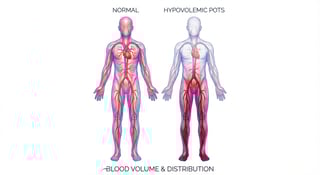
Mechanism: Low total blood volume (typically about a 13% deficit) means there is simply not enough blood to fill the expanded vascular space when you stand up.
Key symptoms: Dramatic improvement with salt and fluid intake, heat intolerance, orthostatic headaches that worsen when upright and improve lying down, feeling best first thing in the morning before dehydration accumulates.
How common: Some degree of hypovolemia is present in the majority of POTS patients, making it arguably the most universal feature.
Diagnostic clues:Patients show paradoxically low renin and aldosterone levels, the opposite of normal compensatory physiology. This is known as the renin-aldosterone paradox. Standard bloodwork cannot detect it because equal plasma and red blood cell losses yield a normal hematocrit. Patients need formal blood volume testing via DAXOR BVA-100 (I-131 labeled albumin) to quantify the deficit.
Mechanism: Autoantibodies target receptors on the autonomic nervous system, blocking vasoconstriction and enhancing cardiac stimulation simultaneously.
Key symptoms: Post-viral onset (especially after COVID-19, mono, or flu), coexisting autoimmune conditions (Hashimoto's, celiac, Sjogren's, lupus), family history of autoimmune disease.
How common: At least 16% and 20% of POTS patients have a strong autoimmune component. In addition, antibodies to adrenergic receptors are found in every POTS patient tested, and elevated G-protein-coupled receptor autoantibodies show up in 89% of patients. Finding these autoantibodies doesn't automatically confirm an autoimmune cause — many are discovered at low titers with unclear clinical significance, and results across studies aren't always consistent. But when combined with a coexisting autoimmune diagnosis, post-viral onset, or family history, they strengthen the case that a patient's POTS is autoimmune-driven.
Diagnostic clues: Patients can be tested for the presence of antibodies using commercially available ganglionic acetylcholine receptor antibodies, and adrenergic receptor autoantibodies.
The EDS, POTS, and MCAS Trifecta
If you have POTS, there is about a one-in-three chance you also have features of Ehlers-Danlos Syndrome, Mast Cell Activation Syndrome, or both. This overlap is so consistent that clinicians now recommend screening for all three whenever any one is present.
Ehlers-Danlos Syndrome (hEDS) involves lax connective tissue throughout the body, including blood vessel walls. When those vessels are too stretchy, blood pools more easily in the lower body upon standing. About a third of POTS patients meet hEDS diagnostic criteria, and roughly 80% of hEDS patients report POTS symptoms. Signs include joint hypermobility ("double-jointed"), easy bruising, stretchy skin, chronic joint pain, and frequent subluxations.
Mast Cell Activation Syndrome (MCAS) involves inappropriate release of histamine and other inflammatory mediators, causing flushing, hives, GI symptoms, food and medication sensitivities, and anaphylaxis-like reactions. When mast cells degranulate, the resulting vasodilation drops blood pressure and triggers reflex tachycardia, worsening the POTS pattern.
Among patients with both POTS and EDS, about a third also have MCAS, a 32-fold increase in odds compared to patients without both conditions. If you scored positive for EDS or MCAS flags on the quiz above, bring those results to a geneticist (for EDS) or allergist/immunologist familiar with MCAS.
What Causes POTS?
Most POTS cases have an identifiable trigger. Knowing what started your symptoms helps clinicians determine your subtype and treatment approach.
Proposed mechanisms include autoimmune molecular mimicry against autonomic receptors, vagal nerve damage, mast cell activation triggered by spike protein , and disruption of the renin-angiotensin system. Post-COVID POTS typically develops 6 to 8 months after infection.
Other viral triggers include Epstein-Barr virus (mononucleosis), influenza, and cytomegalovirus. Post-viral onset accounts for 28 to 50% of all POTS cases.
Other Common Triggers
Surgery or prolonged hospitalization (extended bed rest deconditions the cardiovascular system)
Pregnancy or hormonal changes (puberty, menopause)
Concussion or traumatic brain injury (see the next section)
Gradual onset with no clear trigger (often associated with underlying EDS)
Post-Concussion POTS: The Brain-Autonomic Connection
This is where the story changes from what you will find on WebMD or Mayo Clinic's patient pages, because most POTS resources treat it as a purely cardiovascular problem. It is not. For a significant subset of patients, the problem starts in the brain.
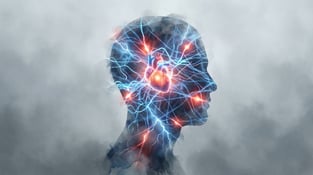
The brainstem houses the nucleus tractus solitarius, the dorsal motor nucleus of the vagus, and the rostral ventrolateral medulla. These are critical autonomic control centers that regulate heart rate, blood pressure, and vascular tone. They sit in a region that is particularly vulnerable to the rotational and shearing forces of concussion.
A study looking at 8 previously healthy patients developed POTS after TBI described how six of them experienced syncope cognitive dysfunction, and were unable to maintain employment.
In addition, over 40% of patients with persistent post-concussion symptoms often show evidence of orthostatic tachycardia.
Standard POTS medications (propranolol, midodrine, ivabradine) treat the downstream cardiovascular symptoms, but they do not address the upstream brain injury driving the autonomic dysregulation. For patients whose POTS began after a concussion or head injury, treatment that targets the Central Autonomic Network, the brain circuit connecting the insular cortex, anterior cingulate cortex, hypothalamus, and brainstem nuclei, can address the actual cause rather than managing the effect.
Functional NeuroCognitive Imaging (fNCI) can identify which specific brain regions are underperforming, and the EPIC Treatment protocol targets those regions with intensive, individualized rehabilitation. This matters because a concussion patient on propranolol may get heart rate control but will never resolve the brain fog, fatigue, and exercise intolerance until the brain injury itself is treated. This is what we offer at Cognitive FX.
How to Test for POTS at Home: The Active Standing Test
You do not need a tilt table to get preliminary data. The active standing test (also called the NASA Lean Test or "poor man's tilt table") requires only a heart rate monitor or blood pressure cuff and a timer. Here is the protocol:
Step 1: Lie flat for 5 to 10 minutes in a quiet room. Record your resting heart rate and blood pressure.
Step 2: Stand up and lean your back against a wall (for balance, not support). Stay as still as possible.
Step 3: Record your heart rate and blood pressure at 2 minutes, 5 minutes, and 10 minutes. Write down any symptoms you experience and when they start.
What to look for:
Heart rate increase of 30+ bpm (or exceeding 120 bpm) within 10 minutes of standing = consistent with POTS
Heart rate increase of 20 to 29 bpm with symptoms = borderline, warrants further testing
Blood pressure drop of 20+ systolic or 10+ diastolic = may indicate orthostatic hypotension (a different condition)
Repeat the test on 2 to 3 different days at similar times of day for reliability. Avoid caffeine, large meals, and heavy exercise for at least 2 hours before testing.
This does not replace a formal tilt table test, which remains the diagnostic gold standard. But objective data is far more persuasive than describing vague symptoms when you walk into a clinic. Print the numbers and bring them to your doctor.
POTS Treatment Options
There are currently no FDA-approved drugs for POTS. Every medication used is off-label. But effective treatment exists, especially when matched to the right subtype.
Lifestyle and Diet
Every POTS patient, regardless of subtype, should start here:
Fluids: 2 to 3 liters of water daily (more in heat or during exercise)
Salt: 3 to 10 grams daily, adjusted by subtype. Hypovolemic patients benefit most. Hyperadrenergic patients may not tolerate high salt (it can worsen symptoms).
Compression: Waist-high compression garments at 20 to 30 mmHg. Abdominal binders are equally important because most blood pools in the splanchnic circulation, not just the legs. Knee-high stockings alone are not enough.
Positioning: Head-of-bed elevation (10 to 15 cm) reduces nocturnal diuresis.
The most robust treatment evidence in POTS comes from structured exercise. Developed by Dr. Benjamin Levine at the Institute for Exercise and Environmental Medicine in Dallas, the protocol starts entirely with recumbent exercises (rowing, swimming, recumbent cycling) and gradually introduces upright activity over 7 to 8 months.
The critical caveat: About 60% of patients cannot complete the full program. If you also have ME/CFS with post-exertional malaise, standard graded exercise may be harmful. The approach must be tailored.
Medication
Ivabradine (Corlanor): The strongest pharmacological evidence producing significantly reduced standing heart rate in medical trials.
Low-dose propranolol: Curiously, low doses (20 mg) produce better results than higher doses (80 mg). Low dose reduced tachycardia; high dose worsened quality of life.
Midodrine (2.5 to 10 mg three times daily): Alpha-1 agonist that improves vasoconstriction. This option is best for neuropathic POTS.
Fludrocortisone (0.1 to 0.2 mg daily): Mineralocorticoid that expands blood volume. This drug is commonly prescribed for hypovolemic POTS, though evidence from controlled trials is limited.
Vagus Nerve Stimulation: An Emerging Approach
The most exciting recent development. A recent study using daily transcutaneous vagus nerve stimulation at the tragus of the ear showed that, after 2 months, orthostatic tachycardia decreased from 26.4 to 17.6 bpm.
The treatment also decreased anti-adrenergic autoantibodies and TNF-alpha inflammatory markers. This is the first evidence of a non-pharmacological intervention that appears to modify the disease process rather than just managing symptoms.
A Different Approach: Targeting the Neurological Root Causes of POTS
Most POTS treatment options, whether delivered by a cardiologist or a neurologist, focus on managing how your body responds to dysregulation. Compression stockings, salt loading, hydration protocols, and medications address the downstream effects of an autonomic nervous system that isn't functioning properly. For many patients, those measures provide partial relief but not lasting recovery.
At Cognitive FX, our approach starts from a different premise: that POTS is fundamentally a brain problem, and that meaningful, lasting improvement requires treating the brain directly.
How This Protocol Was Developed
This protocol was discovered while treating patients with post-concussion syndrome. We noticed that our PCS patients who also had POTS symptoms were recovering their autonomic function through neurological rehabilitation. We then refined what was working into a dedicated POTS program. That means our approach emerged from real patient outcomes, not theory.
What the 5-Day Program Includes
Our 5-day specialized program in Provo, Utah, targets the three root systems that standard care typically doesn't address: autonomic regulation, vestibular calibration, and breathing mechanics.
The tools we use go well beyond what most POTS providers consider:
Neuro-Cardio Training
The autonomic nervous system has two main branches:
Sympathetic nervous system (SNS):“fight or flight” --> raises heart rate and blood pressure
Parasympathetic nervous system (PNS):“rest and digest” --> lowers heart rate and blood pressure
POTS patients are often stuck in a state of chronic sympathetic overactivation. Neuro-cardio training uses brief, high-intensity exercise intervals to trigger the SNS, followed by controlled recovery using diaphragmatic breathing and cooling techniques to activate the PNS. Repeating these cycles retrains the body to move smoothly between stress and rest states—the fundamental shift that POTS disrupts.
Vestibular Recalibration
Dizziness and orthostatic intolerance in POTS aren’t caused only by blood flow. The inner ear plays a significant role, specifically a small structure called the saccule, which detects vertical position changes like moving from lying to sitting or standing.
The saccule communicates with the vagus nerve to help regulate heart rate in response to position shifts. If those vestibular signals are inaccurate or delayed, the brain may overcorrect—triggering a stronger-than-necessary heart rate response and worsening orthostatic symptoms. Our vestibular recalibration exercises retrain the brain to process positional signals correctly, reducing dizziness and calming the overreaction to standing.
Breathing Mechanics Training
Breathing directly shapes autonomic state: inhalation activates the SNS, exhalation activates the PNS. Many POTS patients develop dysfunctional breathing patterns (often shallow, mouth-based breathing) that chronically lower CO₂ levels (hypocapnia). Low CO₂ worsens dizziness, fatigue, and the body’s ability to regulate blood flow.
Our training focuses on slow, nasal, diaphragmatic breathing. Where needed, supplemental CO₂ therapy is used to restore the balance between CO₂ and oxygen, which is essential for effective oxygen delivery to the brain.
Cranial Nerve Activation
We use targeted smell and taste exercises to stimulate cranial nerves involved in autonomic regulation. Lavender, vanilla, and rose activate parasympathetic pathways; citrus and peppermint activate sympathetic ones. This trains sensory-autonomic connections that influence brainstem centers controlling heart rate and breathing.
CO₂-Based Therapies
Many POTS patients have chronically low CO₂, which limits the body’s ability to deliver oxygen at the tissue level. We use CO₂ therapeutically in two ways:
Pre-cardio inhalation to improve oxygen utilization during exercise
CO₂ recovery bath during rest phases to enhance relaxation and tissue perfusion
Patients leave with a personalized home program including daily drills and a repeatable interval-recovery framework already tested and refined to their specific dysregulation pattern during the treatment week.
The program costs $4,500, which includes the comprehensive evaluation, all treatment sessions, and follow-up consultations. Insurance does not directly cover the program, but Cognitive FX provides documentation and billing codes for patients pursuing out-of-network reimbursement. Payment plans are also available.
The Five-Day POTS Treatment Program
What to expect — day by day at Cognitive FX
Day1
Comprehensive Evaluation
A full assessment of your autonomic function to build a personalized treatment plan for the remaining four days.
This myth causes real harm when it leads to dismissive care. Yes, POTS patients are often deconditioned. But the deconditioning is a result of the disease, not the cause.
On the contrary, POTS patients have low ventricular filling pressures during exercise, the opposite of what you see in simply deconditioned individuals. Telling a POTS patient to "just exercise more" without starting with recumbent exercise and progressing slowly is counterproductive and can make symptoms worse.
Next Steps: Getting a Diagnosis
If you took the quiz above and scored in the moderate or high range, or if your symptom history matches what is described in this article, here is a practical path forward.
Start with the active standing test. Measure your heart rate lying down and standing on 2 to 3 separate days. Print the numbers and symptoms.
Request a tilt table test. Ask your doctor for a referral to a cardiologist or neurologist who specializes in autonomic disorders. This is the formal diagnostic gold standard. Expect it to cost $1,000 to $3,000 depending on location and insurance.
Screen for the trifecta. If you are unusually flexible, bruise easily, or have joint pain, ask about Ehlers-Danlos evaluation. If you get unexplained flushing, hives, or react to many foods and medications, ask about MCAS testing.
Ask about subtype-specific testing. If you suspect neuropathic POTS, ask for a skin biopsy (intraepidermal nerve fiber density) and QSART. If you suspect hyperadrenergic POTS, ask for supine and standing plasma norepinephrine levels.
Do not accept "it's anxiety" without a standing heart rate test. A 30-second heart rate check lying down and standing is all it takes to raise or lower suspicion for POTS. If your doctor will not do this, find one who will.
If standard POTS treatments haven't given you the relief you need, our five-day neurologic-focused program may be a good next step. You can fill out a POTS intake form to get started, or call 385-446-4158 to speak with someone directly.
References
Schondorf R, Low PA. Idiopathic postural orthostatic tachycardia syndrome: an attenuated form of acute pandysautonomia? Neurology. 1993;43(1):132-137. https://doi.org/10.1212/WNL.43.1_Part_1.132
Sheldon RS, Grubb BP, Olshansky B, et al. 2015 Heart Rhythm Society expert consensus statement on the diagnosis and treatment of postural tachycardia syndrome, inappropriate sinus tachycardia, and vasovagal syncope. Heart Rhythm. 2015;12(6):e41-e63. https://doi.org/10.1016/j.hrthm.2015.03.029
Vernino S, Bourne KM, Stiles LE, et al. Postural orthostatic tachycardia syndrome (POTS): State of the science and clinical care from a 2019 National Institutes of Health Expert Consensus Meeting - Part 1. Autonomic Neuroscience. 2021;235:102828. https://doi.org/10.1016/j.autneu.2021.102828
Raj SR, Guzman JC, Harvey P, et al. Canadian Cardiovascular Society Position Statement on Postural Orthostatic Tachycardia Syndrome (POTS) and Related Disorders of Chronic Orthostatic Intolerance. Canadian Journal of Cardiology. 2020;36(3):357-372. https://doi.org/10.1016/j.cjca.2019.12.024
Shaw BH, Stiles LE, Bourne K, et al. The face of postural tachycardia syndrome – insights from a large cross-sectional online community-based survey. Journal of Internal Medicine. 2019;286(4):438-448. https://doi.org/10.1111/joim.12895
Dulal D, Maraey A, Elsharnoby H, Chacko P, Grubb B. Impact of COVID-19 pandemic on the incidence and prevalence of postural orthostatic tachycardia syndrome. European Heart Journal - Quality of Care and Clinical Outcomes. 2025;11(5):698-704. https://doi.org/10.1093/ehjqcco/qcae111
Thieben MJ, Sandroni P, Sletten DM, et al. Postural orthostatic tachycardia syndrome: the Mayo Clinic experience. Mayo Clinic Proceedings. 2007;82(3):308-313. https://doi.org/10.4065/82.3.308
Shannon JR, Flattem NL, Jordan J, et al. Orthostatic intolerance and tachycardia associated with norepinephrine-transporter deficiency. New England Journal of Medicine. 2000;342(8):541-549. https://doi.org/10.1056/NEJM200002243420803
Raj SR, Biaggioni I, Yamhure PC, et al. Renin-aldosterone paradox and perturbed blood volume regulation underlying postural tachycardia syndrome. Circulation. 2005;111(13):1574-1582. https://doi.org/10.1161/01.CIR.0000160356.97313.5D
Gunning WT III, Kvale H, Kramer PM, Karabin BL, Grubb BP. Postural orthostatic tachycardia syndrome is associated with elevated G-protein coupled receptor autoantibodies. Journal of the American Heart Association.2019;8(18):e013602. https://doi.org/10.1161/JAHA.119.013602
Li H, Yu X, Liles C, et al. Autoimmune basis for postural tachycardia syndrome. Journal of the American Heart Association. 2014;3(1):e000755. https://doi.org/10.1161/JAHA.113.000755
Blitshteyn S. Autoimmune markers and autoimmune disorders in patients with postural tachycardia syndrome (POTS). Lupus. 2015;24(13):1364-1369. https://doi.org/10.1177/0961203315587566
Björnson M, Wijnbladh K, Törnberg A, et al. Prevalence and clinical impact of postural orthostatic tachycardia syndrome in highly symptomatic long COVID. Circulation: Arrhythmia and Electrophysiology.2025;18(10):e013629. https://doi.org/10.1161/CIRCEP.124.013629
Heyer GL, Fischer A, Wilson J, et al. Orthostatic intolerance and autonomic dysfunction in youth with persistent postconcussion symptoms: a head-upright tilt table study. Clinical Journal of Sport Medicine. 2016;26(1):40-45. https://doi.org/10.1097/JSM.0000000000000183
Miller AJ, Stiles LE, Sheehan T, et al. Prevalence of hypermobile Ehlers-Danlos syndrome in postural orthostatic tachycardia syndrome. Autonomic Neuroscience. 2020;224:102637. https://doi.org/10.1016/j.autneu.2020.102637
Angeli AM, Salonen BR, Ganesh R, et al. Symptom presentation by phenotype of postural orthostatic tachycardia syndrome. Scientific Reports. 2024;14(1):205. https://doi.org/10.1038/s41598-023-50886-8
Fu Q, VanGundy TB, Galbreath MM, et al. Cardiac origins of the postural orthostatic tachycardia syndrome. Journal of the American College of Cardiology. 2010;55(25):2858-2868. https://doi.org/10.1016/j.jacc.2010.02.043
Fu Q, VanGundy TB, Shibata S, et al. Exercise training versus propranolol in the treatment of the postural orthostatic tachycardia syndrome. Hypertension. 2011;58(2):167-175. https://doi.org/10.1161/HYPERTENSIONAHA.111.172262
George SA, Bivens TB, Howden EJ, et al. The international POTS registry: Evaluating the efficacy of an exercise training intervention in a community setting. Heart Rhythm. 2016;13(4):943-950. https://doi.org/10.1016/j.hrthm.2015.12.012
Taub PR, Zadourian A, Lo HC, et al. Randomized Trial of Ivabradine in Patients With Hyperadrenergic Postural Orthostatic Tachycardia Syndrome. Journal of the American College of Cardiology. 2021;77(7):861-871. https://doi.org/10.1016/j.jacc.2020.12.029
Raj SR, Black BK, Biaggioni I, et al. Propranolol decreases tachycardia and improves symptoms in the postural tachycardia syndrome: less is more. Circulation. 2009;120(9):725-734. https://doi.org/10.1161/CIRCULATIONAHA.108.846501
Stavrakis S, Chakraborty P, Farhat K, et al. Noninvasive Vagus Nerve Stimulation in Postural Tachycardia Syndrome: A Randomized Clinical Trial. JACC: Clinical Electrophysiology. 2024;10(2):346-355. https://doi.org/10.1016/j.jacep.2023.10.015
Oldham WM, Lewis GD, Opotowsky AR, Waxman AB, Systrom DM. Unexplained exertional dyspnea caused by low ventricular filling pressures: results from clinical invasive cardiopulmonary exercise testing. Pulmonary Circulation. 2016;6(1):55-62. https://doi.org/10.1086/685054
Wang E, Ganti T, Vaou E, Hohler A. The relationship between mast cell activation syndrome, postural tachycardia syndrome, and Ehlers-Danlos syndrome. Allergy Asthma Proc. 2021 May 1;42(3):243-246. https://pubmed.ncbi.nlm.nih.gov/33980338/
Theoharides TC, Twahir A, Kempuraj D. Mast cells in the autonomic nervous system and potential role in disorders with dysautonomia and neuroinflammation. Ann Allergy Asthma Immunol. 2024 Apr;132(4):440-454. https://pubmed.ncbi.nlm.nih.gov/37951572/
Pearson R, Sheridan CA, Kang K, Brown A, Baham M, Asarnow R, Giza CC, Choe MC. Post-Concussive Orthostatic Tachycardia is Distinct from Postural Orthostatic Tachycardia Syndrome (POTS) in Children and Adolescents. Child Neurol Open. 2022 Mar 2;9:2329048X221082753. https://pmc.ncbi.nlm.nih.gov/articles/PMC9136088/
Dr. Lynn Gaufin graduated from the University of Utah and then attended medical school at Cornell University in New York City. After medical school he join the Army and was a surgeon in the military before finishing his Neurological Residency at University of California Los Angeles. Dr. Gaufin specializes in cervical and lumbar spine surgery, brain tumors, brain hemorrhages, and treatment of traumatic brain injuries. Dr. Gaufin is one of the emergency trauma neurosurgeons on call at Utah Valley Hospital. Before he began his practice in Utah he saw a significant amount of traumatic brain injuries during his career in the Army and his residency in Los Angeles. As a surgeon who treats individuals who suffer from mild to severe traumatic brain injuries he recognized a problem in the post operative rehabilitation. Individuals who suffered severe trauma would be admitted into speciality facilities where they would receive months of care. But patients who had a more mild trauma would be released and would largely be on their own when it came to restoring their cognitive function. That problem is what lead Dr. Gaufin to team up with Dr. Fong and Dr. Allen in the creation of Cognitive FX. Cognitive FX was able to take the research that Dr. Fong and Dr. Allen started in their Phd programs and bring it into the clinical environment.
Related Posts
Hyperadrenergic POTS: Symptoms, Causes, & Treating the Subtype Most Doctors Miss
Hyperadrenergic POTS affects an estimated 30 to 60% of all POTS patients, yet most are never told which subtype they have. That matters because the hyperadrenergic form requires a fundamentally...
If you have POTS, you may know the pattern all too well: you stand up, and within seconds, a headache sets in. It eases off when you lie back down. It returns the next time you stand. Over and over,...
If you have postural orthostatic tachycardia syndrome (POTS), you've probably been told that physical therapy is the place to start. And if you've already tried it—going to every session, doing the...