If you've been living with depression that hasn't responded to medication, you've probably started researching alternatives. Two treatments keep showing up in those searches: transcranial magnetic stimulation (TMS) and psilocybin-assisted therapy.
Both are generating real excitement in the mental health world, and for good reason. They represent fundamentally different approaches to a problem that affects over 2.8 million Americans with treatment-resistant depression. But where do things actually stand with each one? And more importantly, which option can help you right now?
We dug into the clinical trials, FDA records, meta-analyses, and real-world outcomes data to give you a clear, honest comparison. Here's what the evidence says as of early 2026.
How Each Treatment Works on the Brain
These two therapies attack depression through very different pathways, but they actually converge on some of the same brain targets. Understanding how they work helps explain why their results, timelines, and accessibility look so different.
Targeted Electromagnetic Stimulation with TMS
TMS uses an electromagnetic coil placed against the scalp to deliver focused magnetic pulses to a specific brain region called the left dorsolateral prefrontal cortex (DLPFC). In depression, this area is consistently underactive. The magnetic pulses generate tiny electrical currents that increase activity in this region and restore communication between the DLPFC and deeper mood-regulating structures like the subgenual anterior cingulate cortex. Connectivity between these regions is what determines whether a given stimulation site actually works.
Think of it as retraining a circuit that's gone quiet. Over the course of multiple sessions, TMS induces lasting changes in synaptic connections (a process called long-term potentiation), increases levels of brain-derived neurotrophic factor (BDNF, which supports neuron growth), and studies show that it can increase gray matter volume by 3.5 to 11.2% in key regions tied to mood regulation.
For a deeper look at how standard, accelerated, and fMRI-guided TMS protocols differ mechanically — and what a treatment week actually involves — see our patient guide to TMS for treatment-resistant depression.
Reported in the Stanford-run SAINT®/SNT® trials. These results apply to the specific SAINT® protocol delivered with Magnus Medical's device and analysis pipeline. Cognitive FX has not published equivalent trial data for its own protocol and does not claim equivalent outcomes.
The SAINT protocol takes this further by using each patient's own brain imaging to identify the precise spot on the DLPFC that has the strongest connection to mood circuitry. This personalized targeting is a major reason the SAINT protocol achieves substantially higher remission rates than standard TMS.
Psilocybin: Temporary Neurochemical Disruption
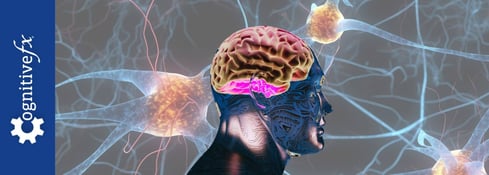
Psilocybin works through a completely different mechanism. After ingestion, it converts to psilocin, which binds powerfully to serotonin 5-HT2A receptors throughout the cortex. This triggers a massive, temporary disruption of normal brain network patterns, particularly in the default mode network (DMN), the brain system associated with self-referential thinking and rumination.
A study published in Nature found that psilocybin causes more than threefold greater disruption of functional connectivity compared to a stimulant control, with some changes persisting weeks after a single dose. This disruption is believed to open a window where rigid, depressive thought patterns can be reorganized, essentially allowing the brain to "reset."
Where Both Treatments Converge
What the Clinical Evidence Actually Shows
This is where the comparison gets nuanced. TMS has a deep, broad evidence base built over decades. Psilocybin has smaller but striking results that come with important caveats.
TMS: The Established Evidence
The data behind TMS is extensive. If you want the full breakdown of how standard rTMS, deep TMS, and accelerated fMRI-guided protocols stack up against each other specifically, see our comparison of TMS success rates by protocol.
Pivotal trial data. The original NeuroStar RCT with 301 patients showed response rates of approximately 25% for active TMS versus 14% for sham, with remission roughly doubled. George et al. (2010) independently replicated results showing patients were four times more likely to achieve remission.
Real-world outcomes are even better. The NeuroStar Outcomes Registry, tracking over 17,700 patients across 118 clinical sites, found a 69% patient-rated response rate and 36% remission rate. The Brainsway deep TMS post-marketing dataset (1,753 patients) showed 81.6% response and 65.3% remission.
The SAINT protocol changes the math. The double-blind RCT published by Stanford showed 79% remission in the active group versus 13% in sham. A larger 2026 RCT found approximately 50% remission and 70% response in a broader patient population. These are remarkable numbers for a treatment that takes just five days.
Meta-analytic effect size. Hedges' g of approximately 0.79 across 65 randomized controlled trials with 2,982 participants (medium-to-large effect).
Psilocybin: Promising but Early
Psilocybin trials have produced impressive headline numbers, but from much smaller samples:
Johns Hopkins (Davis et al., 2021; 24 patients): 71% response and 54% remission at one week, with 75% response and 58% remission sustained at 12 months.
Imperial College vs. escitalopram (Carhart-Harris et al., 2021; 59 patients): 70% response for psilocybin versus 48% for escitalopram. The primary endpoint, however, did not reach statistical significance (p=0.17).
COMPASS Pathways Phase 2b (Goodwin et al., 2022; 233 patients): This was the largest controlled trial and enrolled a more treatment-resistant population. Results were more modest: 37% response and 29% remission at three weeks for the 25 mg dose. The average duration of benefit from a single dose was approximately 12 weeks.
COMPASS Phase 3 (announced June 2025; 258 patients): Met its primary endpoint with statistical significance (p<0.001), marking the first Phase 3 success for any classical psychedelic.
Meta-analytic effect size: Hedges' g = 0.66 to 0.91 across studies (Guo et al., 2024; Terao et al., 2024), though with important caveats about blinding and sample size.
The Honest Comparison
Network meta-analyses that include both treatments (Guo et al., 2024; Terao et al., 2024) consistently rank psilocybin among the most effective interventions for treatment-resistant depression, with TMS effective but generally ranked slightly lower on average. However, there are three critical context points:
Sample size matters. TMS evidence includes over 17,700 patients in the NeuroStar registry alone. The largest controlled psilocybin trial enrolled 258 patients. Smaller studies tend to produce larger effect sizes that often shrink in larger, more rigorous trials, which is exactly what happened between the Johns Hopkins pilot (24 patients) and the COMPASS Phase 2b (233 patients).
Blinding is a real problem for psilocybin. Patients know whether they received a psychedelic or a placebo. This creates expectancy effects that can significantly inflate results. The BMJ meta-analysis rated all included psilocybin studies as having moderate risk of bias for this reason. TMS trials use a convincing sham coil that makes blinding substantially more reliable.
Real-world data tells a different story than pivotal trials. TMS real-world response rates (62 to 82%) consistently exceed its controlled trial numbers, suggesting that the sham-controlled effect size underestimates real clinical benefit. Psilocybin has minimal real-world outcome data beyond Oregon's state program, which does not collect standardized efficacy measures.
FDA Status: Available Now vs. Years Away
This is the single biggest practical difference between TMS and psilocybin, and it's not close.
TMS: FDA-Cleared, Insured, and Widely Available
TMS has been FDA-cleared for depression since October 2008. Since then, at least eight additional devices have received clearance, including deep TMS systems and accelerated protocols. The SAINT accelerated protocol received FDA clearance in September 2022. As of 2026, over 1,100 TMS practices operate across the United States.
Most major insurance carriers cover standard TMS for depression after failure of two or more antidepressant trials, including Medicare, Aetna, Cigna, UnitedHealthcare, and most Blue Cross Blue Shield plans. The SAINT protocol is beginning to gain coverage pathways, with CMS establishing a hospital outpatient payment rate.
Coverage rules vary by protocol and insurer — our complete guide to TMS insurance coverage walks through eligibility criteria, what typically gets denied, and how to appeal a denial.
Psilocybin: Not FDA-Approved, Schedule I Federally
Psilocybin has no FDA approval and remains a Schedule I controlled substance under federal law. COMPASS Pathways' Phase 3 success in 2025 was a major step forward, but FDA review, DEA rescheduling, REMS implementation, and insurance negotiations will take years even in the best-case scenario. COMPASS expects a potential FDA decision in late 2026 or early 2027, but broad clinical availability would follow substantially later.
Currently, the only legal access outside clinical trials is through Oregon's Measure 109 program (operational since mid-2023, approximately 8,000 clients served) and Colorado's Natural Medicine Health Act (first regulated session in June 2025). Neither requires a medical diagnosis or prescription. Neither is covered by insurance.
Safety Profiles: Both Favorable, but Different Risks
TMS Side Effects
TMS has an exceptionally clean safety profile. The most common side effects are scalp discomfort (about 36% of patients, diminishes after the first week) and headache (35 to 47%, responds to over-the-counter pain relievers). The most serious potential risk is seizure, estimated at less than 0.1% per patient, or roughly 1 in 30,000 treatments. No seizures occurred in the NeuroStar pivotal trial across over 10,000 treatments. Fewer than 5% of patients discontinue due to side effects.
Critically, TMS produces no systemic side effects: no weight gain, no sexual dysfunction, no emotional blunting, no withdrawal symptoms, no sedation. Patients drive themselves home after every session.
TMS is contraindicated for patients with metallic implants near the treatment site or implanted devices like pacemakers.
For a fuller rundown of what TMS side effects actually feel like session to session, and how they compare to the risks of continuing to cycle through antidepressant medications, see our detailed guide to TMS side effects, benefits, and risks.
Psilocybin Side Effects
Psilocybin's risks are predominantly psychological rather than physical. Common effects include headache (~50%), nausea (~36%), anxiety during onset, emotional distress, and fatigue. There is no physiological toxicity, no addiction potential, and no withdrawal.
The most concerning safety signal came from the COMPASS Phase 2b trial, where 3 participants in the 25 mg group experienced suicidal behavior. All were non-responders with prior histories of suicidality, and the events occurred more than one month after dosing.
Psilocybin is contraindicated in patients with psychotic spectrum disorders, bipolar disorder, and those currently taking serotonergic medications. SSRIs must be tapered before treatment, which itself carries risk.
What Treatment Actually Looks Like Day to Day
The TMS Experience
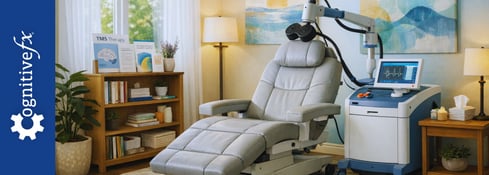
A standard TMS course involves 30 to 36 sessions over about six to nine weeks, with five sessions per week. Each session takes 20 to 40 minutes (or just 3 minutes with theta burst protocols). You sit in a comfortable recliner while a technician positions the coil. You feel a rhythmic tapping on your scalp and hear clicking sounds. Many patients read, scroll their phones, or simply relax during treatment. There's no anesthesia and no recovery period.
The SAINT accelerated protocol compresses the entire treatment course into five consecutive days. You receive 10 brief sessions per day with rest intervals between them. It begins with an fMRI scan to personalize the treatment target. While the daily commitment is significant for that single week, you're done in five days rather than six to nine weeks.
The Psilocybin Experience
A psilocybin therapy course spans four to eight weeks but involves far fewer actual sessions. It starts with one to three preparation sessions with therapists. The dosing session itself lasts six to eight hours: you take a capsule in a comfortable room with two trained therapists present, soft lighting, music through headphones, and eye shades. The experience can include vivid imagery, intense emotions, altered sense of self, and sometimes profound or distressing psychological states. Afterward, one to two integration sessions help process the experience.
Which Treatment Is Right for You?
Both of these approaches show real promise for treatment-resistant depression. The science is clear that they work through overlapping mechanisms and both can produce meaningful improvements. But the practical realities are very different, and for most patients, those practical realities matter more than marginal differences in effect sizes from non-comparable trials.
TMS may be the right choice if you:
- Want an FDA-cleared treatment with 17+ years of clinical data
- Need or prefer to stay on your current antidepressant medications
- Want treatment covered by health insurance
- Prefer a gradual, low-risk treatment without altered states of consciousness
- Need access to treatment now, not in two to three years
- Are looking for a treatment with predictable, manageable side effects
Psilocybin therapy might be worth exploring if you:
- Have exhausted multiple treatments including TMS
- Are willing to travel to Oregon or Colorado and pay out of pocket
- Can safely taper off serotonergic medications
- Have no personal or family history of psychotic or bipolar disorders
- Are open to an intense, hours-long psychological experience
- Are comfortable with a treatment that is not yet FDA-approved
For most patients with treatment-resistant depression who are looking for help today, TMS offers the strongest combination of evidence, accessibility, and safety. And accelerated TMS protocols like SAINT have closed the speed gap that was once psilocybin's clearest advantage: you can achieve remission rates of 50 to 79% in a single week, with treatment backed by FDA clearance and growing insurance coverage.
Getting TMS Treatment at Cognitive FX
Standard rTMS is the most widely available and most commonly insured form of TMS. It also tops out around 30–36% remission in treatment-resistant populations, which is the gap most TRD patients are actually trying to close when they start researching alternatives like psilocybin in the first place.
Two factors explain most of that gap. Coil placement based on scalp measurements can miss the optimal DLPFC site by up to 2 centimeters. The six-week protocol also spreads the neurological stimulus over a long period, which is a real adherence problem for patients whose depression already makes daily commitments difficult.
Cognitive FX's program is built to close both gaps. Treatment begins with an fMRI scan that maps each patient's individual brain activity and identifies the DLPFC target before any stimulation starts. An FDA-approved neuronavigation system then guides the coil to that exact spot for every session, with targeting accuracy within 1–2 millimeters.
The protocol delivers 50 sessions over five days using FDA-approved intermittent theta burst stimulation, roughly 90,000 total pulses. Cognitive behavioral therapy is included alongside the TMS sessions, which published research associates with an approximate 8% improvement in response rates and a 19% improvement in remission rates compared to TMS alone.
How Cognitive FX's Protocol Compares to the Licensed Magnus SAINT™ Product
| |
Cognitive FX fMRI-Guided TMS
|
Magnus SAINT™ TMS
|
|
FDA-approved iTBS
|
Yes
|
Yes
|
|
FDA-approved neuronavigation
|
Yes
|
Yes
|
|
Treatment days
|
5
|
5
|
|
Sessions per day
|
10
|
10
|
|
Total pulses
|
~90,000
|
90,000
|
|
DLPFC targeting method
|
fMRI analysis + personalized E-field coil orientation, assisting the prescribing physician
|
FDA-approved proprietary targeting software
|
|
CBT included
|
Yes
|
Varies by provider
|
|
Cost
|
$7,000–$12,000
|
$30,000+
|
The core difference is the targeting software. Magnus SAINT™ uses an FDA-approved proprietary algorithm to select the DLPFC site. Cognitive FX's neuroscientist and prescribing physician perform the fMRI analysis in-house instead, drawing on more than 25 years of clinical fMRI experience treating brain injury patients. Everything else — the iTBS delivery, the five-day schedule, the pulse count, the FDA-approved neuronavigation hardware — is equivalent.
Clinical research on fMRI-guided TMS has shown approximately 79% remission rates in treatment-resistant populations. Individual results vary.
Cognitive FX treats patients as young as 14 for TMS (teens ages 14 to 17 with parental supervision); patients over 65 need a consultation and a doctor visit before we can confirm they are a good fit. Patients with a seizure history, metallic implants near the treatment site, or who are currently in acute suicidal crisis and need immediate care are also excluded from the program.
If you've been through multiple antidepressant medications without lasting relief, fMRI-guided TMS targets the problem from a different angle than either standard TMS or psilocybin. For more on how the protocol works day to day and who tends to respond best, see our patient guide to TMS for treatment-resistant depression.
Ready to take the next step?Take a short quiz to see if you're a likely candidate, schedule a consultation, or call 385-334-6093 to speak with someone directly.
This article was reviewed for medical accuracy and reflects the best available evidence as of August 2026. It is intended for educational purposes and does not constitute medical advice. Always consult with a qualified healthcare provider before making treatment decisions.
Sources include peer-reviewed publications in JAMA Psychiatry, The New England Journal of Medicine, The American Journal of Psychiatry, Nature, The BMJ, and data from ClinicalTrials.gov, the FDA, and COMPASS Pathways investor disclosures.
SAINT® and SNT® are registered trademarks of The Board of Trustees of the Leland Stanford Junior University, exclusively licensed to Magnus Medical, Inc. Cognitive FX is not affiliated with, sponsored by, or endorsed by Stanford or Magnus Medical, does not use Magnus Medical equipment or software, and does not offer the SAINT® protocol. Cognitive FX provides its own fMRI-guided intermittent theta-burst TMS program, with targets determined by our clinical team and prescribing physician.
Further Reading
References
- O'Reardon JP, Solvason HB, Janicak PG, et al. Efficacy and safety of transcranial magnetic stimulation in the acute treatment of major depression: a multisite randomized controlled trial. Biological Psychiatry. 2007;62(11):1208-1216.doi:10.1016/j.biopsych.2007.01.018
- George MS, Lisanby SH, Avery D, et al. Daily left prefrontal transcranial magnetic stimulation therapy for major depressive disorder: a sham-controlled randomized trial. Archives of General Psychiatry. 2010;67(5):507-516. doi:10.1001/archgenpsychiatry.2010.46
- Sackeim HA, Aaronson ST, Carpenter LL, et al. Clinical outcomes in a large registry of patients with major depressive disorder treated with Transcranial Magnetic Stimulation. Journal of Affective Disorders. 2020;277:65-74. doi:10.1016/j.jad.2020.08.005
- Tendler A, Barnea Yelon T, Gershon AA, et al. Deep TMS H1 coil treatment for depression: results from a large post-marketing data analysis. Psychiatry Research. 2023;326:115327. doi:10.1016/j.psychres.2023.115327
- Cole EJ, Stimpson KH, Bentzley BS, et al. Stanford Neuromodulation Therapy (SNT): a double-blind randomized controlled trial. American Journal of Psychiatry. 2022;179(2):132-141. doi:10.1176/appi.ajp.2021.20101429
- Fox MD, Buckner RL, White MP, Greicius MD, Pascual-Leone A. Efficacy of transcranial magnetic stimulation targets for depression is related to intrinsic functional connectivity with the subgenual cingulate. Biological Psychiatry. 2012;72(7):595-603. doi:10.1016/j.biopsych.2012.04.028
- Davis AK, Barrett FS, May DG, et al. Effects of psilocybin-assisted therapy on major depressive disorder: a randomized clinical trial. JAMA Psychiatry. 2021;78(5):481-489. doi:10.1001/jamapsychiatry.2020.3285
- Gukasyan N, Davis AK, Barrett FS, et al. Efficacy and safety of psilocybin-assisted treatment for major depressive disorder: prospective 12-month follow-up. Journal of Psychopharmacology. 2022;36(2):151-158. doi:10.1177/02698811211073759
- Carhart-Harris R, Giribaldi B, Watts R, et al. Trial of psilocybin versus escitalopram for depression. New England Journal of Medicine. 2021;384(15):1402-1411. doi:10.1056/NEJMoa2032994
- Goodwin GM, Aaronson ST, Alvarez O, et al. Single-dose psilocybin for a treatment-resistant episode of major depression. New England Journal of Medicine. 2022;387(18):1637-1648. doi:10.1056/NEJMoa2206443
- Raison CL, Sanacora G, Woolley J, et al. Single-dose psilocybin treatment for major depressive disorder: a randomized clinical trial. JAMA. 2023;330(9):843-853. doi:10.1001/jama.2023.14530
- Goodwin GM, Croal M, Barch S, et al. COMP360 psilocybin therapy for treatment-resistant depression: 52-week outcomes from a phase 2b trial. Journal of Clinical Psychiatry. 2025.
- COMPASS Pathways. COMPASS Pathways successfully achieves primary endpoint in first phase 3 trial evaluating COMP360 psilocybin for treatment-resistant depression. Press release. June 2025. businesswire.com
- Marwaha S, Palmer E, Sherwood E, et al. Efficacy of psilocybin for treating symptoms of depression: systematic review and meta-analysis. BMJ. 2024;385:e078084. doi:10.1136/bmj-2023-078084
- Razza LB, Palumbo P, Moffa AH, et al. Efficacy and safety of transcranial magnetic stimulation for treating major depressive disorder: an umbrella review and re-analysis of published meta-analyses. Clinical Psychology Review. 2022;98:102210. doi:10.1016/j.cpr.2022.102210
- Guo Q, Li Y, Hu S, et al. Efficacy and safety of eight enhanced therapies for treatment-resistant depression: a systematic review and network meta-analysis of RCTs. Psychiatry Research. 2024;338:115994. doi:10.1016/j.psychres.2024.115994
- Terao T, Ishida A, Hori H. Comparative antidepressant effects and safety of intravenous racemic ketamine, psilocybin and theta burst stimulation for major depressive disorder: a systematic review and network meta-analyses of randomized controlled trials. Psychiatry and Clinical Neurosciences Reports. 2024;3(4):e70042. doi:10.1002/pcn5.70042
- Siegel JS, Subramanian S, Perry D, et al. Psilocybin desynchronizes the human brain. Nature. 2024;632:131-138. doi:10.1038/s41586-024-07624-5
- Carhart-Harris RL, Friston KJ. REBUS and the anarchic brain: toward a unified model of the brain action of psychedelics. Pharmacological Reviews. 2019;71(3):316-344. doi:10.1124/pr.118.017160
- Moliner R, Girber M, Hellenbrand T, et al. Psychedelics promote plasticity by directly binding to BDNF receptor TrkB. Nature Neuroscience. 2023;26:1032-1041. doi:10.1038/s41593-023-01316-5
- Magnus Medical. Magnus Medical receives FDA clearance for the SAINT Neuromodulation System. Press release. September 2022. magnusmed.com
- Magnus Medical. Magnus Medical announces CMS approval of new payment rate for SAINT treatment in 2025 Hospital Outpatient Rule. Press release. November 2024. magnusmed.com
- American Psychiatric Association. Position statement on psychedelics. July 2024, psychiatry.org/psychiatrists/search-directories-databases/position-statements