You've waited weeks. You've followed every instruction. And you still feel the same, or maybe even worse. If your antidepressant isn't working, you're not imagining things, and you're far from alone.
Here's something that might surprise you: research shows that traditional antidepressants fail to provide meaningful relief for roughly two-thirds of patients. That's not a typo. The majority of people who try these medications don't get the results they were hoping for.
If you're reading this, you're probably wondering what went wrong and what options you have left. This guide will walk you through the reasons antidepressants fail, help you recognize when it's time to try something different, and introduce you to evidence-based alternatives that are helping people who've been where you are right now.
This is what we intend to help you with in this article. Below, we provide a comprehensive overview of:
How to Tell If Your Antidepressant Isn't Working
When assessing the effectiveness of antidepressant medications, it’s important to remember that they typically take anywhere from six to twelve weeks to show full effects. During this period, it’s crucial to be patient and give the medication enough time before concluding whether it’s working.
If you've tried two or more antidepressants without relief, our 5-day fMRI-guided TMS program is a non-medication option to discuss with your doctor. See how it works, what it includes, and what it costs.
Important signs that your antidepressant may not be effective include:
Before deciding your medication has failed, it's important to give it enough time. Antidepressants typically take 6 to 12 weeks to show their full effects. Judging too early can lead to abandoning a medication that might have worked.
That said, if you're past the trial period and experiencing any of the following, your medication may not be the right fit:
No Noticeable Improvement
After 8 to 12 weeks, you should notice some change in your symptoms. If your mood, energy, or ability to function remains the same as before you started, the medication likely isn't working for you. Key symptoms to monitor include persistent low mood, feelings of hopelessness, difficulty concentrating, and changes in sleep or appetite.
Side Effects Outweigh Benefits
Some side effects are normal in the first few weeks and often subside. But if you're 6+ weeks in and still dealing with significant weight gain, sexual dysfunction, emotional numbness, or fatigue that makes daily life harder, the medication may be causing more harm than good. In some cases, side effects can actually mimic or worsen depressive symptoms.
Your Symptoms Are Getting Worse
If you feel more depressed, anxious, or agitated than before starting the medication, contact your doctor promptly. While some initial fluctuation is normal, a sustained worsening of symptoms is a red flag that the medication isn't right for you.
Symptoms Returned After Initial Improvement
Did your medication work at first but stop helping over time? This phenomenon is sometimes called antidepressant poop-out or tachyphylaxis. It affects up to 25% of people on SSRIs. Your body may have developed tolerance to the medication, meaning the dose or medication type may need adjustment.
Partial Response Only
Some people experience a partial response where the medication "takes the edge off" but doesn't resolve symptoms fully. While not ideal, this can still be valuable. A partial response might mean the medication is helping, and adding psychotherapy or an adjunct treatment could bridge the gap. However, if you expected full remission and aren't close, it's worth discussing alternatives with your doctor.
Ultimately, giving the medication sufficient time during the trial period is essential, along with closely monitoring both progress and side effects with your doctor. Patience and open communication with your healthcare provider is key in determining whether adjustments or changes in medication are needed.
6 Reasons Your Antidepressant May Not Be Working
If the trial period for your antidepressant medication has passed and you're still not seeing results, the following factors could explain why.
1. You Fall Into the Two-Thirds of Patients for Whom Antidepressant Medications Have No Effect
In 2022, a reanalysis of the largest antidepressant study found that traditional antidepressant medications only relieve depression symptoms in about one-third of patients.
Thus, the first potential reason why your medication isn’t working is that you may fall into the two-thirds of patients who don’t respond to any category of these medications.
The reasons for this lack of response aren’t fully understood, as our grasp of how these medications work remains theoretical. Antidepressant medications are thought to affect neurotransmitters in the brain, such as serotonin, dopamine, or epinephrine. A plausible explanation for their ineffectiveness in some patients is that issues with these neurotransmitters may not be the source of their depression.
In these cases, considering alternative depression treatments that operate differently may provide a better chance of finding relief.
2. The Medication You’re Taking Isn’t a Good Biological Match for You
Another potential reason your antidepressant isn’t working is that it may not be the right type of medication for you. Different types of antidepressants work in various ways — the right medication for one person isn’t necessarily suitable for another. Finding the right medication often doesn’t happen on the first attempt, but this does not mean that no antidepressant medications will work for you.
Your doctor can suggest different types or combinations of medications to find what works for you. Ideally, patients should try a different class of antidepressants. For example, if a selective serotonin reuptake inhibitor (SSRI) doesn’t work, you might try a serotonin and norepinephrine reuptake inhibitor (SNRI) or tricyclic antidepressant (TCA) for the second trial. Different classes have various proposed mechanisms of action, and one may work better than the other.
3. Your Body Has Gotten Used to the Medication and Its Effectiveness Has Decreased Over Time
Antidepressant medications may work initially but gradually become less effective, especially in patients who have been taking these drugs for a long time. This reduced effectiveness occurs because the body builds a tolerance to the medication, a phenomenon known as antidepressant tachyphylaxis, which tends to occur with selective serotonin reuptake inhibitors (SSRIs). Studies suggest that up to 25% of people treated for depression may experience tachyphylaxis.
These situations can sometimes be resolved by increasing the dose, but some patients may need to try a different medication.
4. Your Medication Is Working, But Only Partially
When starting antidepressant medication, some patients (understandably) expect that all their symptoms will eventually disappear, allowing them to return to their normal lives before depression. If this doesn’t happen, they may feel that their antidepressant isn’t working.
The truth is that many patients never achieve full remission from their depression with antidepressant medication. If patients experience a beneficial effect — such as the medication “taking the edge off” but still feeling depressed — it may indicate they are responding to the medication, even if it doesn’t completely relieve their depression symptoms.
This may not align with patients’ expectations and is certainly not what they hope for, but it can still be useful. For example, it may be enough to help them have the energy to seek other treatments such as psychotherapy which can further improve symptom relief and aid in better long-term outcomes.
5. You Missed Doses or Didn’t Take Your Medication as Prescribed
It’s not uncommon for patients to miss doses or take their medication at irregular intervals. However, failing to take antidepressant medications consistently can prevent them from working as well as they should or even prevent them from working at all.
It’s crucial to take antidepressant medications as prescribed by your healthcare provider. Also, make sure you inform your physician if you have missed some doses before they decide to stop or change your antidepressant.
6. You’ve Experienced a Change In Life Circumstances
If you’re suddenly experiencing an unexpected difficult situation, such as losing your job or receiving a diagnosis for a serious health condition, you may feel that your antidepressant is no longer helping. However, it may be that your medication just isn’t enough to compensate for the extra stress. In this case, you should see your doctor as you may need to have your current prescription adjusted.
Other Factors That Can Make Antidepressants Less Effective
-
Increased alcohol or substance use: Alcohol and recreational drugs can counteract antidepressants, intensify side effects, and cause dangerous interactions (e.g., serotonin syndrome or high blood pressure with MAOIs).
-
Aging: As you age, your body becomes less efficient at processing medications, and the use of multiple drugs can reduce antidepressant effectiveness.
-
Pregnancy: Pregnancy may reduce the effectiveness of antidepressants due to changes in your body, and dosage adjustments may be necessary.
Please note: Never stop medication abruptly without speaking with your doctor.
-
Initial improvement followed by decline: If you felt better immediately but improvements didn’t last, it might be due to the placebo effect, meaning the medication never truly worked.
-
New medical condition or medication: Chronic illnesses or new medications can interfere with antidepressants, making them less effective or causing harmful drug interactions.
-
Misdiagnosis of depression: In some cases when antidepressant medications don’t work, patients may have undiagnosed bipolar disorder, which requires different treatments and can worsen with antidepressant medication.
What to Do When Your Antidepressant Isn't Working
Scenario #1: You’re In the Trial Period of Your Medication
As mentioned earlier, if you’re in the trial period of your antidepressant medication (the first six to twelve weeks), it’s typically best to continue taking it, as there is still a chance it will begin to work for you.
Scenario #2: You’ve Passed the Trial Period of Your First Medication and Haven’t Experienced Any Effect
At this point, you should reach out to your doctor or mental health provider and let them know that you haven’t seen any improvement in your symptoms. They will likely suggest or facilitate one or more of the following approaches to help you:
-
Changing your dose: A first step may be to adjust your dose to see if that affects the medication’s effectiveness.
-
Trying a different class of antidepressant medication: As mentioned above, different classes of antidepressant medications work in various ways. If your initial medication doesn’t work, your doctor may try a different class of medication to see if it's a better match for you.
-
Combining medications: Doctors may suggest adding a different type of medication, such as antipsychotics, mood stabilizers, or anti-anxiety medications.
-
Psychotherapy: Doctors may suggest beginning psychotherapy in addition to taking your medication to see if it improves your treatment outcomes.
What to Know About Switching to a New Depression Medication
Switching antidepressant medications is a process that requires careful management and should always be done under the guidance of a doctor. Here’s what patients should know about making the switch safely:
-
Consult your doctor: Never stop or change medications on your own. Always involve your healthcare provider to ensure a safe and smooth transition.
-
Tapering off the current medication: Typically, you will be gradually tapered off your current antidepressant by reducing the dosage over weeks or even months, depending on your starting dosage and individual needs.
-
Expect discontinuation effects: During the tapering process, you may experience discontinuation effects, such as new or worsening symptoms. This can sometimes cause anxiety, as patients may feel like their depression is returning. It’s important to recognize these effects as a normal part of tapering off and not a reason to immediately return to the old dosage.
-
Overlapping or sequential switching: Sometimes, a new medication is introduced while you are still tapering off the old one, which can create confusion about which medication is causing certain symptoms. In other cases, the tapering process is completed before starting the new medication. Either way, it’s essential to be patient during this transition.
-
Patience with the new medication: Just as with any new antidepressant, the new medication will take time to show its full effects. Be prepared for a period of adjustment and allow both the discontinuation effects and the new medication to stabilize before drawing conclusions about how well the new treatment is working.
Switching antidepressants can be challenging, but with patience and close communication with your doctor, you can navigate the process safely and effectively.
Scenario #3: You’ve Completed Two Antidepressant Medication Trials and Both Were Unsuccessful
Earlier in this article, we mentioned the research that found traditional antidepressant medications only work for about one-third of patients. In that study, another key finding was that among patients whose symptoms persisted after two types of antidepressant medications failed, less than 2% experienced success with a third or fourth medication.
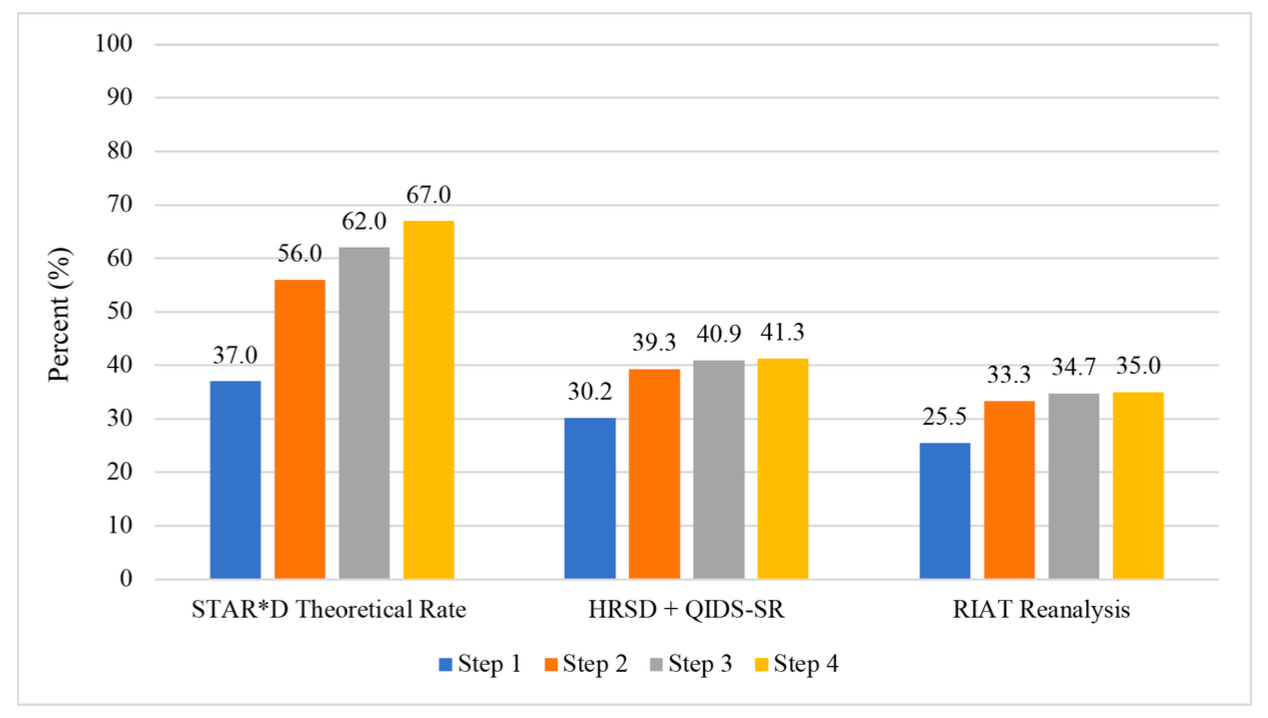
Source: National Institute of Health
This means that if you’ve tried two separate medications without symptom relief, data suggest there is very little chance of finding success with a third or fourth medication. Furthermore, trying additional medications requires another trial period of 6 to 12 weeks, along with the side effects that can entail.
For these reasons, we feel that most people who’ve had two unsuccessful medication trials are better off looking at other types of depression treatments.
Questions to Ask Your Doctor About Your Antidepressant
Feeling uncertain about whether your medication is working? Use these questions at your next appointment to have a productive conversation with your doctor.
About Your Current Medication
- How long should I expect before this medication reaches full effectiveness?
- Are the side effects I'm experiencing normal, or should we be concerned?
- What specific improvements should I be looking for to know the medication is working?
- Is my current dose appropriate, or should we consider adjusting it?
About Changing Medications
- If this medication isn't working, what would be the next medication class to try?
- Would genetic testing help identify which antidepressants might work better for me?
- How will we transition from my current medication to a new one safely?
- What discontinuation symptoms should I watch for during the switch?
About Alternative Treatments
- At what point should we consider non-medication options like TMS or ketamine?
- Would adding psychotherapy improve my outcomes with medication?
- Do I meet the criteria for treatment-resistant depression?
- What are the pros and cons of TMS vs. ECT vs. ketamine for someone in my situation?
Questions to Ask Your Doctor About Your Antidepressant
Feeling uncertain about whether your medication is working? Use these questions at your next appointment to have a productive conversation with your doctor.
About Your Current Medication
- How long should I expect before this medication reaches full effectiveness?
- Are the side effects I'm experiencing normal, or should we be concerned?
- What specific improvements should I be looking for to know the medication is working?
- Is my current dose appropriate, or should we consider adjusting it?
About Changing Medications
- If this medication isn't working, what would be the next medication class to try?
- Would genetic testing help identify which antidepressants might work better for me?
- How will we transition from my current medication to a new one safely?
- What discontinuation symptoms should I watch for during the switch?
About Alternative Treatments
- At what point should we consider non-medication options like TMS or ketamine?
- Would adding psychotherapy improve my outcomes with medication?
- Do I meet the criteria for treatment-resistant depression?
- What are the pros and cons of TMS vs. ECT vs. ketamine for someone in my situation?
Beyond Antidepressants: Alternative Treatments That Actually Work
To support the two-thirds of people for whom antidepressant medications don’t work, researchers and clinicians are focused on developing safe, evidence-based, and effective treatment alternatives.
Some of the most common that you are likely to come across are transcranial magnetic stimulation therapy (TMS), electroconvulsive therapy (ECT), and ketamine (along with the variation known as Esketamine) — all of which are FDA-approved for treating major depressive disorder.
We’ve written in-depth articles on each of these that discuss their effectiveness, risks, side effects, and more. You can find those here:
At our Utah-based clinic, Cognitive FX, we offer a new form of TMS for major depression known as accelerated fMRI-guided iTBS (a close alternative to the cutting-edge SAINT™ protocol).
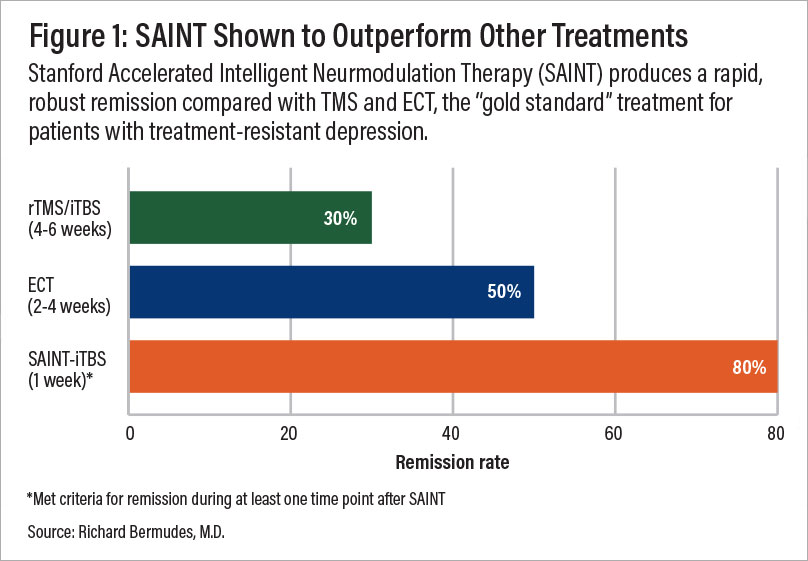
A comparison of remission rates for rTMS/iTBS, electroconvulsive therapy (ECT), and SAINT-iTBS.
Of all the types of TMS available, this is the most targeted, safe, and effective protocol for patients with treatment-resistant depression. Accelerated fMRI-iTBS is:
- Safe: Widely tolerated and associated with mild, short-lasting side effects.
- Precise: fMRI ensures that the treatment target area is precisely located for each patient, accounting for variations in head size and shape. Neuronavigation ensures the magnetic coil is placed over that exact spot for every treatment session.
- Fast: Treatment courses are reduced to a single week, making it easier to complete alongside life and work commitments (compared to 4 to 6 weeks of standard TMS and accelerated TMS protocols).
To improve outcomes for our patients, we also include cognitive behavioral therapy (CBT) as a part of our treatment. When combined with the traditional method of TMS (rTMS), CBT improved response and remission rates by ~8% and ~19%, respectively. Additionally, CBT is likely to produce sustained improvement over time once treatment has concluded.
Our brain stimulation treatment is ideal for most patients with treatment-resistant depression. We treat patients as young as 14 (teens ages 14 to 17 with parental supervision), and patients over 65 need a consultation and a doctor visit before we can confirm they are a good fit. Additionally, as a safety measure, we do not treat patients who have a history of seizures or who are currently actively suicidal and in need of crisis care.
Click here to learn more about receiving accelerated fMRI TMS therapy at Cognitive FX.
Cited Research