---
title: How to Find & Evaluate TMS Clinics Near You
description: Learn how to find and evaluate the best TMS clinics near you for depression treatment. We explore types of TMS, costs, and key questions to ask.
image: https://www.cognitivefxusa.com/hubfs/find-and-evaluate-tms-clinics-near-you.jpg
---

![Light-Mode-Sun-Icon-SVG](https://www.cognitivefxusa.com/hubfs/Sun.svg) ![Dark-Mode-Moon-Icon-SVG](https://www.cognitivefxusa.com/hubfs/moon.svg)

###### 280 W River Park Drive Suite 110 Provo, UT

###### [+1 385 446-4161](tel:+13854464161)

###### [hello@cognitivefxusa.com](mailto:hello@cognitivefxusa.com)

[![Main_Logo_500px 1](https://www.cognitivefxusa.com/hubfs/Main_Logo_500px%201.svg) ](https://www.cognitivefxusa.com/)

[**Get Started** ](https://www.cognitivefxusa.com/precision-mental-health-fmri-guided-transcranial-magnetic-stim)

- [Brain Injury Treatments](https://www.cognitivefxusa.com/treatment) ![down arrow](https://www.cognitivefxusa.com/hubfs/down-arrow-1.svg)
  
  ### Your Treatment
  
  ###### [Post-Concussion Syndrome Treatment Our intensive EPIC program helps patients recover from symptoms that haven't responded to traditional care.](https://www.cognitivefxusa.com/treatment)


  ###### [POTS Treatment POTS treatment clinic using neurological retraining, vestibular recalibration & CO₂ therapy. 5-day intensive program in Utah.](https://www.cognitivefxusa.com/pots-treatment)


  ###### [Viral Brain Injury Treatment Long Covid-19, Post-Treatment Lyme, Encephalitis. We utilize cutting-edge treatments to help you regain function.](https://www.cognitivefxusa.com/viral-brain-injury)


  ###### [What does CFX do for PCS? Learn more about post-concussion.](https://www.cognitivefxusa.com)


  ###### [Book Consult Schedule a 30-minute call with one of our doctors to see if CFX precision treatment approach is right for you.](https://cognitivefxusa.typeform.com/consult-intake)


  ###### [Pricing Pricing for each of our treatment packages and other important financial information.](https://www.cognitivefxusa.com/pricing)


  ###### [Learn about the Brain Scan fNCI Standard brain scans show structure. fNCI shows function. It's the difference between a "normal scan" and being able to see what is wrong and treat it.](https://www.cognitivefxusa.com/fnci-brain-scan-at-cognitive-fx-56-regions-measured)


  ###### [TIA Mini Stroke Treatment Still struggling with brain fog, fatigue, or memory issues after a TIA or mini stroke? Cognitive FX uses functional brain imaging and an intensive 5-day program to treat the symptoms standard care misses.](https://www.cognitivefxusa.com/tia-mini-stroke-treatment-for-lingering-symptoms-cognitive-fx)
- [TMS Treatments](https://www.cognitivefxusa.com/precision-mental-health-fmri-guided-transcranial-magnetic-stim) ![down arrow](https://www.cognitivefxusa.com/hubfs/down-arrow-1.svg)
  
  ### Depression Treatment
  
  ###### [Depression Treatment fMRI Guided TMS Depression treatment with precision brain imaging meets advanced TMS protocols for depression that hasn't responded to medication.](https://www.cognitivefxusa.com/precision-mental-health-fmri-guided-transcranial-magnetic-stim)


  ###### [One-Day Depression TMS Treatment Protocol Accelerated depression treatment TMS protocol that compresses weeks of treatment into one day intensive session.](https://www.cognitivefxusa.com/one-d-tms-one-day-tms-accelerated-depression-treatment-protocol)


  ###### [Depression Treatment Resistant Quiz Tried multiple antidepressants with no relief? This free quiz evaluates your treatment history, symptoms, and risk factors to help you understand your next steps.](https://www.cognitivefxusa.com/treatment-resistant-depression-quiz-free-self-assessment-no-email)


  ###### [Schedule Consultation Schedule a 30-minute telehealth visit with our team to discuss potential TMS treatment.](https://www.cognitivefxusa.com/tms-consultation-signup)


  ###### [Depression Treatment Blogs Learn more about TMS treatment for depression. And how effective it can be for patients with treatment-resistant depression.](https://www.cognitivefxusa.com/blog/topic/transcranial-magnetic-stimulation-tms)
- [Treatment Results](https://www.cognitivefxusa.com/our-patients) ![down arrow](https://www.cognitivefxusa.com/hubfs/down-arrow-1.svg)
  
  ### Patient Results
  
  ###### [Publications Learn more about post-concussion.](https://www.cognitivefxusa.com/our-research)


  ###### [Patient Results We see patients from all over the world with different types of brain injuries. Learn more about who our patients are.](https://www.cognitivefxusa.com/treatment-outcomes)


  ###### [Patient Stories Our patients say it best! Watch our past patients' stories.](https://www.cognitivefxusa.com/patient-stories)


  ###### [Other Brain Injuries We have found our approach to concussion treatment also works for other types of brain injuries. Check out our non-concussion patients' improvements with EPIC Treatment.](https://www.cognitivefxusa.com/other-types-of-injuries)


  ###### [How We Measure Success Learn more about how we measure the success of EPIC Treatment through our fNCI scan and symptom measurements.](https://www.cognitivefxusa.com/treatment-outcomes)


  ###### [Treatment Summary Whitepaper Learn more about the outcomes and studies done on targeted fMRI guided treatment for brain injuries.](https://www.cognitivefxusa.com/hubfs/Treatment%20and%20Research%20Summary/Treatment%20%26%20Research%20Summary%20(web).pdf?hsLang=en-us)
- [Symptom Trackers](https://www.cognitivefxusa.com/post-concussion-symptom-tracker) ![down arrow](https://www.cognitivefxusa.com/hubfs/down-arrow-1.svg)
  
  ### Your Treatment
  
  ###### [Post Concussion Symptom Tracker Free post-concussion symptom tracker tool. Can measure symptoms daily or weekly, all data stored locally.](https://www.cognitivefxusa.com/post-concussion-symptom-tracker)


  ###### [POTS Symptom Tracker Learn more about your symptoms. Log heart rate (lying/standing), blood pressure, and triggers daily. No account needed.](https://www.cognitivefxusa.com/free-pots-symptom-tracker-log-vitals-triggers-cognitive-fx)
- [Blog](https://www.cognitivefxusa.com/blog) ![down arrow](https://www.cognitivefxusa.com/hubfs/down-arrow-1.svg)
  
  ### The Cognitive FX Head Injury Blog
  
  ###### [Post Concussion Treament Learn more about post-concussion syndrome.](https://www.cognitivefxusa.com/blog/topic/post-concussion-treatment)


  ###### [Transcranial Magnetic Stimulation Learn more about TMS for depression, anxiety, and concussion.](https://www.cognitivefxusa.com/blog/topic/transcranial-magnetic-stimulation-tms)


  ###### [Long Covid - Viral Infection Treatment Learn more about how we treat viral infections that impact the brain. COVID-19, Lyme, etc.](https://www.cognitivefxusa.com/blog/topic/covid)


  ###### [Other Brain Injuries Treated Read about other types of brain injury we treat. Stroke, TIA, Tinnitus, etc.](https://www.cognitivefxusa.com/blog/topic/traumatic-brain-injury)


  ###### [Patient Outcomes and Stories Learn more about the specific symptoms and issues our patients have faced.](https://www.cognitivefxusa.com/blog/topic/patient-stories)


  ###### [Browse more topics here! Browse through all of the brain injury topics and posts from the Cognitive FX Blog home.](https://www.cognitivefxusa.com/blog)

[**Get Started** ](https://www.cognitivefxusa.com/precision-mental-health-fmri-guided-transcranial-magnetic-stim)

#### [Back to Blog](https://www.cognitivefxusa.com/blog)

#### Content

1. [ Home ](https://www.cognitivefxusa.com)
2. [ Blog ](https://www.cognitivefxusa.com/blog)
3. How to Find & Evaluate TMS Clinics Near You

# How to Find & Evaluate TMS Clinics Near You

![Image of Dr. Mark Allen, Ph.D.](https://www.cognitivefxusa.com/hubfs/Mark_150px.webp)

 Dr. Mark Allen, Ph.D. 

•

 Updated on 11 September, 2025 

•

 Medically Reviewed by

[Dr. Diane Spangler, Ph.D.](https://www.cognitivefxusa.com/blog/author/dr-diane-spangler-phd)

<http://www.facebook.com/share.php?u=https://www.cognitivefxusa.com/blog/find-and-evaluate-tms-clinics-near-you> [mailto:?subject=Check%20out%20https://www.cognitivefxusa.com/blog/find-and-evaluate-tms-clinics-near-you%20&body=Check%20out%20https://www.cognitivefxusa.com/blog/find-and-evaluate-tms-clinics-near-you&media=https://2921058.fs1.hubspotusercontent-na1.net/hubfs/2921058/find-and-evaluate-tms-clinics-near-you.jpg](mailto:?subject=Check%20out%20https://www.cognitivefxusa.com/blog/find-and-evaluate-tms-clinics-near-you%20&body=Check%20out%20https://www.cognitivefxusa.com/blog/find-and-evaluate-tms-clinics-near-you&media=https://2921058.fs1.hubspotusercontent-na1.net/hubfs/2921058/find-and-evaluate-tms-clinics-near-you.jpg)

The stakes of finding the right TMS provider can feel understandably high. After all, patients suffering from mental health conditions such as major depressive disorder (MDD) or obsessive-compulsive disorder (OCD) are often in desperate need of relief. And any time you plan to receive a treatment that affects your brain chemistry, you want to be certain that you can trust your provider.

To be clear, TMS is a [safe, FDA-approved procedure](https://www.cognitivefxusa.com/blog/is-tms-safe) for treating these conditions. [Common side effects](https://www.cognitivefxusa.com/blog/side-effects-of-tms-benefits-vs-risks) tend to be mild and minimal, and it's proven to be an effective treatment for relieving depression symptoms.

Still, choosing the right TMS clinic requires consideration. There are numerous matters to weigh such as costs and insurance coverage, duration of treatment, the type of TMS offered, and more.

**In this article, we cover some important things you should know and consider throughout the process of seeking a treatment center, including:**

- [Important questions to ask when evaluating TMS clinics](https://www.cognitivefxusa.com/blog/find-and-evaluate-tms-clinics-near-you#important-questions)
- [How to approach finding a clinic that’s a good fit for you](https://www.cognitivefxusa.com/blog/find-and-evaluate-tms-clinics-near-you#finding-a-tms-clinic)
- [Red flags to keep an eye out for](https://www.cognitivefxusa.com/blog/find-and-evaluate-tms-clinics-near-you#red-flags)

***Note: ****This article focuses on TMS therapy for depression because that’s what we offer and treat at our clinic. However, much of what is covered can apply to assessing TMS clinics for treating other conditions.*

## Important Questions to Ask When Evaluating TMS Clinics

If you’re considering T[MS therapy as a treatment for your depression](https://www.cognitivefxusa.com/blog/tms-for-treatment-resistant-depression), the following are some key questions that you should seek to answer to pick the right clinic for you.

### 1. What type(s) of TMS does the clinic offer?

One of the most important questions you need to ask the clinics you’re considering is what type or types of TMS they offer. Here’s a brief overview of the main types you will encounter:

#### rTMS

The most common form is called **repetitive transcranial magnetic stimulation (rTMS)** and was first [applied](https://pubmed.ncbi.nlm.nih.gov/8547583/) to treat depression in the mid-90s. This outpatient procedure involves [repeated](https://pubmed.ncbi.nlm.nih.gov/12894031/) electromagnetic pulses delivered by a magnetic coil placed on the patient’s scalp to improve neuronal activity.

The coil generates low-frequency magnetic pulses to regulate brain activity in an area of the brain called the dorsolateral prefrontal cortex (DLPFC). The DLPFC is linked to executive functioning, including distinguishing between ideas, actions, and outcomes. Its [main functions](https://www.midcitytms.com/part-brain-tms-stimulate/) include working memory, decision-making, reasoning, and planning.

Standard [treatments](https://pubmed.ncbi.nlm.nih.gov/31901449/) using rTMS involve daily sessions, five days a week, with 20**–**30 sessions delivered over 4**–**6 weeks. [Typically](https://pubmed.ncbi.nlm.nih.gov/30764649/), patients start to see improvements after 2**–**4 weeks. However, some only see the benefits after treatment is completed. [About 50% of patients](https://journals.lww.com/co-psychiatry/fulltext/2019/09000/repetitive_transcranial_magnetic_stimulation.8.aspx) respond well to treatment with over 30% showing complete remission.

#### Accelerated TMS

To reduce the time commitments needed for rTMS, some clinics offer a form of TMS called [accelerated TMS](https://www.cognitivefxusa.com/blog/accelerated-tms). This option involves much shorter sessions (3 minutes vs. 30 minutes with rTMS) and patients can undergo multiple sessions per day reducing the length of the treatment.

Studies show accelerated TMS is [as safe](https://pubmed.ncbi.nlm.nih.gov/29153439/) as rTMS and potentially more effective. Patients [receiving](https://pubmed.ncbi.nlm.nih.gov/29398915/) multiple sessions each day tend to experience improvements in symptoms faster than patients receiving single daily sessions, and the effects are still [visible](https://pubmed.ncbi.nlm.nih.gov/32849235/) months after their treatment.

#### Intermittent Theta-Burst Stimulation (iTBS)

In 2018, the FDA approved a new version of accelerated TMS called [Intermittent Theta-Burst Stimulation (iTBS)](https://www.cognitivefxusa.com/blog/theta-burst-stimulation-tms-treatment). This method uses theta waves, the neural frequencies that the hippocampus uses to connect to other brain regions, form new memories, and regulate certain sleep phases.

This method is safe and effective; many patients [experience](https://www.brainstimjrnl.com/article/S1935-861X(21)00184-4/fulltext) improvements shortly after starting treatment. In addition, patients also noticed a decrease in [suicidal](https://www.frontiersin.org/articles/10.3389/fnhum.2016.00480/full) ideation, suggesting that iTBS could be an option to rapidly treat patients at high risk of suicide. As it requires more specialized equipment, this protocol is currently offered by fewer clinics in the U.S.

#### Accelerated fMRI-Guided iTBS (SAINT™ TMS)

Finally, the SAINT™ protocol (developed by researchers at Stanford University) offers the most precise and effective form of TMS. It uses an fMRI brain scan to determine exactly where the DLPFC is located in the brain and a neuronavigation device to ensure the coil is placed over that exact spot during every iTBS session.

SAINT treatment involves 10 sessions per day over 5 days for an efficient one-week treatment plan. Following this protocol significantly [reduced](https://ajp.psychiatryonline.org/doi/10.1176/appi.ajp.2019.19070720) depressive symptoms and suicidal ideation within 5 days, without negative side effects. It’s currently considered the “gold standard” treatment for treatment-resistant depression.
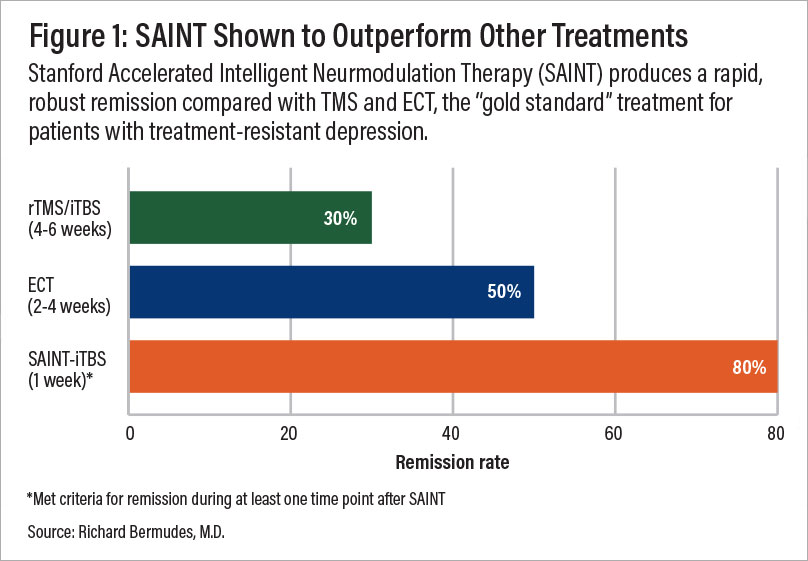
![A comparison of remission rates for rTMS/iTBS, electroconvulsive therapy (ECT), and SAINT-iTBS.](https://www.cognitivefxusa.com/hs-fs/hubfs/SAINT%20Shown%20to%20Outperform%20Other%20Treatments.png?width=808&height=561&name=SAINT%20Shown%20to%20Outperform%20Other%20Treatments.png)  
*A comparison of remission rates for rTMS/iTBS, electroconvulsive therapy (ECT), and SAINT-iTBS.*

### 2. How is the target area of the brain located? And how is the magnetic coil placed for each treatment session?

One of the crucial aspects of TMS is how the brain region for the treatment is located and how the coil is placed for each session. This can significantly impact the overall results of treatment, as even missing it by a few millimeters can lower the treatment’s effectiveness.

At the moment, the different methods of coil placement include:

#### The 5 cm Method (Most Common; Least Accurate)

When TMS was developed in the mid-1990s, the first [method](https://www.sciencedirect.com/science/article/abs/pii/S0140673696012196) to identify the location of the DLPFC involved a simple measurement of the skull. This procedure, which is still commonly used today, is [called](https://www.ncbi.nlm.nih.gov/pmc/articles/PMC3573221/) the 5 cm method. It involves identifying an area located on top of the head called the motor cortex.

Once the motor cortex is located, operators measure 5 cm along the parasagittal plane anterior to the activation hotspot. However, since the motor cortex is roughly the size of a golf ball, operators cannot determine which section they are targeting with the pulses. This means that the starting point to measure the 5 cm can change from session to session and often miss the right area for the treatment. Even slight deviations of a few millimeters can result in poorer outcomes.

You may find that several of the clinics that you’re considering use this procedure. This method is easy to carry out because it doesn’t require any specialized equipment. However, many [studies](https://link.springer.com/chapter/10.1007/978-3-031-38563-6_20) now show that this method can be unreliable and doesn’t take into account individual [variations](https://pubmed.ncbi.nlm.nih.gov/11457424/) in brain size and shape between patients.

#### Beam F3 Method (EEG Cap)

Issues with the 5 cm approach have been [apparent](https://link.springer.com/article/10.1023/b:brat.0000006333.93597.9d) since the early 2000s and there is increasing interest in developing and validating alternative methods. One of these [methods](https://www.ncbi.nlm.nih.gov/pmc/articles/PMC6871049/) relies on the International 10–20 EEG system to locate the DLPFC. This procedure uses a standard grid which is divided into multiple sections. In practical terms, this involves placing a cap on the patient’s head. Once the cap is correctly placed, the operator marks position F3 to place the magnetic coil.

This method is inexpensive and scalable, as it does not require any additional equipment or specialized operator training. For these reasons, it has become popular in many TMS clinics. Although studies show that the F3 method is [slightly](https://www.ncbi.nlm.nih.gov/pmc/articles/PMC7507589/) more accurate and reliable compared to the 5 cm rule, differences are minor and unlikely to be substantially better. In addition, even a simple haircut can change how the cap fits the patient, which means it can vary from session to session.

#### Structural MRI

The main problem with the methods described above is that they fail to account for differences in patients’ head sizes and shapes, leading to inaccuracies in targeting the correct brain area and higher variability in treatment outcomes. To overcome this issue, researchers developed various neuronavigation methods to locate the target area more precisely and consistently. As a general rule, neuronavigation can be used with any type of TMS, including rTMS, but it’s more commonly found in clinics that offer advanced TMS options such as accelerated TMS or SAINT-iTBS.

The most common neuronavigation method involves a [structural](https://www.sciencedirect.com/science/article/abs/pii/S098770531000002X) MRI to accurately identify the location of the DLPFC. Using neuronavigation software with the results from the scan allows operators to accurately guide the magnetic coil to the intended area with millimeter precision for each patient. In addition, using brain scans also [reduces](https://www.ncbi.nlm.nih.gov/pmc/articles/PMC10026380/) variation caused by the operator, which is a major problem with the methods described above.

The downside of using neuronavigation is that it involves relatively complex equipment, and patients need to undergo an expensive MRI scan, which increases overall costs. In addition, fewer clinics offer these services, and you may need to travel some distance to find one suitable for you.
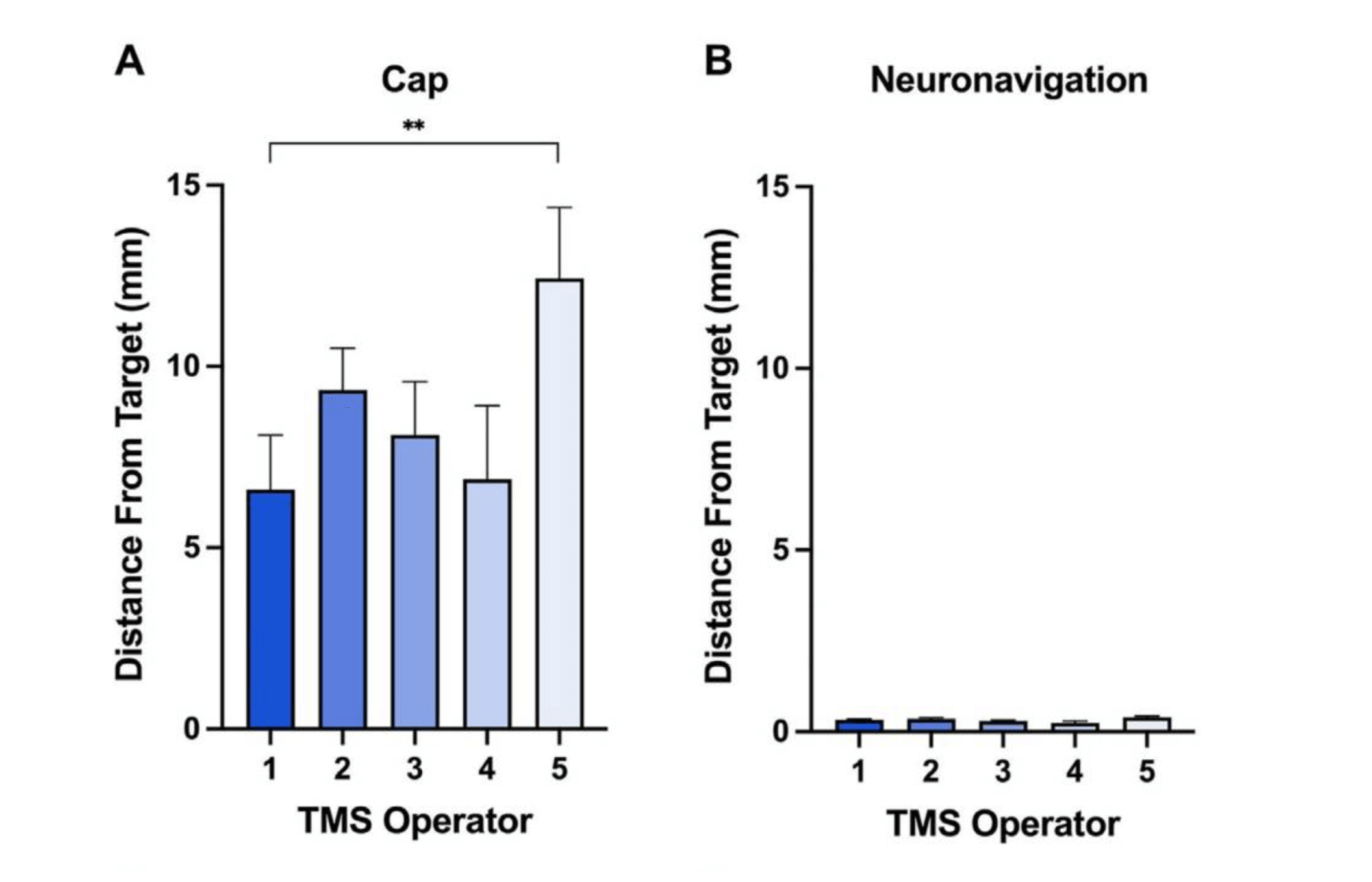
![NIHMS Article PMC10026380 Figure 5: Study shows the distance from the target is higher and more variable using a cap compared to neuronavigation.](https://www.cognitivefxusa.com/hs-fs/hubfs/NIHMS%20Article%20PMC10026380%20Figure%205.png?width=2112&height=1358&name=NIHMS%20Article%20PMC10026380%20Figure%205.png)  
*Study shows the distance from the target is higher and more variable using a cap compared to neuronavigation. *[*[Source - Fig. 5.]*](https://www.ncbi.nlm.nih.gov/pmc/articles/PMC10026380/)

#### Functional MRI (fMRI)

While structural MRIs show detailed images of the brain, they cannot reveal how specific areas are functioning. Functional MRI (fMRI), on the other hand, can identify active brain regions, which is useful for targeting during treatment.

With fMRI, doctors can focus even more precisely on the DLPFC, which is connected to another region known as the subgenual anterior cingulate cortex (sgACC). High [activity](https://pubmed.ncbi.nlm.nih.gov/12468016/) in the sgACC is linked to depression, and targeting it indirectly through the left DLPFC with TMS can reduce its activity, leading to symptom [improvement](https://pubmed.ncbi.nlm.nih.gov/15748841/).

fMRI provides much greater accuracy than other methods in locating these brain areas. For example, [using fMRI](https://www.biorxiv.org/content/10.1101/503441v1.abstract) ensures that the sgACC is properly stimulated through the left DLPFC in nearly all patients, while simpler brain measurements are successful in [less than half](https://pubmed.ncbi.nlm.nih.gov/30156743/). This precision explains why fMRI-guided treatment, like the method used at our clinic, has high success rates.

In a double-blind randomized clinical trial, [about 85%](https://ajp.psychiatryonline.org/doi/10.1176/appi.ajp.2021.20101429?url_ver=Z39.88-2003&rfr_id=ori:rid:crossref.org&rfr_dat=cr_pub%20%200pubmed) of patients responded to the treatment and around 78% reached remission. At the one-month [mark](https://psychiatryonline.org/doi/10.1176/appi.ajp.2019.19070720), 60% were still in remission. For patients who didn’t respond to rTMS before, fMRI-guided TMS like the SAINT protocol may help. With fMRI's accuracy, there is a better chance of recovery.

If possible, choose a TMS clinic that uses MRI and neuronavigation to precisely position the coil, as this can significantly improve treatment results.

### 3. Does the clinic offer other therapies alongside TMS?

Some clinics combine TMS with other therapies to improve treatment outcomes for their patients. Common examples of additional therapies include psychotherapy, neurofeedback, eye movement desensitization and reprocessing (EMDR), or yoga.

From our perspective, pairing cognitive behavioral therapy (CBT) with TMS (as we do at our clinic) is likely to have the highest positive impact on patients' long-term outcomes. TMS on its own can help provide [fast-acting symptom relief](https://www.cognitivefxusa.com/blog/fast-acting-depression-treatment-options), but CBT has been proven to offer long-lasting benefits.

In comparison to other types of psychotherapy, CBT has significantly more scientific and empirical support for treating depression, including a greater number of randomized controlled trials supporting its efficacy. Most [meta-analyses](https://www.ncbi.nlm.nih.gov/pmc/articles/PMC3584580/) comparing different types of psychotherapy for depression indicate that CBT [outperforms](https://www.sciencedirect.com/science/article/abs/pii/S0272735805001005?via%3Dihub) others in both the short-term and particularly in the long term (e.g., 6 months to 1 year post-treatment). Once treatment concludes, the benefits of CBT are sustained over time. In contrast, the benefits of other forms of psychotherapy (and medications for that matter) are not as durable, with patients often experiencing relapses of depression once these treatments conclude.

Overall, research shows that CBT is superior to other psychotherapies and medication for depression in both short- and long-term outcomes, with a notable advantage in the long term. The response rate to CBT across studies ranges from 61%–87% with [large effect sizes](https://www.sciencedirect.com/science/article/abs/pii/S0272735899000574?via%3Dihub).

### 4. What is the cost of treatment and is it covered by insurance?

[The cost of TMS treatment](https://www.cognitivefxusa.com/blog/tms-depression-treatment-costs) varies widely, so a crucial factor for patients when selecting a clinic is how they will manage the expenses.

Many insurance companies consider TMS a medically necessary treatment option to address major depressive disorder (MDD) and treatment-resistant depression (TRD) and therefore cover TMS in their policies.

Each insurer has its criteria for TMS coverage. For instance, some require patients to have failed four [antidepressant medications](https://www.cognitivefxusa.com/blog/why-arent-my-antidepressant-medications-working) and psychotherapy, while others are less strict, requiring failure of only two medications. Some insurers specify which types of medications — such as antipsychotics or different classes of antidepressants — must be tried first. Additionally, coverage may vary based on the severity of symptoms, with some insurers covering moderate cases, while others limit coverage to severe conditions.

Currently, the only form of TMS that is covered by insurance is repetitive TMS (rTMS). This involves daily treatment [sessions](https://pubmed.ncbi.nlm.nih.gov/31901449/), five days a week for four to six weeks. Even after receiving insurance approval, patients should expect to pay a copay and/or deductible, which can vary depending on the specific insurance plan. In some cases, insurance covers the full cost or a percentage of the cost of the treatment. For patients who require further financial assistance, payment plans, healthcare financing or medical credit cards from companies like CareCredit may be an option.

If patients are covering the costs of treatment with personal finances, they are not restricted to rTMS. Many clinics around the US offer more advanced types of TMS which are not covered by insurance companies. The main advantage is that more recent methods like the fMRI guided protocol have increased effectiveness with mild side effects.

### Key Takeaways

- **Types of TMS:** It's important to understand the different types of TMS offered by clinics, such as rTMS, accelerated TMS, iTBS, or the SAINT protocol, as they vary in effectiveness and session duration.
- **Precision Matters:** Accurate targeting of the brain's DLPFC using advanced methods like neuronavigation with MRI can significantly improve treatment outcomes.
- **Combination Therapy:** Pairing TMS with Cognitive Behavioral Therapy (CBT) can lead to better long-term outcomes for patients.
- **Cost and Insurance:** TMS can be expensive, so patients should inquire about insurance coverage, out-of-pocket costs, and payment plan options.
- **Tailored Treatment: **Choosing a clinic that offers personalized treatment plans with advanced TMS methods can lead to better recovery outcomes for patients with depression.

## How to Approach Finding a TMS Clinic That’s Right for You

As we’ve seen in this article, there is a lot to consider, from the type of TMS offered to treatment costs. Here are a few tips for finding the best clinic for you:

### Be Wary of Using Directory Sites

If you’ve googled “TMS clinics near me,” you may have come across several directory sites claiming to help you find a suitable TMS clinic. While they can be helpful, it’s important to note that many of these sites are run by TMS device manufacturers and only include clinics that use their devices.

### Understand What Questions to Ask

Simply googling “TMS clinics near me” will yield many results, but it’s crucial to analyze them. For instance, if your work and family commitments won’t allow you to take six weeks to complete the treatment, then rTMS may not be a viable option for you.

Conversely, if you need your insurance company to cover your treatment, find a clinic that offers rTMS (the only option currently covered by insurance) combined with neuronavigation, which significantly increases your chances of improvement after the treatment.

### Contact the Clinics and Get Your Questions Answered

Choose 2 to 3 potential clinics you’re considering and reach out to them with your questions. A good starting point is the questions we discussed earlier. Gather detailed information about their offerings to make an informed decision.

## Red Flags to Keep an Eye Out For

Even after choosing a TMS clinic for your treatment, it’s important to keep an eye out for any red flags that may suggest that the treatment you’re receiving is inadequate.

### Painful Treatment

Patients should expect some tenderness and discomfort in the scalp, especially during the first few TMS sessions. Some patients experience mild headaches, which can typically be treated with over-the-counter painkillers and usually dissipate after a few sessions as the body adjusts to treatment.

If you consistently experience strong headaches after each session and your medical team insists this is normal, we recommend seeking treatment elsewhere. Persistent headaches may indicate that the TMS machine settings are too high.

### Not Informing Patients About Different TMS Options

Most clinics offer only one type of TMS, but they should inform you about other options. This is especially important if they provide rTMS without mentioning alternatives like iTBS or the SAINT protocol, which have demonstrated higher efficacy.

### Asking Patients to Stop Their Antidepressant Medication

Some clinics insist that patients stop taking their antidepressant medication, but there is no evidence that these medications are harmful during TMS treatment.

These clinics often request that patients stop their medications for the ease of conducting TMS sessions. However, this is unnecessary, as a skilled operator should be able to manage patients on antidepressants. This approach allows patients to begin their TMS sessions immediately, without needing to wait to be weaned off their medication.

## Receiving Accelerated fMRI TMS at Cognitive FX

Our clinic in Provo, Utah, provides a cutting-edge alternative to SAINT™ TMS that offers **the same precision of personalized treatment targeting, combined with FDA-approved theta burst stimulation at a significantly lower cost**. This approach delivers the same core elements that make SAINT so revolutionary.

The only difference between our treatment and SAINT™ (a trademark licensed to Stanford Medical) is our targeting method. Our target locations are determined by fMRI and our prescribing neuroscientist and physician, rather than their proprietary software.

Comparison Chart

# Accelerated fMRI - TMS vs. Magnus SAINT™ TMS

|  | Accelerated fMRI - TMS | Magnus SAINT™ TMS |
| --- | --- | --- |
| FDA-Approved iTBS | ✔ | ✔ |
| FDA-Approved Neuronavigators | ✔ | ✔ |
| FDA-Approved Figure 8 Coils | ✔ | ✔ |
| Number of Treatment Days | 5 | 5 |
| Treatments per Day | 10 | 10 |
| Total Treatments | 50 | 50 |
| Number of TMS Pulses | Approx. 90,000 | 90,000 |
| Resting motor threshold pulse intensity | 90–120% | 90–120% |
| FDA-Approved Personalized DLPFC Targeting | ✘ | ✔ |
| Personalized DLPFC Targeting Assists Doctor in Target Location | ✔ | ✘ |
| Personalized E Field Coil orientation | ✔ | ✘ |
| Cost | $9,000 to $12,000 | $30,000+ |


This accelerated protocol of iTBS is:

- **Safe: **Widely tolerated and associated with mild, short-lasting side effects.

- **Precise: **fMRI ensures that the treatment target area is precisely located for each patient, accounting for variations in head size and shape. Neuronavigation ensures the magnetic coil is placed over that exact spot for every treatment session.

- **Fast: **Treatment courses are reduced to a single week, making it easier to complete alongside life and work commitments (compared to 4 to 6 weeks of standard TMS and accelerated TMS protocols). 

- **Effective: **Precision coil placement combined with theta burst stimulation produces the [best TMS treatment results to date](https://www.cognitivefxusa.com/blog/most-effective-depression-treatments). 

To improve patient outcomes, we also include cognitive behavioral therapy (CBT) as a part of our treatment. When combined with the traditional method of TMS (rTMS), CBT [improved response and remission rates](https://journals.lww.com/co-psychiatry/fulltext/2019/09000/repetitive_transcranial_magnetic_stimulation.8.aspx) by ~8% and ~19%, respectively. Additionally, CBT is likely to produce sustained improvement over time once treatment has concluded.

Our brain stimulation treatment is ideal for most patients with treatment-resistant depression. However, we do not treat patients under the age of 18 or over 65. Additionally, as a safety measure, we do not treat patients who have a history of seizures or who are currently actively suicidal and in need of crisis care.

[***Click here***](https://www.cognitivefxusa.com/tms-new-patient-paperwork)* to learn more about receiving accelerated fMRI TMS therapy at Cognitive FX.*

## Cited Research

- [Evidence-based guidelines on the therapeutic use of repetitive transcranial magnetic stimulation (rTMS): An update (2014-2018)](https://pubmed.ncbi.nlm.nih.gov/31901449/)
- [Transcranial magnetic stimulation in therapy studies: examination of the reliability of "standard" coil positioning by neuronavigation](https://pubmed.ncbi.nlm.nih.gov/11457424/)
- [Stanford Neuromodulation Therapy (SNT): A Double-Blind Randomized Controlled Trial](https://psychiatryonline.org/doi/10.1176/appi.ajp.2021.20101429?url_ver=Z39.88-2003&rfr_id=ori%3Arid%3Acrossref.org&rfr_dat=cr_pub++0pubmed)

---

![Image of Dr. Mark Allen, Ph.D.](https://www.cognitivefxusa.com/hs-fs/hubfs/Mark_150px.webp?height=150&name=Mark_150px.webp)

### About the author

[Dr. Mark Allen, Ph.D.](https://www.cognitivefxusa.com/blog/author/dr-mark-allen-phd)

Dr. Mark D. Allen holds a Ph.D. in Cognitive Science from Johns Hopkins University and received post-doctoral training in Cognitive Neuroscience and Functional Neuroimaging at the University of Washington. As a co-founder of Cognitive Fx, he played a pivotal role in establishing the unique and exceptional treatment approach. Dr. Allen is renowned for his pioneering work in adapting fMRI for clinical use. His contributions encompass neuroimaging biomarkers development for post-concussion diagnosis and innovative research into the pathophysiology of chronic post-concussion symptoms. He's conducted over 10,000 individualized fMRI patient assessments and crafted a high-intensity interval training program for neuronal and cerebrovascular recovery. Dr. Allen has also co-engineered a machine learning-based neuroanatomical discovery tool and advanced fMRI analysis techniques, ensuring more reliable analysis for concussion patients.

## Related Posts

![TMS vs. tDCS for Depression: Which Is Better?](https://www.cognitivefxusa.com/hs-fs/hubfs/tms-vs-tdcs.jpg?height=175&name=tms-vs-tdcs.jpg)

### TMS vs. tDCS for Depression: Which Is Better?

![Image of Dr. Mark Allen, Ph.D.](https://www.cognitivefxusa.com/hs-fs/hubfs/Mark_150px.webp?height=70&name=Mark_150px.webp)

[Dr. Mark Allen, Ph.D.](https://www.cognitivefxusa.com/blog/author/dr-mark-allen-phd)

For many people living with major depression, antidepressant medications either [don’t work](https://www.cognitivefxusa.com/blog/why-arent-my-antidepressant-medications-working) or only get them part of the way to recovery. Symptoms may ease for a while, but then return, or never fully...

[Read the full article

](https://www.cognitivefxusa.com/blog/tms-vs-tdcs)

![Key Factors When Looking for Accelerated TMS Near You](https://www.cognitivefxusa.com/hs-fs/hubfs/accelerated-tms-near-you.jpg?height=175&name=accelerated-tms-near-you.jpg)

### Key Factors When Looking for Accelerated TMS Near You

![Image of Dr. Mark Allen, Ph.D.](https://www.cognitivefxusa.com/hs-fs/hubfs/Mark_150px.webp?height=70&name=Mark_150px.webp)

[Dr. Mark Allen, Ph.D.](https://www.cognitivefxusa.com/blog/author/dr-mark-allen-phd)

A major challenge for patients with depression is that traditional antidepressant medications often take weeks or months to show results — [if they work at all](https://www.cognitivefxusa.com/blog/most-effective-depression-treatments). This delay can be especially...

[Read the full article

](https://www.cognitivefxusa.com/blog/accelerated-tms-near-you)

![TMS Therapy vs. Neurofeedback: Which Is Better for Depression?](https://www.cognitivefxusa.com/hs-fs/hubfs/tms-therapy-vs-neurofeedback-for-depression.jpg?height=175&name=tms-therapy-vs-neurofeedback-for-depression.jpg)

### TMS Therapy vs. Neurofeedback: Which Is Better for Depression?

![Image of Dr. Mark Allen, Ph.D.](https://www.cognitivefxusa.com/hs-fs/hubfs/Mark_150px.webp?height=70&name=Mark_150px.webp)

[Dr. Mark Allen, Ph.D.](https://www.cognitivefxusa.com/blog/author/dr-mark-allen-phd)

Transcranial magnetic stimulation (TMS) and neurofeedback are gaining popularity as non-invasive, medication-free options for treating depression—especially for people who haven’t found relief from [...](https://www.cognitivefxusa.com/blog/why-arent-my-antidepressant-medications-working)

[Read the full article

](https://www.cognitivefxusa.com/blog/tms-therapy-vs-neurofeedback-for-depression)

![](https://www.cognitivefxusa.com/hs-fs/hubfs/how-long-has-tms-been-around.jpg?height=175&name=how-long-has-tms-been-around.jpg)

### How Long Has TMS Been Around?

![Image of Dr. Mark Allen, Ph.D.](https://www.cognitivefxusa.com/hs-fs/hubfs/Mark_150px.webp?height=70&name=Mark_150px.webp)

[Dr. Mark Allen, Ph.D.](https://www.cognitivefxusa.com/blog/author/dr-mark-allen-phd)

While many people are learning about Transcranial Magnetic Stimulation (TMS) for the first time, this [brain stimulation method](https://www.cognitivefxusa.com/blog/brain-stimulation-depression-treatment) has been helping patients for nearly 40 years. Originally developed as...

[Read the full article

](https://www.cognitivefxusa.com/blog/how-long-has-tms-been-around)

![What If TMS Doesn’t Work? Advice for Patients](https://www.cognitivefxusa.com/hs-fs/hubfs/what-if-tms-doesnt-work.jpg?height=175&name=what-if-tms-doesnt-work.jpg)

### What If TMS Doesn’t Work? Advice for Patients

![Image of Dr. Mark Allen, Ph.D.](https://www.cognitivefxusa.com/hs-fs/hubfs/Mark_150px.webp?height=70&name=Mark_150px.webp)

[Dr. Mark Allen, Ph.D.](https://www.cognitivefxusa.com/blog/author/dr-mark-allen-phd)

If you’re wondering what to do when [transcranial magnetic stimulation](https://www.cognitivefxusa.com/blog/tms-for-treatment-resistant-depression) (TMS) doesn’t work, you might be:

[Read the full article

](https://www.cognitivefxusa.com/blog/what-if-tms-doesnt-work)

![Does Insurance Cover TMS Therapy? Complete Patient Guide](https://www.cognitivefxusa.com/hs-fs/hubfs/does-insurance-cover-TMS-therapy.jpg?height=175&name=does-insurance-cover-TMS-therapy.jpg)

### Does Insurance Cover TMS Therapy? Complete Patient Guide

![Image of Dr. Mark Allen, Ph.D.](https://www.cognitivefxusa.com/hs-fs/hubfs/Mark_150px.webp?height=70&name=Mark_150px.webp)

[Dr. Mark Allen, Ph.D.](https://www.cognitivefxusa.com/blog/author/dr-mark-allen-phd)

Over the past few years, [Transcranial Magnetic Stimulation (TMS)](https://www.cognitivefxusa.com/blog/tms-for-treatment-resistant-depression) has become an increasingly popular treatment option for patients who [haven’t found symptom relief from antidepressant medications](https://www.cognitivefxusa.com/blog/why-arent-my-antidepressant-medications-working).

[Read the full article

](https://www.cognitivefxusa.com/blog/does-insurance-cover-tms-therapy)

[![Main_Logo_500px](https://www.cognitivefxusa.com/hs-fs/hubfs/Main_Logo_500px.png?width=257&height=78&name=Main_Logo_500px.png "Main_Logo_500px")](https://www.cognitivefxusa.com)

Comprehensive Traumatic Brain Injury Treatment

280 W River Park Drive Suite 110 Provo, UT 84604

[Follow us on Facebook ](https://www.facebook.com/cognitivefx) [Follow us on Instagram ](https://www.instagram.com/cognitive_fx)

#### Quick Links

- [Blog](https://www.cognitivefxusa.com/blog)
- [Sign-Up for Free Consultation](https://www.cognitivefxusa.com/start-here-paperwork-old)

#### Support

- [Contact Us](https://www.cognitivefxusa.com/contactus)
- [Patient Results](https://www.cognitivefxusa.com/treatment-outcomes)
- [Privacy Policy](https://www.cognitivefxusa.com/privacypolicy)
- [Terms & Conditions](https://www.cognitivefxusa.com/terms-and-conditions)

#### Solutions

- [Good Fit Quiz](https://www.cognitivefxusa.com/start-here-paperwork-old)
- [EPIC Treatment](https://www.cognitivefxusa.com/treatment)
- [Post-Concussion Syndrome Information](https://www.cognitivefxusa.com/blog/post-concussion-syndrome-and-post-concussion-symptoms-pcs)
- [fNCI Brain Scan](https://www.cognitivefxusa.com/about-fnci)
- [Online Course](https://cognitivefx.thinkific.com/courses/headaches)

#### Company

- [About](https://www.cognitivefxusa.com/research-history)
- [Press & Media](https://www.cognitivefxusa.com/media)
- [Our Team](https://www.cognitivefxusa.com/our-team)

### Sign Up For Our Newsletter

Copyright © Cognitive FX 2024. All Rights Reserved. | [Privacy Policy](https://www.cognitivefxusa.com/blog/find-and-evaluate-tms-clinics-near-you#)

```json
{
  "@context" : "https://schema.org",
  "@type" : "BlogPosting",
  "author" : {
    "@type" : "Person",
    "name" : "Dr. Mark Allen, Ph.D.",
    "url" : "https://www.cognitivefxusa.com/blog/author/dr-mark-allen-phd"
  },
  "dateModified" : "2025-09-11T20:58:55.054Z",
  "datePublished" : "2024-10-02T17:39:08.000Z",
  "headline" : "How to Find & Evaluate TMS Clinics Near You",
  "image" : [ "https://www.cognitivefxusa.com/hubfs/find-and-evaluate-tms-clinics-near-you.jpg" ],
  "mainEntityOfPage" : {
    "@id" : "https://www.cognitivefxusa.com/blog/find-and-evaluate-tms-clinics-near-you",
    "@type" : "WebPage"
  },
  "publisher" : {
    "@type" : "Organization",
    "logo" : {
      "@type" : "ImageObject",
      "url" : "https://www.cognitivefxusa.com/hubfs/Cognitive-Final-Logo-BlBlk-Med.png"
    },
    "name" : "Cognitive FX"
  }
}
```

```json
{
  "@context" : "https://schema.org",
  "@type" : "Article",
  "about" : {
    "@type" : "MedicalCondition",
    "name" : ""
  },
  "audience" : {
    "@type" : "Audience",
    "audienceType" : [ "patient", "caregiver" ]
  },
  "author" : {
    "@type" : "Person",
    "affiliation" : {
      "@type" : "MedicalOrganization",
      "name" : "Cognitive FX",
      "url" : "https://www.cognitivefxusa.com"
    },
    "name" : "Dr. Mark Allen, Ph.D."
  },
  "dateModified" : "11 September, 2025",
  "datePublished" : "2024-10-02 17:39:08",
  "description" : "Learn how to find and evaluate the best TMS clinics near you for depression treatment. We explore types of TMS, costs, and key questions to ask.",
  "headline" : "How to Find &amp; Evaluate TMS Clinics Near You",
  "image" : "",
  "mainEntityOfPage" : {
    "@id" : "https://www.cognitivefxusa.com/blog/find-and-evaluate-tms-clinics-near-you",
    "@type" : [ "MedicalWebPage" ],
    "breadcrumb" : {
      "@type" : "BreadcrumbList",
      "itemListElement" : [ {
        "@type" : "ListItem",
        "item" : "https://www.cognitivefxusa.com",
        "name" : "Cognitive FX Home",
        "position" : 1
      }, {
        "@type" : "ListItem",
        "item" : "https://www.cognitivefxusa.com/blog",
        "name" : "Blog Home",
        "position" : 2
      }, {
        "@type" : "ListItem",
        "item" : "https://www.cognitivefxusa.com/blog/find-and-evaluate-tms-clinics-near-you",
        "name" : "How to Find &amp; Evaluate TMS Clinics Near You",
        "position" : 3
      } ]
    },
    "lastReviewed" : "1757624335059",
    "reviewedBy" : {
      "@type" : "Person",
      "name" : ""
    }
  },
  "publisher" : {
    "@type" : "Organization",
    "brand" : {
      "@type" : "Organization",
      "name" : "Cognitive FX",
      "sameAs" : [ "https://www.linkedin.com/in/cognitive-fx-usa/", "https://www.instagram.com/cognitive_fx/", "https://twitter.com/cognitivefx", "https://www.facebook.com/cognitivefx/", "https://www.pinterest.com/cognitivefx/", "https://www.tiktok.com/@cognitivefx" ]
    },
    "name" : "Cognitive FX",
    "url" : "https://www.cognitivefxusa.com"
  }
}
```