Hyperadrenergic POTS: Symptoms, Causes, & Treating the Subtype Most Doctors Miss
30:16
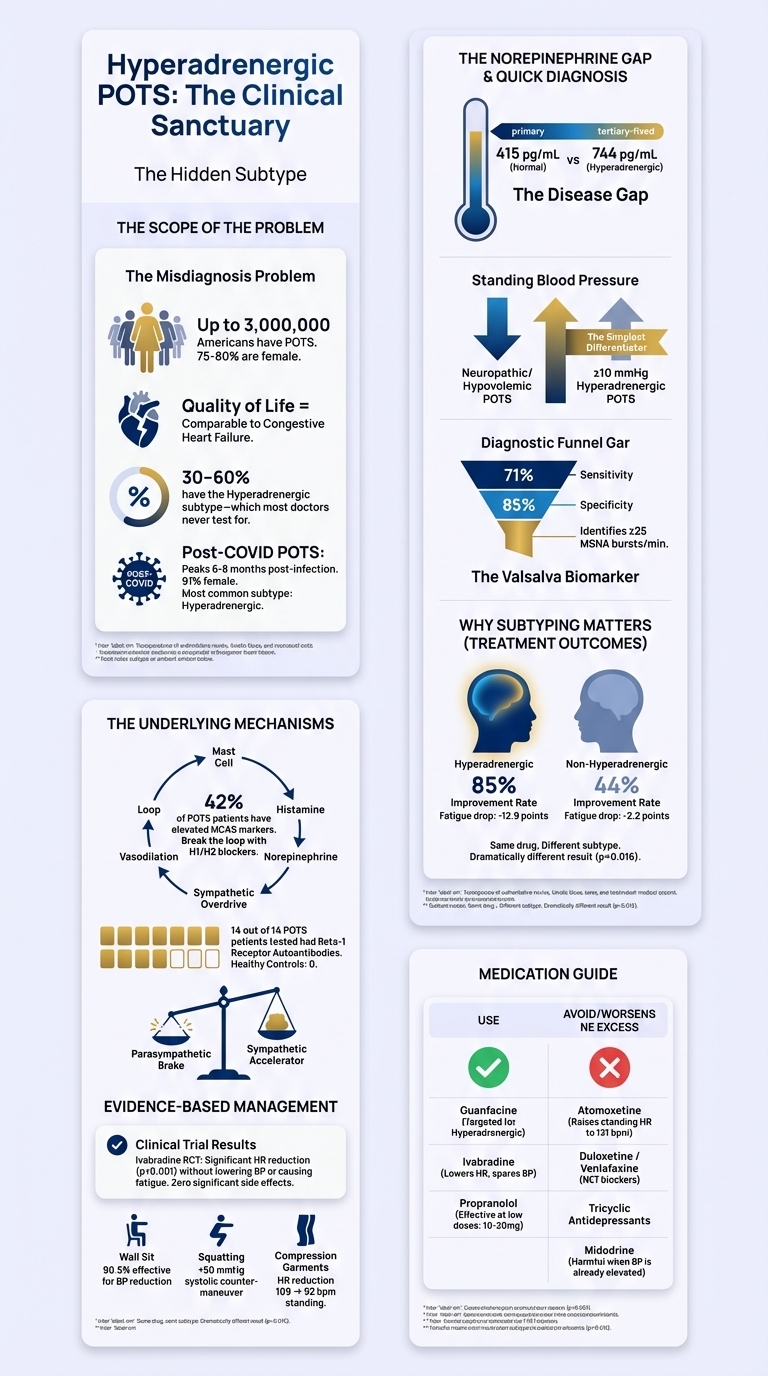
Hyperadrenergic POTS affects an estimated 30 to 60% of all POTS patients, yet most are never told which subtype they have. That matters because the hyperadrenergic form requires a fundamentally different treatment strategy than other types of POTS. Get it wrong, and some of the most commonly prescribed POTS medications can actually make symptoms worse.
Educational only, not a diagnosis. This check cannot replace a visit with a healthcare provider. Only testing can confirm a POTS subtype. If you faint and do not wake up quickly, have chest pain, or have trouble breathing, call 911.
Free check · 8 questions · 2 minutes
Do your symptoms match hyperadrenergic POTS?
Question 1 of 8
Have you been diagnosed with POTS?
This check is educational, not a diagnosis. Talk through your results with your doctor.
This subtype is defined by excess norepinephrine, the body's primary stress neurotransmitter. Standing plasma norepinephrine levels reach 600 pg/mL or higher, compared to roughly 415 pg/mL in non-hyperadrenergic POTS patients. That difference drives a distinct clinical picture: blood pressure that rises on standing instead of falling, visible tremor, intense anxiety-like episodes, and a nervous system that feels permanently locked in fight-or-flight mode.
POTS as a whole affects an estimated 500,000 to 3,000,000 Americans. Roughly 80% are female, with a peak onset between ages 15 and 25. Quality of life scores for POTS patients are comparable to those of patients with COPD or congestive heart failure, which tells you something about the severity of functional impairment this condition causes. The average patient waits nearly 5 years for a diagnosis and sees 7 different physicians before getting answers. For hyperadrenergic patients specifically, the misdiagnosis rate is even higher because their symptoms overlap heavily with anxiety disorders and panic disorder.
In this article, we cover what hyperadrenergic POTS is, how to tell if you have it, what causes it at the cellular level, which medications help (and which ones to avoid), and why standard POTS treatment often falls short for this subtype. We also explain how Cognitive FX's neurologic-focused POTS program targets the upstream neurological dysfunction that drives the hyperadrenergic state, rather than simply managing the downstream symptoms.
What makes hyperadrenergic POTS different from other subtypes?
POTS is not a single disease. It is a clinical syndrome with at least three distinct underlying mechanisms that frequently overlap in the same patient.
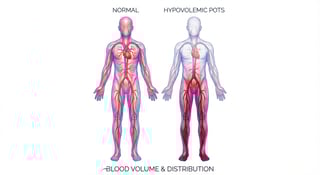
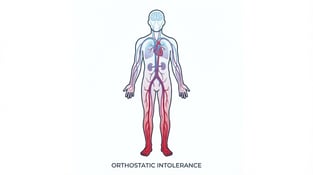
In neuropathic POTS, damaged autonomic nerves in the legs lose their ability to constrict blood vessels on standing. Blood pools downward, cardiac output drops, and heart rate spikes to compensate. The tachycardia is reactive. It is the body's attempt to keep blood flowing to the brain.
In hypovolemic POTS, the problem is volume. Reduced circulating blood and plasma means the heart has less to pump. Again, the tachycardia is compensatory.
Hyperadrenergic POTS works differently. The sympathetic nervous system itself is overactive. The brain is producing too much norepinephrine, and the tachycardia is not compensatory. It is directly driven by excessive sympathetic outflow from the central nervous system. This distinction changes everything about how the condition should be treated.
The diagnostic hallmarks of hyperadrenergic POTS are a standing plasma norepinephrine level of 600 pg/mL or greater, and a rise in systolic blood pressure of at least 10 mmHg upon standing. A 2024 Vanderbilt University study found that hyperadrenergic patients had mean standing norepinephrine of 744 pg/mL, compared to 415 pg/mL in patients without the hyperadrenergic phenotype (Okamoto et al., Hypertension, 2024. PMID: 39109428).
These subtypes are not mutually exclusive. A patient can have neuropathic nerve damage in the legs and central sympathetic overactivation at the same time. That overlap is common and is one of the reasons subtype-specific evaluation matters.
All POTS patients share a core set of symptoms: rapid heart rate on standing, lightheadedness, brain fog, fatigue, and exercise intolerance. But hyperadrenergic patients report a specific cluster of additional symptoms tied directly to excess norepinephrine:
Tremor and tremulousness. Visible shaking, especially in the hands, that worsens with standing. A 2024 study confirmed that hyperadrenergic patients report significantly more severe tremulousness than patients without this subtype (Okamoto et al., 2024. PMID: 39109428).
Anxiety-like episodes. Intense waves of anxiety, often with flushing, palpitations, and a sense of dread. These episodes are frequently misdiagnosed as panic disorder or generalized anxiety. The distinction matters: the anxiety is not psychological in origin. It is a direct physiological consequence of excess sympathetic activation.
Blood pressure that rises on standing. In neuropathic POTS, blood pressure tends to drop or stay flat when the patient stands. In hyperadrenergic POTS, systolic blood pressure often climbs 10 mmHg or more. This is one of the clearest clinical differentiators.
Cold, sweaty extremities. Paradoxically, hands and feet may be cold and clammy despite the sympathetic overdrive. Excessive sweating (hyperhidrosis) is common throughout the body.
Migraine headaches. Frequently comorbid with the hyperadrenergic subtype.
Hyperadrenergic surges. Sudden, intense episodes of flushing, palpitations, tremor, and anxiety that come in waves. These can feel like an adrenaline dump and often occur without a clear trigger.
Hyperadrenergic POTS treatment
Diagnosed with hyperadrenergic POTS and still struggling?
If medication, salt and compression have only taken you partway, our 5-day program in Provo, Utah works on how your nervous system regulates heart rate and blood pressure.
Next: a short intake form, then a free video consult with our team, usually 1 to 2 weeks out. Questions? Call (385) 375-8590.
What causes the sympathetic nervous system to become overactive?
The hyperadrenergic state in POTS can arise from several distinct mechanisms, and many patients have more than one at play simultaneously.
Norepinephrine transporter (NET) deficiency
The norepinephrine transporter is a protein that clears norepinephrine from nerve synapses after it has been released. When this transporter is not working properly, norepinephrine accumulates and overstimulates the system.
In rare cases, this is genetic. A 2001 Vanderbilt study identified a specific mutation (A457P) in the NET gene that reduces transporter activity by more than 98% (Robertson et al., Annals of the New York Academy of Sciences, 2001. PMID: 11458707). Mice engineered with this same mutation reproduce the human POTS phenotype.
More commonly, the NET gene is epigenetically downregulated. DNA methylation and histone modifications suppress gene transcription without any mutation being present. Research from the Baker Institute in Melbourne has demonstrated these epigenetic changes in POTS patients (Khan et al., Neuroscience and Biobehavioral Reviews, 2017. PMID: 27345145).
This mechanism has direct treatment implications. Medications that block NET, including SNRIs like duloxetine and venlafaxine, tricyclic antidepressants, and atomoxetine, can worsen hyperadrenergic POTS by further preventing norepinephrine clearance. A randomized controlled trial found that atomoxetine (a pure NET inhibitor) significantly increased standing heart rate from 105 to 121 bpm and worsened symptom scores in POTS patients (Green et al., JAHA, 2013. PMID: 24002370).
Mast cell activation syndrome (MCAS)
MCAS is the most frequently identified comorbidity with hyperadrenergic POTS. A foundational 2005 study by Shibao et al. at Vanderbilt established that mast cells can physically pair with autonomic nerve fibers and that histamine directly stimulates norepinephrine release (Shibao et al., Hypertension, 2005. PMID: 15710782).
This creates a positive feedback loop: mast cell degranulation releases histamine and other vasoactive mediators, which causes vasodilation. The body responds with reflex sympathetic activation and more norepinephrine release, which worsens orthostatic intolerance, which triggers more mast cell activity. One study found that 42% of POTS patients exhibited at least one elevated biochemical marker, suggesting mast cell activation.
A 2024 case report documented complete remission of hyperadrenergic POTS secondary to long COVID using histamine blocker therapy, further supporting this bidirectional mechanism (Gonzalez-Alvarez et al., Journal of Hypertension, 2024. PMID: 38526146).
Autoimmune adrenergic receptor antibodies
Emerging research has identified functional autoantibodies against adrenergic receptors in POTS patients. In one study, all 14 POTS patients tested had dose-dependent beta-1 adrenergic receptor activation from their serum, compared to zero healthy controls. These antibodies act as direct agonists, binding to the receptor and stimulating it as though norepinephrine were present (Li et al., JAHA, 2014. PMID: 24572257).
Separately, alpha-1 adrenergic receptor antibodies were found to exert a partial antagonist effect on peripheral blood vessels, reducing their ability to constrict. This forces the body to compensate with more sympathetic outflow, further raising norepinephrine levels.
Baroreflex dysfunction
Baroreceptors are pressure sensors in the carotid arteries and aortic arch that normally buffer changes in heart rate and blood pressure during postural shifts. In hyperadrenergic POTS, the vagal (parasympathetic) side of this reflex is weakened, while the sympathetic side stays active. The result is an unbalanced autonomic response: the "accelerator" keeps firing, but the "brake" does not engage (Cutsforth-Gregory & Sandroni, Handbook of Clinical Neurology, 2019. PMID: 31307619).
This baroreflex dysfunction is central to the pathophysiology and has implications for treatment. Mathematical modeling has demonstrated that the persistent heart rate increase and blood pressure oscillations in POTS can be predicted by modulating baroreflex sensitivity parameters (Geddes et al., Journal of the Royal Society Interface, 2022. PMID: 36000360).
Post-viral and post-COVID onset
A substantial number of COVID-19 survivors have developed POTS within 6 to 8 months of infection. The hyperadrenergic subtype appears particularly common in post-COVID POTS. Proposed mechanisms include RAAS dysregulation, autoimmune processes, direct viral infection of autonomic structures, and immune-mediated mast cell activation (Park et al., Medicina, 2024. PMID: 39202605).
How is hyperadrenergic POTS diagnosed?
The baseline POTS diagnosis requires a heart rate increase of 30 or more bpm (or exceeding 120 bpm) within 10 minutes of standing, with no orthostatic hypotension, and symptoms lasting at least 3 to 6 months.
To identify the hyperadrenergic subtype specifically, clinicians measure plasma catecholamines while the patient is supine and again after 10 minutes of standing. A standing norepinephrine level of 600 pg/mL or greater, combined with a systolic blood pressure increase of at least 10 mmHg, identifies the subtype.
A 2024 discovery from Vanderbilt offers a simpler office-based alternative. Researchers found that a diastolic blood pressure increase greater than 17 mmHg during late phase 2 of the Valsalva maneuver identifies patients with high resting muscle sympathetic nerve activity (MSNA) with 71% sensitivity and 85% specificity. Patients identified by this biomarker responded significantly better to guanfacine treatment: 85% improvement vs. 44% in those without the biomarker (Okamoto et al., Hypertension, 2024. PMID: 39109428).
One practical note about timing: standing heart rate is significantly higher in the morning than in the evening for both POTS patients and healthy controls. More patients meet the diagnostic heart rate threshold when tested in the morning (Brewster et al., Clinical Science, 2012. PMID: 21751966). If you are being evaluated for POTS, morning testing is more likely to capture the full extent of your autonomic dysfunction.
What medications work for hyperadrenergic POTS (and which ones make it worse)?
No FDA-approved medications exist for any form of POTS. All pharmacological treatments are off-label. That said, several medications have meaningful evidence for the hyperadrenergic subtype specifically.
Medications that help
Central sympatholytics are first-line for hyperadrenergic POTS. Guanfacine, a central alpha-2 agonist, reduces sympathetic outflow from the brain. The 2024 Vanderbilt study found an 85% improvement rate in hyperadrenergic patients treated with guanfacine, compared to 44% in non-hyperadrenergic patients. Patients showed significant improvements in orthostatic tolerance, chronic fatigue scores, and hyperadrenergic episode severity. Clonidine and methyldopa work through a similar mechanism but have more side effects (Okamoto et al., 2024. PMID: 39109428).
Ivabradine has the strongest randomized controlled trial evidence specifically for hyperadrenergic POTS. A 2021 double-blinded, placebo-controlled crossover trial of 22 patients with hyperadrenergic POTS (all with plasma NE above 600 pg/mL) showed significant heart rate reduction, improved physical and social functioning, and no significant side effects. Unlike beta-blockers, ivabradine reduces heart rate without lowering blood pressure or causing the fatigue that many POTS patients find intolerable (Taub et al., JACC, 2021. PMID: 33602468).
Low-dose beta-blockers such as propranolol (10 to 20 mg) can blunt tachycardia without excessive blood pressure reduction. High doses should be avoided because they often worsen fatigue and exercise intolerance.
Pyridostigmine (Mestinon) works through a different pathway entirely. Rather than suppressing the sympathetic "accelerator," it enhances the parasympathetic "brake" by increasing acetylcholine levels.
Medications to avoid
This is where getting the subtype wrong becomes dangerous. Several commonly prescribed medications inhibit the norepinephrine transporter and can significantly worsen hyperadrenergic POTS:
SNRIs (duloxetine, venlafaxine) block norepinephrine reuptake, increasing the very neurotransmitter that is already in excess. Atomoxetine and other pure NET inhibitors do the same. Tricyclic antidepressants (amitriptyline, nortriptyline) also have significant NET-blocking activity. Midodrine, a vasoconstrictor commonly used in neuropathic POTS, can be harmful when blood pressure is already elevated.
If you have been prescribed any of these medications and your symptoms have worsened, it is worth discussing your POTS subtype with your physician.
MCAS-targeted treatments
For patients with comorbid mast cell activation, H1 and H2 receptor blockers (cetirizine and famotidine) are commonly used alongside mast cell stabilizers such as cromolyn sodium and ketotifen. These treatments address the upstream trigger rather than the downstream catecholamine excess.
Hyperadrenergic Protocol
No FDA-approved POTS medications exist. Explore the off-label pharmacological hierarchy used in clinical practice.
01
Lifestyle Foundations
Fluid and salt loading
2-3L fluid + 6-10g salt daily. Administer cautiously in hyperadrenergic profiles if blood pressure presents elevated at baseline.
Compression garments Class I Evidence
Waist-high, 30-40 mmHg. Clinical trials demonstrate abdominal-leg compression effectively reduced standing HR from 109 to 92 bpm.
Graduated recumbent exercise
Swimming, rowing, or recumbent cycling following the CHOP Modified Dallas Protocol. Widely considered potentially disease-modifying over time.
Physical counter-maneuvers
Leg crossing (+15-20 mmHg systolic), deep squatting (+50 mmHg), and isometric hand grip immediately prior to postural shifts.
02
First-Line Medications
Guanfacine 85% Improvement
Central alpha-2 agonist. Studies report 85% improvement in hyperadrenergic patients vs. 44% in non-hyperadrenergic populations (Okamoto et al., 2024).
Ivabradine Strongest RCT Evidence
Reduces heart rate exclusively without systemic hypotension. Double-blinded RCTs show significant HR reduction and improved quality of life with minimal side effects.
Low-dose propranolol
Dosed at 10-20 mg to blunt tachycardia. High doses can exacerbate fatigue and exercise intolerance; strict adherence to micro-dosing is recommended.
Clonidine / Methyldopa
Central sympatholytics possessing heavier side effect profiles compared to guanfacine. Clonidine requires critical tapering to avoid rebound hypertensive crisis.
03
Adjunctive Interventions
Pyridostigmine (Mestinon)
Enhances the parasympathetic "brake" mechanism by increasing synaptic acetylcholine. Functions independently of traditional sympatholytic pathways.
H1/H2 blockers + mast cell stabilizers
Cetirizine, famotidine, cromolyn sodium, ketotifen. Targeted primarily at patients with comorbid MCAS, an overlap present in ~42% of the POTS population.
Immunotherapy
IVIG and plasmapheresis indicated strictly for autoimmune-mediated POTS presentations. Broad high-quality evidence remains limited.
04
Emerging Protocols
Moxonidine
Centrally-acting sympatholytic currently under investigation in Vanderbilt clinical trials for patients exhibiting elevated resting MSNA.
Transcutaneous vagus nerve stimulation
Non-invasive low-level tragus stimulation proven to enhance sympathovagal balance in hyperadrenergic animal models.
Low-dose naltrexone (LDN)
Currently undergoing clinical trials at the University of Calgary to address systemic fatigue and neuroinflammation in dysautonomia.
Stellate ganglion block
Pilot study at Stanford University exploring ultrasound-guided sympathetic blocks for resetting autonomic tone (status: not yet recruiting).
Medications to AVOID in Hyperadrenergic POTS
SNRIs (duloxetine, venlafaxine) Block norepinephrine reuptake, which elevates sympathetic drive and worsens symptoms.
Atomoxetine A pure NET inhibitor. Demonstrated in RCTs to drastically increase standing heart rate to 121 bpm.
Tricyclic antidepressants (amitriptyline, nortriptyline) Possess significant NET-blocking activity that mirrors the adverse effects of SNRIs.
Midodrine A peripheral vasoconstrictor. This poses a distinct cardiovascular risk if the patient's supine or standing blood pressure is already elevated.
Why does standard POTS treatment often fall short for hyperadrenergic patients?
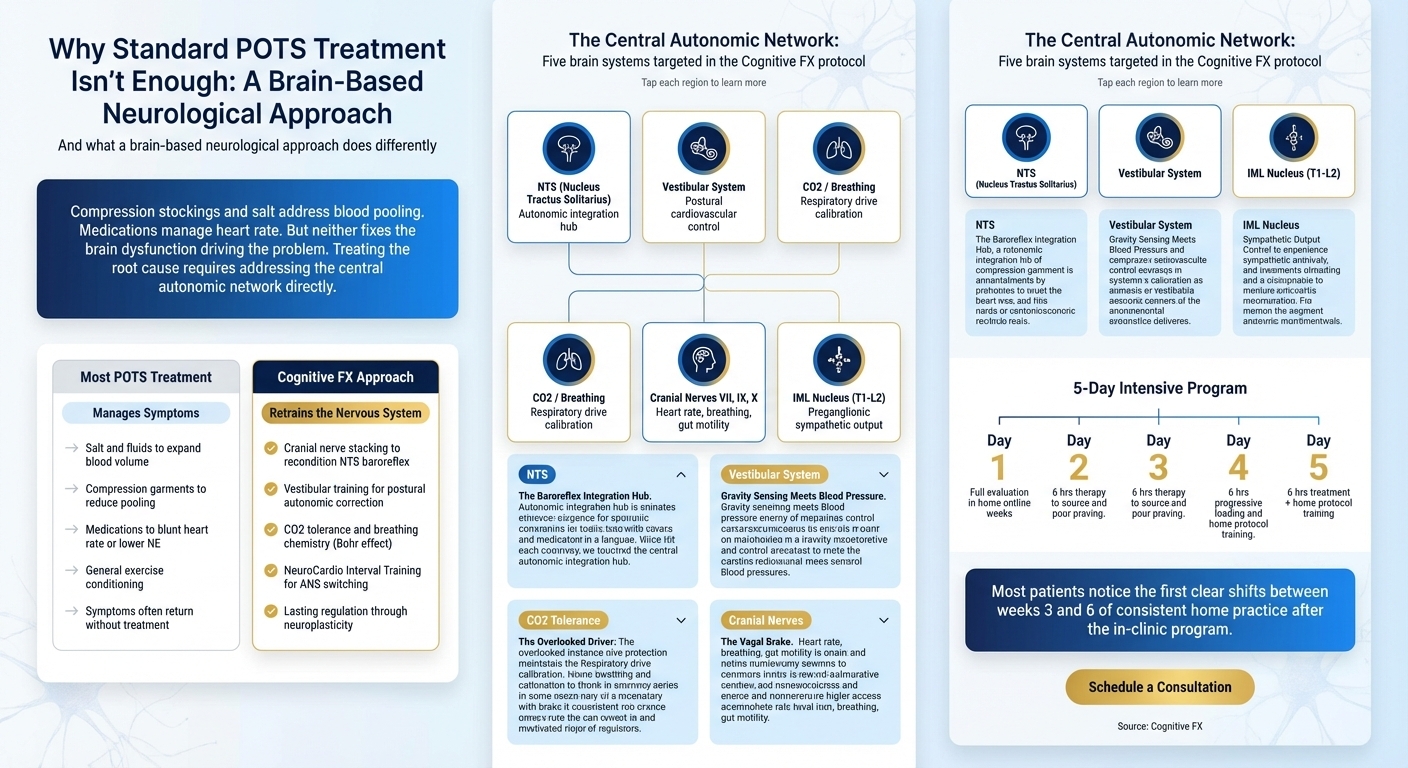
Standard POTS treatment follows a predictable formula: salt loading, fluid expansion, compression garments, and graduated exercise. These interventions address blood volume and venous return. They are most effective for the hypovolemic and neuropathic subtypes.
For hyperadrenergic POTS, this approach has limitations. Aggressive salt loading may be counterproductive when blood pressure is already elevated. Compression helps venous return, but it does not address the central sympathetic overdrive. Medications can blunt the heart rate or lower norepinephrine output, but they do not retrain the autonomic nervous system to regulate itself more accurately.
The core problem in hyperadrenergic POTS is not at the periphery. It is in the brain. Specifically, it is a failure of baroreflex gain at the level of the nucleus tractus solitarius (NTS), the brainstem structure where all baroreceptor input from the carotid and aortic sensors converges before the autonomic response is coordinated. In hyperadrenergic POTS, the NTS circuitry is not destroyed. It is dysregulated. Its calibration is off.
This is where a neurologic-based treatment approach becomes relevant.
Does this sound like you?
Signs standard POTS care has only taken you partway
Your blood pressure rises when you stand, or you've been told you have hyperadrenergic POTS
Salt, fluids and compression have helped only a little
Medication slows your heart rate, but surges, tremor or anxiety-like episodes still come
Symptoms still limit work, school or exercise
If two or more fit, a free consult can tell you whether our program is a good match.
At Cognitive FX, we approach POTS through a neurological lens. Our 5-day intensive POTS/ANS Therapy Program is built around five key systems that are commonly dysregulated in dysautonomia, each targeted with a unique therapy:
Cranial nerve activation
The Nucleus Tractus Solitarius (NTS) is the brain's primary integration hub for autonomic signaling. Every baroreceptor signal from cranial nerves IX and X converges here before the autonomic response is coordinated. In POTS, the NTS is not lesioned. It is poorly calibrated. Our protocol uses cranial nerve stacking, a deliberate sequence of cranial nerve inputs (CN VII, IX, and X) performed 2 to 3 times daily, to progressively recondition the NTS through use-dependent neuroplasticity.
Vestibular recalibration
The vestibular system detects gravity, linear acceleration, and rotation, and it is in constant, direct communication with the autonomic nervous system. When vestibular processing is inaccurate or delayed, the cardiovascular adjustments needed to maintain brain perfusion during postural changes misfire. Our vestibular training protocol addresses saccule activation (vertical movement), utricle activation (horizontal movement), and VOR (vestibulo-ocular reflex) recalibration, all of which directly influence the autonomic response to standing.
Breathing chemistry and CO2 tolerance
CO2 tolerance and breathing mechanics are among the most overlooked drivers of autonomic dysfunction. Many POTS patients chronically overbreathe, which depletes CO2 and impairs oxygen delivery to tissues (via the Bohr effect). Our breathing program includes resonance frequency breathing at approximately 6 breaths per minute to entrain baroreflex oscillations at their natural ~0.1 Hz resonance, which is the single strongest non-invasive amplifier of baroreflex gain in the research literature. For hyperadrenergic patients specifically, this breathing chemistry work and autogenic training play a central role.
NeuroCardio interval training
Standard exercise reconditioning (like the Levine protocol) rebuilds cardiovascular capacity gradually over months. Our program's NeuroCardio interval training (NCT) works a different angle: it forces the sympathetic and parasympathetic systems to cycle between full effort and complete rest within a single session, retraining the autonomic switching that is dysregulated in POTS. Sessions run 20 minutes. Each interval is 30 seconds of maximal effort followed by full recovery (breathing returns to baseline, heart rate drops) before the next round. The number of intervals is determined by recovery time, not a target count. If you only complete 1-2 rounds with full recovery, that is the right dose. The training effect comes from the recovery, not the exertion.
Isometric training and spinal autonomic support
Isometric wall sits and hand grip exercises improve autonomic control of vascular tone with as few as three sessions per week. Thoracic spine mobility work targets blood flow and sensory input to the intermediolateral (IML) nucleus, the column of preganglionic sympathetic neurons spanning T1-L2 that governs downstream vascular output. Progressive muscle relaxation and autogenic training build interoceptive awareness and parasympathetic access on demand, giving patients a tool to actively shift their autonomic state rather than being at its mercy.
What the 5-day program looks like
Day 1EvaluationHeart rate and blood pressure seated and standing, tilt table test, vestibular, cranial nerve and NTS assessment, supplement screening and goal setting. If you arrive early, we can work in an fMRI brain scan.
Days 2 to 5Treatment, 4 to 6 hours a day
Day 2
Day 3
Day 4
Day 5
Paced to what you can do, with time built in to prepare for activity and recover from it. Every exercise session is supervised with heart rate and blood pressure monitors.
Breathing retraining
Cranial Nerve Stack
NeuroCardio Training
Vestibular and vision
Isometric training
Relaxation training
After you leaveHome programA detailed home protocol that repeats the clinic therapies, starting with a morning cranial nerve stack before you get out of bed. Zoom follow-ups as needed.
Most patients notice the first clear shifts in their symptom pattern between weeks 3 and 6 of consistent home practice. The in-clinic program accelerates the starting point, but sustained improvement is built through daily repetition.
What should you do if you think you have hyperadrenergic POTS?
Start with identification. Ask your physician about plasma catecholamine testing, supine and standing. If your standing norepinephrine is above 600 pg/mL and your blood pressure rises rather than drops on standing, you likely have the hyperadrenergic subtype. If your doctor is unfamiliar with subtype testing, a referral to an autonomic specialist or dysautonomia center may be appropriate. Our guide to POTS clinics in the US compares the options.
Review your medication list. If you are taking an SNRI, atomoxetine, or a tricyclic antidepressant, your medication may be worsening your symptoms. Do not stop any medication without physician guidance, but raise the question. The 2013 RCT data on atomoxetine is clear: NET inhibitors can significantly worsen tachycardia and symptom burden in POTS.
Ask about the Valsalva maneuver biomarker. The 2024 Vanderbilt finding that a diastolic BP increase greater than 17 mmHg during late phase 2 of the Valsalva maneuver identifies patients with high sympathetic nerve activity is a simpler, office-based alternative to plasma catecholamine testing. If your physician performs Valsalva maneuver testing, this metric can help identify whether you are likely to respond to central sympatholytics like guanfacine.
If you have been told you have MCAS in addition to POTS, the two conditions may be feeding each other. Histamine from mast cell degranulation directly stimulates norepinephrine release, creating a feedback loop that maintains the hyperadrenergic state. Treating the MCAS component with H1/H2 blockers and mast cell stabilizers may reduce the catecholamine excess driving your POTS symptoms.
If you have been managing POTS with salt, fluids, and compression alone, and your symptoms have not meaningfully improved, the issue may not be compliance. It may be that your treatment is targeting the wrong mechanism. Standard POTS management addresses blood volume and venous return. If your primary problem is excess central sympathetic outflow and impaired baroreflex calibration, those downstream interventions will only get you partway there.
Cognitive FX's POTS/ANS Therapy Program is designed specifically for patients who need more than symptom management. If you are ready to address the neurological root of your autonomic dysfunction, schedule a consultation to learn whether our program is right for your situation.
Next steps
How to find out if our POTS program fits you
Fill out the intakeA short form about your diagnosis, symptoms and timing.
Book a free video consultPick a time on the calendar. Consults are usually 1 to 2 weeks out.
Talk it throughWe review your history, answer your questions and tell you honestly whether the program fits.
Plan your week in ProvoStart dates are usually one to two months out. Travel and lodging are not included in the $4,500.
If you crash for days after light activity, please call our POTS coordinator at (385) 446-4158 or our main line at (385) 375-8590 before booking a consult.
This article is for educational purposes only and is not a substitute for medical advice. Always consult a qualified healthcare provider for diagnosis and treatment of any medical condition.
References
Mar PL, Raj SR. Postural Orthostatic Tachycardia Syndrome: Mechanisms and New Therapies. Annual Review of Medicine. 2020;71:235-248. PMID: 31412221.
Ghazal M, Akkawi AR, Fancher A, et al. Pathophysiology and management of postural orthostatic tachycardia syndrome (POTS): A literature review. Current Problems in Cardiology. 2025;50(2):102977. PMID: 39706392.
Thieben MJ, Sandroni P, Sletten DM, et al. Postural Orthostatic Tachycardia Syndrome: The Mayo Clinic Experience. Mayo Clinic Proceedings. 2007;82(3):308-313. PMID: 17352367.
Okamoto LE, Urechie V, Rigo S, et al. Hyperadrenergic Postural Tachycardia Syndrome: Clinical Biomarkers and Response to Guanfacine. Hypertension. 2024;81(10):2153-2163. PMID: 39109428.
Robertson D, Flattem N, Tellioglu T, et al. Familial orthostatic tachycardia due to norepinephrine transporter deficiency. Annals of the New York Academy of Sciences. 2001;940:527-543. PMID: 11458707.
Khan AW, Corcoran SJ, Esler M, El-Osta A. Epigenomic changes associated with impaired norepinephrine transporter function in postural tachycardia syndrome. Neuroscience and Biobehavioral Reviews. 2017;73:32-47. PMID: 27345145.
Green EA, Raj V, Shibao CA, et al. Effects of norepinephrine reuptake inhibition on postural tachycardia syndrome. Journal of the American Heart Association. 2013;2(5):e000395. PMID: 24002370.
Li H, Yu X, Liles C, et al. Autoimmune basis for postural tachycardia syndrome. Journal of the American Heart Association. 2014;3(1):e000755. PMID: 24572257.
Shibao C, Arzubiaga C, Roberts LJ, et al. Hyperadrenergic Postural Tachycardia Syndrome in Mast Cell Activation Disorders. Hypertension. 2005;45(3):385-390. PMID: 15710782.
Taub PR, Zadourian A, Lo HC, et al. Randomized Trial of Ivabradine in Patients With Hyperadrenergic Postural Orthostatic Tachycardia Syndrome. Journal of the American College of Cardiology. 2021;77(7):861-871. PMID: 33602468.
Cutsforth-Gregory JK, Sandroni P. Clinical neurophysiology of postural tachycardia syndrome. Handbook of Clinical Neurology. 2019;161:387-398. PMID: 31307619.
Geddes JR, Ottesen JT, Mehlsen J, Olufsen MS. Postural orthostatic tachycardia syndrome explained using a baroreflex response model. Journal of the Royal Society Interface. 2022;19(193):20220220. PMID: 36000360.
Park JH, Park S, Kim NH, et al. Postural Orthostatic Tachycardia Syndrome Associated with COVID-19: A Narrative Review. Medicina. 2024;60(8):1325. PMID: 39202605.
Gonzalez-Alvarez F, Estanol B, Gonzalez-Hermosillo JA, et al. Complete remission with histamine blocker in a patient with intractable hyperadrenergic POTS secondary to long COVID. Journal of Hypertension. 2024;42(6):1119-1123. PMID: 38526146.
Brewster JA, Garland EM, Biaggioni I, et al. Diurnal variability in orthostatic tachycardia: implications for the postural tachycardia syndrome. Clinical Science. 2012;122(1):25-31. PMID: 21751966.
Vernino S, Bourne KM, Stiles LE, et al. Postural orthostatic tachycardia syndrome (POTS): State of the science and clinical care from a 2019 NIH Expert Consensus Meeting - Part 1. Autonomic Neuroscience. 2021;235:102828. PMID: 34144933.
Raj SR. The Postural Tachycardia Syndrome (POTS): pathophysiology, diagnosis & management. Indian Pacing and Electrophysiology Journal. 2006;6(2):84-99. PMID: 16943900.
Dr. Lynn Gaufin graduated from the University of Utah and then attended medical school at Cornell University in New York City. After medical school he join the Army and was a surgeon in the military before finishing his Neurological Residency at University of California Los Angeles. Dr. Gaufin specializes in cervical and lumbar spine surgery, brain tumors, brain hemorrhages, and treatment of traumatic brain injuries. Dr. Gaufin is one of the emergency trauma neurosurgeons on call at Utah Valley Hospital. Before he began his practice in Utah he saw a significant amount of traumatic brain injuries during his career in the Army and his residency in Los Angeles. As a surgeon who treats individuals who suffer from mild to severe traumatic brain injuries he recognized a problem in the post operative rehabilitation. Individuals who suffered severe trauma would be admitted into speciality facilities where they would receive months of care. But patients who had a more mild trauma would be released and would largely be on their own when it came to restoring their cognitive function. That problem is what lead Dr. Gaufin to team up with Dr. Fong and Dr. Allen in the creation of Cognitive FX. Cognitive FX was able to take the research that Dr. Fong and Dr. Allen started in their Phd programs and bring it into the clinical environment.
Neuropathic POTS is the most common subtype of Postural Orthostatic Tachycardia Syndrome, affecting roughly 50% of all diagnosed patients. It is caused by damage to the small nerve fibers (called...
The room spins when you stand up. A foggy, disconnected sensation follows you through the day. Months after recovering from COVID-19, you still cannot trust your own balance.
If you have POTS, you may know the pattern all too well: you stand up, and within seconds, a headache sets in. It eases off when you lie back down. It returns the next time you stand. Over and over,...