TMS vs. EMDR for Treating PTSD

If you've tried EMDR therapy (or been told you should) and it hasn't worked, or you're not sure you can go through it, you're not out of options. A growing body of research is examining whether TMS...


Published peer-reviewed research shows that Cognitive FX treatment leads to meaningful symptom reduction in post-concussion symptoms for 77% of study participants. Cognitive FX is the only PCS clinic with third-party validated treatment outcomes.
READ FULL STUDY
"Did I lock the door? I'm sure I did. But what if I didn't? I should go back and check. I already checked twice, but maybe I didn't do it right. What if someone breaks in? What if something terrible happens and it's my fault?"
— The internal monologue that never stops.
If this sounds like the inside of your head, you already know what obsessive-compulsive disorder actually feels like. Not the sitcom punchline about organizing sock drawers. The real version. The one where your brain generates terrifying thoughts on a loop, and no amount of reasoning or willpower makes them stop.
You've probably tried medication. Maybe several. You might have white-knuckled your way through exposure and response prevention therapy. And while those treatments help many people, you're reading this because they haven't been enough for you. The intrusive thoughts are still there. The rituals still pull at you. The exhaustion of fighting your own brain every single day is wearing you down.
Here's the part that most people don't hear from their doctors: OCD is not just a psychological habit. It's a brain circuit problem. Specific neural pathways in your brain are stuck in overdrive, and no amount of talk therapy or serotonin-boosting medication can always fix a wiring issue. This is where transcranial magnetic stimulation, or TMS, enters the picture. It targets those overactive circuits directly, without medication, without surgery, and without the side effects that may have made your current treatment feel like trading one problem for another.
Let's look at what the science actually shows, who it helps, and what the treatment experience is really like.
Standard first-line treatment for OCD involves SSRIs (selective serotonin reuptake inhibitors) and a specific form of cognitive-behavioral therapy called ERP, or exposure and response prevention. Both have solid evidence behind them. SSRIs produce meaningful improvement in roughly 50 to 70 percent of patients, and ERP achieves similar response rates in those who complete a full course.
But there's a catch that the statistics don't capture well.
SSRIs require 8 to 12 weeks at the highest tolerable dose before you can truly evaluate whether they're working. And many patients cycle through multiple medications over months or even years before finding one that helps. Meanwhile, the side effects are systemic: sexual dysfunction, weight gain, emotional blunting, gastrointestinal issues. These aren't minor inconveniences. For some patients, the side effects become their own source of distress, creating a frustrating trade-off between symptom relief and quality of life.
ERP therapy, on the other hand, is highly effective when it works. But it asks patients to deliberately confront their worst fears without engaging in compulsions. That requires a level of cognitive control that becomes nearly impossible when your brain's error-detection system is screaming at full volume. About 45 percent of OCD patients either fail to respond to ERP or drop out because the process is simply too overwhelming. [Link to: What is ERP Therapy?]
By the numbers, 40 to 60 percent of OCD patients don't respond adequately to first-line treatment. That's not a small minority. That's nearly half of everyone who tries the standard approach.
Here's the piece that changes how you think about OCD treatment entirely. For decades, the dominant explanation was that OCD resulted from low serotonin levels. Medications were designed to fix that chemical imbalance. But modern neuroimaging has revealed something more specific and more fixable.
OCD involves hyperactivity in a particular brain circuit called the cortico-striato-thalamo-cortical (CSTC) loop. Think of it as your brain's threat-detection and response system. In a healthy brain, this loop works like a well-calibrated smoke detector. It fires when there's real danger, you respond, and then it resets.
In OCD, this circuit is stuck in the "on" position. The alarm never fully resets. Your cortex (the thinking part) sends a danger signal to the striatum (the action-selection center), which relays it through the thalamus (the relay station), which sends it right back to the cortex. Around and around it goes: obsession triggers anxiety, anxiety demands a compulsion, the compulsion provides brief relief, and the cycle restarts.
OCD is like a smoke alarm that won't stop blaring even when there's no fire. TMS recalibrates the sensor so it responds to real threats instead of false alarms.
SSRIs influence serotonin throughout the entire brain and body. They don't specifically target this circuit. ERP works to retrain the behavioral response, but when the circuit itself is firing too intensely, therapy can feel like trying to have a calm conversation in the middle of a fire alarm. The volume is just too loud.
This is the gap that TMS was designed to fill.
Transcranial magnetic stimulation is a non-invasive brain stimulation technique that uses focused magnetic pulses to modulate activity in specific brain regions. The concept is straightforward: a coil placed against the scalp generates brief magnetic fields that pass through the skull and induce tiny electrical currents in the brain tissue underneath. These currents can either increase or decrease the activity of the targeted neurons, depending on the stimulation pattern.
For OCD, TMS targets the cortical nodes of the CSTC loop, particularly the medial prefrontal cortex and the anterior cingulate cortex. These are the regions where the "error detection" signals originate. By modulating their activity, TMS works to turn down the volume on that stuck alarm system. Over the course of treatment, the goal is to induce lasting neuroplastic changes, essentially helping the circuit learn to reset itself normally again.
The FDA cleared TMS specifically for OCD treatment in August 2018, making it the first non-invasive device therapy ever authorized for this condition. That clearance was based on a rigorous multi-center clinical trial, and additional devices have since been cleared through equivalence pathways. This is not experimental or off-label. It is an FDA-cleared, evidence-based treatment for OCD.
There's an important distinction worth understanding. Standard TMS uses a figure-eight coil that penetrates about 1.5 centimeters below the skull surface. That's sufficient for targeting the dorsolateral prefrontal cortex, which sits close to the surface and is the primary target for depression treatment.
But the brain regions most implicated in OCD, the medial prefrontal cortex and anterior cingulate cortex, sit deeper in the brain, roughly 3 to 5 centimeters below the surface. Reaching these structures requires specialized equipment. Deep TMS uses a unique helmet-shaped H7 coil that generates a broader, deeper magnetic field capable of stimulating these deeper structures directly.
Electric field modeling studies have confirmed that the H7 coil stimulates 2 to 5 times more brain volume than standard coils and produces significantly stronger fields in the OCD-relevant brain regions, including the dorsal anterior cingulate, orbitofrontal cortex, and pre-supplementary motor area (Tzirini et al., 2022).
That said, the science here is nuanced. A 2024 study by Tadayonnejad and colleagues found that for certain brain targets, a standard figure-eight coil actually produced greater improvement than a deep coil. This suggests the relationship between stimulation depth and clinical outcomes isn't as simple as "deeper equals better." Focality, meaning how precisely the stimulation targets one specific region, may matter as much as penetration depth.
Understanding the fundamental differences between these approaches can help clarify why TMS offers something genuinely different for treatment-resistant OCD.
| Factor | SSRI Medication | Deep TMS for OCD |
|---|---|---|
| How It Works | Increases serotonin throughout the entire brain and body | Targets specific overactive brain circuits with magnetic pulses |
| Systemic Side Effects | High — sexual dysfunction, weight gain, GI issues, emotional blunting | Minimal — mild headache at treatment site (resolves quickly) |
| Targeting Precision | Affects the whole brain and body (systemic) | Focused on OCD-relevant brain regions (mPFC, ACC) |
| Time to Response | 8–12 weeks at full dose | Many respond within 4–5 weeks of daily sessions |
| Treatment Duration | Ongoing daily medication, often indefinite | 29 sessions over 6 weeks (defined endpoint) |
| Cognitive Effects | Can cause brain fog, concentration issues | No cognitive impairment documented |
| Anesthesia Required | No | No |
| Can Drive After? | Yes (once adjusted) | Yes, immediately |
| FDA Status for OCD | Multiple SSRIs approved | FDA-cleared since August 2018 |
Key Point: TMS doesn't replace medication for everyone. It is cleared as an adjunctive treatment, meaning it's used alongside existing medications and therapy. For many patients, TMS turns down the neural "noise" enough to make ERP therapy and medication far more effective than they were before. [Link to: TMS Treatment at Cognitive FX]
The short answer: yes, with meaningful caveats about who benefits most. Let's look at the numbers.
The FDA clearance was based on a landmark 2019 study led by Carmi and colleagues, published in the American Journal of Psychiatry. This was a rigorous, double-blind, sham-controlled trial conducted across 11 medical centers with 99 treatment-resistant OCD patients. Patients receiving active deep TMS showed a mean reduction of 6.0 points on the Y-BOCS (the gold-standard OCD severity scale), compared to 3.3 points for the sham group. The difference was statistically significant.
More importantly, 38.1% of patients who received active TMS met criteria for clinical response (defined as at least a 30% reduction in symptoms), compared to just 11.1% receiving sham treatment. At the one-month follow-up, that gap widened further, reaching 45.2% versus 17.8%. The number needed to treat was 3.7, which means that for roughly every 4 patients treated, one additional person achieves a meaningful response beyond what placebo would provide.
Clinical trials are one thing. What happens in everyday practice is another. A large post-marketing study by Roth and colleagues (2021) tracked 219 patients across 22 clinical sites in real-world settings. The results were actually better than the pivotal trial: 57.9% of patients responded by the end of the 29-session course, and 72.6% showed a meaningful response at some point during treatment. First response typically occurred around session 18 or 19, roughly four and a half weeks into the six-week course.
A 10-site registry published by Tendler and colleagues (2022) reported that 31.7% of 145 patients achieved full remission, meaning their OCD symptoms dropped below clinical thresholds entirely.
Durability is one of the most important questions patients ask. A multi-center follow-up study by Harmelech and colleagues (2022) surveyed 60 patients who initially responded to deep TMS. The findings were encouraging: 86.7% maintained their response for at least one year, and 43.3% sustained improvement for two years or longer. The average durability was approximately two years.
Looking beyond individual studies, a comprehensive meta-analysis by Steuber and McGuire (2023) analyzed 25 randomized controlled trials involving 860 patients. The overall effect size was moderate (Hedges' g = 0.65), and active TMS patients were 3.15 times more likely to respond than those receiving sham treatment. The response rate across active groups averaged 39.5%, compared to 8.8% for sham. An umbrella review by Kar and colleagues (2024) that synthesized 12 separate meta-analyses confirmed consistent support for TMS efficacy in OCD.
What These Numbers Mean for You: If you're in that 40 to 60 percent of OCD patients who haven't responded adequately to medication and therapy, TMS offers roughly a 1 in 2 chance of meaningful improvement. Those odds are significantly better than continuing to try additional medications, which show diminishing returns the more you've already tried (Pellegrini et al., 2022). And importantly, for many patients, reducing the neural "volume" of OCD through TMS makes ERP therapy dramatically more effective.
Knowing what treatment actually looks and feels like can take a lot of the anxiety out of the process. Here's a week-by-week walkthrough.
The most common question we hear is "Does it hurt?" Most patients describe TMS as a rapid tapping or knocking sensation on the scalp. It feels unusual during the first session or two, but patients generally acclimate quickly. You remain fully awake and alert throughout the session. There's no sedation, no anesthesia, and no recovery period needed.
You can drive yourself to and from treatment. You can return to work or daily activities immediately afterward. This is fundamentally different from treatments like ECT (electroconvulsive therapy), which requires general anesthesia and can cause memory disruption, or ketamine infusions, which impair your ability to function for hours after each session. [Link to: TMS vs. ECT vs. Ketamine Comparison]
One unique aspect of TMS for OCD is the symptom provocation that occurs before each session. A trained clinician helps activate your specific OCD triggers, bringing your distress to a moderate level (about 4 to 7 on a 10-point scale). This isn't about traumatizing you. The scientific rationale is that stimulating the brain while the OCD circuits are already activated may enhance the neuroplastic effect of the treatment. Think of it as catching the alarm while it's ringing so TMS can teach it to reset.
A 2025 systematic review by Bello and colleagues found that studies using symptom provocation showed larger effect sizes than those without, though the difference hasn't yet been confirmed in a head-to-head trial.
TMS for OCD is specifically designed for patients who haven't found adequate relief from standard treatments. Here are the typical qualification criteria.
You may be a good candidate if: You have a confirmed diagnosis of OCD. You have tried at least one SSRI at an adequate dose for an adequate duration (typically 12+ weeks) without sufficient improvement. You are currently working with a mental health provider. You are 18 years of age or older. You are not pregnant and do not have metallic implants in or near your head (such as cochlear implants or aneurysm clips).
TMS may be especially worth considering if: You've tried multiple medications with limited results. The side effects of SSRIs are significantly affecting your quality of life. You've struggled to engage with or complete ERP therapy due to symptom intensity. You want a non-invasive treatment option that doesn't involve surgery or sedation. You want a defined treatment course with a clear endpoint rather than indefinite daily medication.
Always consult with a qualified TMS provider for a thorough eligibility screening before beginning treatment.
One important finding from the research: TMS may be more effective earlier in the treatment pathway. A 2022 analysis by Pellegrini and colleagues found that patients with lower SSRI resistance (those who had failed only 1 or 2 medications) showed significantly larger improvements from TMS than patients who had failed 3 or more. This doesn't mean TMS can't help heavily treatment-resistant patients. It does suggest that waiting until you've exhausted every other option may not be the best strategy. [Link to: Schedule a TMS Consultation]
TMS carries a remarkably benign safety profile compared to virtually every other OCD treatment option.
The most common side effect is mild headache at the stimulation site, reported by about 30 to 35 percent of patients. This is comparable to the headache rate in sham (placebo) groups, and it typically decreases over the course of treatment. Scalp discomfort at the application site occurs in roughly 36 percent of patients, with muscle twitching in 6 percent and mild dizziness in 3 percent.
The most serious potential risk is seizure, which occurs in approximately 1 out of every 30,000 to 35,000 individual treatments, or about 0.1 percent of patients. To put that in context, that seizure risk is actually lower than the seizure risk associated with SSRIs and bupropion. No seizures, deaths, or suicides were reported in any of the pivotal clinical trials. Fewer than 5 percent of patients discontinue treatment due to side effects.
There are no systemic side effects. No weight gain. No sexual dysfunction. No emotional blunting. No cognitive impairment. Neuropsychological testing in multiple studies has confirmed no negative effects on memory, attention, or executive function.
The field is evolving rapidly. Two developments are particularly worth watching.
Standard TMS requires 29 sessions over six weeks. That's a significant time commitment, especially for patients who have to take time off work or travel for treatment. Accelerated protocols compress the same or similar treatment into days rather than weeks, delivering multiple sessions per day.
A 2024 study by Mudunuru and colleagues tracked 239 OCD patients who received accelerated deep TMS (twice-daily sessions plus theta-burst stimulation) over just 10 days. The response rate was 62.76%, comparable to or better than standard six-week protocols. Ni and colleagues (2024) tested an even more compressed approach: 10 sessions per day over 5 days, achieving a 56.5% response rate.
However, durability remains a concern. A 2025 meta-analysis of 7 accelerated TMS trials found that while acute results were strong, OCD symptom improvements were not consistently sustained at follow-up, unlike the standard six-week approach. Longer courses or maintenance sessions may be needed to lock in the benefits of compressed treatment.
The most exciting frontier involves using functional brain imaging to personalize where TMS is delivered. Standard protocols use anatomical landmarks to position the coil, but individual brains vary considerably in their functional organization. fMRI-guided targeting identifies the specific cortical coordinate in each patient's brain that shows the strongest connection to the deep structures driving OCD symptoms.
In depression and PTSD research, fMRI-guided patients were 2.3 times more likely to respond compared to standard targeting (Siddiqi et al., 2025). A major multi-site trial at Stanford is currently testing this approach specifically in OCD (NCT04286126), and results are expected in the next one to two years. At Cognitive FX, our experience with functional brain imaging positions us to be at the forefront of these precision-targeted approaches.
One of the most significant recent advances combines TMS with D-cycloserine, a medication that enhances neuroplasticity (the brain's ability to rewire itself). A 2025 trial published in the American Journal of Psychiatry by McGirr and colleagues found that combining TMS with D-cycloserine produced a 39% improvement in OCD symptoms, compared to just 17% with TMS alone and 7% with sham treatment. This combination approach may represent the future of OCD neuromodulation.
Here is the question worth asking any TMS provider: how do they know where to aim? Most clinics use the same scalp measurements for every patient, which is a reasonable starting point but far from precise. Your brain's functional anatomy is unique to you, and the regions driving your OCD are not in exactly the same spot as someone else's. At Cognitive FX, our team has performed over 10,000 individualized functional brain scans using fMRI. That imaging expertise allows us to map the specific neural circuits involved in your symptoms and guide TMS to the coordinates most likely to produce real change. Research is already showing that fMRI-guided targeting can more than double response rates compared to standard positioning. We have the imaging infrastructure, the clinical experience, and the precision-focused treatment philosophy to put that advantage to work for you.
Imagine waking up and not having your first thought be a compulsion. Not spending hours locked in rituals. Having your brain work with you instead of against you. TMS won't erase OCD overnight, but for the right candidates, it can turn down the volume enough to finally feel like yourself again.
Schedule Your TMS ConsultationCall us at (385) 375-8590 or fill out the form to see if you're a candidate for FDA-cleared TMS therapy.
TMS received FDA clearance for the adjunctive treatment of OCD in adults in August 2018. Multiple devices are now cleared. It is important to note that TMS is cleared as adjunctive treatment, meaning it works alongside your existing medications and therapy rather than replacing them entirely.
The standard FDA-cleared protocol involves 29 sessions delivered over approximately 6 weeks (5 days per week). Each session lasts about 18 to 20 minutes. Accelerated protocols that compress treatment into 5 to 10 days are being studied but are not yet the standard of care. Most patients begin noticing changes around sessions 15 to 19.
Most patients describe the sensation as a rapid tapping on the scalp, similar to the feeling of a woodpecker. It's unusual but generally not painful. Some patients experience mild discomfort during the first few sessions that typically diminishes as they acclimate. No anesthesia is needed and you remain fully alert throughout.
In clinical trials, response rates for treatment-resistant OCD patients range from roughly 38 to 58 percent. Real-world clinical data shows that up to 72.6% of patients experience meaningful improvement at some point during treatment. Approximately 32% achieve full remission (symptoms below clinical threshold). Among those who respond, about 87% maintain their improvement for at least one year.
TMS is cleared as an adjunctive treatment, meaning it's designed to work alongside your existing medications. You should not stop or change your medications without consulting your prescribing physician. Many patients find that TMS allows their medications and therapy to work more effectively, potentially enabling medication reduction over time under medical supervision.
The key differences are the brain target and the use of symptom provocation. Depression TMS targets the dorsolateral prefrontal cortex (near the surface), while OCD TMS targets the medial prefrontal cortex and anterior cingulate cortex (deeper structures). OCD TMS also includes individualized symptom provocation before each session to activate the OCD circuits before stimulation. Deep TMS coils are typically required for OCD due to the depth of the target regions.
Insurance coverage for TMS varies by provider and plan. Many commercial insurers now cover TMS for OCD after documentation of treatment resistance (typically failure of at least one adequate SSRI trial). Medicare and some Medicaid programs also provide coverage. Your TMS provider's office can typically help verify your specific coverage and navigate the prior authorization process.
After completing the 29-session course, most patients continue their existing medications and therapy. Studies show that improvement often continues to build in the month following treatment. Long-term data indicates that about 87% of responders maintain their gains for a year or more. Some patients may benefit from occasional "booster" sessions if symptoms begin to re-emerge, though formal booster protocols are still being studied.
Disclaimer: This content is for informational purposes only and does not constitute medical advice. TMS therapy should only be administered by qualified medical professionals. Individual results vary. Please consult with a healthcare provider to determine if TMS is appropriate for your specific condition.
Cognitive FX · 280 W River Park Dr, Ste 110, Provo, UT 84604 · (385
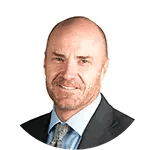
Dr. Mark D. Allen holds a Ph.D. in Cognitive Science from Johns Hopkins University and received post-doctoral training in Cognitive Neuroscience and Functional Neuroimaging at the University of Washington. As a co-founder of Cognitive Fx, he played a pivotal role in establishing the unique and exceptional treatment approach. Dr. Allen is renowned for his pioneering work in adapting fMRI for clinical use. His contributions encompass neuroimaging biomarkers development for post-concussion diagnosis and innovative research into the pathophysiology of chronic post-concussion symptoms. He's conducted over 10,000 individualized fMRI patient assessments and crafted a high-intensity interval training program for neuronal and cerebrovascular recovery. Dr. Allen has also co-engineered a machine learning-based neuroanatomical discovery tool and advanced fMRI analysis techniques, ensuring more reliable analysis for concussion patients.

If you've tried EMDR therapy (or been told you should) and it hasn't worked, or you're not sure you can go through it, you're not out of options. A growing body of research is examining whether TMS...

If you're considering transcranial magnetic stimulation and want to know whether it can damage your brain, that's a reasonable question and it deserves a direct answer, not reassurance dressed up as...

While many people are learning about Transcranial Magnetic Stimulation (TMS) for the first time, this brain stimulation method has been helping patients for nearly 40 years. Originally developed as...

Over the past few years, Transcranial Magnetic Stimulation (TMS) has become an increasingly popular treatment option for patients who haven’t found symptom relief from antidepressant medications.
If you’re wondering what to do when transcranial magnetic stimulation (TMS) doesn’t work, you might be:

With the original form of TMS therapy for major depressive disorder—known as repetitive transcranial magnetic stimulation (rTMS)—some patients begin noticing improvements within the first week of...
Published peer-reviewed research shows that Cognitive FX treatment leads to meaningful symptom reduction in post-concussion symptoms for 77% of study participants. Cognitive FX is the only PCS clinic with third-party validated treatment outcomes.
READ FULL STUDY