Duke Study on fMRI Brain Scans for Post-Concussion Syndrome Detection

The Hariri lab at Duke University recently published a review that questions the reliability of task-based fMRI as used to examine individual patients.

Cognitive FX pioneers accelerated TMS protocol that reduces concussion symptoms by 63% in just three days
If you're reading this, you likely know the frustration firsthand. The headaches that won't quit. The brain fog that makes work impossible. The exhaustion that sleep doesn't fix. The anxiety and depression that weren't there before your injury.
You've been told these symptoms should resolve within weeks or months. But for 10-15% of people with mild traumatic brain injury (mTBI), symptoms persist for months or even years—a condition known as post-concussion syndrome (PCS).
Traditional treatments often fall short. Physical therapy helps some symptoms but not others. Medications manage individual complaints without addressing the root cause. Cognitive rehabilitation teaches coping strategies but doesn't restore normal brain function. Many patients cycle through multiple specialists, spending thousands of dollars and months of their lives, only to see minimal improvement.
Until now, few treatments have directly targeted the underlying brain network dysfunctions that cause persistent concussion symptoms.

Cognitive FX has pioneered a revolutionary approach that's changing outcomes for patients with chronic post-concussion syndrome. Our new research, recently published in medRxiv, demonstrates that a specialized form of transcranial magnetic stimulation (TMS)—delivered using personalized brain imaging and an accelerated protocol—can produce dramatic symptom relief in just three days.
Unlike standard TMS protocols that use the same brain location for everyone, our approach uses advanced functional MRI (fMRI) scanning to identify the exact treatment target for each patient's unique brain connectivity patterns.
We analyze how your default mode network (DMN), cognitive control network (CCN), and salience network (SN) are functioning—the three brain networks most commonly disrupted after concussion. The fMRI scan reveals:
This personalized mapping allows us to target the precise location in your dorsolateral prefrontal cortex that will most effectively restore healthy network function.
Traditional TMS for depression requires daily sessions over 4-6 weeks. Our accelerated intermittent theta burst stimulation (iTBS) protocol compresses treatment into just 3 consecutive days:
This intensive approach induces rapid neuroplastic changes—essentially "rebooting" maladaptive brain network patterns that developed after your injury.
iTBS delivers magnetic pulses in a specific pattern (short bursts at 50 Hz, repeated at a theta frequency of 5 Hz) designed to promote long-term potentiation—the same process your brain uses for learning and memory. This pattern is particularly effective at:
Our pilot study followed 11 patients with chronic post-concussion syndrome (average 21 months since injury) who underwent the 3-day accelerated iTBS protocol.
Post-Concussion Symptom Scale (PCSS)
Beck Anxiety Inventory (BAI)
Beck Depression Inventory (BDI)
Perhaps most remarkably, every single patient showed dramatic improvements in objective brain function measures:
Brain Region Activation
Functional Connectivity
These objective changes provide biological confirmation that the treatment is directly addressing the underlying neural dysfunction—not just masking symptoms.
Understanding the science behind post-concussion syndrome helps explain why this treatment works so effectively.
Default Mode Network (DMN) After concussion, the DMN often becomes overactive or poorly regulated, contributing to:
Cognitive Control Network (CCN) Reduced CCN activity or connectivity leads to:
Salience Network (SN) Dysfunction in the SN, particularly involving the anterior cingulate cortex, causes:
By delivering precisely targeted magnetic stimulation to the dorsolateral prefrontal cortex—a critical hub connecting all three networks—we can:
The accelerated protocol delivers enough stimulation in a compressed timeframe to induce lasting neuroplastic changes, essentially "resetting" the dysfunctional patterns your brain developed after injury.
Beyond just treating symptoms, we provide objective measures of your brain function using our proprietary fNCI protocol. This task-related fMRI assessment:
No other concussion clinic in the world offers this level of detailed, objective brain function assessment.
This latest research builds on Cognitive FX's decade-long commitment to advancing concussion treatment through rigorous scientific investigation. Our team includes:
All treatments are guided by peer-reviewed research and continuously refined based on patient outcomes.
While accelerated TMS can produce rapid improvements, we recognize that optimal recovery often requires a multidisciplinary approach. Our treatment programs can include:
The key difference: TMS can restore normal brain network function, making your brain more receptive to these other therapies.
You may benefit from fMRI-guided accelerated TMS if you have:
For safety reasons, TMS is not appropriate if you have:
While this study focused on chronic PCS (symptoms lasting months to years), we also treated two patients with acute concussion (<3 months) who showed similar improvements. Earlier intervention may prevent chronic symptoms from developing.
Morning: Functional MRI Scans
Afternoon: Treatment Planning
Daily Schedule
During Treatment
Common Side Effects (temporary and mild)
Important: Nearly all participants in our study reported that any side effects resolved before the next day's treatment session.
Immediate Post-Treatment (Day 4 or 5)
1-4 Week Follow-Up
While we can't share individual patient stories without consent, the research data reveals common patterns:
The brain's remarkable ability to reorganize itself—neuroplasticity—is both the problem and the solution in chronic PCS.
After concussion, your brain develops compensatory patterns to work around damaged or dysfunctional areas. While initially protective, these patterns can become maladaptive, creating:
Accelerated iTBS delivers enough concentrated stimulation to overcome these entrenched patterns. By specifically targeting brain regions anti-correlated with the Default Mode Network and positively correlated with the Cognitive Control Network, we:
The accelerated protocol (multiple sessions per day over consecutive days) produces more robust neuroplastic changes than traditional once-daily treatments, potentially explaining the dramatic results.
Research shows significant individual variability in brain organization, especially after injury. What works at one brain location for one person may be suboptimal for another.
Our fMRI-guided approach ensures we're targeting:
This personalization may explain why 100% of patients in our study showed objective brain improvements, even though symptom patterns varied.
Standard Approach:
Limitations:
When it works: Early intervention in acute phase, straightforward symptoms
Protocol:
Limitations for PCS:
When it works: Depression without brain injury
Protocol:
Advantages:
Ideal for: Chronic PCS unresponsive to standard treatment, patients needing rapid improvement
TMS is FDA-approved for depression and is increasingly covered by insurance for that indication. Coverage for post-concussion syndrome applications is evolving. We recommend:
Our team can provide documentation of medical necessity and assist with insurance navigation.
While costs vary based on individual circumstances and insurance coverage, consider:
The Cost of Persistent Symptoms:
The Value of Rapid, Objective Improvement:
Many patients find that the potential for dramatic, lasting improvement justifies the investment, especially after unsuccessful standard treatments.
Our EPIC (Enhanced Performance in Cognition) program is a comprehensive 1-week intensive rehabilitation that includes physical, cognitive, and occupational therapy guided by fMRI results. Accelerated TMS can be:
Your treatment team will recommend the best approach for your specific needs.
Our research shows sustained improvements at 1-4 weeks post-treatment. Long-term durability studies are ongoing. Some patients may benefit from occasional booster sessions, while others experience lasting relief. The objective brain changes we measure suggest genuine neuroplastic reorganization, not temporary symptom masking.
Most patients describe the sensation as a tapping feeling on the scalp with some facial twitching. It's typically not painful, though scalp sensitivity is common. We adjust intensity to maintain tolerability while delivering therapeutic benefit.
TMS is FDA-approved for depression, and many of our patients have both post-concussion syndrome and mood disorders. The treatment may help both conditions, especially when they're neurologically linked.
Yes. Unlike some brain treatments, TMS doesn't impair your ability to drive or function. Most patients drive themselves to and from sessions.
While our research shows significant improvements in the vast majority of patients, individual responses vary. If you don't experience sufficient benefit, we'll:
Our goal is always an optimal outcome, whether that comes from TMS alone or combination approaches with our third party validated EPIC program.
This research represents a paradigm shift in how we approach persistent post-concussion symptoms.
Directly measure brain network dysfunction with fMRI
Precisely target the neural circuits causing symptoms
Rapidly restore healthy brain function in days
Objectively verify improvements with follow-up imaging
Enable better response to comprehensive rehabilitation
Cognitive FX continues to advance the field through:
We're committed to continually improving outcomes through rigorous scientific investigation.
If you're struggling with persistent concussion symptoms that haven't responded to standard treatment, fMRI-guided accelerated TMS may offer the breakthrough you've been seeking.


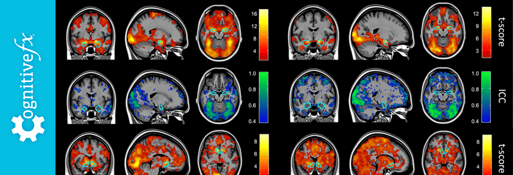
The Hariri lab at Duke University recently published a review that questions the reliability of task-based fMRI as used to examine individual patients.

Dr. Mark Allen, and Dr. Alina Fong presented at Pink Concussions 4th conference Pink 4 hosted in Rome, Italy after the Pediatric Aquired Brain Injury Conference.
This presentation explores important...