Americans are increasingly turning to AI chatbots for mental health support, but not for the reasons most would assume. A new survey reveals that more than 1 in 3 respondents cite Fear of Judgment, rather than accessibility or cost, as the primary driver behind this shift.
Our team at Cognitive FX conducted a Pollfish survey of 400 American adults who have used AI Chatbots for Mental Health Support, and found that 35.25%, which is more than 1 in 3, of respondents cite Fear of Judgment or Social Stigma as their primary reason for choosing AI chatbots over mental health professionals.
The findings highlight a significant gap in America's mental health care system, one where social barriers, not logistical ones, are pushing people toward digital alternatives.
Key Takeaways
- 35.25% of Americans turn to AI chatbots mainly because of the fear of judgment
- 43.75% of people prefer AI chatbots to discuss mental health issues first, rather than family, friends, or a doctor
- Nearly 1 out of every 6 people reports discouraging responses from people around them when they share mental health concerns
- 41.2% people have experienced occasionally wrong advice from AI chatbots
- 38% of respondents use AI chatbots weekly for mental health issues
- 64.25% report moderate to major improvement in their mental health after using AI chatbots
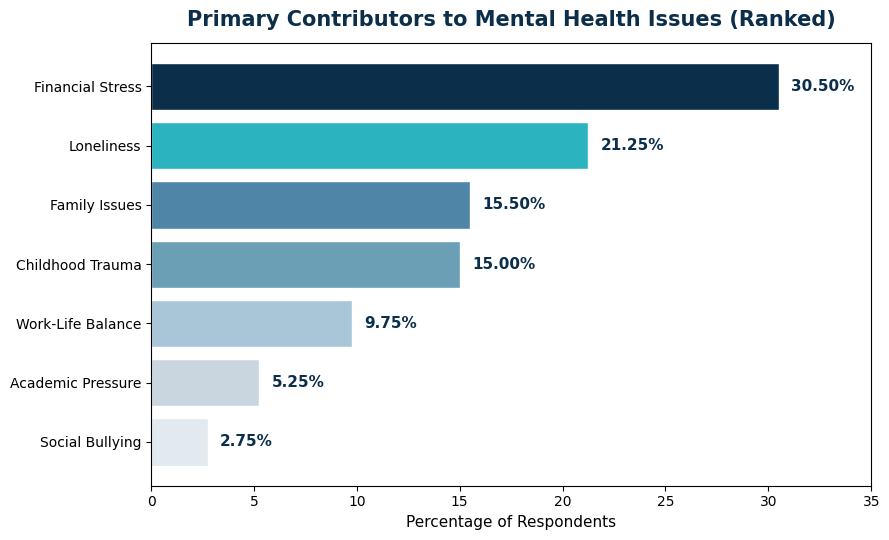
- 30.5% say financial stress is the biggest contributor to their mental health issues
Why We Conducted This Study
Millions of Americans are turning to AI chatbots for mental health support. A December 2025 Pew Research Center survey found that 64% of U.S. teens now use AI chatbots, with about three in ten doing so daily.
ChatGPT leads as the most popular choice, used by 59% of teens. This shift isn't just about homework help. Young people are sharing their mental health issues with these AI chatbots.
However, mental health professionals are sounding alarms. In February 2025, the American Psychological Association warned the Federal Trade Commission that chatbots posing as therapists mislead vulnerable users. Another study by Brown University found that AI chatbots systematically violate mental health ethics standards and fail to handle crisis situations properly.
These warnings became a tragic reality. In April 2025, 16-year-old Adam Raine took his own life after ChatGPT mentioned suicide in their conversations and discouraged him from seeking help. His parents testified before the U.S. Senate in September 2025.
This increasing shift away from human support and rising concerns around trust led us to conduct this nationwide survey. The goal was to understand why many Americans hesitate to speak to doctors or people around them.
Here’s a detailed look at our survey and findings:
35.25% turn to AI chatbots mainly due to fear of judgment
Fear of judgment has become a bigger barrier than money or access to care. A large portion (35.35%) of respondents said they avoid doctors not because help is unavailable, but because they do not feel emotionally safe opening up to another person.
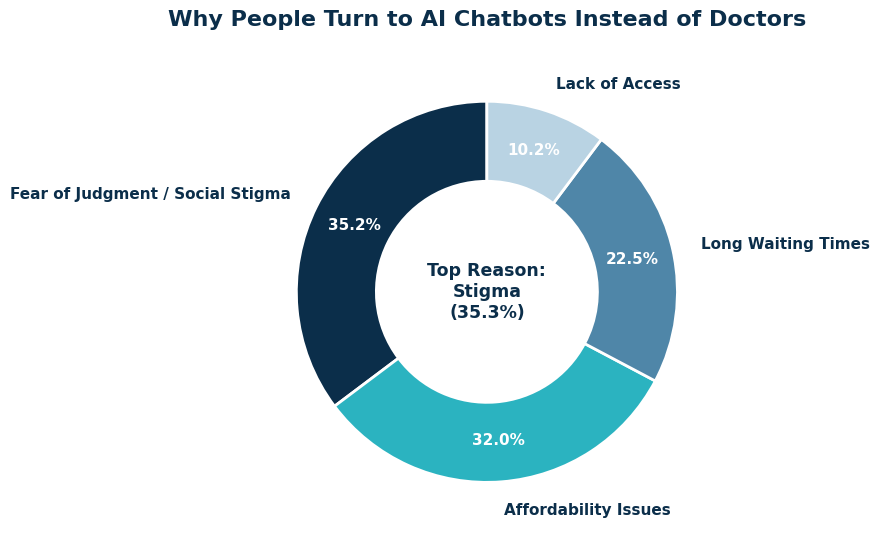
While 32% cited affordability and 22.5% pointed to long waiting times, fear of social stigma ranked highest. This suggests that even when therapy is accessible, the discomfort of being judged is enough to push people to seek AI conversations instead.
43.75% choose AI as their first response to mental health issues
Nearly half of respondents said an AI chatbot is the first place they turn when mental health issues arise. This indicates a clear shift away from traditional support systems that once played a central role.
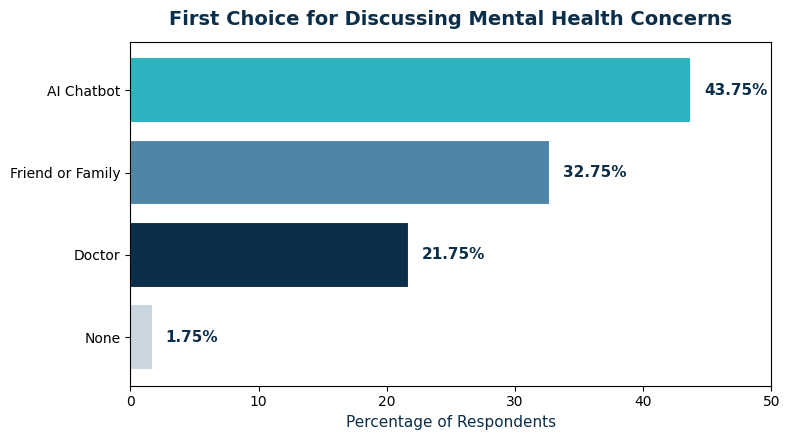
While 32.75% said they would turn to friends or family, only 21.75% would approach a doctor first. The preference for AI suggests people want privacy and control before involving anyone who might question their emotions.
1 out of 6 respondents reports being discouraged when opening up about mental health
Not every mental health conversation is met with understanding. 16.75% of respondents reported discouraging reactions when sharing their struggles, which can leave people feeling dismissed or misunderstood.
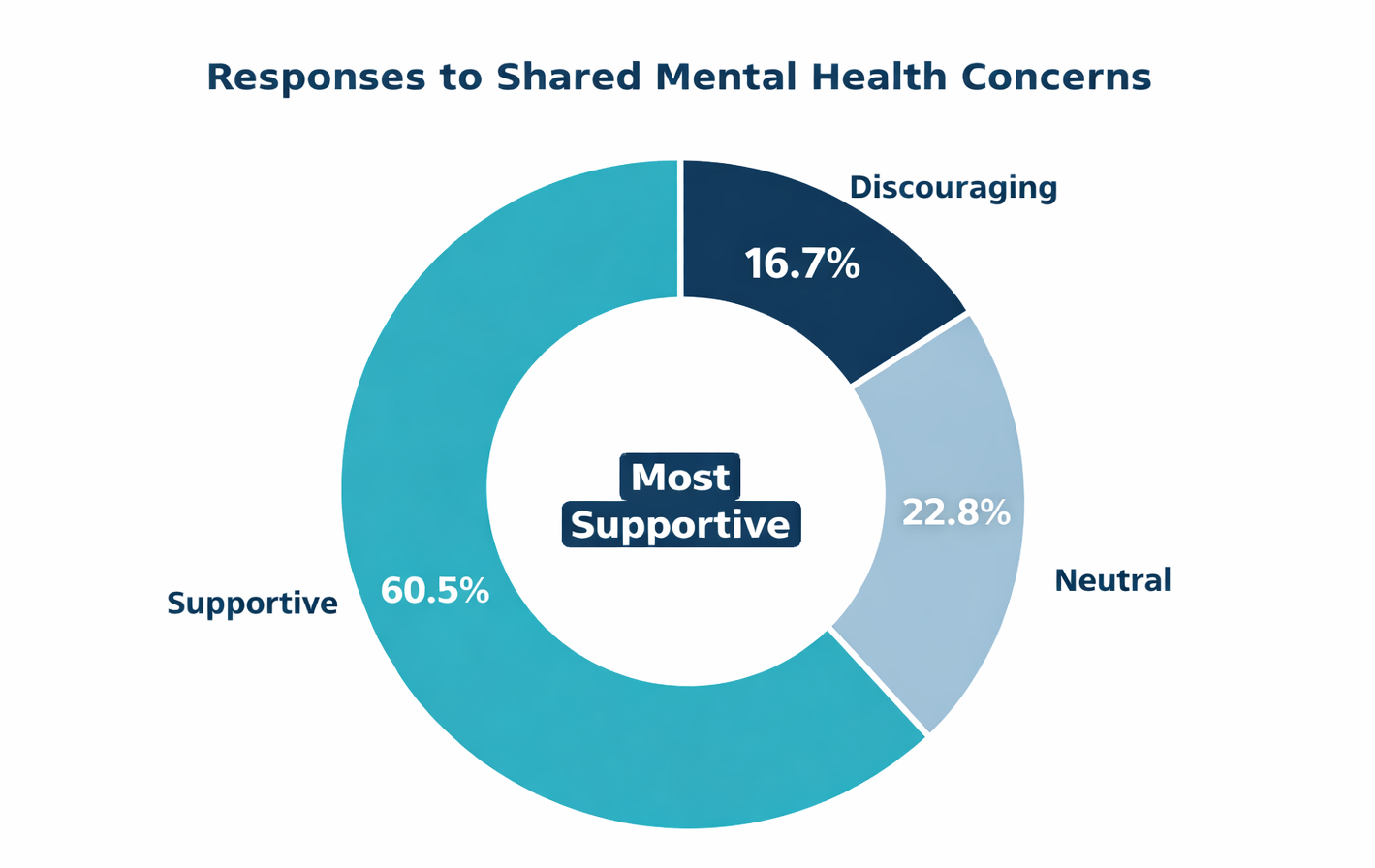
This finding aligns with a 2025 NAMI workplace Mental Health poll, which found that two in five Americans worry they would be judged if they shared about their mental health at work.
Although 60.5% reported supportive responses, 22.75% reported neutral reactions. Together, these responses explain why some people stop opening up to others and instead turn to AI, where responses feel more predictable.
41.2% people have experienced occasionally wrong advice from AI chatbots
A significant portion of users have encountered problems with AI-generated mental health advice. About 41.2% of respondents report receiving occasionally wrong or misleading guidance from chatbots. This raises concerns about the reliability of AI tools for something as sensitive as mental health support.
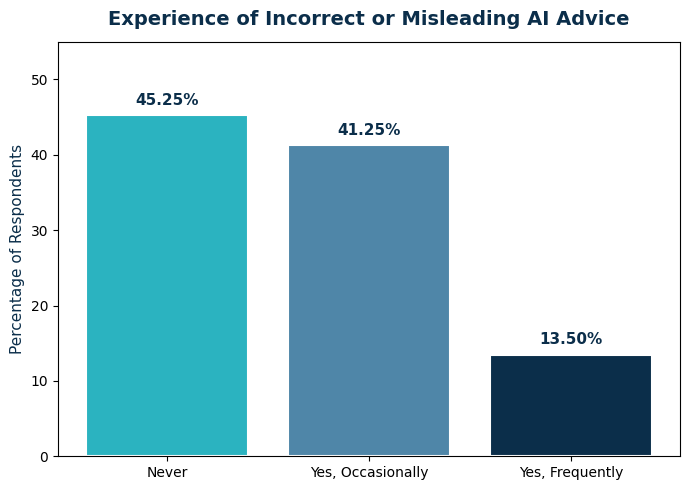
On the other hand, 45.25% report never having noticed misleading advice. However, the fact that over four in ten people have received incorrect guidance indicates that AI chatbots are far from foolproof. When mental health is at stake, even occasional mistakes can lead to serious consequences.
38% of Americans use AI chatbots weekly for emotional support
AI chatbots are no longer used only in moments of crisis. In the survey, 38% of respondents said they rely on these tools weekly for managing their mental health. This indicates that AI has become part of routine mental health maintenance.
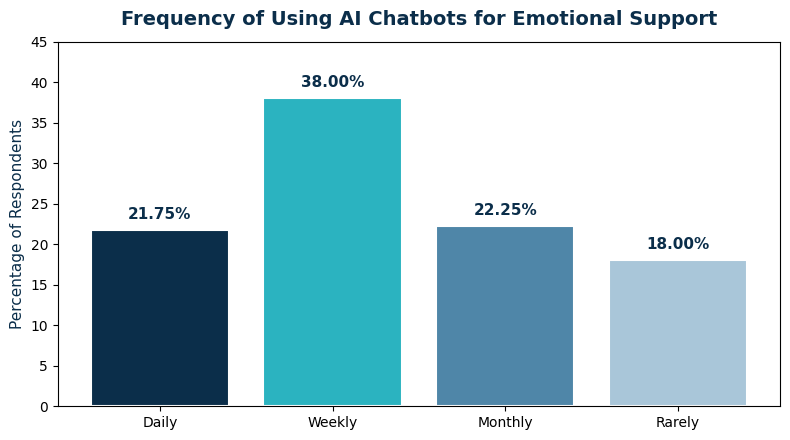
In addition, 21.75% of respondents use AI chatbots daily for mental health, and 22.25% use them monthly. Overall, nearly all respondents relied on AI for mental health support. These patterns indicate a shift from occasional to routine reliance.
64.25% report moderate to major improvement in their mental health
Many users believe AI chatbots are helping them feel better. Nearly two-thirds of Americans in the survey reported moderate to major improvement after using AI for mental health support, which explains why adoption continues to grow.
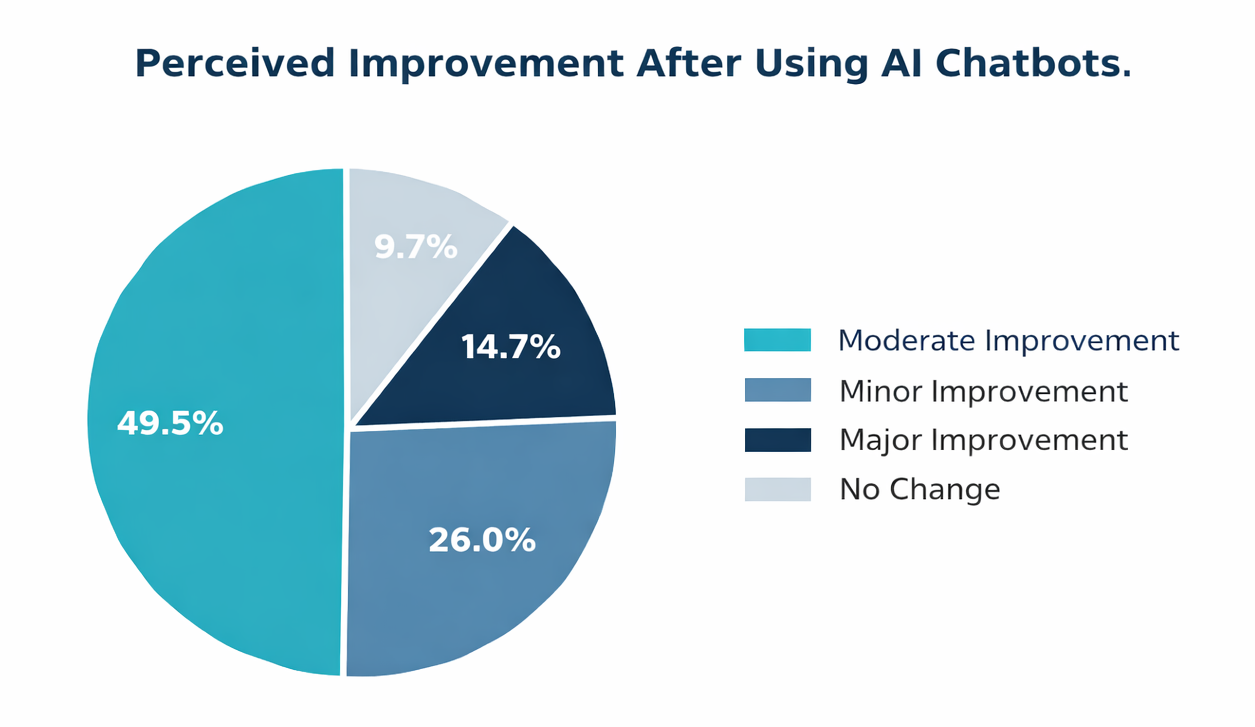
However, 26% noticed only minor improvement, and 9.75% saw no change at all. This shows that the tendency toward AI is not random, as a clear majority reports real benefits from its use.
30.5% say financial stress is the biggest mental health trigger
Money-related stress remains the leading cause of mental health struggles among respondents. Financial pressure topped the list with 30.5% respondents. It reflects how economic uncertainty continues to affect emotional well-being.
Loneliness followed at 21.25%, while family issues and childhood trauma each accounted for around 15%. Work-life balance affected nearly 10% of people. All these factors show that daily pressures and long-term stressors play a major role in mental health challenges.
Implications for Mental Health Care and AI Regulation
The survey results reveal several critical implications for mental health providers, policymakers, and technology companies:
Build Trust in Therapy Spaces: Every 1 in 3 Americans avoided human therapists for mental health due to fear of judgment. Mental health professionals must focus on creating environments where people feel safe opening up. Training programs should emphasize compassionate communication that reduces shame and encourages honest conversations about struggles.
Immediate AI Regulation Required: Over 41% received incorrect advice from chatbots. Tragic deaths like Adam Raine show an urgent need for oversight. Clear safety standards and accountability measures must be established for AI mental health platforms.
Address Financial Stress Directly: Financial pressure drives 30.5% of mental health struggles. Policymakers should recognize that therapy alone will not solve this crisis. Economic support programs and affordable mental health options could reduce the desperation that pushes people toward unregulated AI solutions.
Combine Human Care with AI Tools: Mental health systems should integrate chatbots as supplementary support rather than replacements. This respects the 64.25% of the respondents who reported improvements. However, ensuring human oversight protects users from dangerous guidance.
Methodology
This survey collected 400 responses from adults across the United States who have used AI chatbots for mental health support. The survey was conducted through Pollfish:
Age Range: Participants were 18 to 45 years old, representing a broad adult population.
Household Income: Respondents mainly fell within lower- to middle-income brackets, with incomes ranging from under $5,000 to $49,999.
Education Level: Most participants had a high school or college-level education, including 30% high school graduates, 20.5% bachelor’s degree holders, and 12.25% with a master’s degree.
Conclusion
This survey reveals why Americans are choosing AI chatbots over human support for mental health. Fear of judgment has become the biggest barrier. 1 out of every 3 respondents cited it as their main reason for turning to AI. This fear outweighs even cost and access issues. Nearly half of respondents make AI chatbots their first choice when facing mental health struggles, ahead of friends, family, or doctors.
Over 41% of respondents claim to have received wrong or misleading advice from chatbots. Real tragedies like the deaths of Adam Raine prove that AI guidance can be dangerous. Professional warnings from organizations like the American Psychological Association and research from Brown University confirm that these tools violate mental health ethics standards.
The findings point to a deeper crisis in human support systems. But the main reason why people are turning to AI chatbots is that they offer predictable and non-judgmental responses. People crave this non-judgmental approach but can't always find it in human relationships.
This shift highlights the urgent need to address mental health stigma while ensuring AI tools are properly regulated to protect vulnerable users.