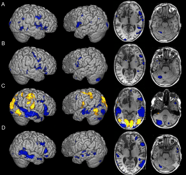
Your Brain Before and After TMS: What Imaging Actually Shows

Many patients who consider or undergo transcranial magnetic stimulation (TMS therapy) want to understand how this treatment affects their brains.

If you've been researching TMS for treatment-resistant depression, you've probably run into more than one version of the treatment and no clear answer about which one applies to you. Deep TMS and accelerated fMRI-guided TMS are both FDA-cleared, but they solve the problem in different ways, and the remission rates, cost, and time commitment aren't interchangeable.
Deep TMS uses a wider magnetic field to reach a broader area of the prefrontal cortex over four to six weeks. Accelerated fMRI-guided TMS images your brain first, targets a specific point in your own circuitry, and compresses fifty sessions into five days. Those different approaches are why the outcomes and price tag look so different between them.
This article breaks down how each treatment actually works, what the clinical trials found, what each course costs and takes, and who tends to do best with each one. By the end, you'll have what you need for an informed conversation with your care team about which approach fits your situation.
Deep TMS delivers magnetic pulses through a coil shaped like the letter H, held inside a cushioned helmet. The H-coil's magnetic field stimulates a wider and deeper area in the brain compared to the figure-8 coil used in standard TMS, . To treat depression, the device pulses at 18 Hz over the prefrontal cortex.
Reaching deeper areas means lower precision. Deep TMS covers more tissue, but technicians find the target using measurements taken over the scalp, not by imaging the patient’s brain. Two people with the same helmet placement can have meaningfully different underlying circuitry in their brain
The pivotal depression trial behind the FDA clearance for deep TMS enrolled 212 patients who had failed one to four antidepressants. After the acute phase, 38% of the active group responded and 33% reached remission, compared with 21% and 15% on sham. Those gains held through three months of maintenance. Deep TMS is also cleared for OCD, smoking cessation, and anxious depression, which gives it the widest set of indications of any TMS device.
SAINT® and SNT® are registered trademarks of The Board of Trustees of the Leland Stanford Junior University, exclusively licensed to Magnus Medical, Inc. Cognitive FX is not affiliated with, sponsored by, or endorsed by Stanford or Magnus Medical, does not use Magnus Medical equipment or software, and does not offer the SAINT® protocol. Cognitive FX provides its own fMRI-guided intermittent theta-burst TMS program, with targets determined by our clinical team and prescribing physician. Clinical-trial outcomes published for SAINT® (Cole et al., 2020 and 2022) reflect Stanford and Magnus Medical's specific protocol and should not be assumed to reproduce at Cognitive FX.
Accelerated fMRI-guided TMS keeps the focal figure-8 coil but changes three things: it images your brain first, it stimulates harder, and it compresses the whole treatment course into just 5 days. This is the protocol Stanford developed and tested as SAINT, then refined and confirmed as SNT, and it is the version of TMS built around precision rather than coverage.
The imaging step is the part that matters most. Before treatment, a resting-state functional MRI maps your brain while you lie still and locates the spot in the left dorsolateral prefrontal cortex (DLPFC) that is most strongly linked with the subgenual anterior cingulate, a deep region that malfunctions in patients with depression. Once this spot is found, stimulation is aimed there. This targets the specific location for each patient, not a population average. The protocol then delivers intermittent theta-burst stimulation (iTBS) in 10 sessions a day for five consecutive days, using a much higher pulse dose than a standard course packs into the same window.
The open-label SAINT study reported 91% remission in patients who completed treatment. The double-blind, sham-controlled trial that followed showed a 53% drop in depression scores at four weeks versus 11% for sham, with 71% of the active group responding and 57% reaching remission, against 13% and 0% on sham. These results form the basis for the September 2022 FDA clearance. A second double-blind trial published in 2026 replicated the effect in a larger sample, with 50% of active patients in remission at one month versus 21% on sham. Two independent controlled trials landing in the same range is what separates this protocol from a single promising result.
The target for TMS involves a circuit connecting different areas in the brain, not a single spot on the scalp. Depression involves an overactive subgenual anterior cingulate cortex, but this region is too deep for TMS to reach directly. Instead, TMS targets the left dorsolateral prefrontal cortex because these two areas are functionally connected. The catch is that the precise location in the prefrontal cortex wired most tightly to the subgenual cingulate sits in a different place in each person. Standard targeting ignores that, and uses external measurements in the scalp that identify a location that is somewhere in the right region for most people but off-target for many.
The science here is settled enough to act on. A prospective study tracked where stimulation actually landed in individual patients and measured each site's connectivity to the subgenual cingulate. The more a patient's stimulation site was correlated with the subgenual cingulate, the better that patient responded, and connectivity was the only factor that predicted response to active stimulation rather than sham. Put plainly: hit the spot that is most correlated with the depression hub, and outcomes improve. fMRI guidance exists to find that spot in you specifically.
This is the mechanism behind the higher remission numbers. When the coil sits over the part of your prefrontal cortex that is genuinely wired to the mood circuit, more of every pulse does useful work. When it sits a centimeter or two off, much of the dose is wasted on tissue that does not move the circuit.
Targeting decides where the dose goes. The accelerated schedule decides how much arrives and how fast. Ten sessions a day at a high pulse count drive far more total stimulation into the circuit across five days than a standard course delivers across six weeks. The brain appears to consolidate that massed stimulation into durable change rather than needing it spread thin over a month.
The timing of each session also matters. The protocol spaces the 10 daily sessions about 50 minutes apart, an interval drawn from work on how the brain best locks in repeated stimulation. And the underlying pulse pattern followed, called intermittent theta-burst, carries the most favorable balance of benefit and tolerability among the options studied . The accelerated protocol is not a gamble on doing more, faster. It stacks three evidence-backed choices: the right pattern, delivered in the right rhythm, at the right individual target.
Treatment is one work week. Before it starts, you have a single MRI mapping scan of about 45 minutes to identify your individualized target. Then for five consecutive days, you come in for ten short stimulation sessions a day, each only about 10 minutes, with roughly 50-minute breaks between them. You are awake and alert throughout, and people typically read, walk, or rest during the breaks.
Most of the day is the gaps between sessions, not the sessions themselves. Many people start noticing a shift in mood within the first couple of days rather than the first couple of weeks, which is part of why the compressed format suits people in acute distress or those who simply cannot clear six weeks of daily appointments. By Friday, the full course is done.
Standard TMS and Deep TMS land in a similar range. Multiple studies show around 30% remission for standard theta-burst stimulation and deep TMS These are solid, durable results for people who have run out of medication options, and both come from large randomized trials.
In contrast, accelerated fMRI-guided TMS reports much higher efficacy rates, about 57% remission in its first controlled trial, 50% in a 2026 replication trial, and 91% open-label. Those are the strongest depression-remission results published for any TMS protocol, and the targeting and dosing sections above explain why.
Two honest caveats keep this accurate. First, no study has put these protocols head to head in the same room with the same patients, so the comparison is across trials, not within one. Second, the open-label 90% figure sits at a lower evidence tier than the controlled trials, so the roughly 50 to 57% remission from the two randomized trials is the fair benchmark to use. Even at that conservative number, it leads the field, and the fact that two independent controlled trials agree is what makes it credible rather than a one-off. A pooled meta-analysis of accelerated protocols supports the practical case from another angle: accelerated TMS at least matches standard TMS on efficacy while compressing the timeline, with early signals of a lasting maintenance effect.
Deep TMS usually runs through insurance. For treatment-resistant depression, after two failed antidepressant trials, most major plans cover this treatment and the patient only pays a per-session copay. Self-pay courses, where they apply, generally fall in the several-thousand to roughly $12,000 range depending on the market and session count.
Accelerated fMRI-guided TMS costs more out of pocket today because it is newer and includes the imaging and targeting work. Some certified centers have cited around $30,000 - $36,000 for a full course. That picture is changing: in 2025 the Centers for Medicare and Medicaid Services established specific outpatient payments for accelerated treatment days and the targeting procedure, so reimbursement pathways are starting to open even though coverage still varies by plan and setting.
The cost gap is real, but it buys two things: a five-day course instead of six weeks, and targeting matched to your own brain.
This is the clearest difference. Deep TMS is about 20 minutes a day, five days a week, for four to six weeks, so 20 to 30 visits spread across more than a month.
Accelerated fMRI-guided TMS is five consecutive days. Each day runs ten short sessions with breaks in between, plus a one-time MRI mapping scan of about 45 minutes at the start. For someone who cannot step out of work or life for six weeks, or who needs relief fast, a single week is the difference between getting treated and not.
Deep TMS has the broader label. Beyond depression, deep TMS is FDA-cleared for OCD, with a pivotal trial showing a 38.1% response versus 11.1% on sham, rising to 45.2% at one-month follow-up. It also carries clearances for smoking cessation and anxious depression.
Accelerated fMRI-guided protocols are cleared for depression and are currently being studied to treat other conditions. An early meta-analysis of accelerated TMS for OCD found meaningful symptom reduction versus sham, though the evidence base is younger and smaller than the depression data. For now, breadth of indication is Deep TMS's advantage, and speed plus precision in depression is the accelerated approach's advantage.
TMS is well tolerated, and that holds across both approaches. It needs no anesthesia, no sedation, and no recovery time. You drive yourself home and go back to your day.
The most common side effect is a mild headache or scalp discomfort at the treatment site, which usually fades within the first week as you get used to the sensation. In the large standard-TMS trial, headache was the most frequent complaint in both arms, reported by about two-thirds of patients, and dropout rates stayed low. Neither the accelerated fMRI-guided studies nor the Deep TMS trials found cognitive downsides. Memory and thinking were tested before and after the accelerated course and showed no negative effects.
The only serious risk worth naming is seizure, but this is rare. In the Deep TMS depression trial, one patient suffered a seizure, but it happened during a protocol violation rather than under normal conditions. Standard screening covers the situation that raises that risk, including a personal history of seizures and certain medications, which is part of why a proper evaluation comes first. TMS is not used in people with non-removable metal or implanted devices near the head. None of this requires the systemic side effects that come with antidepressants, which is a large part of the appeal for people who could not tolerate medication.
A course of TMS can produce lasting relief, but depression is a relapsing condition, so durability is a fair question for any treatment, including medication.
For Deep TMS, the antidepressant effect held through a maintenance phase. In a continuation study, patients kept improving after the acute weeks, with an estimated response probability above 80% by the end of 22 weeks when treatment continued. For accelerated fMRI-guided TMS, a durability analysis followed patients after a single five-day course. Seventy percent entered remission in the week after treatment, and at 12 weeks, 47% of those who had remitted were still in remission without further treatment. That is honest two-sided news: a single course helps many people for months, and a meaningful share will need a maintenance plan to hold the gains.
The practical takeaway is that TMS is not always one-and-done, and the better clinics plan for that from the start. Knowing your relapse risk and having a maintenance or retreatment option mapped out matters more than the headline remission number.
The best candidates for TMS have treatment-resistant depression, meaning depression that has not lifted after at least one or two adequate antidepressant trials. That is the population studied in the pivotal trials, and it is where TMS earns its place.
Beyond that, accelerated fMRI-guided TMS suits a few situations especially well:
A proper evaluation decides candidacy. It covers your diagnosis and history, your prior treatments, your medications, and the safety screening described above. fMRI-guided care also means imaging is part of the workup, which is exactly the kind of brain-first assessment that should precede any neuromodulation.
TMS occupies a useful middle ground. Antidepressants are the usual first step, but remission rates fall with each failed medication, and many people cannot tolerate the side effects. TMS is the evidence-based next move when medication has not worked, and it avoids systemic drug effects entirely.
Ketamine and esketamine act fast but require ongoing dosing and carry their own monitoring and dissociative effects. Electroconvulsive therapy (ECT) remains the most powerful option for the most severe cases, but it involves anesthesia and carries memory side effects that TMS does not.
Accelerated fMRI-guided TMS is interesting precisely because it aims for fast, ECT-adjacent remission speed without anesthesia or cognitive cost, which is why the durability research frames it alongside those acute treatments. None of these is automatically right for everyone. The fit depends on severity, urgency, prior treatments, and what side effects you can live with.
Our team at Cognitive FX, based in Provo, Utah, offers a protocol that is:
Safe: Widely tolerated and associated with mild, short-lasting side effects.
Precise: fMRI ensures that the treatment target area is precisely located for each patient, accounting for variations in head size and shape. Neuronavigation ensures the magnetic coil is placed over that exact spot for every treatment session.
Fast: Treatment courses are reduced to a single week, making it easier to complete alongside life and work commitments (compared to 4 to 6 weeks of standard TMS and accelerated TMS protocols).
Effective: Precision coil placement combined with theta burst stimulation produces the best TMS treatment results to date.
To improve outcomes for our patients, we also include cognitive behavioral therapy (CBT) as a part of our treatment. When combined with the traditional method of TMS (rTMS), CBT improved response and remission rates by ~8% and ~19%, respectively. Additionally, CBT is likely to produce sustained improvement over time once treatment has concluded.
Our brain stimulation treatment is ideal for most patients with treatment-resistant depression. We treat patients as young as 14 (teens ages 14 to 17 with parental supervision), and patients over 65 need a consultation and a doctor visit before we can confirm they are a good fit. Additionally, as a safety measure, we do not treat patients who have a history of seizures or who are currently actively suicidal and in need of crisis care.
Click here to learn more about receiving accelerated fMRI TMS therapy at Cognitive FX.
Is TMS covered by insurance? Standard and Deep TMS are widely covered for treatment-resistant depression after two failed antidepressant trials, and you typically pay a per-session copay. Accelerated fMRI-guided TMS is newer and more often self-pay today, though Medicare and Medicaid began establishing payment pathways for it in 2025, and coverage is expanding.
Does TMS hurt? No. Most people feel a tapping sensation on the scalp and sometimes a mild headache early on. It does not require sedation, and you stay awake and alert.
How soon does TMS start working? Standard and Deep TMS usually show benefit over several weeks. With the accelerated fMRI-guided protocol, many people notice a mood shift within the first couple of days of the five-day course.
Can I keep taking my medication during TMS? Usually yes. TMS is often delivered alongside stable antidepressant doses. Your prescriber makes that call based on your specific medications.
How is fMRI-guided TMS different from regular TMS? Regular TMS finds the location for the coil using scalp measurement to land in roughly the right area. fMRI-guided TMS images your brain first and targets the precise spot wired to your depression circuit, then delivers a higher dose over five days instead of six weeks.
How many sessions will I need? A standard or Deep TMS course is about 20 to 36 sessions over four to six weeks. The accelerated fMRI-guided course is 50 sessions delivered as 10 a day across five days.
If you need the widest set of FDA-cleared uses, or your insurance strongly favors a standard course, Deep TMS is a proven path. If your priority is the highest reported remission rates and the fastest route there, with stimulation matched to your own brain, accelerated fMRI-guided TMS is built for exactly that.
The right answer depends on your history, your timeline, and your imaging. At Cognitive FX, we use functional neuroimaging to understand each patient's brain before we treat it, which is the same principle that makes fMRI-guided targeting work. Talk with our team about which approach fits your situation.
Levkovitz Y, et al. Efficacy and safety of deep transcranial magnetic stimulation for major depression: a prospective multicenter randomized controlled trial. World Psychiatry. 2015;14(1):64-73. https://doi.org/10.1002/wps.20199
Cole EJ, et al. Stanford Accelerated Intelligent Neuromodulation Therapy for Treatment-Resistant Depression. American Journal of Psychiatry. 2020;177(8):716-726. https://doi.org/10.1176/appi.ajp.2019.19070720
Cole EJ, et al. Stanford Neuromodulation Therapy (SNT): A Double-Blind Randomized Controlled Trial. American Journal of Psychiatry. 2022;179(2):132-141. https://doi.org/10.1176/appi.ajp.2021.20101429
Blumberger DM, et al. Effectiveness of theta burst versus high-frequency repetitive transcranial magnetic stimulation in patients with depression (THREE-D): a randomised non-inferiority trial. Lancet. 2018;391(10131):1683-1692. https://doi.org/10.1016/S0140-6736(18)30295-2
Shi R, et al. Short-term and long-term efficacy of accelerated transcranial magnetic stimulation for depression: a systematic review and meta-analysis. BMC Psychiatry. 2024;24(1):109. https://doi.org/10.1186/s12888-024-05545-1
Kishi T, et al. Theta burst stimulation for depression: a systematic review and network and pairwise meta-analysis. Molecular Psychiatry. 2024;29(12):3893-3899. https://doi.org/10.1038/s41380-024-02630-5
Carmi L, et al. Efficacy and Safety of Deep Transcranial Magnetic Stimulation for Obsessive-Compulsive Disorder: A Prospective Multicenter Randomized Double-Blind Placebo-Controlled Trial. American Journal of Psychiatry. 2019;176(11):931-938. https://doi.org/10.1176/appi.ajp.2019.18101180
Joseph JT, et al. Efficacy and safety of accelerated transcranial magnetic stimulation for obsessive-compulsive disorder: A systematic review and meta-analysis. Asian Journal of Psychiatry. 2025;106:104420. https://doi.org/10.1016/j.ajp.2025.104420
Weigand A, et al. Prospective Validation That Subgenual Connectivity Predicts Antidepressant Efficacy of Transcranial Magnetic Stimulation Sites. Biological Psychiatry. 2018;84(1):28-37. https://doi.org/10.1016/j.biopsych.2017.10.028
Kratter IH, et al. Stanford neuromodulation therapy for treatment-resistant depression: a randomized controlled trial confirming efficacy, and an EEG study providing insight into mechanism of action and a potentially predictive biomarker of efficacy. World Psychiatry. 2026;25(1):105-116. https://doi.org/10.1002/wps.70032
Harel EV, et al. H-coil repetitive transcranial magnetic stimulation for treatment resistant major depressive disorder: An 18-week continuation safety and feasibility study. World Journal of Biological Psychiatry. 2014;15(4):298-306. https://doi.org/10.3109/15622975.2011.639802
Geoly AD, et al. Durability of clinical benefit with Stanford Neuromodulation Therapy (SNT) in treatment-resistant depression. Brain Stimulation. 2025;18(3):875-881. https://doi.org/10.1016/j.brs.2025.04.006
SAINT® and SNT® are registered trademarks of The Board of Trustees of the Leland Stanford Junior University, exclusively licensed to Magnus Medical, Inc. Cognitive FX is not affiliated with, sponsored by, or endorsed by Stanford or Magnus Medical, does not use Magnus Medical equipment or software, and does not offer the SAINT® protocol. Cognitive FX provides its own fMRI-guided intermittent theta-burst TMS program, with targets determined by our clinical team and prescribing physician. Clinical-trial outcomes published for SAINT® (Cole et al., 2020 and 2022) reflect Stanford and Magnus Medical's specific protocol and should not be assumed to reproduce at Cognitive FX.



Many patients who consider or undergo transcranial magnetic stimulation (TMS therapy) want to understand how this treatment affects their brains.


For many people living with major depression, antidepressant medications either don’t work or only get them part of the way to recovery. Symptoms may ease for a while, but then return, or never fully...