Neuropathic POTS is the most common subtype of Postural Orthostatic Tachycardia Syndrome, affecting roughly 50% of all diagnosed patients. It is caused by damage to the small nerve fibers (called small fiber neuropathy) that control blood vessel constriction in the legs and abdomen. When these nerves fail, blood pools in the lower body every time you stand, and the heart races to compensate. The result is not just tachycardia. It is a full-body regulatory breakdown that produces brain fog, fatigue, GI dysfunction, neuropathic pain, and disability levels that match congestive heart failure.
If you have been diagnosed with POTS, or suspect you have it, understanding whether the neuropathic subtype is driving your symptoms changes what treatment looks like and how likely you are to recover.

What is neuropathic POTS and how does it differ from other subtypes?
POTS is not one condition. It is a syndrome with multiple underlying drivers, and the treatment that works depends on which driver is primary. If you are still learning about POTS generally, start with our complete guide.
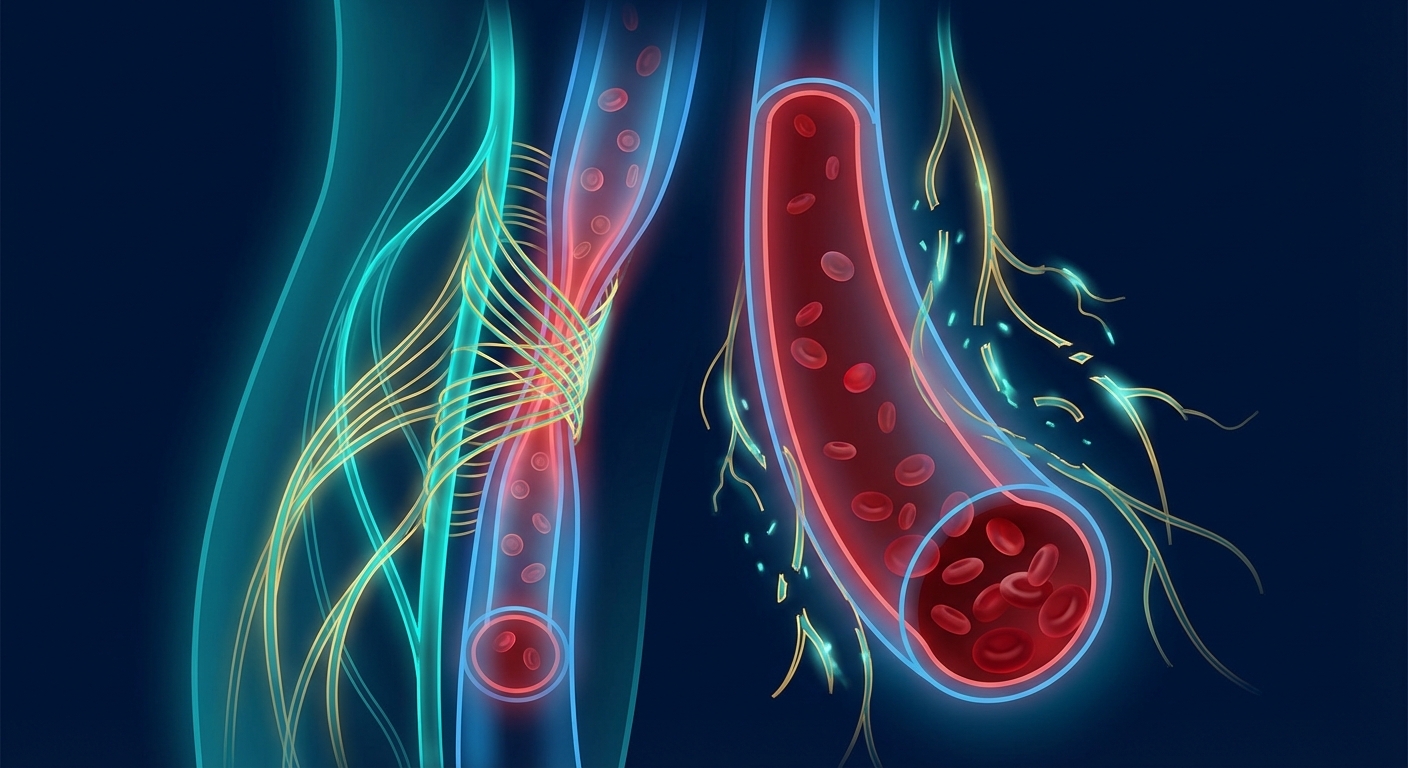
Neuropathic POTS results from damage to thin, unmyelinated C-fibers, the sympathetic postganglionic nerves that tell blood vessels to constrict. These are the same nerves measured in a skin punch biopsy. When they are working properly, they release norepinephrine at the vascular wall to tighten vessels and push blood upward against gravity. When they are damaged, vessels in the legs and abdomen stay too relaxed. Blood falls and stays low. The heart detects the drop in venous return and races to keep cardiac output up.
A landmark Vanderbilt University study published in the New England Journal of Medicine (Jacob et al., 2000) confirmed this by measuring norepinephrine release separately in the arms and legs. POTS patients had significantly lower norepinephrine in the leg veins (135 vs. 215 pg/mL in controls, P = 0.001), while arm measurements looked normal. The nerve damage follows a length-dependent pattern. The longest fibers fail first, which is why the legs are hit hardest.
The other major subtypes work differently:
Hyperadrenergic POTS involves excessive sympathetic activation rather than denervation. Standing norepinephrine shoots above 600 pg/mL (often above 1,000), blood pressure spikes alongside heart rate, and patients report intense anxiety, tremor, and cold sweaty hands. Read more about hyperadrenergic POTS here.
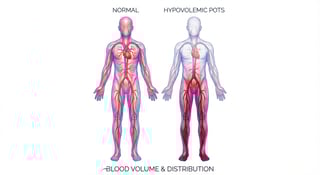
Hypovolemic POTS stems from abnormally low blood volume, roughly a 13% plasma deficit, caused by a paradoxical suppression of the renin-aldosterone system.
These subtypes overlap. A neuropathic POTS patient often develops hyperadrenergic features as the brain ramps up sympathetic drive to compensate for the peripheral nerve failure. This is not a contradiction. It is the nervous system doing its job with broken tools.
What does neuropathic POTS feel like?
The symptoms extend far beyond a fast heartbeat. POTS produces disability across virtually every organ system, and the neuropathic subtype carries some distinct markers that help clinicians identify it.
Acrocyanosis is the most visually obvious sign. Present in 40-50% of POTS patients, it shows up as a dark red-blue or purple discoloration of the feet and lower legs within minutes of standing. The skin feels cold to the touch. This happens because damaged sympathetic nerves cannot constrict the cutaneous vessels, so blood stagnates in the superficial veins. If your feet turn purple when you stand, that is a strong signal pointing toward neuropathic POTS specifically.
Brain fog is often the most disabling symptom. More than 95% of POTS patients report cognitive impairment, with 67% experiencing it daily. Testing reveals deficits in attention, processing speed, executive function, and working memory. In neuropathic POTS, a key finding is that working memory deficits occur only when upright and improve with something as simple as drinking water (Rodriguez et al., 2019). This confirms the cognitive problems are hemodynamically driven: the brain is not getting enough blood. We cover POTS brain fog in depth here.
GI dysfunction affects 96% of POTS patients. Nausea (79-86%), constipation (70%), bloating (55-67%), and abdominal pain (59-70%) are the most common complaints. In the neuropathic subtype, these symptoms may result from the same small fiber damage affecting the gut's enteric nervous system.
Other hallmark symptoms include exercise intolerance and chronic fatigue (nearly universal), neuropathic pain with burning, tingling, or numbness in the hands and feet, patchy loss of sweating, particularly in the lower extremities (present in about 50% and highly suggestive of the neuropathic subtype), temperature dysregulation and heat intolerance, and sleep disturbances.
Quality of life data puts this in perspective. POTS patients score as impaired as people with congestive heart failure on standardized measures (Benrud-Larson et al., 2002). About 25% are functionally disabled. Only 48% maintain employment, and 70.5% report lost income.
What causes neuropathic POTS?
The small fiber damage driving neuropathic POTS does not happen randomly. Four categories of triggers account for the vast majority of cases.
Autoimmune attack on autonomic nerves
The evidence for autoimmunity in POTS is building rapidly, though the picture is more nuanced than early reports suggested. Multiple research groups have found autoantibodies targeting the receptors that control autonomic function. The most compelling evidence comes from functional studies. Li and colleagues (2014, 2021) demonstrated that POTS patient serum actively binds and disrupts adrenergic receptors in lab assays. When they immunized rabbits with adrenergic receptor peptides, the animals developed POTS-like physiology that resolved when the autoantibodies were cleared. That is direct causal evidence.
The clinical testing picture is more complicated. Standard blood tests (ELISA) for these autoantibodies have not reliably distinguished POTS patients from healthy controls in well-designed studies (Raj et al., 2022, Circulation). This does not mean autoimmunity is not involved. It means the commercially available tests are not sensitive or specific enough to use as clinical diagnostics yet. Functional bioassays that measure what the antibodies do rather than just whether they are present appear to be more informative.
About 20% of POTS patients have an identifiable autoimmune comorbidity (Hashimoto's, Sjogren's, celiac disease). In pediatric patients with confirmed small fiber neuropathy, the odds of positive autoimmune markers are 3 times higher than in those without nerve damage (Moak et al., 2024).
Post-viral and post-infectious triggers
Over half of POTS patients (50-60%) trace their symptom onset to a viral illness. Long COVID has become the single largest trigger. A 2025 Norwegian study using objective tilt table testing found that 31% of highly symptomatic Long COVID patients met full POTS criteria (Circulation: Arrhythmia and Electrophysiology). The proposed mechanisms include molecular mimicry (the immune system confuses viral proteins with autonomic nerve proteins), direct viral invasion of autonomic neurons, and persistent neuroinflammation.
An encouraging finding: one longitudinal study found POTS prevalence in Long COVID patients dropped from 71% in the first year to 0% after two years, suggesting many post-viral cases resolve over time.
Other established viral triggers include Epstein-Barr virus, Lyme disease, and influenza. Post-vaccination POTS has been reported but is significantly less common than post-infection POTS. A Nature Cardiovascular Research analysis found POTS risk was five times higher after COVID-19 infection than after vaccination.
Ehlers-Danlos Syndrome and the genetic connection
About 80% of patients with hypermobile Ehlers-Danlos Syndrome (hEDS) also have POTS. The connection runs through the connective tissue: weakened vessel walls allow excessive venous pooling, and fragile connective tissue may leave small nerve fibers more vulnerable to damage. Since hEDS follows autosomal dominant inheritance, this represents a clear genetic pathway for POTS susceptibility. About 15% of POTS patients have a first-degree relative with the condition.
The clinical triad of hEDS, POTS, and Mast Cell Activation Syndrome (MCAS) has been described with increasing frequency. A 2025 study of 392 patients (Yao et al., Frontiers in Neurology) confirmed the overlap is real and coined the term "autonomic neuro-immune axis dysfunction."
Brain injury and concussion
This is where the neuropathic POTS story intersects with post-concussion syndrome, and the overlap has significant treatment implications. We have written extensively about post-concussion autonomic dysfunction.
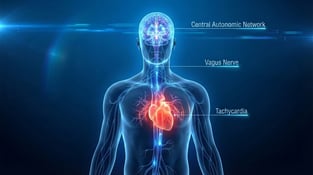
The brain contains a distributed network of autonomic control centers called the Central Autonomic Network (CAN). This network includes the insular cortex, hypothalamus, nucleus tractus solitarius (NTS) in the brainstem, and the ventrolateral medulla. Together, these structures coordinate every cardiovascular adjustment your body makes when you change position. TBI can damage any of them directly, or sever the white matter connections between them, creating what researchers have called a "disconnection syndrome" (Meyfroidt et al., 2017, The Lancet Neurology).
The prevalence numbers are striking. Heyer and colleagues (2016) found that 70.6% of youth with persistent post-concussion symptoms had abnormal tilt table results, and 41% met full POTS criteria. Miranda et al. (2018) found 11.4% of POTS patients at a large pediatric center reported onset within three months of a concussion.
The critical problem is recognition. POTS symptoms after concussion (dizziness, brain fog, fatigue, exercise intolerance, tachycardia, nausea) look identical to standard post-concussion symptoms. Clinicians attribute everything to the head injury and never check for POTS. This is part of why POTS is so often misdiagnosed as anxiety.
Post-concussion autonomic dysfunction appears to be reversible. Heyer et al. showed that 75% of PCS patients with POTS had normal tilt table results once their concussion symptoms improved. The autonomic disruption can resolve when the underlying brain dysfunction is treated.
How is neuropathic POTS diagnosed?
Confirming POTS requires demonstrating the characteristic heart rate response. Confirming the neuropathic subtype requires a second layer of testing to identify the small fiber damage. Our full diagnostic guide covers this in detail.
Tilt table test or active standing test confirms POTS: a sustained heart rate increase of 30 bpm or more within 10 minutes of standing (40 bpm or more for ages 12-19), without orthostatic hypotension, with symptoms lasting at least 3-6 months.
Skin punch biopsy is the gold standard for confirming small fiber neuropathy. A 3mm biopsy from the lower leg is stained to count the density of nerve fibers crossing into the epidermis. Results below the 5th percentile for age and sex confirm SFN. Sensitivity ranges from 74-90%, specificity from 64-90%.
QSART (Quantitative Sudomotor Axon Reflex Test) measures sweat nerve function. About 56% of POTS patients have abnormal QSART results. Importantly, biopsy and QSART results often disagree in the same patient, meaning they identify different subsets of nerve damage and should be used together.
Blood testing screens for autoimmune drivers and treatable causes: ANA, antithyroid antibodies, celiac panel, HbA1c, B12, CRP/ESR, thyroid function, and catecholamine levels (supine and standing).
The diagnostic journey is notoriously long. POTS patients wait an average of nearly 6 years and see 7 different doctors before getting a correct diagnosis. Sixty-nine percent are initially told they have anxiety. After proper diagnosis, only 37% continue to carry a psychiatric label.
What treatments work for neuropathic POTS?
Treatment for neuropathic POTS works best when it addresses the underlying nervous system dysfunction rather than just suppressing symptoms. The strongest evidence supports exercise reconditioning, but the most complete recovery comes from programs that combine physical rehabilitation with targeted neurological inputs.
Exercise reconditioning is the single most effective intervention
The Levine protocol (also called the Dallas protocol) is the gold standard. A 2011 study in Hypertension compared three months of structured exercise to propranolol in 19 POTS patients. Exercise produced a 12% increase in heart mass, a 7% increase in blood volume, and 53% of participants no longer met POTS criteria. Quality of life improved significantly (physical functioning score: 33 to 50). Propranolol reduced heart rate but did not improve quality of life at all (34 to 36, P = 0.63).
The protocol starts with recumbent exercise only (swimming, rowing, recumbent bike) for the first 1-3 months. This is critical because it eliminates the orthostatic stress that makes upright exercise intolerable. Upright exercise is introduced gradually after cardiovascular reconditioning has begun to restore stroke volume. Community-based data showed 71% remission among completers, though only 41% completed the full program. The dropout rate reflects the fundamental challenge: the treatment requires doing the thing the disease makes hardest.
Compression and hydration form the baseline
A 2021 randomized study found full abdominal-leg compression reduced standing heart rate from 109 bpm to 92 bpm (P < 0.001). Abdominal compression alone outperformed leg-only compression because the abdomen holds a larger blood volume. Waist-high garments at 30-40 mmHg are recommended over knee-high stockings.
Fluid intake of 2-3 liters daily, salt loading (6-10g daily based on clinician guidance), and small frequent low-carb meals form the nutritional foundation. These expand plasma volume and reduce the orthostatic deficit that drives symptoms.
Neurological rehabilitation targets the brain-level dysfunction
Salt, compression, and exercise address what is happening downstream. They expand blood volume, physically prevent pooling, and recondition the heart. But for patients whose POTS involves central autonomic dysregulation (particularly after brain injury, concussion, or viral illness affecting the brainstem), the upstream regulation problem also needs direct attention. The nucleus tractus solitarius in the brainstem is not receiving, integrating, or responding to baroreceptor signals accurately. The vestibular system is sending imprecise gravity and position data. Breathing chemistry is off. Until those inputs are corrected, the autonomic system keeps misfiring no matter how much salt you consume.
The research supports this layered approach. Vestibular rehabilitation (which is in direct communication with autonomic cardiovascular centers) produced clinically significant improvement in 63% of POTS patients in a 2025 tertiary clinic study. Resonance frequency breathing at approximately 6 breaths per minute is the strongest non-invasive amplifier of baroreflex gain in the research literature, directly training the NTS to respond more accurately to orthostatic challenges. HRV biofeedback after TBI improved baroreflex engagement and cognitive outcomes in a 2025 randomized controlled trial (Talbert et al.). Isometric wall sits were ranked as 90.5% effective for blood pressure reduction across a 2023 meta-analysis of 270 trials, improving the autonomic control of vascular tone that neuropathic POTS patients lack.
Medications manage symptoms but do not reverse the condition
No FDA-approved medications exist for POTS. All drug treatments are off-label and considered second-line. Ivabradine (a heart rate reducer that does not affect blood pressure) is the most promising, with 78% of patients reporting improvement in retrospective data. Low-dose propranolol (10-20 mg) reduces tachycardia, but higher doses worsen fatigue. Midodrine directly promotes vasoconstriction and is particularly logical for the neuropathic subtype. For patients with confirmed autoimmune-driven neuropathic POTS, IVIG has been explored, though a 2024 randomized trial found no clear benefit over albumin placebo.
Treating POTS as a Neurological Condition at Cognitive FX
At Cognitive FX, the POTS/ANS Therapy Program combines these evidence-based interventions into an intensive, individualized format. The program runs across multiple days. Day 1 is a full evaluation: heart rate, blood pressure, and oxygen saturation measured seated and standing, tilt table testing, vestibular assessment, cranial nerve and NTS assessment, supplement screening, and goal setting. This evaluation identifies your specific POTS profile (neuropathic, hyperadrenergic, hypovolemic, post-viral, post-concussive, or a combination) and determines which systems are the primary drivers.
Treatment days run approximately six hours each of individualized, protocol-driven therapy targeting five key systems:
Cranial nerve activation
The NTS is where all baroreceptor input from cranial nerves IX and X converges before the autonomic response is coordinated. In POTS, the NTS is not lesioned. It is dysregulated: intact circuitry that is poorly calibrated. The program uses a sequenced cranial nerve stacking protocol that progressively loads the NTS through its accessible afferent inputs. Carotid sinus activation delivers baroreceptor signaling through CN IX. The dive reflex (cold applied to the face) triggers the trigeminovagal pathway through CN V to boost cardiac vagal output. Resonance frequency breathing at each patient's individual resonance rate (typically 4.5 to 7 breaths per minute) entrains baroreflex oscillations at their natural frequency of approximately 0.1 Hz. A salt water gargle activates CN IX pharyngeal mechanoreceptors while simultaneously delivering a sodium-sensing signal to the rostral NTS. The sequence finishes with a graded orthostatic transition (lying to sitting to standing with resonance breaths at each stage), applying the primed NTS state to the functional challenge that POTS makes hardest: standing up.
Vestibular recalibration
The vestibular organs detect gravity, linear acceleration, and rotation, and they are in constant direct communication with the autonomic nervous system. When vestibular processing is inaccurate or delayed, the cardiovascular adjustments needed to maintain brain perfusion misfire. The program trains both the saccule (vertical linear acceleration, activated through controlled vertical oscillation exercises progressing from supine to seated to standing) and the utricle (horizontal linear acceleration, trained through anterior-posterior and mediolateral sway drills). VOR (vestibulo-ocular reflex) training recalibrates the fastest reflex in the body, reducing the dizziness, nausea, and visual instability that compound POTS symptoms. Each vestibular exercise is performed with a fixed gaze target, and progression follows a strict symptom threshold: challenge without exceeding a 3-4/10 symptom increase.
Breathing chemistry and CO2 tolerance
Carbon dioxide is what breaks the bond between oxygen and hemoglobin so that oxygen can enter cells. If CO2 is too low (a common finding in POTS patients who chronically hyperventilate), tissue oxygenation suffers even when blood oxygen levels look normal. This produces brain fog, cold extremities, dizziness, and anxiety that overlap with and amplify POTS symptoms. The program retrains breathing mechanics from the ground up: nasal breathing as the default (mouth breathing activates sympathetic fight-or-flight signaling with every breath), diaphragmatic initiation, extended exhale techniques that shift the system toward parasympathetic dominance, and progressive CO2 tolerance training using breath holds and precision CO2 delivery devices. The goal is to raise the brainstem's CO2 set point so the respiratory drive stops triggering unnecessary sympathetic activation.
NeuroCardio interval training
Standard exercise reconditioning (like the Levine protocol) rebuilds cardiovascular capacity gradually over months. The program's NeuroCardio interval training (NCT) works a different angle: it forces the sympathetic and parasympathetic systems to cycle between full effort and complete rest within a single session, retraining the autonomic switching that is dysregulated in POTS. Sessions run 20 minutes. Each interval is 30 seconds of maximal effort followed by full recovery (breathing returns to baseline, heart rate drops) before the next round. The number of intervals is determined by recovery time, not a target count. If you only complete 1-2 rounds with full recovery, that is the right dose. The training effect comes from the recovery, not the exertion.
Isometric training and spinal autonomic support
Isometric wall sits and hand grip exercises improve autonomic control of vascular tone with as few as three sessions per week. Thoracic spine mobility work targets blood flow and sensory input to the intermediolateral (IML) nucleus, the column of preganglionic sympathetic neurons spanning T1-L2 that governs downstream vascular output. Progressive muscle relaxation and autogenic training build interoceptive awareness and parasympathetic access on demand, giving patients a tool to actively shift their autonomic state rather than being at its mercy.
Patients leave with a structured home program covering all of these systems, organized into morning, midday, evening, and bedtime blocks. Compression garments, salt and fluid loading, head-of-bed elevation, and physical counter-maneuvers (squatting, leg crossing with tensing, pre-standing hand grip) are integrated as the foundational support layer underneath the neurological work. The home program is designed to be progressive: start with the morning cranial nerve stack and breathing work, add isometrics and vestibular training as those become stable, layer in NCT intervals once breathing baseline has improved.
Published outcomes from Cognitive FX's EPIC Treatment protocol for post-concussion patients show an 80% average reduction in objective brain dysfunction scores, with results stable at one-year follow-up. For patients with concurrent POTS and post-concussion syndrome, addressing the brain-level dysfunction often resolves the autonomic symptoms that standard POTS treatments could not reach.
To learn whether you’re a candidate for our five-day neurological POTS treatment program, take our quiz to see if you’re a fit for treatment
Can neuropathic POTS go away?
Roughly 50% of patients improve significantly within 1-3 years, and about 80% show meaningful improvement over time. Complete remission rates range from 19-33%, with better outcomes in younger patients and those who maintain consistent exercise. After the Levine exercise protocol specifically, 53% no longer meet POTS diagnostic criteria.
The factors that predict better outcomes include younger age at onset, consistent exercise (the single strongest modifiable factor), early diagnosis and treatment, identification and treatment of the underlying cause (autoimmune, post-viral, post-concussion), and for post-concussion patients, targeted rehabilitation addressing the brain systems that regulate autonomic function.
The neuropathy itself may persist on testing even as symptoms improve. Functional adaptation and cardiovascular reconditioning can compensate substantially for residual nerve damage. For patients whose POTS involves central autonomic dysregulation, correcting the upstream brain-level dysfunction can restore regulation even when some peripheral nerve damage remains.
The research pipeline is moving faster than ever
The post-COVID surge in POTS cases has accelerated research investment dramatically. The NIH RECOVER-AUTONOMIC trials (the largest coordinated POTS treatment study ever) are testing IVIG, ivabradine, and non-drug care across 380 participants at 50 U.S. sites. Regeneron has initiated the first pharmaceutical company-sponsored Phase 2 trial for POTS (REGN7544, an NPR1 antagonist antibody). The first candidate blood biomarkers for POTS were identified in a 2025 proteomic analysis. And the NIH formally prioritized POTS through a 2024 Notice of Special Interest calling for biomarker, wearable technology, and genetic studies.
For patients living with neuropathic POTS right now, the trajectory is clear: meaningful recovery is achievable for the majority, and the treatment landscape is expanding faster than at any point in the condition's history.
See if our POTS treatment program is right for you
Most POTS treatment stops at symptom management: salt, compression, and medications to blunt the heart rate response. Those tools matter, and we use them. But if your autonomic nervous system is misfiring because the brainstem, vestibular system, or cranial nerve pathways that regulate it are dysregulated, no amount of salt loading will fix that. The nervous system needs the right inputs to recalibrate.
If you have POTS, especially if it developed after a concussion, viral illness, or brain injury, and you have tried the standard approaches without lasting improvement, take our quiz to see if you’re a fit for our neurologic-based treatment.
Not medical advice, informational purpose only.
References
- Jacob G, Costa F, Shannon JR, et al. The neuropathic postural tachycardia syndrome. N Engl J Med. 2000;343(14):1008-1014. PubMed
- Gibbons CH, Bonyhay I, Benson A, Wang N, Freeman R. Structural and functional small fiber abnormalities in the neuropathic postural tachycardia syndrome. PLoS One. 2013;8(12):e84716. PMC
- Haensch CA, Tosch M, Katona I, Weis J, Isenmann S. Small-fiber neuropathy with cardiac denervation in postural tachycardia syndrome. Muscle Nerve. 2014;50(6):956-961. PubMed
- Arnold AC, Ng J, Raj SR. Postural tachycardia syndrome: Diagnosis, physiology, and prognosis. Auton Neurosci. 2018;215:3-11. PubMed
- Thieben MJ, Sandroni P, Sletten DM, et al. Postural orthostatic tachycardia syndrome: the Mayo Clinic experience. Mayo Clin Proc. 2007;82(3):308-313. PubMed
- Gunning WT III, Kvale H, Kramer PM, Karabin BL, Grubb BP. POTS is associated with elevated G-protein coupled receptor autoantibodies. J Am Heart Assoc. 2019;8(18):e013602. JAHA
- Raj SR, Guzman JC, Harvey P, et al. Detection of G protein-coupled receptor autoantibodies in POTS using standard methodology. Circulation. 2022;146(8):613-622. Circulation
- Li H, Yu X, Liles C, et al. Autoimmune basis for postural tachycardia syndrome. J Am Heart Assoc. 2014;3(1):e000755. PubMed
- Vernino S, Bryarly M, Hopkins S, et al. Ganglionic acetylcholine receptor antibodies in postural tachycardia syndrome. Neurol Clin Pract. 2021;11(5):e686-e691. PMC
- Moak JP, Leong D, Gurbani N, et al. Small fiber neuropathy in children and young adults with POTS. Auton Neurosci. 2024;252:103157. PubMed
- Ormiston CK, Swendseid B, et al. Prevalence and clinical impact of POTS in highly symptomatic Long COVID. Circ Arrhythm Electrophysiol. 2025;18(1):e013629. PubMed
- Fedorowski A, et al. Cardiovascular autonomic dysfunction in post-COVID-19 syndrome. Nat Rev Cardiol. 2024;21(6):379-395. Nature
- Kwan AC, Ebinger JE, Wei J, et al. The risks of POTS after COVID-19 vaccination and SARS-CoV-2 infection. Nat Cardiovasc Res. 2022;1:1101-1103. Nature
- Meyfroidt G, Baguley IJ, Menon DK. Paroxysmal sympathetic hyperactivity: the storm after acute brain injury. Lancet Neurol. 2017;16(9):721-729. PubMed
- Khalid F, Yang GL, McGuire JL, et al. Autonomic dysfunction following traumatic brain injury: translational insights. Neurosurg Focus. 2019;47(5):E8. JNS
- Heyer GL, Fischer A, Wilson J, et al. Orthostatic intolerance and autonomic dysfunction in youth with persistent postconcussion symptoms. Clin J Sport Med. 2016;26(1):40-45. PubMed
- Miranda NA, Boris JR, Kouvel KM, Stiles L. Activity and exercise intolerance after concussion: Identification and management of POTS. J Neurol Phys Ther. 2018;42(3):163-171. LWW
- Kanjwal K, Karabin B, Grubb BP. Autonomic dysfunction presenting as POTS following traumatic brain injury. Cardiol J. 2010;17(5):482-487. PubMed
- Bilan A, Chen D, Siddiqui T, Shen WK, Singer W. Skin biopsy and QSART in patients with POTS. Auton Neurosci. 2022;244:103060. PMC
- Shaw BH, Stiles LE, Bourne K, et al. The face of postural tachycardia syndrome. J Intern Med. 2019;286(4):438-448. PMC
- Fu Q, VanGundy TB, Shibata S, Auchus RJ, Williams GH, Levine BD. Exercise training versus propranolol in the treatment of POTS. Hypertension. 2011;58(2):167-175. PubMed
- George SA, Bivens TB, Howden EJ, et al. The international POTS registry: Evaluating exercise training in a community setting. Heart Rhythm. 2016;13(4):943-950. PubMed
- Bourne KM, Sheldon RS, Hall J, et al. Abdominal compression as a treatment for POTS. J Am Heart Assoc. 2021;10(4):e017610. JAHA
- Benrud-Larson LM, Dewar MS, Sandroni P, et al. Quality of life in patients with POTS. Mayo Clin Proc. 2002;77(6):531-537. PubMed
- Raj SR, Black BK, Biaggioni I, et al. Propranolol decreases tachycardia and improves symptoms in POTS: less is more. Circulation. 2009;120(9):725-734. PubMed
- Yao B, Maxwell CR, et al. Association of POTS, hypermobility spectrum disorders, and mast cell activation syndrome. Front Neurol. 2025;16:1513199. Frontiers
- Fedorowski A. Postural orthostatic tachycardia syndrome: clinical presentation, aetiology and management. J Intern Med. 2019;285(4):352-366. PubMed
- Dysautonomia International. Diagnostic delay in POTS. Link