If you have postural orthostatic tachycardia syndrome (POTS), you already know what a flare feels like. Your heart starts racing the moment you stand, the room tilts, and a fatigue sets in that's out of proportion to anything you actually did.. What you may not know is exactly why it happens, or why some days are so much worse than others.
POTS flares are not random. They follow a predictable logic rooted in how your autonomic nervous system (ANS) works and what pushes it past its tolerance threshold. Understanding that logic is the first step toward fewer bad days.
This article covers the ten most common POTS flare triggers, the neurological mechanism behind each one, and what the evidence says about managing them, including why standard treatments help some patients but leave many others still struggling.
In this article:
This article covers the ten most common POTS flare triggers, the neurological mechanism behind each one, and what the evidence says about managing them — including why standard treatments help some patients but leave many others still struggling.
What Is Actually Happening in Your Nervous System During a POTS Flare?
Before you can understand what triggers a flare, it’s important to understand what’s already wrong.
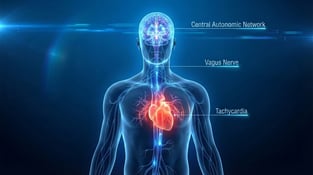
POTS is not a heart problem. The heart rate spike is a symptom of a deeper failure involving the autonomic nervous system's inability to properly regulate blood flow when your body changes position. When you stand up, gravity pulls roughly 500 to 750 milliliters of blood toward your legs and abdomen. In a healthy person, the ANS compensates automatically: blood vessels constrict, heart rate nudges upward slightly, and blood reaches the brain without a problem.
In patients with POTS, however, this compensation fails. Blood pools in the lower body, the heart races to compensate, and the brain does not receive enough blood.
The reason behind this failure is neurological, not cardiovascular. Certain brain regions, including the left anterior insula, the paraventricular nucleus of the hypothalamus, and brainstem structures like the nucleus tractus solitarius, are responsible for orchestrating the cardiovascular response to standing.
Neuroimaging studies show measurable differences in these areas in POTS patients. When those control centers are not working properly, the system defaults to sympathetic overdrive: a persistent fight-or-flight state that cannot be easily dialed back.
This is the baseline state in POTS. The sympathetic nervous system (responsible for the “fight or flight” response) is overactive. The parasympathetic branch (responsible for the "rest and digest" counterbalance) is underactive. The system is already operating near its limit. A flare happens when something tips the balance further. Any additional physiological demand, such as heat, dehydration, a large meal, a stressful event, a hormonal shift, draws on compensatory reserves that are already depleted. The result is a symptomatic crisis that can last hours to days.
How Do POTS Subtypes Affect Which Triggers Hit Hardest?
Not all POTS is the same, and your subtype determines which triggers are most dangerous for you. Take the quiz and get an idea of what symptoms match what type of POTS you may have.
-
Hyperadrenergic POTS involves elevated standing norepinephrine levels (above 600 pg/mL). These patients have the most exaggerated sympathetic responses. Emotional stress, stimulants, and histamine-releasing events are particularly dangerous, and blood pressure often rises rather than falls when standing.
-
Neuropathic POTS involves partial autonomic nerve damage that impairs peripheral vasoconstriction. Heat, prolonged standing, and dehydration hit hardest, because the blood vessels simply cannot tighten fast enough to compensate. Salt and fluid loading is especially important for this subgroup.
-
Long COVID-related POTS combines classical ANS dysfunction with ongoing neuroinflammation, possible small fiber neuropathy, and autoantibody production. Illness reactivation is the most dangerous trigger for relapse, and post-exertional malaise is more severe. These patients typically need slower, more conservative exercise progression than classic POTS.
-
POTS with hypermobile EDS (hEDS) adds connective tissue laxity to the picture. Stretchier blood vessel walls make pooling worse, even during minor orthostatic challenges. These patients often need higher sodium targets and may have difficulty tolerating compression garments.
-
POTS with Mast Cell Activation Syndrome (MCAS) is the most complex subgroup. Heat, high-histamine foods, stress, and certain medications can trigger mast cell degranulation, producing histamine and other inflammatory mediators that cause vasodilation and worsen blood pooling. The POTS-MCAS-hEDS triad is increasingly recognized as a distinct clinical pattern.
What Are the Most Common POTS Flare Triggers?
Does heat cause POTS flares?
Yes, heat is one of the most universally reported POTS flare triggers, and the mechanism is well-established.
When the body gets hot, it redirects blood flow toward the skin surface to dissipate heat through convection and sweating. This is a process driven by the sympathetic system.
In contrast, in patients with POTS, it creates a compounding problem: blood is simultaneously pooling in the legs because of impaired orthostatic compensation and being diverted to the skin for thermoregulation. The combined draw on circulating volume overwhelms an already-failing system.
Impaired baroreceptor signaling worsens this further. Baroreceptors are pressure sensors in your blood vessels that trigger the body’s compensatory responses. In POTS, these receptors can’t react quickly enough, causing a drop in blood volume and brain perfusion before the body can respond.
Hot showers are a particularly common trigger because they combine heat vasodilation with prolonged upright standing. A lukewarm shower with a shower chair is typically better tolerated. For MCAS patients, heat also directly activates mast cells, triggering degranulation of histamine and prostaglandins that cause additional vasodilation.
What helps: Pre-cooling before anticipated heat exposure (cooling vest, cold towel to the back of the neck, cold beverages), lukewarm rather than hot showers, and limiting time in high-humidity environments. During an acute heat-related flare, cold water immersion of hands and forearms can produce rapid vasoconstriction and partial symptom relief.
Does exercise trigger POTS flares?
Exercise is both the most common short-term trigger and the most important long-term therapy for POTS. Understanding why requires separating the two time scales.
In the short term, exercise diverts blood to active muscles, raises core temperature, and places cardiovascular demands on a system that is already struggling to maintain adequate perfusion. In patients with hyperadrenergic POTS, for example, exertion can push heart rate and norepinephrine to levels that cause palpitations, presyncope, or a post-exertional crash lasting hours.
In the long term, structured exercise increases blood volume, improves venous tone in the legs, and gradually retrains the autonomic system to better tolerate orthostatic stress. This is why the exercise paradox in POTS is so frustrating: what helps the most is also what is likely to cause a flare if done incorrectly.
What helps: Start with recumbent exercise only (rowing, swimming, recumbent cycling, gentle reclined strength training). Progress extremely slowly, using heart rate response and symptom load rather than a fixed schedule. Many POTS specialists recommend keeping heart rate below 110 bpm during activity early in rehabilitation. Hydrate aggressively before and after exercise. Pre-exercise salt loading is often useful. If activity leaves you worse, our guide to exercising when it makes your symptoms worse walks through how to reintroduce movement without triggering a crash.
Can illness cause a POTS flare?
Yes, and this is one of the most predictable patterns. Any illness that causes fever, vomiting, diarrhea, or reduced oral intake will reduce circulating blood volume, which is already critically limited in POTS. Systemic infection also activates cytokine release and immune pathways that further impair ANS regulation.
For patients with Long COVID-related POTS, illness reactivation can be particularly worrying. Reinfection with SARS-CoV-2 or other respiratory viruses can restimulate the same neuroinflammatory and autoimmune processes that caused POTS in the first place, producing significant relapse.
Illness-related flares often persist well past the acute infection. This is not unusual. The inflammatory load from even a mild virus can take two to three weeks to fully resolve, and autonomic symptoms may remain elevated throughout.
What helps: Establish a sick-day protocol with your provider in advance. Aggressive oral rehydration with electrolyte solutions rather than plain water is the most important step, often accompanied by a temporary increase in sodium intake. Reduce activity to what is genuinely tolerable. Track heart rate as an objective guide to severity rather than relying on perceived exertion alone.
Does the menstrual cycle affect POTS?
This is one of the most under-discussed POTS flare mechanisms, but the evidence is clear.
POTS is a strongly female-predominant condition, with research reporting up to 94% female predominance.
Women with POTS consistently report symptom worsening that follows a predictable hormonal pattern: flares concentrate in the premenstrual and early follicular phases, when both estrogen and progesterone are falling or at their lowest.
The mechanism involves the renin-angiotensin-aldosterone system (RAAS). When estrogen and progesterone are high during the mid-luteal phase, they activate the RAAS, promoting salt and water retention that increases circulating blood volume. This partially compensates for the orthostatic deficit. However, when both hormones drop at the end of the cycle, that compensatory volume is lost. Plasma renin activity and aldosterone are measurably lower during the early follicular phase in POTS women, corresponding with higher rates of presyncope during standing tests.
The progesterone drop also triggers a pro-inflammatory cascade: decreased progesterone (an anti-inflammatory hormone) stimulates prostaglandin release, which increases inflammatory markers. For POTS patients already prone to inflammation-mediated symptom worsening, this creates a double hit.
What helps: Tracking the menstrual cycle alongside POTS symptoms is worthwhile for most female POTS patients. IV saline is particularly beneficial around menstruation, when it is accessible. Some patients benefit from hormonal contraceptive regimens that reduce cycle frequency. Salt and fluid loading in the premenstrual window can partially offset the RAAS decline.
Does dehydration worsen POTS?
Consistently, reliably, and sometimes dramatically. POTS patients typically already have below-normal circulating blood volume. Any further loss from dehydration compresses this further and makes orthostatic compensation even more difficult.
Low sodium compounds the problem in a different way: it reduces osmotic pressure in the bloodstream, causing fluid to shift out of blood vessels and into surrounding tissues. The net effect is reduced intravascular volume even when total body fluid intake looks adequate.
The relationship is also bidirectional. Sympathetic overdrive in POTS itself drives increased sweating and urinary losses, meaning patients lose fluid faster than average. Some patients with POTS also have inappropriately suppressed aldosterone, which reduces the kidney's ability to retain sodium normally.
What helps: Target 2 to 3 liters of fluid daily (more in heat or during exercise). Most POTS specialists recommend 3,000 to 10,000 mg of sodium per day depending on subtype and blood pressure. Salt tablets with meals are practical. Electrolyte-rich drinks provide faster volume expansion than plain water.
Does stress trigger POTS flares?
Yes, and the mechanism is direct. Psychological stress activates the sympathetic nervous system and triggers release of epinephrine and norepinephrine. In a healthy person, the parasympathetic system moderates this response. In POTS patients, the parasympathetic counterbalance is already impaired, so the stress response runs longer and harder.
This creates a feedback loop that complicates treatment: POTS symptoms are frightening, and fear of symptoms activates the same sympathetic pathways that worsen those symptoms. Palpitations trigger anxiety about palpitations. Dizziness creates hypervigilance. Importantly, anxiety is not the cause of POTS. POTS is a genuine neurological condition and the psychological response to symptoms can amplify and prolong flares.
Chronic stress matters as much as acute stress. Sustained cortisol elevation desensitizes baroreceptors over time and reduces parasympathetic tone, which keeps the system in a state of heightened reactivity. The same autonomic dysregulation also drives the brain fog that most POTS patients report.
What helps: Diaphragmatic (slow, belly) breathing is one of the most effective immediate interventions for stress-related POTS flares. It directly activates the parasympathetic nervous system via vagal stimulation. Heart rate variability (HRV) biofeedback can teach patients to shift their autonomic state more reliably. Cognitive behavioral approaches help reduce symptom-driven anxiety without dismissing the underlying physical dysfunction.
Do food and drink trigger POTS flares?
For many patients, yes. There are three distinct mechanisms.
-
Large meals and postprandial hypotension: When you eat a large meal, the body diverts blood to the gastrointestinal tract to support digestion. This redistribution can drop central blood volume enough to trigger orthostatic symptoms within 30 to 60 minutes of eating. This is called postprandial hypotension and it is common in POTS.
-
Alcohol: Alcohol causes peripheral vasodilation, routing blood toward the skin. It also has a significant diuretic effect, increasing urinary fluid losses. The combination reliably worsens POTS in almost all patients. There is no safe POTS-friendly alcohol quantity for most patients.
-
High-histamine foods and MCAS: For patients with concurrent MCAS, foods that are high in histamine or that trigger mast cell degranulation can cause a cascade of vasodilatory and pro-inflammatory effects that directly worsen POTS symptoms. Common high-histamine foods include aged cheeses, fermented foods, cured meats, wine and beer, spinach, tomatoes, and leftover cooked protein (bacteria in stored food produce histamine). In hyperadrenergic POTS patients with mast cell activation, histamine stimulates norepinephrine release, worsening the sympathetic overdrive that defines this subtype.
What helps: Smaller, more frequent meals (five to six per day) rather than three large ones. Staying hydrated during meals. Avoiding alcohol. For suspected MCAS overlap, a four to six-week low-histamine dietary trial is worth attempting, with guidance from a provider familiar with both conditions. For a broader look at lifestyle-based approaches, see our guide to natural remedies for POTS.
Can medications trigger POTS flares?
Yes, and this is a clinically important point because patients with POTS are often prescribed medications for other conditions that can inadvertently worsen their autonomic function.
Medication classes most likely to cause problems include:
-
Vasodilators and antihypertensives: Calcium channel blockers, nitrates, and alpha-blockers reduce peripheral vascular resistance, worsening blood pooling.
-
Diuretics: Reduce circulating volume in patients who often already have too little.
-
Tricyclic antidepressants: Known to worsen orthostatic intolerance through alpha-adrenergic blockade and antihistamine effects.
-
Sympathomimetics and stimulants: Amphetamines and SNRIs can push an already overactive sympathetic system further, particularly in hyperadrenergic POTS.
-
Beta-blockers and MCAS: An important nuance — beta-blockers have the potential to activate mast cells and should be used with extra caution in patients with POTS-MCAS overlap.
Caffeine is individualized. The vasoconstrictive effect is helpful for some patients. For others, the increase in heart rate and anxiety worsens symptoms. Trial and careful self-monitoring is the best approach.
What helps: Medication review by a provider knowledgeable about POTS is essential. Any new prescription from a non-POTS specialist should be evaluated for autonomic effects before starting.
Does poor sleep worsen POTS?
Sleep is the primary window during which the autonomic nervous system resets. Disrupted or insufficient sleep sustains sympathetic tone, raises cortisol, and blunts parasympathetic recovery. POTS symptoms are consistently worse the morning after poor sleep.
Sleep disruption is both a symptom and a trigger. POTS-related tachycardia and discomfort make quality sleep difficult, and poor sleep then worsens the next day's POTS, creating a reinforcing cycle.
Morning symptoms are typically worst because lying down for hours followed by rapid upright positioning represents the most abrupt orthostatic challenge of the day. Overnight fluid redistribution means patients often wake with temporarily increased plasma volume, which then rapidly shifts when they stand.
What helps: Elevating the head of the bed by 6 to 8 inches is one of the most evidence-supported interventions for POTS-related morning symptoms. It reduces overnight fluid redistribution to the legs and partially simulates orthostatic conditioning during sleep. Consistent sleep timing and pre-sleep hydration also matter. Many patients benefit from a slow, deliberate standing protocol in the morning: sitting upright for several minutes before standing, and hydrating before any vertical activity.
Do weather and barometric pressure changes trigger POTS?
Weather-related flares are widely reported by patients but less studied than other triggers. The most well-supported mechanisms involve heat and humidity (described above) and barometric pressure.
Drops in barometric pressure are associated with vasodilation and reduced atmospheric compression of peripheral blood vessels. For POTS patients, this translates to less external support for venous return, worsening the orthostatic pooling problem. High humidity compounds this by impairing sweat evaporation, which means the body cannot shed heat efficiently — internal temperature rises, driving further cutaneous vasodilation.
Seasonal patterns are common in POTS, with summer typically the worst period for most patients. Geographic relocation to cooler, lower-humidity environments genuinely helps some patients and is worth discussing with a provider.
What helps: Air conditioning, cooling vests, and avoiding prolonged outdoor activity during extreme heat or humidity. Tracking barometric pressure changes (several weather apps report this) alongside symptom diaries can help patients anticipate and prepare for high-risk weather windows.
If standard POTS management hasn't produced the results you want, a free consultation can help you find out if a neurological approach is right for you.
Does the Brain Play a Bigger Role in POTS Than Most Treatments Address?
This is the core issue behind why so many POTS patients plateau with standard care.
Every trigger discussed above ultimately works through the same mechanism: it pushes an already-dysregulated autonomic nervous system past its compensatory threshold. The question standard treatments rarely ask is why the system is so poorly calibrated in the first place.
The brain regions responsible for autonomic control — the insular cortex, hypothalamus, brainstem nuclei — show measurable structural and functional differences in POTS patients on advanced neuroimaging. These are the actual control centers for heart rate, blood pressure, vascular tone, and the baroreceptor reflexes that protect against orthostatic stress. When they are not working correctly, the cardiovascular outputs are going to be abnormal no matter how much salt you eat or how many compression garments you wear. Our overview of post-concussion autonomic dysfunction covers these brain mechanisms in more detail for patients whose POTS began after a head injury.
Standard POTS treatments target the outputs. They increase blood volume, slow the heart rate, or constrict blood vessels. These interventions are useful and often necessary. But they do not address the control centers that are generating the dysfunction.
Why Do Standard POTS Treatments Fall Short for So Many Patients?
There is no FDA-approved medication for POTS. Every drug used is prescribed off-label, based on relatively small trials, without standardized protocols. The treatment landscape reflects a condition that medicine has only recently taken seriously.
Beyond the regulatory gap, the core problem is that standard care targets the wrong level of the problem. Fludrocortisone increases blood volume. Midodrine constricts blood vessels. Beta-blockers slow the heart rate. Ivabradine (currently showing the best real-world response rates at around 78%) reduces heart rate through a different pathway. These are all peripheral interventions addressing peripheral consequences of central dysfunction. We look at this gap in more depth in our article on whether there is a cure for POTS.
A systematic review found no positive study supporting fludrocortisone for POTS, and symptomatic improvement in only 51% of patients using pyridostigmine. These are the most commonly prescribed medications for the condition.
The heterogeneity of POTS compounds this. Hyperadrenergic, neuropathic, hypovolemic, and autoimmune POTS all share a diagnostic label but have meaningfully different underlying mechanisms. A treatment approach calibrated for one subtype may be neutral or counterproductive for another.
Finally, the standard cardiology framework for POTS misses the neurological root cause. When the brain's autonomic control centers are dysfunctional, managing heart rate and blood pressure around that dysfunction is symptom management, not treatment.
What Does Treating the Root Cause Actually Look Like?
For patients whose symptoms are not adequately controlled by standard management, the question worth asking is whether the autonomic nervous system itself can be retrained.
The answer, based on the neuroplasticity research and clinical experience, is yes, but it requires a different approach than symptom-focused care.
At Cognitive FX, we approach POTS as a neurological problem, not a cardiovascular one. We’re recalibrating the thermostat, not adjusting to a room that’s always hot. The clinical evidence and our own imaging data consistently point to brain-level dysregulation as the driver of autonomic dysfunction. This is true whether POTS developed after a concussion, a viral illness, a period of deconditioning, or without obvious trigger.
Our POTS treatment program is built on the same neurological rehabilitation principles we developed treating post-concussion patients — many of whom presented with significant autonomic dysfunction. As those patients recovered through intensive neurological therapy, we consistently observed improvements in autonomic regulation: reduced resting tachycardia, better orthostatic tolerance, less post-exertional crash. Over time, those observations were formalized into a dedicated, 5-day intensive POTS program. If you are evaluating your options, our guide to choosing the right POTS clinic outlines what to look for in any provider.
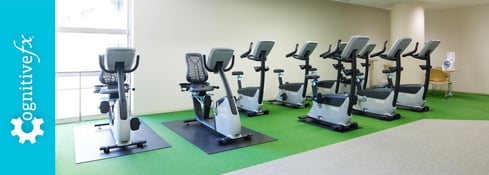
The core mechanism is interval-based autonomic retraining. POTS patients are typically stuck in sympathetic overdrive. Our neurologist-cardio training uses carefully structured cycles of exertion followed by guided parasympathetic recovery, including CO₂ therapy, diaphragmatic breathing, vestibular calibration, and sensory inputs — to teach the nervous system to transition more smoothly between its two states. Repeating these transitions in a controlled clinical environment creates the neuroplastic change that produces lasting improvement, rather than just short-term symptom relief.
How each therapy works
Each part of the program goes after a different piece of the autonomic problem. Here is what a patient actually does in each one, and what it is meant to change.
Neuro-Cardio Training
Think of the nervous system as running on an accelerator and a brake. One side speeds the heart up under stress; the other eases it back down afterward. In POTS the accelerator tends to stay jammed on, and the brake never fully engages. This therapy works that switch directly. A patient does a short, hard burst of effort to call up the stress response, then moves straight into a guided wind-down, cooling off, changing position, and breathing slowly from the diaphragm, until the calming side takes over. Cycling between the two, over and over, rebuilds the body's ability to change gears on demand instead of lurching from a racing heart to a crash.
Vestibular recalibration
Not all POTS dizziness comes from blood flow. Some of it starts in the inner ear. A small sensor there, the saccule, tracks whether you are lying down, sitting, or upright, and it feeds that information to the same nerve pathways (by way of the vagus nerve) that decide how much to adjust your heart rate when you move. If that sensor reports late or reports wrong, the brain responds to a position change it has misjudged, and it tends to overshoot, hence the sudden pounding heart and the swimming head when you stand. The fix is practice: guided balance and movement drills that retrain the brain to trust and correctly interpret those position signals, so its heart-rate response is sized to what is really happening.
Breathing mechanics training
How you breathe feeds straight back into how revved-up or settled your nervous system is, and many POTS patients have drifted into a fast, shallow, upper-chest pattern without realizing it. That pattern strips too much carbon dioxide out of the blood. Counterintuitively, low CO₂ is a problem, and it shows up as more dizziness and more fatigue, not less. Retraining slower nasal breathing that comes from the diaphragm, with the exhale drawn out, helps reset that balance. Where a patient needs more help getting there, supplemental CO₂ is added.
Cranial nerve activation
A handful of cranial nerves carry taste and smell signals into the same brainstem hubs that manage heart rate and breathing, which makes scent a surprisingly direct lever on autonomic tone. The program uses that deliberately during the training cycles: softer, calming aromas (lavender, vanilla, rose) to nudge the system toward rest, and sharper ones (citrus, peppermint) to nudge it the other way.
CO₂-based therapies
Carbon dioxide has a bad reputation it does not fully deserve. It is not just a waste gas; it is the signal that lets oxygen actually unload from the blood into the tissues that need it, and POTS patients often do not have enough of it on board. The program puts it to work twice over. A patient inhales it before a cardio interval so their muscles and brain get oxygen more efficiently during the effort, and then rests in a CO₂ bath or suit afterward to help the body relax and improve circulation while it recovers.
Planned rest and recovery
Recovery is scheduled, not left to chance. Overshooting your limit is itself one of the things that sets off a flare, so deliberate rest between sessions is what keeps the week's work from backfiring and makes the gains stick.
Patients do not leave empty-handed either. Alongside a working understanding of what POTS is and why neurological training helps, they go home with their own routine, a set of daily drills and an effort-then-recovery framework that has already been dialed in to their particular pattern during the program, so progress keeps building after the visit ends.
For patients where appropriate, functional neuroimaging (our proprietary fNCI scan) identifies which specific brain regions are contributing to the dysregulation. This allows treatment to be targeted to the actual pattern of dysfunction rather than applied generically.
Our POTS program draws on the same clinical team and principles as our post-concussion care.
Is Cognitive FX the Right Fit for Your POTS?
Our program is most appropriate for patients who:
- Have a confirmed POTS diagnosis from a neurologist or cardiologist
- Have tried standard management (lifestyle, medication, exercise rehab) without adequate improvement
- Have POTS that developed after a concussion, viral illness, or another neurological event
- Are dealing with POTS alongside brain fog, fatigue, and cognitive symptoms that have not responded to conventional care
- Have Long COVID-related dysautonomia with ongoing functional impairment
We do not diagnose POTS and a tilt table test or standing test with documented heart rate criteria is required before coming to us. We also do not position our program as a replacement for ongoing medication management with your primary provider. Our focus is addressing what standard care cannot reach: the central nervous system dysfunction driving the condition.
If you have lived with POTS long enough to know that managing the symptoms is not the same as getting better, a neurological approach may be the next step worth taking.
Schedule a consultation with our team.
The Bottom Line on POTS Flare Triggers
POTS flares follow a logic. Heat, exertion, illness, hormonal shifts, dehydration, stress, food, medications, sleep disruption, and weather changes all worsen POTS through a common pathway: they push a dysregulated autonomic nervous system past its compensatory threshold. Understanding which triggers are most relevant to your subtype makes management more precise and less reactive.
The ten triggers covered in this article give you a working framework. But the deeper point is this: flare frequency and severity are not fixed. With the right approach — one that addresses the autonomic nervous system rather than working around it — most patients can do better than they currently are.
If you've tried the standard playbook and you're still having frequent flares, our five-day POTS program may be worth a conversation. Start with our intake form or call 385-446-4158 to talk with our team.
Further Reading
References
- Fu Q, VanGundy TB, Shibata S, Auchus RJ, Williams GH, Levine BD. Menstrual cycle affects renal-adrenal and hemodynamic responses during prolonged standing in the postural orthostatic tachycardia syndrome. Hypertension. 2010;56(1):92-90. PMID: 20479333
- Shibao C, Arzubiaga C, Roberts LJ, et al. Hyperadrenergic postural tachycardia syndrome in mast cell activation disorders. Hypertension. 2005;45(3):385-390. PMID: 15710782
- Kohno R, Cannom DS, Olshansky B, Xi SC, Krishnappa D, Adkisson WO, Norby FL, Fedorowski A, Benditt DG. Mast Cell Activation Disorder and Postural Orthostatic Tachycardia Syndrome: A Clinical Association. J Am Heart Assoc. 2021 Sep 7;10(17):e021002. PMID: 34398691
- Miller AJ, Raj SR. Pharmacotherapy for postural tachycardia syndrome. Autonomic Neuroscience. 2018;215:28-36. Miller AJ, Raj SR. Pharmacotherapy for postural tachycardia syndrome. Auton Neurosci. 2018 Dec;215:28-36. PMID: 29753556.
- Shouman K, Vanichkachorn G, Cheshire WP, et al. Autonomic dysfunction following COVID-19 infection: an early experience. Clinical Autonomic Research.2021;31(3):385-394. PMID: 33860871
- Benarroch EE. The central autonomic network: functional organization, dysfunction, and perspective. Mayo Clinic Proceedings. 1993;68(10):988-1001. PMID: 8412366.
- Blitshteyn S. Neuroinflammation at the Dorsolateral Inferior Medulla: A Possible Central Nervous System Localization for POTS and Long COVID. Biomedicines. 2025 Jan 12;13(1):166. PMID: 39857750.
- Stickford AS, VanGundy TB, Levine BD, Fu Q. Menstrual cycle phase does not affect sympathetic neural activity in women with postural orthostatic tachycardia syndrome. J Physiol. 2015 May 1;593(9):2131-43. doi: 10.1113/JP270088. PMID: 25656420
- Peggs KJ, Nguyen H, Enayat D, Satterfield BA, Bern AS, Raj SR. Gynecologic disorders and menstrual cycle lightheadedness in postural tachycardia syndrome. International Journal of Gynecology and Obstetrics. 2012;118(3):242-246. PMID: 22721633
- Zhao S, Tran V. Postural orthostatic tachycardia syndrome. In: StatPearls [Internet]. Treasure Island (FL): StatPearls Publishing; 2026. Bookshelf ID: NBK541074
- Pierson BC, Apilado K, Franzos MA, Allard R, Mancuso JD, Tribble D, Saunders D, Koehlmoos TP. Oral medications for the treatment of postural orthostatic tachycardia syndrome: a systematic review of studies before and during the COVID-19 pandemic. Frontiers in Neurology. 2025;15:1515486. PMID: 39882369
- Khan MS, Miller AJ, Ejaz A, Molinger J, Goyal P, MacLeod DB, Swavely A, Wilson E, Pergola M, Tandri H, Mills CF, Raj SR, Fudim M. Cerebral Blood Flow in Orthostatic Intolerance. J Am Heart Assoc. 2025 Feb 4;14(3):e036752. PMID: 39895557.