If you're researching SAINT™ TMS in Los Angeles, you’ve probably already tried antidepressant medications, psychotherapy, or standard TMS without achieving the relief you’re looking for.
Now you're looking at the most effective form of transcranial magnetic stimulation available for treatment-resistant depression. The catch is access. Only a handful of clinics in the U.S. currently offer SAINT TMS, and the price is typically $30,000+. Most insurance plans don't cover it.
Los Angeles is actually one of the better cities in the country for SAINT access. There are several FDA-approved providers within driving distance. But the cost is the same wherever you go.
This article covers your LA options in detail. Then it covers something most clinic pages won't tell you: there's an alternative fMRI-guided accelerated TMS protocol available for roughly a third of SAINT's price, with a short flight to Utah.
At Cognitive FX, we offer accelerated fMRI-guided TMS for patients with treatment-resistant depression for $9,900: a five-day program built on the same published accelerated TMS research, using our own off-label protocol and personalized fMRI-based targeting. Book a free consultation to see if it's a good fit for you.
About this comparison: SAINT™ is a trademark of Stanford University, exclusively licensed to Magnus Medical. Cognitive FX is not affiliated with, endorsed by, or licensed to provide SAINT, and does not use Magnus Medical equipment. We offer fMRI-guided intermittent theta burst TMS, with target locations determined by fMRI and our prescribing physician. We reference SAINT here only to compare treatment options.
SAINT™ TMS Clinics in Los Angeles and Surrounding Areas
Magnus Medical licenses the SAINT protocol to a small number of clinics nationally. Three are within driving distance of Los Angeles, plus one in Northern California for context.
Here's what each one offers.
The only SAINT-licensed clinic inside Los Angeles itself.
Founded by Dr. Ian Cook after a 25-year academic career at UCLA, the clinic offers SAINT TMS alongside other accelerated TMS protocols and ketamine therapy. It also provides second opinion consultations, which can be useful if you've been recommended a treatment elsewhere and want a psychiatry specialist to review the plan. Patients typically work directly with Dr. Cook, who personally administers and monitors each TMS session. New patients usually access the clinic by referral from another mental healthprovider, though direct inquiries are accepted.
Led by Dr. Robert Bota, a board-certified psychiatrist who previously started and led the first TMS program at UC Irvine. The flagship clinic is in Costa Mesa, with a second location in Westwood (Los Angeles) and a third in Jurupa Valley.
In addition to SAINT, BrainHealth Solutions offers traditional TMS (covered by most insurance plans for major depression and OCD), TMS for obsessive-compulsive disorder using the FDA-cleared MagVenture system, and psychiatric second opinion consultations. The team treats a broad scope of mental health conditions including major depressive disorder, anxiety, OCD, PTSD, grief, and addiction.
Salma Health offers SAINT at three California locations: San Diego, Orange County and the Bay Area. The Orange County clinic is the closest to Los Angeles. The original Kaizen Brain Center was founded by Dr. Mohammed Ahmed nearly a decade ago to combine neurology and psychiatry into an integrated neuropsychiatry practice.
Salma Health covers a broader diagnostic scope than the other LA-area SAINT providers. Beyond the SAINT TMS protocol and traditional TMS, the clinic treats traumatic brain injury, concussion, migraine and facial pain, memory disorders and dementia, and PTSD, alongside major depressive disorder, anxiety, and obsessive-compulsive disorder.
If you suspect your depression has a neurological contributor beyond pure psychiatry (post-concussion, post-COVID, chronic migraine), this is the only LA-area SAINT clinic structured to evaluate both sides as part of a coordinated brain wellness program.
Acacia Clinics — Sunnyvale (Northern California)
Not technically in LA, but worth including because Acacia is the most established SAINT provider on the West Coast, and many of their patients fly more than 600 miles for treatment. Founded by Stanford Medicine alumni, including Dr. David Carreon (co-author of the original SAINT protocol) and Dr. Brandon Bentzley (lead developer of SAINT and co-founder of Magnus Medical, the company that licenses the protocol).
Acacia was the first independent treatment center to provide commercial SAINT therapy. The clinic has conducted SAINT clinical trials since 2021 and reports performing more accelerated TMS treatments than any provider in the world. They also offer their own proprietary protocol called HOPE-TMS®, which combines accelerated 5-day TMS with high-impact psychotherapy, which is similar to what we offer at Cognitive FX. Patients have access to research study participation and financial aid for self-pay patients.
What's the Same Across All Four
All four are private clinics, and none currently bill commercial insurance plans for the SAINT protocol. That pathway is only available to Medicare and Medicaid patients receiving SAINT TMS in a hospital outpatient setting under the new CMS rule. Pricing for the full one-week course typically ranges from $30,000 to $36,000 out of pocket.
Each clinic delivers the same core SAINT protocol. Magnus Medical sets strict standards for the fMRI scan, the targeting algorithm, and the treatment delivery, so the medical experience is highly consistent. What varies is the clinic environment, the breadth of conditions treated, the team's research background, scheduling availability, and the ancillary services offered.
What to Ask Before Calling
Wait times at established SAINT clinics are commonly several weeks. Capacity is the bottleneck. Before you commit, ask each clinic about:
- Current wait time for the next available treatment week
- Whether the included fMRI scan is performed in-house or outsourced
- What clinical support is included before, during, and after the treatment week
- Whether psychotherapy is included in the treatment package
- Cancellation, rescheduling, and refund policies
- Total cost including the fMRI scan, targeting, and any follow-up visits
The Cost Problem with SAINT and What It Means for LA Patients
SAINT works. The data from multiple clinical trials is strong, but the price keeps it out of reach for most patients who need it.
Commercial insurance plans do not cover SAINT TMS. The exception is Medicare and Medicaid patients receiving SAINT in hospital outpatient settings, where a new CMS payment rate reimburses hospitals $19,703 for the full protocol. However, none of the LA-area SAINT providers are hospital outpatient sites, so this coverage doesn't currently apply to patients seeking SAINT locally.
For self-pay patients, the math is stark. Among the LA-area clinics that publicly share their prices, the out-of-pocket cost ranges from $30,000 to $36,000 for a single week of treatment. For most LA households, that's the equivalent of several months of rent or mortgage. Even patients with significant HSA or FSA savings find it difficult to cover the cost fully.
The practical question is whether an alternative protocol exists at a lower price. It does (see below).
What Makes SAINT Work and Whether It Can Be Replicated
About this data: Remission and response figures shown are from published research on fMRI-guided accelerated TMS and the protocols cited below, not outcomes measured at Cognitive FX. Individual results vary. These figures describe the published protocols and do not represent a guarantee of any specific outcome. SAINT™ is a trademark of Stanford University, licensed to Magnus Medical; Cognitive FX is not affiliated with or endorsed by either and does not deliver the SAINT protocol.
To understand the cost question, it helps to know what makes SAINT TMS a better option compared to traditional TMS:
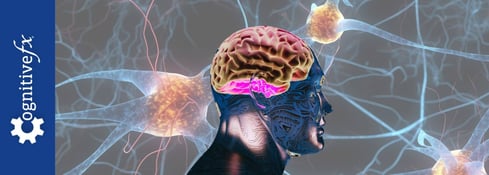
- Personalized fMRI targeting:Standard TMS places the magnetic coil based on scalp landmarks or population-average coordinates. That target can be off by up to 2 cm from the spot in your prefrontal cortex that TMS is intended to stimulate. In contrast, SAINT uses an fMRI scan to find your specific coordinate within 1 to 2 mm. This is the single biggest reason its remission rates are higher than traditional TMS.
- Condensed five-day schedule: Ten TMS sessions per day across five consecutive days. About 90,000 magnetic pulses are delivered in just one week instead of six weeks. Each treatment session lasts roughly 10 minutes, much shorter than the 30–45 minutes typical of standard TMS.
- Intermittent theta-burst stimulation (iTBS): A newer, FDA-approved form of brain stimulation that delivers magnetic pulses in rapid bursts mimicking natural brain rhythms. Total treatment time per session is much shorter, and outcomes are as good as standard rTMS.
In a double-blind randomized controlled trial, 86% of patients with treatment-resistant depression responded and 79% achieved remission after five days of fMRI-guided iTBS. This was significantly higher than the 30% remission rate typically seen with standard TMS. A more recent real-world analysis found patients receiving fMRI-guided accelerated TMS were 2.3 times more likely to respond than those receiving non-guided accelerated treatment. Side effects across both protocols are typically mild and transient, most commonly scalp discomfort and brief headaches that resolve after the first few sessions.
Each of these elements is reproducible without Magnus Medical's proprietary software. The fMRI scan, neuronavigation, iTBS pulse delivery, and five-day schedule are all available through FDA-cleared equipment used at clinics outside the SAINT licensing network. A non-licensed clinic can't use the Magnus targeting algorithm. Instead, a trained neuroscientist analyzes your fMRI data and selects your treatment target.
That's the basis of the off-label alternative, and that is what we offer at Cognitive FX.
Treatment at Cognitive FX: fMRI-Guided Accelerated TMS at About a Third of SAINT's Cost
At Cognitive FX, we deliver fMRI-guided theta burst TMS based on the same published accelerated iTBS research as SAINT™, using our own protocol, delivered off-label. We've been performing clinical fMRI scans for over a decade, which is what allows us to handle the targeting in-house rather than licensing Magnus's proprietary software.
How Our Protocol Compares to SAINT
Three Differences Worth Knowing
- We use in-house fMRI analysis instead of Magnus's proprietary software. Magnus licenses an FDA-approved algorithm that identifies the spot to target during treatment. Our prescribing neuroscientist and physician analyze the connectivity patterns in your fMRI data and select your target. Because we don't pay Magnus's licensing fees, we can offer the treatment at $9,900 instead of $30,000+.
- We use E-field modeling for coil orientation. Magnus's current SAINT protocol places the coil based on the scalp coordinate above your target. We go a step further: an E-field model accounts for how your individual brain anatomy bends the magnetic field, and we orient the coil to deliver the dosage accurately to your target voxel. This is a meaningful refinement that improves dose precision.
- CBT is integrated during treatment week. Cognitive behavioral therapy combined with TMS improves response rates by ~8% and remission rates by ~19% compared to TMS alone. We include CBT sessions during the five-day treatment week, plus resources to continue CBT after you return home. Most SAINT-licensed clinics are psychiatry-only operations and don't include this.
About this comparison: SAINT™ is a trademark of Stanford University, exclusively licensed to Magnus Medical. Cognitive FX is not affiliated with, endorsed by, or licensed to provide SAINT, and does not use Magnus Medical equipment. We offer fMRI-guided intermittent theta burst TMS, with target locations determined by fMRI and our prescribing physician. We reference SAINT here only to compare treatment options.
A fourth point worth mentioning, especially for LA patients: Treatment-resistant depression often has contributing factors beyond psychiatry. Post-concussion symptoms, long COVID, unresolved trauma, and other neurological contributors are common in patients who've failed multiple antidepressants. Our fNCI brain scan can identify whether something other than primary depression is driving symptoms. Crucially, this information changes the direction of treatment. SAINT-licensed clinics don't typically offer this evaluation, which is one reason patients with major depression and unresolved physical symptoms often see better outcomes when both are addressed together.
DISCLAIMER: SAINT™ is a trademark of The Board of Trustees of the Leland Stanford Junior University ("Stanford") and has exclusively licensed such mark to Magnus Medical. Cognitive FX is neither endorsed by Stanford nor utilizes Magnus Medical equipment nor claims to be offering the SAINT™ protocol as prescribed by Stanford University et al. or Magnus Medical. We provide fMRI-guided intermittent theta burst TMS with target locations determined by fMRI and our prescribing physician.
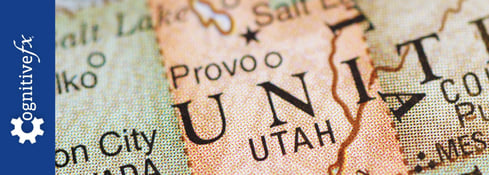
LA to Provo: What the Travel Decision Actually Looks Like
The obvious objection is distance. There are SAINT clinics 20 minutes from your house. The counterargument is roughly $18,000 to $25,000 in savings.
Both options are five-day, out-of-pocket accelerated TMS programs. SAINT™ uses Magnus's licensed targeting software. Ours uses clinician-led fMRI targeting, delivered off-label. For most patients, the biggest practical difference is cost.
LA to Salt Lake City (SLC) Is One of the Easier Domestic Routes in the U.S.
LAX, Burbank (BUR), Long Beach (LGB), and Orange County (SNA) all offer direct flights to Salt Lake City. Flight time is about 1 hour 45 minutes. Multiple daily flights run on Delta, Southwest, United, and JetBlue.
Provo Municipal Airport (PVU) is 10–15 minutes from our clinic and is served by Allegiant. If you fly into SLC, the drive to Provo is roughly 45 minutes. We have accommodation partnerships nearby with patient rates and shuttle service to and from the clinic each day of treatment.
The Full Cost Comparison
- Round-trip flight from LA to SLC: typically $150–$400.
- Five nights of accommodation with our patient rates: roughly $750–$1,500 depending on the option you choose.
- Treatment: $9,900.
- Total: roughly $10,800 to $11,800 all-in for travel and treatment.
- Booster courses and returning patients: discounted pricing.
Compare that to $30,000–$36,000 for SAINT at an LA clinic.
The savings are significant enough that even patients who initially planned to do SAINT locally often reconsider once they run the math.
What You May Not Factor In
- Wait times: SAINT clinics have limited capacity with only one or two patients per week, often with multi-week waitlists. We operate at higher patient volume and tend to have shorter waits.
- Privacy: For LA patients in entertainment, public-facing roles, or executive positions, treatment 700 miles away offers meaningfully more discretion than five consecutive days at a clinic near LA. This is a practical factor LA patients raise more often than patients elsewhere.
- The treatment environment: Five days of intensive brain stimulation makes you sensitive to your environment. Going home to LA traffic and stimulation after each day of treatment is different from going back to a quiet hotel in a smaller city.
- Therapy infrastructure in LA: LA has one of the deepest therapy markets in the country. The post-treatment support that helps maintain results long-term is right where you live, regardless of where you do TMS.
Choosing the Right Path
There's no single right answer here.
- If cost isn't a concern and staying in LA matters most, the SAINT-licensed clinics above are the right fit. Same protocol, delivered locally, no travel required.
- If you want fMRI-guided theta burst TMS on a five-day schedule, at about a third of the price, our protocol is built for this.
- If you've been quoted $30,000+ for SAINT and you're weighing whether to proceed, run the comparison before committing. Total trip cost to Cognitive FX still lands well below LA SAINT pricing even with accommodation and travel. We offer a free consultation that can serve as a no-cost second opinion before you commit either way.
FAQs About SAINT TMS in Los Angeles
How much does SAINT TMS cost in LA?
LA-area SAINT clinics charge between $30,000 and $36,000 for the full one-week protocol. Commercial insurance plans rarely cover the price, so most patients pay self-pay.
Is SAINT TMS covered by insurance in California?
No commercial insurance plans currently cover SAINT. The only exception is Medicare and Medicaid patients receiving SAINT in a hospital outpatient setting under the new CMS reimbursement rate of $19,703. None of the LA-area private SAINT clinics qualify under this rule.
Can I use my HSA or FSA to pay for SAINT or accelerated TMS?
Yes. Both SAINT TMS and our accelerated fMRI-guided TMS qualify as eligible medical expenses for HSA and FSA accounts. Because our treatment costs roughly a third of SAINT, the same HSA savings cover a much greater share of the total.
What's the difference between SAINT and other fMRI-guided accelerated TMS protocols?
SAINT is a specific licensed product from Magnus Medical that uses proprietary software to analyze fMRI data and identify a target. Non-licensed clinics offering fMRI-guided accelerated TMS use fMRI targeting, iTBS delivery, and a five-day schedule, but rely on a trained clinician to analyze the imaging data and select the target.
Can I get an equivalent protocol to SAINT for less money?
No. SAINT™ specifically refers to a protocol that uses Magnus Medical’s proprietary targeting software. Our fMRI-guided accelerated theta burst TMS draws on the same published research, using our own off-label protocol on FDA-cleared equipment, for $9,900 instead of $30,000+.
Are there waiting lists at LA SAINT clinics?
Most SAINT-licensed clinics have multi-week waitlists due to capacity. The full protocol consumes a clinic's schedule for an entire week per patient. Ask each clinic directly about its current wait time.
What if I've already tried standard TMS and it didn't work?
This is one of the most common reasons patients come to us. Standard TMS using scalp-based targeting can land up to 2 cm from the spot in your prefrontal cortex that’s actually driving your depression. When the target is off, treatment fails not because TMS doesn't work, but because it lacks precision. Personalized fMRI targeting addresses this directly.
What are the side effects of SAINT TMS?
Side effects from SAINT and other forms of accelerated TMS are typically mild and short-lived. The most common are scalp discomfort and brief headaches during the first day or two of treatment, which usually resolve as the brain adjusts. Seizures are an extremely rare side effect of any TMS protocol, well under 0.01% of sessions. SAINT and Cognitive FX both screen out patients with a history of seizures or metallic implants near the treatment site.
If you've been weighing SAINT in LA and the cost is the barrier, talk to us first. Our free consultation is a 30-minute call with a member of our clinical team. You can also take our short quiz to see if you're a good fit for treatment, or call us directly at 385-334-6093.
Further Reading
- SAINT TMS Locations: Where Can You Get SAINT Treatment? — A national overview of every SAINT-licensed clinic in the U.S., what each one offers, and how their approach compares to fMRI-guided accelerated TMS at Cognitive FX.
- SAINT Treatment Cost vs. Alternatives: What's the Best Option? — A detailed breakdown of what SAINT costs across providers, what's driving the price, and an alternative fMRI-guided accelerated TMS protocol available at a fraction of the cost.
- Is SAINT™ TMS Right for Me? What It Is & Factors to Consider — A practical guide to deciding whether SAINT is the right fit, covering candidacy criteria, what to expect during treatment, and the key questions to ask before committing.
- SAINT™ Depression Treatment: 79% Remission in One Week — A deeper look at the clinical evidence behind SAINT, including how the protocol was developed at Stanford and what the published remission rates actually mean for patients.
- Treatment-Resistant Depression Options: Guide to Evidence-Based Treatments — A comprehensive overview of every evidence-based option for treatment-resistant depression, from medication strategies to ketamine, ECT, and the full range of TMS protocols.
Cited Research
- Cole EJ, Phillips AL, Bentzley BS, et al. Stanford Neuromodulation Therapy (SNT): A Double-Blind Randomized Controlled Trial. American Journal of Psychiatry. 2022;179(2):132–141. https://psychiatryonline.org/doi/10.1176/appi.ajp.2021.20101429
- O'Reardon JP, Solvason HB, Janicak PG, et al. Efficacy and Safety of Transcranial Magnetic Stimulation in the Acute Treatment of Major Depressive Disorder: A Multisite Randomized Controlled Trial. Biological Psychiatry. 2007;62(11):1208–1216. https://pubmed.ncbi.nlm.nih.gov/17573044/
- Pigott HE, Kim T, Xu C, Kirsch I, Amsterdam J. What are the treatment remission, response and extent of improvement rates after up to four trials of antidepressant therapies in real-world depressed patients? A reanalysis of the STAR*D study's patient-level data with fidelity to the original research protocol. BMJ Open. 2023;13(7):e063095. https://pmc.ncbi.nlm.nih.gov/articles/PMC10373710/
- DeSouza DD, Meng NF, DeGaetano NP, et al. Naturalistic Outcomes with fMRI-Guided and Non-fMRI-Guided Accelerated TMS for Depression. medRxiv. 2025. https://www.medrxiv.org/content/10.1101/2025.09.03.25334813
- Blumberger DM, Vila-Rodriguez F, Thorpe KE, et al. Effectiveness of theta burst versus high-frequency repetitive transcranial magnetic stimulation in patients with depression (THREE-D): a randomised non-inferiority trial. The Lancet. 2018;391(10131):1683–1692. https://pubmed.ncbi.nlm.nih.gov/29726344/