Compression socks are one of the first things most POTS patients are told to try. But there’s a big difference between a pair of travel socks from the pharmacy and a properly fitted, waist-high medical-grade compression garment worn before you get out of bed in the morning. For people living with postural orthostatic tachycardia syndrome, that difference can determine whether compression becomes a genuinely useful daily tool or an expensive drawer-filler.
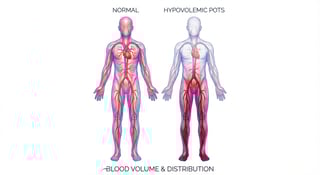
POTS is a disorder of the autonomic nervous system (a form of dysautonomia) that disrupts how the body regulates heart rate and blood pressure when changing positions. When a person with POTS stands up, blood pools rapidly in the lower extremities and abdomen, starving the brain and heart of the blood flow they need. Symptoms such as heart rate spikes, lightheadedness, fatigue, brain fog, and palpitations are the body's attempt to compensate. Compression garments work by mechanically countering blood pooling before it begins.
The research behind these garments is stronger than their unglamorous reputation suggests. But the details matter: which garments, what pressure, how to wear them, and who shouldn't use them at all. This article covers all of it.
In this article
Note: If you've been managing POTS symptoms without adequate relief, Cognitive FX offers a neurological rehabilitation program for POTS that targets the autonomic dysfunction driving your symptoms. You can learn more about our POTS program or see if you’re a good fit here.
How Compression Garments Help
The core problem in POTS is blood pooling in the lower extremities and abdomen when a person stands upright. This pooling reduces the amount of blood returning to the heart, which in turn triggers a compensatory surge in heart rate.
Compression garments work by applying graduated pressure to the lower body, mechanically pushing pooled blood back toward the heart through the blood vessels. This improves blood circulation, increases stroke volume, and reduces the heart's need to compensate, allowing for a lower, more stable heart rate on standing.
Researchers put this to the test by comparing four compression configurations in 30 adults with POTS. Full lower-body compression meaningfully reduced upright heart rate from an average of 109 beats per minute down to 92. Abdominal compression alone produced significant benefits even without leg compression, which has important implications for patients who struggle with the practicalities of full-length garments.
Those findings held up outside the lab, too. When the same research group tested commercially available waist-high compression tights in a community setting, the garments reduced heart rate and symptoms both immediately and after several hours of wear, and the benefits persisted even in participants already taking heart rate-lowering medications.
Benefits of Compression Garments for POTS Patients
For people living with POTS, compression garments offer a range of practical benefits that go beyond simply reducing heart rate on standing.
- Reduced lightheadedness and dizziness: By countering blood pooling in the lower body, compression helps maintain more consistent blood flow to the brain when upright, directly addressing one of the most disabling symptoms of POTS.
- Lower resting heart rate on standing: A study found that full lower-body compression can cut the heart rate spike by approximately 17 beats per minute compared to no compression. For many patients, this translates to less palpitation and better tolerance of daily activities.
- Improved energy and blood pressure stability: When the cardiovascular system doesn't have to work as hard to compensate for blood pooling, less energy is expended simply on maintaining circulation. Compression also supports more consistent venous return, which helps stabilize blood pressure—particularly important for POTS patients who also experience orthostatic hypotension.
- Reduced leg swelling and discomfort: Preventing fluid from pooling in the lower legs reduces the aching, heaviness, and swelling that many POTS patients experience after standing or sitting for extended periods.
- Enhanced tolerance of upright activity: Compression can extend the amount of time a person is able to remain upright before symptoms set in, making it easier to manage work, exercise, and social life.
- Non-pharmacological and low-risk: Unlike medications, compression garments carry no side effects for most patients and can be used alongside medications. Abdominal compression has been shown to amplify the effects of beta-blockers, making the combination more effective than either approach alone.
- Accessible and convenient: The best compression garments for POTS are widely available, relatively affordable, and can be worn discreetly under clothing. They require no specialist equipment or clinic visits once correctly fitted.
Does It Matter What Type You Wear?
Yes, significantly. There are several garment types to consider, each suited to specific needs.
- Knee-high compression socks are the most familiar and widely available option. They are easier to put on and more comfortable for daily wear. However, for many POTS patients, they address only part of the problem. If blood is pooling in the thighs or abdomen, knee-high socks may push blood upward only to have it re-pool just above the sock line.
- Thigh-high compression stockings provide broader coverage and are more effective than knee-high options for patients who experience pooling above the knee.
- Waist-high compression tights or leggings are generally considered the most effective option by autonomic specialists. Tights and leggings that reach the waist address blood pooling across the entire lower body, including the thighs and abdomen. Most specialists recommend at least 30–40 mmHg of compression at waist height for POTS management.
- Abdominal compression binders address a key site of blood pooling that leg garments miss entirely. Nearly a third of total blood volume can pool in the abdominal vascular bed when standing. Leg-only compression cannot reach this reservoir, which is one reason abdominal coverage consistently outperforms knee-high compression socks in the research.
A note on compression level: Compression is measured in millimeters of mercury (mmHg). The higher the number, the firmer the pressure. Over-the-counter socks labeled "compression" often provide only 8–15 mmHg, which is typically insufficient for POTS. Many commercially available garments fall well short of the clinically recommended 30–40 mmHg range, which may explain why some patients try compression and conclude it doesn't work. Most autonomic specialists recommend a minimum of 20–30 mmHg, with many patients requiring 30–40 mmHg for meaningful relief.
Practical Tips for Use
- Put them on before getting up: Blood pools quickly once you are upright, so applying compression while still lying in bed gives the garments the best chance to be effective.
- Wear them throughout the day: Benefits are most relevant during upright activity. Most patients remove them at night, though those with severe symptoms may benefit from lighter (15–20 mmHg) compression overnight.
- Get a proper fit: Measure your ankle and calf circumference in the morning, before swelling occurs. Garments that are too tight can restrict blood circulation rather than support it; garments that are too loose provide little benefit.
- Look for breathable, moisture-wicking fabrics: Durability and comfort both matter for daily wear. Garments that are hot or irritating won't be worn consistently, which defeats the purpose.
- Replace them regularly: Elasticity degrades over time. Replacing compression garments every 3–6 months ensures consistent therapeutic pressure.
When Compression Garments Should NOT Be Used
Compression therapy is generally safe, but it is not appropriate for every patient. People with the following conditions should consult a healthcare provider before using compression garments:
- Peripheral vascular disease or arterial insufficiency: Compression can dangerously restrict already compromised blood flow to the limbs. A Doppler ultrasound is recommended before prescribing compression to anyone with suspected vascular disease.
- Diabetes with peripheral complications: Reduced sensation can prevent a person from noticing injury or excessive pressure from a poorly fitting garment.
- Active skin conditions: Eczema, dermatitis, open wounds, or very fragile skin can be worsened by the pressure and friction of compression garments.
- Peripheral neuropathy: Impaired sensation increases the risk that damage from an ill-fitting garment goes unnoticed.
- Lower limb infection or trauma: Compression should be avoided over areas of active infection, recent injury, or significant inflammation.
- Severe heart failure: Suddenly increasing venous return in a patient with a compromised heart can worsen fluid overload.
Even in patients without these contraindications, garments that are too tight or poorly fitted carry risks, including numbness, tingling, skin indentation, and worsening circulation. Warning signs to watch for include persistent redness, pain, skin discoloration, or indentations after removing the garment. When in doubt, speak with a healthcare professional before starting compression therapy.
Alternatives and Complementary Approaches
Compression therapy works best as part of a broader POTS management plan. The following approaches are commonly used alongside compression garments:
- Increased salt and fluid intake is one of the cornerstones of POTS management. Because many POTS patients have reduced blood volume, increasing sodium helps retain fluids in the bloodstream. Guidelines from a 2019 NIH Expert Consensus panel recommend a daily sodium intake of 3–10 grams, alongside a fluid intake of 2–3 liters per day.
- Exercise rehabilitation is among the most evidence-based treatments for POTS. The advice is to start with recumbent exercise—rowing, swimming, cycling lying down—and progressively add upright activity. This allows the cardiovascular system to recondition without the gravitational stress that provokes symptoms.
- Dietary adjustments can reduce symptom flares. Eating several small meals rather than large ones helps because large meals divert blood flow to the digestive system. Alcohol, caffeine, and high-carbohydrate meals are common triggers and are worth limiting.
- Medications are used when lifestyle measures are insufficient. There are currently no FDA-approved medications specifically for POTS, but several are commonly prescribed off-label, including beta-blockers (such as propranolol), fludrocortisone, and midodrine. Intravenous saline infusions are also used in some cases for acute symptom relief. For a broader look at non-pharmacological strategies, see natural remedies for POTS.
- Heat management is often overlooked but important, as heat causes vasodilation and fluid loss through sweating—both of which worsen POTS symptoms. Cooling vests, cold drinks, and avoiding hot environments can significantly reduce symptom burden, particularly in patients with long COVID-associated POTS who may have heightened heat sensitivity.
Targeting the Underlying Dysfunction: A Neurological Approach
Compression socks, salt loading, and gradual cardiovascular reconditioning are the pillars of most POTS management. But for patients who have plateaued on these approaches, or who are looking for something that targets the underlying dysfunction rather than buffering around it, you’re not out of options.
At Cognitive FX, we offer specialized POTS treatment that directly targets the brainstem and autonomic centers that are causing the exaggerated heart rate and blood pressure responses.
How This Protocol Was Developed
This protocol was discovered while treating patients with post-concussion syndrome. We noticed that our PCS patients who also had POTS symptoms were recovering their autonomic function through neurological rehabilitation. We then refined what was working into a dedicated POTS program.
What the 5-Day Program Includes
Our 5-day specialized program in Provo, Utah, targets the three root systems that standard care typically doesn't address: autonomic regulation, vestibular calibration, and breathing mechanics.
The tools we use go well beyond what most POTS providers offer:
Neuro-Cardio Training
The autonomic nervous system has two main branches:
- Sympathetic nervous system (SNS): “fight or flight”; raises heart rate and blood pressure
- Parasympathetic nervous system (PNS):“rest and digest”; lowers heart rate and blood pressure
POTS patients are often stuck in a state of chronic sympathetic overactivation. Neuro-cardio training uses brief, high-intensity exercise intervals to trigger the SNS, followed by controlled recovery using diaphragmatic breathing and cooling techniques to activate the PNS. Repeating these cycles retrains the body to move smoothly between stress and rest states—the fundamental shift that POTS disrupts.
Vestibular Recalibration
Dizziness and orthostatic intolerance in POTS aren’t caused only by blood flow. The inner ear plays a significant role, specifically a small structure called the saccule, which detects vertical position changes like moving from lying to sitting or standing.
The saccule communicates with the vagus nerve to help regulate heart rate in response to position shifts. If those vestibular signals are inaccurate or delayed, the brain may overcorrect, triggering a stronger-than-necessary heart rate response and worsening orthostatic symptoms. Our vestibular recalibration exercises retrain the brain to process positional signals correctly, reducing dizziness and calming the overreaction to standing.
Breathing Mechanics Training
Breathing directly shapes autonomic state: inhalation activates the SNS, exhalation activates the PNS. Many POTS patients develop dysfunctional breathing patterns (often shallow, mouth-based breathing) that chronically lower CO₂ levels (hypocapnia). Low CO₂ worsens dizziness, fatigue, and the body’s ability to regulate blood flow.
Our training focuses on slow, nasal, diaphragmatic breathing. Where needed, supplemental CO₂ therapy is used to restore the balance between CO₂ and oxygen, which is essential for effective oxygen delivery to the brain.
Cranial Nerve Activation
We use targeted smell and taste exercises to stimulate cranial nerves involved in autonomic regulation. Lavender, vanilla, and rose activate parasympathetic pathways; citrus and peppermint activate sympathetic ones. This trains sensory-autonomic connections that influence brainstem centers controlling heart rate and breathing.
CO₂-Based Therapies
Many POTS patients have chronically low CO₂, which limits the body’s ability to deliver oxygen at the tissue level. We use CO₂ therapeutically in two ways:
- Pre-cardio inhalation to improve oxygen utilization during exercise
- CO₂ recovery bath during rest phases to enhance relaxation and tissue perfusion
Patients leave with a personalized home program, including daily drills and a repeatable interval-recovery framework already tested and refined to their specific dysregulation pattern during the treatment week.
The program costs $4,500, which includes the comprehensive evaluation, all treatment sessions, and follow-up consultations. Insurance does not directly cover the program, but Cognitive FX provides documentation and billing codes for patients pursuing out-of-network reimbursement. Payment plans are also available.
If you have POTS—whether from brain injury, long COVID, or another cause—and standard management hasn't provided the relief you're looking for, you can learn more about our POTS program or see if you’re a good fit here, or call our clinic directly at 385-446-4158.
Frequently Asked Questions
What compression level is best for POTS?
Most autonomic specialists recommend a minimum of 20–30 mmHg, with many patients requiring 30–40 mmHg for significant symptom relief. Standard over-the-counter compression socks often provide only 8–15 mmHg—typically insufficient for POTS patients. Always consult your healthcare provider before choosing a compression level, especially at higher grades.
How long should I wear them each day?
Most patients wear compression garments throughout the day during upright activity and remove them at bedtime. If you are new to compression, consider starting with 1–2 hours per day and gradually building up. Night-time use is not generally recommended unless advised by your healthcare provider, though lighter compression (15–20 mmHg) overnight may help some patients with severe symptoms.
Can compression garments make POTS symptoms worse?
In most cases, no. But garments that are too tight or poorly fitted can restrict circulation and cause numbness, tingling, or skin irritation. Knee-high compression socks worn without abdominal or thigh coverage can occasionally push blood upward into an uncompressed area, worsening pooling there. If symptoms worsen after wearing compression, remove the garment and speak with your healthcare professional.
Are compression garments safe for everyone with POTS?
No. People with peripheral vascular disease, poorly controlled diabetes, active skin conditions, peripheral neuropathy, or lower limb infections should consult a healthcare provider before using compression. In these cases, compression can cause harm rather than benefit.
Do I need a prescription, and will insurance cover compression garments?
Lower-grade compression (up to around 15–20 mmHg) is widely available without a prescription. Medical-grade garments at 20–30 mmHg or higher may require a prescription, and a prescription is often needed for insurance reimbursement. Coverage varies widely; some plans cover medical-grade compression when a POTS diagnosis is documented and a doctor's prescription is provided. Check with your insurer and ask your healthcare provider to specify the medical necessity.
Can I use compression garments alongside POTS medications?
Yes, and they may work better together. The evidence on abdominal compression combined with beta-blockers suggests the two work synergistically, producing greater symptom reduction together than either does independently. Always inform your healthcare provider of everything you are using.
Are compression garments a cure for POTS?
No. Compression garments manage symptoms by mechanically supporting circulation while they are worn. They do not address the underlying autonomic nervous system dysfunction that causes POTS. They are one component of a broader management plan that typically includes dietary changes, exercise rehabilitation, and in some cases, medication. For patients seeking treatment that targets the underlying dysfunction, options like neurological rehabilitation for POTS may be worth exploring.
Relevant and Cited Research
- Bourne KM, Sheldon RS, Hall J, et al. Compression Garment Reduces Orthostatic Tachycardia and Symptoms in Patients With Postural Orthostatic Tachycardia Syndrome. Journal of the American College of Cardiology. 2021;77(3):285–296. doi: 10.1016/j.jacc.2020.11.040
- Bourne KM, Karalasingham K, Siddiqui T, et al. A Community-Based Trial of Commercially Available Compression Tights in Patients With Postural Orthostatic Tachycardia Syndrome. JACC: Clinical Electrophysiology. 2025;11(1):179–190. doi: 10.1016/j.jacep.2024.09.033
- Miller AJ, Bourne KM. Abdominal Compression as a Treatment for Postural Tachycardia Syndrome. Journal of the American Heart Association. 2020;9(14):e017610. doi: 10.1161/JAHA.120.017610
- Bourne KM, Sheldon RS, Exner DV, Raj SR. One Size Does Not Fit All: An Exploration of Compression Garment Use in Patients With Postural Orthostatic Tachycardia Syndrome. CJC Open. 2024;6(11):1324–1333. doi: 10.1016/j.cjco.2024.07.013
- Suri S, et al. Current Landscape of Compression Products for Treatment of Postural Orthostatic Tachycardia Syndrome and Neurogenic Orthostatic Hypotension. Journal of Clinical Medicine. 2024;13(23):7304. doi: 10.3390/jcm13237304
- Fu Q, Levine BD. Exercise and Non-Pharmacological Treatment of POTS. Autonomic Neuroscience: Basic and Clinical. 2018;215:20–27. doi: 10.1016/j.autneu.2018.07.001
- Garland EM, Gamboa A, Nwazue VC, et al. Effect of High Dietary Sodium Intake in Patients With Postural Tachycardia Syndrome. Journal of the American College of Cardiology. 2021;77(20):2517–2527. doi: 10.1016/j.jacc.2021.03.292
- Raj SR, Fedorowski A, Sheldon RS, et al. Postural Orthostatic Tachycardia Syndrome (POTS): State of the Science and Clinical Care From a 2019 National Institutes of Health Expert Consensus Meeting — Part 1. Autonomic Neuroscience. 2021;235:102828. doi: 10.1016/j.autneu.2021.102828
- Raj SR, Guzman JC, Harvey P, et al. Canadian Cardiovascular Society Position Statement on Postural Orthostatic Tachycardia Syndrome (POTS) and Related Disorders of Chronic Orthostatic Intolerance. Canadian Journal of Cardiology. 2020;36(3):357–372. doi: 10.1016/j.cjca.2019.12.024
- Lei LY, Sheikh N, Raj SR. Water Ingestion in Postural Orthostatic Tachycardia Syndrome: A Feasible Treatment Option? Autonomic Neuroscience. 2020;226:102662. doi: 10.1016/j.autneu.2020.102662