If you have postural orthostatic tachycardia syndrome (POTS), you've probably been told that physical therapy is the place to start. And if you've already tried it—going to every session, doing the home exercises, sticking with it for months—yet you're still struggling, that experience tells you something real. Not that PT is useless, but that it's not addressing the full picture.
This article covers what physical therapy for POTS involves, what the research says about it, where it falls short—and why a treatment approach that targets the nervous system directly can help patients in ways that standard PT can't.
The key idea we’ll explain below: POTS isn't a fitness problem. It's a problem with how your nervous system regulates your body.
Table of Contents
Note: Cognitive FX's POTS treatment program addresses the autonomic nervous system dysfunction underlying the condition rather than managing symptoms around it. To find out if you're a good fit, fill out the intake form at cognitivefxusa.typeform.com/pots-intake or call 385-446-4158.
What Is Physical Therapy for POTS?
Physical therapy for POTS is a structured exercise and rehabilitation program—not general fitness, but a regimen specifically designed to help your body handle the thing POTS makes hardest: changing position, particularly going from lying down or sitting to a standing position.
A physical therapist working with POTS patients will typically design a program around your specific symptoms and tolerance level, adjusting it as you progress. The most widely used PT protocol is the Levine Protocol, developed by cardiologist Benjamin Levine. Patients start with exercises they can tolerate without triggering symptoms and gradually build from there over several months.
In practice, a standard physical therapy program for POTS usually includes some combination of:
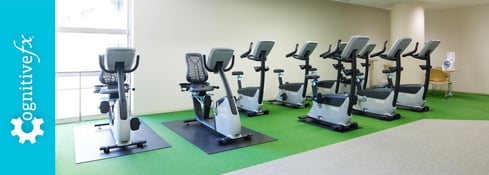
- Recumbent exercise using rowing machines, recumbent bikes, and swimming—horizontal positions that let you build cardiovascular fitness without the orthostatic challenge of standing upright
- Strength training for the lower extremities to build the leg and abdominal muscles that help push blood back up toward your heart; resistance bands are often used in early stages when upright positions aren't yet tolerable
- Gradually progressing to upright positions, working up to standing and walking as your body adjusts
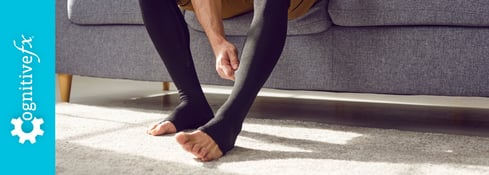
- Compression garments, such as socks or leggings, that reduce blood pooling in the legs during physical activity
- Salt intake and hydration to increase blood volume, which helps the body manage position changes more effectively
This kind of exercise program typically runs three to six months, with regular appointments and home exercises between sessions. Some POTS patients also work with occupational therapy alongside PT, particularly where daily life activities like cooking, dressing, or commuting are significantly affected.
Why Doctors Recommend It—The Theory Behind Standard PT
To understand why PT is the standard recommendation, it helps to understand what's believed to be driving symptoms of POTS in many patients.
POTS is a type of dysautonomia—the autonomic nervous system, which controls things like heart rate and blood pressure automatically, isn't functioning properly. One of the most commonly cited contributing factors is deconditioning. Research has shown that many POTS patients have lower blood volume, a smaller heart, and lower overall cardiovascular fitness than healthy people their age. In some patients, this deconditioning appears to make postural tachycardia syndrome significantly worse.
The reasoning is straightforward: if deconditioning is making your POTS worse, getting fitter should make it better. Start with aerobic exercise you can manage, build your cardiovascular system gradually, and your body should eventually handle the shift to an upright position without the dramatic, rapid heart rate and symptoms.
For some patients, this works. Research documents real improvements for POTS patients who complete a structured exercise training program:
- Better exercise tolerance: Being able to stay physically active for longer before symptoms kick in
- Lower heart rate when standing: Some patients see a meaningful reduction in the orthostatic heart rate spike, sometimes dropping by 20–30 bpm
- Less blood pooling in the legs: Stronger lower extremity muscles help push blood back toward the heart more effectively
- Better quality of life: Being able to manage daily activities without immediately feeling unwell
A randomized controlled trial of exercise training in people with orthostatic intolerance found real reductions in heart rate response and POTS symptoms in patients who completed the program. For people with milder POTS, or those whose symptoms are largely driven by deconditioning, a dedicated exercise program can make a significant difference.
The connection between deconditioning and POTS is well-established in research. The problem is that this is only part of the story—and for many POTS patients, the part it leaves out is the part that matters most.
The Real Problem: POTS Is About Regulation, Not Just Fitness
The fitness-based model assumes the problem is your cardiovascular system: your heart, blood vessels, and muscles aren't strong or fit enough to handle standing up. So the solution is to make them fitter.
But plenty of POTS patients have a perfectly healthy cardiovascular system. Their hearts are fine. Their blood vessels are fine. Their muscles are fine. Yet they still have POTS because the root cause isn't the cardiovascular system itself. It's the control system telling it what to do.
Your autonomic nervous system (ANS) runs in the background without you thinking about it, making constant adjustments to keep everything balanced—heart rate, blood pressure, breathing, and digestion. When you stand up, it's supposed to make a quick, smooth adjustment to keep blood flowing properly to your brain. In a healthy person, this happens seamlessly. In POTS, it doesn't. The ANS isn't sending the right signals. Your heart and blood vessels are just doing what they're told—even when what they're told leads to palpitations, lightheadedness, brain fog, and all the other symptoms of POTS you know too well.
The heart isn't the problem. The problem is the instructions it's getting from the brain—and standard PT doesn't touch those instructions.
Most POTS symptoms trace back to three systems that aren't working together properly. Understanding them is what makes the limitations of standard PT legible, and what makes a neurologically-focused approach different.
1. The Autonomic Nervous System—Miscalibrated Signals, Not a Weak Heart
The areas of the brain responsible for managing heart rate and blood pressure when you stand are miscalibrated. As a result, what should be a small, automatic adjustment turns into an overreaction—the hallmark of postural tachycardia syndrome. Standard PT builds fitness around this misfiring. It doesn't retrain the misfiring itself.
2. The Vestibular System—Your Inner Ear's Overlooked Role
Most people associate the inner ear with balance and motion sickness, but it also detects when you change position—including when you stand up. A small structure called the saccule is specifically responsible for sensing changes in vertical position. In many POTS patients, this system isn't calibrated correctly.
The vestibular system has direct connections to areas of the brain that control heart rate and blood pressure, so when your inner ear sends an exaggerated signal about standing up, your cardiovascular system reacts accordingly. Standard physical therapy doesn't assess or treat vestibular function. For patients where this is a significant factor, a real driver of their symptoms goes entirely unaddressed.
3. Breathing Mechanics—a Direct Lever on Blood Flow That PT Rarely Addresses
Breathing retraining isn't just for anxiety. Breathing is a direct way to influence your autonomic nervous system, and many POTS patients have a breathing pattern that's making their symptoms worse without realizing it. The issue is usually an imbalance in carbon dioxide and oxygen levels—too shallow, too fast, or too much chest breathing instead of diaphragmatic breathing.
Low CO₂ causes blood vessels to constrict, reduces blood flow to the brain, and directly worsens the lightheadedness, brain fog, and fatigue that POTS patients deal with every day. Correcting how you breathe isn't a wellness exercise—it's a direct intervention on how your vascular system functions. Standard PT rarely addresses this.
The Limitations of Standard PT
Staying in the "Comfortable Zone" Means You Never Actually Fix the Problem
Standard physical therapy for POTS is built around keeping exercise intensity at a moderate level where heart rate stays controlled and symptoms don't get triggered. That makes sense as a starting point: exercise intolerance is real for POTS patients, and if intense physical activity makes you feel terrible, you need to find a level you can actually manage.
But by always staying below the threshold that triggers symptoms, you never challenge the system that's causing them. Your sympathetic nervous system (the one that revs you up) and your parasympathetic nervous system (the one that calms you down) never have to practice switching between the two. They sit in a comfortable middle range. You might build some general fitness, but the underlying misfiring doesn't get fixed.
The Most Important Part of the Training Gets Skipped Entirely
The parasympathetic nervous system—the "calming down" system—is mainly trained during recovery, not during exercise itself.
When you push your heart rate up and then come back down, that recovery phase is where your parasympathetic system gets its workout. It has to activate, bring your heart rate back down, and return your body to a calm state. Do that repeatedly, and that system gets better at it.
Standard PT keeps exercise in a steady, moderate range, which never creates that recovery signal. Your heart rate goes up a little, stays there, and comes back down slowly on its own. The parasympathetic system never gets asked to do much. So even after months of PT, the specific part of your nervous system that POTS disrupts can remain just as untrained as when you started.
Building Stamina and Fixing Coordination Aren't the Same Thing
The goal of standard PT is essentially to build your stamina so symptoms happen less often. That's genuinely useful. But stamina and nervous system coordination are two different things.
Stamina is about how long your body can keep going. Nervous system coordination is about how accurately and quickly your sympathetic and parasympathetic systems can work together—speeding up when you need it, calming down when you don't. The core dysfunction in POTS is that coordination. You can build all the stamina in the world and still have POTS if that coordination hasn't been addressed.
It Improves the Response to Bad Signals, But Doesn't Fix the Signals
Standard PT works on the outputs of the system—what your heart and blood vessels do when they receive instructions. It doesn't work on the source of the instructions.
If your ANS is sending the wrong signals, making your cardiovascular system fitter helps it cope slightly better with those wrong signals. But the signals are still wrong. Think of it like a broken thermostat that keeps your house too hot. Standard PT is like opening windows and using fans—those things help, but the thermostat is still broken. The house will always run too hot until someone fixes the thermostat.
How Cognitive FX Treats POTS—A Nervous-System-Focused Approach
Standard PT works around autonomic dysfunction. Cognitive FX's program works on it directly—targeting the three systems described above rather than building fitness to compensate for their dysfunction.
This isn't a more intensive version of what your physical therapist has already tried. It's a different set of interventions, targeting a different layer of the problem—the control system, not just the cardiovascular system it controls.
How This Protocol Was Developed
This protocol was discovered while treating patients with post-concussion syndrome. We noticed our PCS patients who also had POTS symptoms were recovering their autonomic function through neurological rehabilitation. We then refined what was working into a dedicated POTS program.
What the 5-Day Program Includes
Our 5-day specialized program in Provo, Utah, targets the three root systems that standard care typically doesn't address: autonomic regulation, vestibular calibration, and breathing mechanics.
The tools we use go well beyond what most POTS providers offer:
Neuro-Cardio Training
The autonomic nervous system has two main branches:
- Sympathetic nervous system (SNS): “fight or flight”; raises heart rate and blood pressure
- Parasympathetic nervous system (PNS): “rest and digest”; lowers heart rate and blood pressure
POTS patients are often stuck in a state of chronic sympathetic overactivation. Neuro-cardio training uses brief, high-intensity exercise intervals to trigger the SNS, followed by controlled recovery using diaphragmatic breathing and cooling techniques to activate the PNS. Repeating these cycles retrains the body to move smoothly between stress and rest states—the fundamental shift that POTS disrupts.
Vestibular Recalibration
Dizziness and orthostatic intolerance in POTS aren’t only caused by blood flow. The inner ear plays a significant role, specifically a small structure called the saccule, which detects vertical position changes like moving from lying to sitting or standing.
The saccule communicates with the vagus nerve to help regulate heart rate in response to position shifts. If those vestibular signals are inaccurate or delayed, the brain may overcorrect—triggering a stronger-than-necessary heart rate response and worsening orthostatic symptoms. Our vestibular recalibration exercises retrain the brain to process positional signals correctly, reducing dizziness and calming the overreaction to standing.
Breathing Mechanics Training
Breathing directly shapes autonomic state: inhalation activates the SNS, exhalation activates the PNS. Many POTS patients develop dysfunctional breathing patterns—often shallow, mouth-based breathing—that chronically lower CO₂ levels (hypocapnia). Low CO₂ worsens dizziness, fatigue, and the body’s ability to regulate blood flow.
Our training focuses on slow, nasal, diaphragmatic breathing. Where needed, supplemental CO₂ therapy is used to restore the balance between CO₂ and oxygen, which is essential for effective oxygen delivery to the brain.
Cranial Nerve Activation
We use targeted smell and taste exercises to stimulate cranial nerves involved in autonomic regulation. Lavender, vanilla, and rose activate parasympathetic pathways; citrus and peppermint activate sympathetic ones. This trains sensory-autonomic connections that influence brainstem centers controlling heart rate and breathing.
CO₂-Based Therapies
Many POTS patients have chronically low CO₂, which limits the body’s ability to deliver oxygen at the tissue level. We use CO₂ therapeutically in two ways:
- Pre-cardio inhalation to improve oxygen utilization during exercise
- CO₂ recovery bath during rest phases to enhance relaxation and tissue perfusion
Patients leave with a personalized home program—daily drills and a repeatable interval-recovery framework already tested and refined to their specific dysregulation pattern during the treatment week.
The program costs $4,500, which includes the comprehensive evaluation, all treatment sessions, and follow-up consultations. Insurance does not directly cover the program, but Cognitive FX provides documentation and billing codes for patients pursuing out-of-network reimbursement. Payment plans are also available.
If you have POTS—whether from brain injury, long COVID, or another cause—and standard management hasn't provided the relief you're looking for, you can learn more about our POTS program or see if you’re a good fit here, or call our clinic directly at 385-446-4158.
Why So Many POTS Patients Are Afraid of Exercise—and Why This Is Different
If exercise has made you feel worse before, that response is well-documented—and it points to something specific about how your nervous system is currently functioning, not a personal failure to push through.
Exercise intolerance and post-exertional symptom worsening are established realities for POTS patients. For patients with an autoimmune component to their POTS, or those with hypermobility conditions like hEDS, physical activity can feel especially unpredictable—manageable some days, completely destabilizing on others. Being told to keep exercising when exercise reliably crashes you isn't just unhelpful. For some patients, it genuinely sets them back.
So the fair question about a five-day intensive program is: why would this be different?
It's built around your specific pattern, not a standard protocol. Day 1 is entirely dedicated to assessing how your specific nervous system responds—your autonomic function, vestibular calibration, breathing mechanics, and cranial nerve inputs. Treatment is built from that assessment, not applied generically.
Someone is watching and adjusting the whole time. Every session is supervised by clinicians who are tracking how your nervous system is responding in real time and adjusting the approach based on what they see.
Recovery is designed into every day. Planned rest and recovery blocks are built into the daily schedule—not concessions to people who can't keep up, but deliberate components of the protocol. The program is structured around what POTS patients can actually tolerate.
You leave with a program already tested on you. The home program isn't a generic set of exercises. It's the specific interval-recovery framework refined during your treatment week, based on how your nervous system responded. The trial-and-error has already happened before you go home.
What to Realistically Expect
POTS doesn't currently have a cure, and whether it will go away depends on a number of individual factors. No treatment, including Cognitive FX's, eliminates the health condition for every patient. The goal is to reduce how much POTS symptoms affect your daily life and improve how well your nervous system regulates itself. That's a meaningful change—but it's important to go in with accurate expectations.
How much you improve, and how long those improvements last, depend largely on how fully your symptoms resolve during the treatment week itself. Patients who see significant improvement during the program tend to maintain those gains long-term without needing to return. Patients who see partial improvement typically benefit from occasional maintenance sessions over time.
The most common reasons symptoms return after treatment are getting sick again with another infection that stresses the autonomic system, and going through a period of extreme physical or emotional stress. The home program matters more than it might seem: the daily drills and interval-recovery framework you leave with were personalized to your specific dysregulation pattern during treatment, and sticking with them consistently is one of the biggest factors in whether improvements hold.
Who Is a Good Candidate?
Cognitive FX's POTS program is likely worth considering if:
- You've tried standard POTS treatments—beta-blockers, fludrocortisone, or midodrine; compression garments; increased salt intake and hydration; gradual exercise reconditioning—and haven't seen lasting improvement
- Your POTS diagnosis followed a neurological event: a concussion or brain injury, long COVID, post-treatment Lyme disease, or another viral illness
- You feel like you're managing symptoms of POTS rather than actually getting better
- Orthostatic hypotension, palpitations, or lightheadedness continue to significantly limit your daily activities despite trying standard interventions
If you're relatively new to your POTS diagnosis and haven't yet worked consistently through standard approaches, it's worth trying those first—not because they address the root cause, but because they genuinely help a meaningful number of patients. It's worth finding out whether you're one of them before pursuing something more intensive.
A knowledgeable healthcare provider, ideally one with specialties in neurology or autonomic medicine, can help you assess where you are in that process. Organizations like Dysautonomia International can also help connect you with physicians familiar with POTS diagnosis and treatment options.
Relevant and Cited Research
- Fu, Q., & Levine, B. D. (2018). Exercise and non-pharmacological treatment of POTS. Autonomic Neuroscience, 215, 20–27. https://doi.org/10.1016/j.autneu.2018.07.001
- Winker, R., Barth, A., Bidmon, D., Ponocny, I., Weber, M., Mayr, O., ... & Rüdiger, H. W. (2005). Endurance exercise training in orthostatic intolerance: a randomized, controlled trial. Hypertension, 45(3), 391–398. https://doi.org/10.1161/01.HYP.0000156540.25707.af
- Raj, S. R. (2013). Postural tachycardia syndrome (POTS). Circulation, 127(23), 2336–2342. https://doi.org/10.1161/CIRCULATIONAHA.112.144501
- Parsaik, A., Singer, W., Allison, T. G., Sletten, D. M., Joyner, M. J., Benarroch, E. E., ... & Low, P. A. (2012). Deconditioning in patients with orthostatic intolerance. Neurology, 79(14), 1435–1439. https://doi.org/10.1212/WNL.0b013e31826d5f95
- Yates, B. J., Billig, I., Cotter, L. A., Mori, R. L., & Card, J. P. (2002). Role of the vestibular system in regulating respiratory muscle activity during movement. Clinical and Experimental Pharmacology and Physiology, 29(1–2), 112–117. https://doi.org/10.1046/j.1440-1681.2002.03612.x
- Waxenbaum, J. A., Reddy, V., & Varacallo, M. (2023). Anatomy, autonomic nervous system. StatPearls. https://www.ncbi.nlm.nih.gov/books/NBK539845/