Dysautonomia is an umbrella term for disorders in which the autonomic nervous system (ANS), the network that automatically runs heart rate, blood pressure, digestion, and temperature, stops regulating the body correctly. If you're asking, "do I have dysautonomia?" this free symptom quiz and checklist can help you see whether your symptoms fit a recognizable autonomic pattern.
Postural orthostatic tachycardia syndrome (POTS), one of the most common forms of dysautonomia, is a chronic and often disabling autonomic disorder that usually first appears in adolescence and is frequently set off by a viral infection. It is often mistaken for anxiety before the autonomic cause is recognized.
This quiz will not diagnose you, but it will show whether your symptoms fit an autonomic pattern and what to do next
What is dysautonomia, and what are its main types?
Dysautonomia describes any condition in which the autonomic nervous system misfires. Because that system runs heart rate, blood pressure, digestion, sweating, and temperature in the background, the symptoms can seem unrelated: a racing heart on standing, brain fog, stomach trouble, and exhaustion all at once.
The condition is best understood as a parent category rather than a single disease. The most common, recognizable forms include:
- Postural orthostatic tachycardia syndrome (POTS) is an excessive heart-rate jump on standing without a drop in blood pressure.
- Orthostatic hypotension (OH) is a sustained fall in blood pressure on standing.
- Initial orthostatic hypotension is a brief blood-pressure drop in the first seconds of standing.
- Vasovagal (reflex) syncope is reflex fainting with clear warning signs and triggers.
- Inappropriate sinus tachycardia (IST) is a fast heart rate present at rest, not just on standing.
Other forms, including autonomic neuropathy and rarer neurodegenerative conditions, are distinguished by a clinician and cannot be self-identified. The quiz above is built around the common, treatable orthostatic patterns and does not try to name your subtype. If your symptoms started after a head injury, see autonomic dysfunction after concussion for the post-injury form.
What are the symptoms of dysautonomia?
Autonomic symptoms affect several body systems, which is why they often look unrelated. The validated COMPASS-31 symptom inventory groups them into domains which can be used as a quick dysautonomia symptoms checklist. The more domains you recognize, the more it is worth getting evaluated by a medical professional.
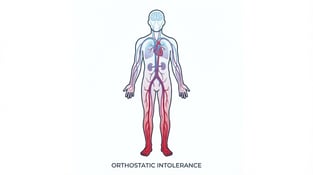
- Orthostatic intolerance: lightheadedness, palpitations, weakness, blurred vision, and fatigue that come on when standing and ease when lying down.
- Gastrointestinal: bloating, nausea, early fullness, constipation, or diarrhea.
- Vasomotor / secretomotor: abnormal sweating, too much or too little, or color and temperature changes in the hands and feet.
- Bladder and visual: urinary urgency or frequency, light sensitivity, or trouble focusing.
- Systemic: persistent fatigue and brain fog, two of the most burdensome symptoms patients report.
As a useful rule of thumb, symptoms that reliably worsen on standing and ease on lying down point toward an autonomic cause rather than anxiety. For an exhaustive symptom-by-symptom breakdown, see the complete list of POTS symptoms, including the ones doctors often miss.
When are dysautonomia symptoms a medical emergency?
Most autonomic symptoms are not emergencies, but some fainting patterns can be serious.
Seek urgent care or call emergency services if you faint or nearly faint during or right after physical exertion, suddenly with no warning at all, with chest pain or a racing or irregular heartbeat, or while sitting or lying down (not just on standing). The same applies if you have a family history of sudden cardiac death or inherited heart disease alongside any of these episodes. These patterns can signal a heart problem and need in-person evaluation, an ECG or heart monitor, not an online quiz.
What do your dysautonomia quiz results mean?
Your result has two parts: a likelihood band (likely, possible, or unlikely) and your most-affected autonomic pattern, for example "primarily orthostatic, with significant digestive involvement." It deliberately does not name a specific condition like POTS or orthostatic hypotension. Naming a subtype requires objective in-clinic testing, which no questionnaire can replace.
That is the honest answer to "what type of dysautonomia do I have": a quiz can show your pattern, but only testing can confirm a type. If your symptoms center on a racing heart when you stand, that is the POTS pattern specifically, and our dedicated POTS self-assessment quiz goes deeper on that form.
If your result comes back likely or possible, the most useful next step is bringing objective data to your appointment instead of just describing how you feel from memory. Track your heart rate lying down and then standing, along with blood pressure and what you were doing when symptoms hit, for a week or two before you see a doctor. Our free POTS symptom tracker does this with no account or app download, and it turns a vague symptom history into the kind of pattern a clinician can actually act on.
Is it dysautonomia or anxiety?
Anxiety and dysautonomia share a lot of surface features, including palpitations, dizziness, shortness of breath, and a sense that something is wrong. That overlap is exactly why so many people with autonomic disorders are told it is "just anxiety" first. The clearest differentiator is posture.
| Dysautonomia |
Anxiety |
| Symptoms are posture-locked: measurably worse standing, reliably better lying down. |
Symptoms track with stressful situations or thoughts, not body position. |
| A racing heart appears within minutes of standing. |
A racing heart appears with worry, crowds, or anticipation. |
| Lying flat brings measurable relief. |
Distraction or calming the situation brings relief. |
Studies find that people with POTS score higher anxiety levels than healthy controls, but only when anxiety questionnaires include autonomic items like a racing heart. When those physical items are removed, the difference largely disappears. So if your "anxiety" reliably worsens within minutes of standing and improves when you sit or lie down, that is worth flagging to your doctor.
What else could mimic dysautonomia?
Several common, treatable conditions cause overlapping symptoms and are worth ruling out with your doctor first:
- Anxiety or panic, though symptoms that are tightly posture-locked (worse standing, better lying) point away from anxiety.
- Anemia, especially with heavy periods or known low iron. A simple blood count (CBC) checks this.
- Thyroid disease, with weight loss, heat intolerance, or tremor. A thyroid panel checks this.
- Dehydration, deconditioning, or a new medication, which are often reversible.
- After a viral illness, including COVID. New orthostatic symptoms are common afterward and often improve over weeks to months.
- Hypermobility (hEDS) or mast-cell (MCAS) features, which tend to co-occur with dysautonomia rather than replace it and are worth raising with a specialist.
How is dysautonomia diagnosed and treated?
A questionnaire can flag a pattern, but diagnosis requires objective testing a clinician orders, typically the tilt-table test or an active standing test that measures your heart rate and blood pressure as you change position, sometimes with additional autonomic tests. POTS, for example, is defined by a sustained heart-rate rise of at least 30 beats per minute (40 in adolescents) within 10 minutes of standing, without a drop in blood pressure. If you want the concrete process and timeline, see how POTS is diagnosed and what autonomic testing actually involves.
Here is the encouraging part: many forms of dysautonomia, especially the orthostatic types and those triggered by a concussion or viral illness, respond to treatment and symptoms can improve substantially. Cognitive FX evaluates and treats autonomic dysfunction at our dysautonomia clinic, with particular focus on cases linked to concussion and long COVID.
How Cognitive FX Treats POTS and Autonomic Dysfunction
Most POTS treatment targets the cardiovascular symptoms directly. Salt tablets and increased fluid intake raise blood volume. Compression garments limit blood pooling in the legs. Medications like midodrine, fludrocortisone, and beta-blockers adjust heart rate and blood pressure. Graded exercise reconditioning, done slowly and often starting recumbent, aims to rebuild tolerance for being upright.
These approaches help many patients, and they are usually the right place to start. But they manage the downstream symptoms without correcting the signal that's causing them. The heart rate spike on standing, the blood pressure swings, the fainting — these come from a brainstem and autonomic nervous system that is misreading ordinary position changes as a crisis. Medication and compression can dampen the cardiovascular response, but they don't retrain the system sending the wrong signal in the first place. That's why patients who do everything right with standard care can still plateau, and it's the pattern our physical therapists see often in POTS patients who've tried the standard playbook.
Cognitive FX's POTS program is built around three systems instead of one: autonomic regulation, vestibular calibration, and breathing mechanics. Autonomic regulation covers the brainstem centers that set heart rate and blood pressure and decide how the body reacts to standing up. Vestibular calibration involves the inner ear structures, specifically the saccule, that sense vertical movement; when these misfire, standing gets flagged as a bigger event than it is. Breathing mechanics affect the CO₂/O₂ balance that determines how much oxygen actually reaches the brain and tissues, and many POTS patients run chronically low on CO₂ without realizing it. We're recalibrating the thermostat, not just adjusting to a room that's always too hot.
The program runs five days:
- Day one is a comprehensive evaluation, with functional testing of orthostatic response, vestibular function, cranial nerve inputs, and breathing mechanics, plus education on what the results mean and how the week ahead will be customized.
- Days two through five run four to six hours a day and combine several approaches. Neuro-Cardio Training uses brief intervals through both high and low heart rate zones with precise recovery periods built in, retraining the sympathetic and parasympathetic systems to work together instead of overreacting. Vestibular recalibration retrains the connection between the inner ear and the autonomic response so standing stops triggering an exaggerated reaction. Breathing mechanics training addresses nasal and diaphragmatic patterns along with CO₂/O₂ balance. Cranial nerve activation uses targeted smell and taste inputs, since lavender and vanilla can nudge the parasympathetic system while citrus and peppermint nudge the sympathetic side, to influence the brainstem centers controlling heart rate and breathing. CO₂-based therapies round out the week. CarboHaler inhalation before cardio sessions to improve oxygen delivery, and a CO₂ recovery suit during rest periods for tissue perfusion. Rest blocks are scheduled throughout each day, not left for patients to figure out on their own.
Patients leave with a home program built from their own treatment week: a repeatable interval-recovery framework and daily drills already tested against their specific pattern of dysregulation, not a generic handout.
This protocol wasn't designed for POTS originally. It emerged from treating post-concussion syndrome patients who also had POTS symptoms and consistently showed autonomic recovery through neurological rehab, which is why the program reflects real patient outcomes rather than a theory built in advance. It's also why POTS shows up so often alongside concussion and long COVID in the patients we treat.
The program costs $4,500, which covers the evaluation, every treatment session that week, and follow-up consultations afterward. Insurance doesn't cover it directly, but our team provides documentation and billing codes for patients pursuing out-of-network reimbursement, and payment plans are available. There's no cure for POTS at this point, only ways to reduce the symptom load, and how much relief a patient gets during treatment week is the main predictor of whether they'll need any follow-up sessions later. The most common reason symptoms return is a new infection or a period of extreme stress, not a failure of the treatment itself.
If standard treatment hasn't gotten you far enough and you want to address the autonomic dysfunction directly rather than continue managing around it, fill out our POTS intake form or call 385-446-4158 to talk with our patient care team.
Frequently Asked Questions
Can you test for dysautonomia at home?
No at-home test can diagnose dysautonomia, but a symptom-based self-assessment quiz or checklist can flag whether your symptoms fit an autonomic pattern. A simple standing-heart-rate check can hint at orthostatic issues, but only clinician-ordered tilt-table or standing tests confirm a diagnosis.
How do I know what type of dysautonomia I have?
You cannot confirm a specific type, such as POTS or orthostatic hypotension, from a quiz alone. Self-report tools only measure symptom burden and your most-affected pattern. Naming a subtype requires objective in-clinic testing that measures heart rate and blood pressure as you change position.
What are the most common symptoms of dysautonomia?
Common symptoms include lightheadedness, a racing heart, and fatigue that worsen on standing, plus brain fog, digestive trouble, abnormal sweating, and temperature changes. They cluster across six body systems, so they often seem unrelated. Symptoms that reliably ease when lying down point toward an autonomic cause.
Is dysautonomia just anxiety?
No. Anxiety and dysautonomia share symptoms like palpitations and dizziness, but dysautonomia symptoms are typically posture-locked: they get worse on standing and better lying down. Anxiety symptoms are usually tied to stress, not position. If your symptoms track with standing, mention that to your doctor.
Can a quiz diagnose dysautonomia?
No. A quiz is an educational screening tool, not a diagnosis. It can show whether your symptoms match a recognizable autonomic pattern and help you decide whether to seek evaluation. Only a qualified clinician can diagnose dysautonomia using in-person testing and your full medical history.
How is dysautonomia diagnosed by a doctor?
Diagnosis uses objective testing, typically a tilt-table or active standing test that tracks heart rate and blood pressure as you change position, sometimes with added autonomic tests. POTS, for example, is defined by a sustained heart-rate rise of at least 30 beats per minute within 10 minutes of standing.
Can dysautonomia go away or get better?
Many forms of dysautonomia improve with treatment, especially orthostatic types and those triggered by concussion or a viral illness like COVID. Post-viral cases often improve over weeks to months. Symptoms can be substantially reduced through targeted treatment, though outcomes vary by underlying cause.
What conditions are mistaken for dysautonomia?
Anemia, thyroid disease, dehydration, deconditioning, medication side effects, and anxiety can all mimic dysautonomia and are worth ruling out first. Hypermobility (hEDS) and mast-cell issues (MCAS) tend to co-occur with dysautonomia rather than replace it, so raise them with a specialist.
References
- Sheldon R, Grubb B, Olshansky B et al. 2015 Heart Rhythm Society Expert Consensus Statement on the Diagnosis and Treatment of Postural Tachycardia Syndrome, Inappropriate Sinus Tachycardia, and Vasovagal Syncope
Heart Rhythm, 2015; 12, e41-e63 https://doi.org/10.1016/j.hrthm.2015.03.029
- Saedon, N.I., Frith, J., Goh, CH. et al. Orthostatic blood pressure changes and physical, functional and cognitive performance: the MELoR study. Clin Auton Res 30, 129–137 (2020). https://doi.org/10.1007/s10286-019-00647-3
- Sletten DM, Suarez GA, Low PA, Mandrekar J, Singer W. COMPASS 31: a refined and abbreviated Composite Autonomic Symptom Score. Mayo Clin Proc. 2012 Dec;87(12):1196-201. doi: 10.1016/j.mayocp.2012.10.013. PMID: 23218087 https://doi.org/10.1016/j.mayocp.2012.10.013
- Spahic JM, Hamrefors V, Johansson M, Ricci F, Melander O, Sutton R, et al. Malmö POTS symptom score: Assessing symptom burden in postural orthostatic tachycardia syndrome. J Intern Med. 2023; 293: 91–99. https://doi.org/10.1111/joim.13566
- Vernino S, Bourne K, Stiles L et al. Postural orthostatic tachycardia syndrome (POTS): State of the science and clinical care from a 2019 National Institutes of Health Expert Consensus Meeting - Part 1, Autonomic Neuroscience: Basic and Clinical, 2021; 235Auton Neurosci. PMID 34144933. https://doi.org/10.1016/j.autneu.2021.102828
- Wagner C, Isenmann S, Ringendahl H, Haensch CA. Ängstlichkeit bei Patienten mit posturalem Tachykardiesyndrom (POTS) [Anxiety in patients with postural tachycardia syndrome (POTS)]. Fortschr Neurol Psychiatr. 2012 Aug;80(8):458-62. PMID 22692879. https://doi.org/10.1055/s-0031-1299106
- Sossalla S, Vollmann D. Die inadäquate Sinustachykardie [Inappropriate sinus tachycardia]. Dtsch Med Wochenschr. 2015 Apr;140(8):603-7. German. doi: 10.1055/s-0041-101620. Epub 2015 Apr 16. PMID: 25945910. https://doi.org/10.1055/s-0041-101620
- Hira, R., Karalasingham, K., Baker, J.R. et al. Autonomic Manifestations of Long-COVID Syndrome. Curr Neurol Neurosci Rep 23, 881–892 (2023). PMID 37947962. https://doi.org/10.1007/s11910-023-01320-z
- Wells R, Elliott A, Mahajan R et al. Efficacy of Therapies for Postural Tachycardia Syndrome: A Systematic Review and Meta-analysis
Mayo Clinic Proceedings, 2018; 93, 1043-1053 https://doi.org/10.1016/j.mayocp.2018.01.025
- Weinstock, L.B.; Nelson, R.M.; Blitshteyn, S. Neuropsychiatric Manifestations of Mast Cell Activation Syndrome and Response to Mast-Cell-Directed Treatment: A Case Series. J. Pers. Med. 2023, 13, 1562. PMID 38003876. https://doi.org/10.3390/jpm13111562
Further Reading