If you've had multiple concussions as an athlete, you've probably received one of two unsatisfying responses. One is frightening, full of lists of athletes whose careers ended and warnings about a brain disease you supposedly can't do anything about. The other is a shrug, telling you to keep resting, take care of yourself, and see how it goes. Neither one tells you what is happening inside your brain, what’s causing the symptoms that won’t go away (headaches, brain fog, sleep issues, anxiety, etc.), or what you can do about it.
If you’ve had a normal brain scan and someone used that to tell you nothing is wrong, that may have been the most frustrating moment of all. The scan results don't mean your symptoms aren't real; they just don’t show underlying functional changes caused by your injuries that lead to post-concussion syndrome (PCS).
This article is written for athletes in the middle of all this. It covers what repeated concussions actually do to the brain and body, the injury risk almost no one warns you about, why being cleared to play is not the same as being recovered, and the treatment options that exist beyond rest and standard protocols. The goal is to give you something useful to act on, whether you're still competing, weighing whether to, or years out and still not better.
In this article, we cover:
If you’re experiencing persistent symptoms such as headaches, brain fog, fatigue, memory problems, vision changes, mood swings, and more, months or years after a concussion, you’re not alone—and you’re not crazy. These are real symptoms caused by changes in the brain and autonomic system, and they can be helped. Over 90% of our patients experience significant recovery after treatment in our clinic. To determine if our program is right for you, please schedule a consultation with our team.
Do Multiple Concussions Cause Lasting Damage?
Most single concussions heal. Symptoms usually settle within a couple of weeks, and the brain goes back to normal. The picture changes for athletes when the concussions keep happening. With each hit, the odds that symptoms stick around go up, and the chances of a full recovery go down.
This happens because a mechanism in the brain called neurovascular coupling is disrupted. Under normal circumstances, there is a tight connection between your brain cells and the blood vessels that feed them. When an area of the brain needs energy and nutrients to perform a certain task, the surrounding blood vessels deliver these resources to the right place at the right time.
Injured regions, however, stop getting the right amount of blood flow at the right moment, so the brain starts sending signals down slower, less efficient pathways. Think of it like your commute home. When the highway is closed, you take a back road. You still get there, but it takes longer and burns more fuel. The more often your brain has to detour, the more tired it gets, and the more symptoms you feel.
Repeated concussions give the brain more of these detours to manage. That's why a history of several injuries tends to show up as a heavier symptom load that takes longer to clear.
Are There Any Scans That Can Show This Dysfunction?
Yes. At Cognitive FX, we use functional neurocognitive imaging (fNCI), a form of functional MRI that can reveal the underlying dysfunction in a brain that normal CT and MRI scans miss. This allows us to spot the exact areas of dysfunction in the brain and create personalized treatment based on each individual’s injury.
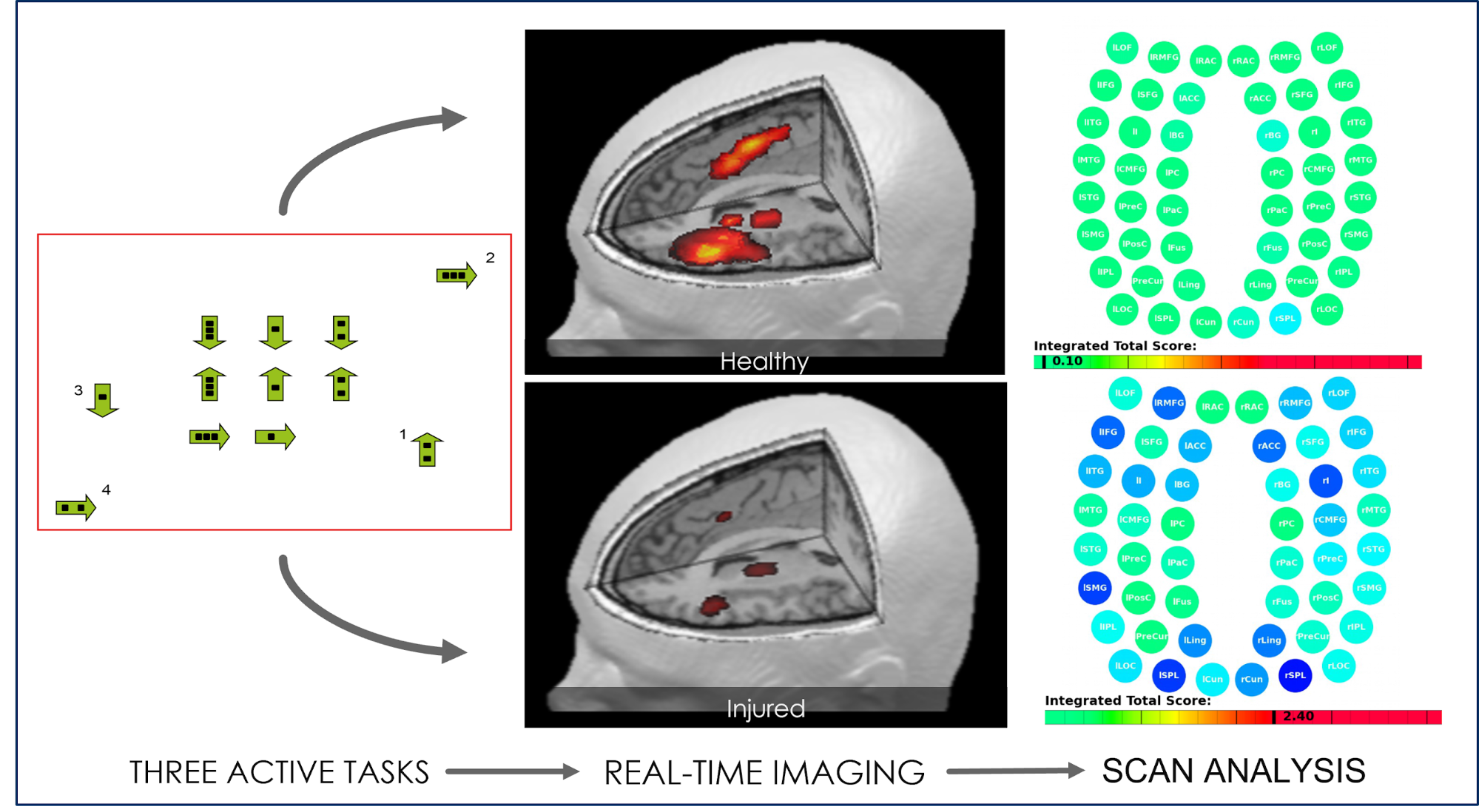
How the scan works: cognitive tasks in the scanner, real‑time imaging, then analysis against a normative database.
Patients commonly see significant improvement through multidisciplinary therapy with our team, even those whose concussions were sustained years ago. You can find patient stories from both professional and youth athletes here: Cognitive FX Patient Stories
Does Getting Multiple Concussions Mean I'll Get CTE?
For a lot of athletes with several concussions, this is the real fear underneath everything else. Chronic traumatic encephalopathy (CTE) is a degenerative brain condition linked to repeated head impacts. It's real, and the concern is understandable. But two facts rarely make it into the headlines.
First, CTE cannot currently be diagnosed in a living person. A definitive diagnosis depends on examining brain tissue after death, because there's no validated scan or blood test that confirms it in life. The clinical pattern doctors use while someone is alive is called traumatic encephalopathy syndrome, and its symptoms overlap heavily with the post-concussion problems that are treatable. In other words, having lingering symptoms is not the same as having a diagnosis of a progressive disease.
Second, risk isn't a simple tally of hits. It tracks with cumulative exposure over time, with age, and with genetics, and the condition is believed to be rare relative to how many people play contact sports. Researchers still can't say how common it is or exactly how it develops.
None of that is a reason to ignore repeated head trauma. The honest response to current symptoms is to treat what's treatable now, rather than to catastrophize about a diagnosis no one can actually give you today. The brain fog, the headaches, the mood changes, the dizziness you're living with are far more likely to come from the kind of brain dysfunction that responds to rehabilitation than from an untreatable disease.
If you want to understand how these conditions differ, we go deeper in our guide to the difference between post-concussion syndrome, CTE, and second impact syndrome.
The Injury Risk Nobody Warns Athletes About
There is another consequence of multiple concussions that rarely gets mentioned. After a concussion, athletes get hurt elsewhere in the body far more often, and not only with another concussion. The injuries show up in hamstrings, ankles, knees, and groins.
For example, in elite soccer players, the risk of a subsequent injury runs roughly twice as high in the period after a concussion compared with players who weren't concussed. Looking at the same athletes before and after injury, lower-extremity injury rates jump by nearly two times post-concussion. Pooling the studies together, concussed athletes carry about double the odds of a musculoskeletal injury after they return.
What matters most here is how the risk climbs with the number of concussions. Athletes with two or more carry higher odds of a later musculoskeletal injury, and those with three or more carry higher odds still. The hits add up in a way you can feel in your soft tissue, not just in your head.
A mild traumatic brain injury (mTBI) turns into a torn hamstring because the systems that keep you safe on the field—your vision, your vestibular sense of balance and head position, and your timing—often haven't fully come back online even after you feel fine. You're still running and cutting at full speed, but with slightly off mechanics, a fraction more muscle tension, and less control. That mismatch is where the strains and sprains come from. It's also part of why a concussed athlete is more prone to the next concussion, too.
Why "Symptom-Free" Isn't the Same as Recovered
Most return-to-play protocols clear an athlete once their symptoms are gone. That's a reasonable starting point, but it isn't the same thing as a brain that has fully recovered, and the gap between the two is where a lot of athletes get caught.
Even after athletes feel better and have returned to play, imaging shows measurable blood-flow abnormalities that outlast the symptoms. The brain's ability to adjust blood flow on demand, its cerebrovascular reactivity, can stay impaired while the athlete reports feeling normal. Clinically, you're recovered. Physiologically, and often psychologically, you're not quite there.
That distinction has real consequences on the field. Being symptom-free tells you the alarm has switched off. It doesn't confirm that your vision, your balance system, your reaction timing, and your cognitive stamina are all working again and, just as importantly, working together. Return-to-play, as it's usually run, is closer to symptom management than to full rehabilitation. The bar that actually matters is whether those systems have been restored and re-integrated, so they fire as one unit when you move at speed.
There's a reason athletes slip through this gap more than most people. Athletes are built to push through discomfort. That tolerance is an asset in competition and a liability in recovery, because it lets you report feeling fine and clear a symptom checklist while the underlying systems are still off. You get back on the field sooner, and the problems show up later as reinjury, a plateau in performance, or symptoms that quietly refuse to leave.
The Symptoms Athletes Miss
Athletes often describe their symptoms differently than the general population, partly because they notice different things. The headache and the obvious dizziness are easy to name. The subtler changes are the ones that erode performance, like reaction speed that's slower than usual, peripheral awareness that doesn't catch what it used to, and vision that goes jumpy when the head moves fast. Players describe this last one vividly, a kind of shaky-camera blur and a headache that comes on while they're playing, because the reflex that's supposed to stabilize the eyes during quick head movement isn't doing its job. Many athletes also notice they sleep worse and recover slower, and some pick up digestive changes they can't explain.
The same underlying dysfunction tends to surface differently depending on the sport. An ice hockey player may notice they're losing people in their peripheral vision and getting beaten to spots they used to reach first. An American football player may find they can't catch a fast-moving ball the way they once could. A cyclist or a skier may feel half a second behind their own balance. The problem is the same; the sport just decides how you first notice it.
The Emotional Side is Part of the Injury
Some of the hardest symptoms to talk about are emotional. Anxiety, depression, irritability, and a pull to withdraw from people are common after repeated head injuries, and they tend to scale with the number of concussions. Former athletes reporting three or more concussions carry more than double the rate of major depression of those with none, and the risk of mental-health symptoms climbs further still at higher concussion counts. This matters because these symptoms are a consequence of the injury, not a personal failing, and they respond to treatment like the physical ones do. If this is where you're struggling, our guides on post-concussion anxiety and personality and mood changes go deeper, and it's worth telling someone on your care team.
The Damage You Can't Feel
You don't need a diagnosed concussion for the exposure to add up. Even smaller repetitive head impacts, the kind a soccer player absorbs heading the ball or a lineman takes every snap, can produce real changes in the brain even in athletes who never had a concussion diagnosed. That's part of why the running total of head contact over a career matters, not just the handful of times you got pulled from a game.
Loss of Consciousness Is Not a Measure of Concussion
Getting knocked out is not the measure of a serious concussion. Most concussions involve no loss of consciousness at all, and it's a poor predictor of how long recovery takes. What happens on the field tends to matter more, especially confusion and the sheer number of symptoms. The catch with confusion is that a confused athlete usually can't recognize it in themselves, so it often takes a teammate, coach, or trainer to spot it. If you've ever insisted you were fine while everyone around you could see you weren't, that's exactly the pattern.
Why Some Athletes Are Hit Harder Than Others
If you've ever wondered why a teammate shook off five concussions while two left you struggling for years, the answer is that recovery isn't uniform, and that's exactly why no one can give you a magic number of weeks or months until you’ll be better. A few factors genuinely move the needle.
The strongest is your own history. Having had concussions before makes the next one both more likely and slower to heal. Athletes with three or more prior concussions are about three times more likely to suffer another, and far more likely to have symptoms drag on past a week. Sex matters too: in comparable sports, female athletes tend to face a higher concussion risk and are more prone to persistent symptoms.
What you brought with you before the injury counts as well. A history of migraine, anxiety or depression, ADHD, or a learning difference shows up more often in people who go on to develop persistent symptoms. Genetics and age appear to play a role, too.
None of this is destiny, and plenty of people with none of these factors still develop lasting symptoms. The point is the opposite of fatalism. Because risk is individual, the number of concussions on its own tells you very little about your situation. What's happening in your brain right now tells you far more, and that's something you can measure and act on.
The Problem of Running Out of Fuel
There's a symptom pattern specific to athletes that standard testing rarely captures. You have the skills, but you run out of gas. You're sharp early, and then somewhere in the back half of the game the fog rolls in, decisions come a beat late, and your play drops off.
This traces back to the blood-flow problem from earlier. When regions of the brain can't call up the right amount of blood flow efficiently, other regions compensate, and that compensation is expensive. A soccer player making decisions across ninety minutes, or a quarterback reading a defense into the fourth quarter, is asking an already-taxed brain to keep spending energy it doesn't have in reserve. The result is cognitive fatigue that arrives faster and hits harder than it should.
This is also why it helps to measure brain function rather than just brain structure. A standard scan can look perfectly normal while this kind of energy-draining dysfunction is quietly costing you the last thirty minutes of every match.
What Actually Helps, and Why "Just Rest" Is Outdated
If you were told to shut everything down and wait in a dark room until you felt better, that advice is out of date. Prolonged, total rest, sometimes called cocoon therapy, doesn't speed recovery and can slow it. After a short initial period, carefully dosed activity is better medicine than stillness.
The approach with the strongest evidence is sub-symptom-threshold aerobic exercise, meaning controlled cardio kept just below the intensity that flares your symptoms. In athletes, it shortens recovery compared with rest, and starting it early has been shown to cut the odds of prolonged symptoms by roughly half.
Aerobic activity prompts the brain to release neurochemicals and growth factors that support blood flow and help neurons rebuild healthier pathways, which is the opposite of what happens when you sit still and wait.
Still, be honest with yourself about what self-management can and can't do. Gentle cardio, a consistent sleep schedule, and a gradual return to activity are the right frontline moves. But if you've been doing the right things and your symptoms still won't shift, that's not a sign to try harder at the same thing. It's the signal that the underlying systems need targeted rehabilitation, which is where structured treatment comes in.
How Cognitive FX Approaches Multiple Concussion Treatment for Athletes
Standard concussion care rules out dangerous structural damage, manages acute symptoms, and gets most people through a mild TBI. Where it tends to fall short is with the athlete who's been cleared, whose scans look normal, and who still isn't right. That's because standard imaging shows brain structure, and the problem in persistent post-concussion symptoms is one of brain function.
This is the gap Cognitive FX helps close. Every patient starts with a functional NeuroCognitive Imaging (fNCI) scan, a type of functional MRI that measures blood flow across brain regions while you perform cognitive tasks. It shows which regions are working too hard, which aren't pulling their weight, and where the dysfunction actually sits—the information a normal scan can't give you.
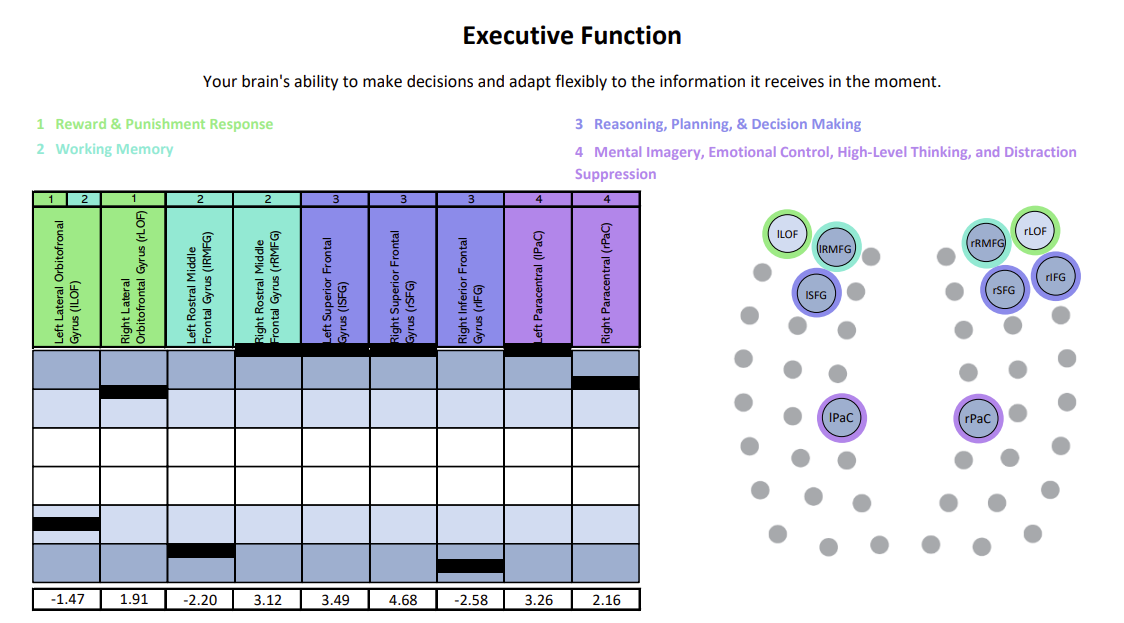
Each chart shows how specific brain regions are functioning compared to a normal brain. The white area represents the normal range, with the center line marking the average. Light and dark blue zones show increasing levels of abnormality. A black line marks the patient’s result for that region—ideally landing within the white. Lines in the light and dark blue zones suggest that region is either hyperactive (blue zones above the white) or hypoactive (blue zones beneath the white). In this example, the patient was experiencing both hypoactivity and hyperactivity within different key regions linked to executive function.
From there, patients go through EPIC Treatment, an intensive week that pairs aerobic exercise with a rotating set of therapies chosen to match what the scan found. The exercise primes the brain to rebuild healthier pathways through neuroplasticity, and the therapies do the targeted rebuilding.
Here's what the week tends to include:
- Vision and occupational therapy retrains eye tracking, focusing, and the saccades and convergence you rely on to follow a ball, a puck, or an opponent, and works on the jumpy, lagging vision that shows up when you move at speed.
- Vestibular and neurointegration therapy rebuilds balance, head and gaze stability, and spatial orientation, the systems behind the shaky-camera vision and that feeling of being half a second behind on your balance.
- Neuromuscular therapy works on head and neck mobility, which matters because athletes so often carry a neck injury alongside the concussion, plus breathing mechanics and the circulation that feeds the brain.
- Cognitive therapy sharpens attention, memory, processing speed, and reaction time, the tools you use to read a play and decide under pressure.
- Autonomic and cardio retraining targets the heart rate and blood pressure dysregulation and stress intolerance that often follow head injury, and rebuilds the cognitive stamina that fades late in a game.
- Psychological support addresses the anxiety, depression, and withdrawal that can come with repeated concussions, so the emotional side gets treated alongside the physical.
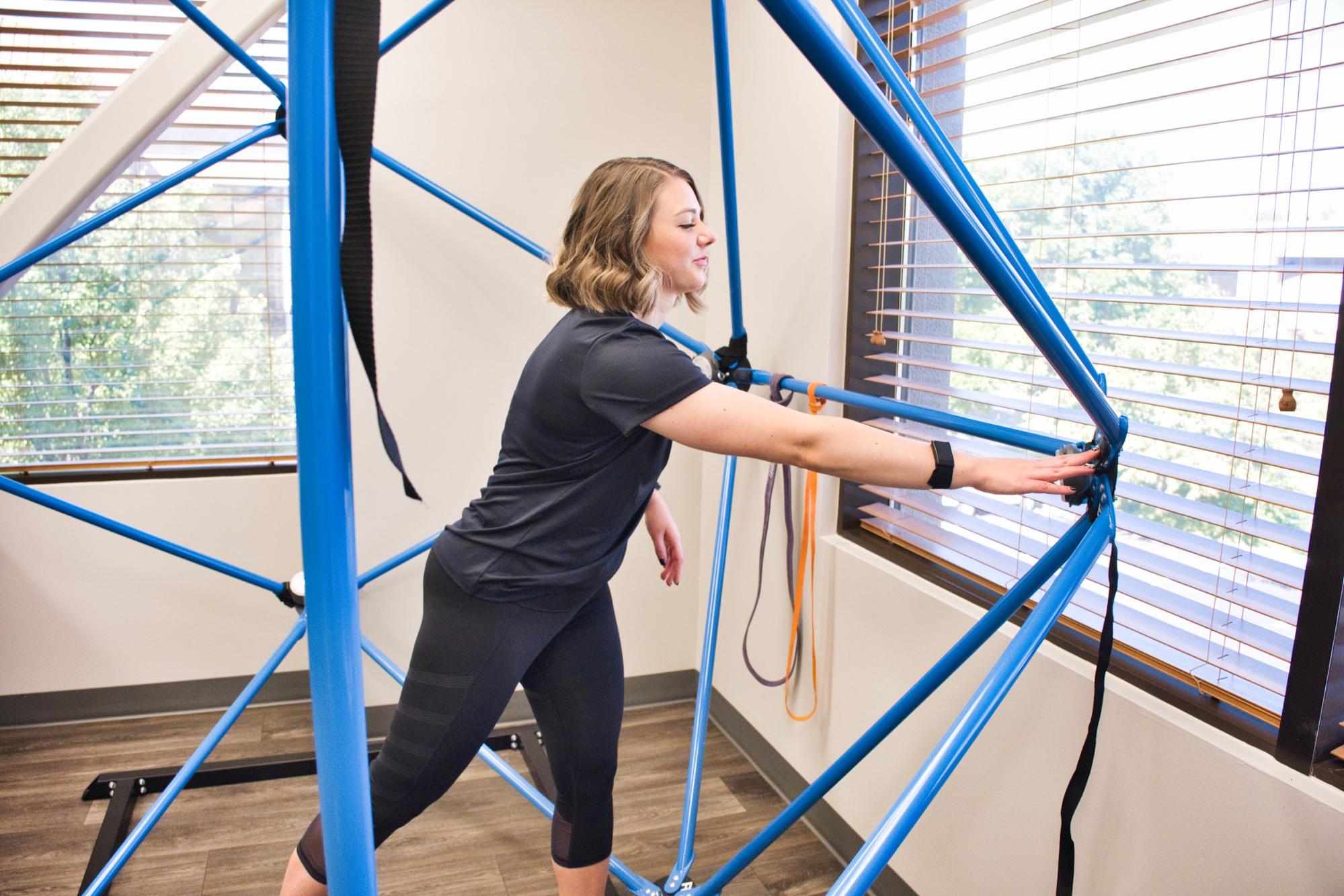
In practice, the athletes who come to us tend to be chasing some mix of the same handful of problems: reaction time and timing that feel a step slow, vision that won't settle when they move, dizziness or imbalance, brain fog and fatigue that arrive late in competition, mood changes they can't shake, and the nagging sense that they keep getting injured. Because the week is built around your individual scan, the plan targets whichever of these are actually driving your symptoms, rather than running you through a generic checklist.
The outcomes are measured and published. On average, patients improve about 75% on the brain-function dysregulation that the fNCI measures, and most report meaningful symptom improvement after a single treatment week, with many continuing to improve after they go home. Independent research puts symptom improvement at around 77% of patients. Individual results vary.
Two practical notes. First, it's rarely too late. The average patient arrives around four years after injury, and treatment still produces gains that far out. Second, this program is built for persistent symptoms. If you’ve experienced a single, recent concussion under six months out, the right move is usually to continue with local care first and revisit this if you're not improving by the six-to-nine-month mark.
Should You Keep Playing?
There's no rule that says three concussions and you're done. Anyone who hands you a fixed number is making it up. The honest version is harder but more useful. This is a personal calculation, and it's yours to make.
Weigh what the sport gives you against the risk you're willing to carry. For some athletes, the sport is their livelihood or their deepest source of meaning, and that changes the math. For others, it's one hobby among several, and the choice is easier. There's no universally correct answer, only the one that's right for your life.
What you can do is watch for signs that the math is shifting against you. Two are worth taking seriously: concussions that start coming from less force than they used to, and symptoms that take longer to clear with each injury. Both suggest your brain's threshold is dropping. Keep in mind that once you've had a concussion, you're more prone to sustaining a second concussion, and that susceptibility is highest in the months right after.
One hard line isn't negotiable, especially for young athletes. Never return while you're still recovering from a concussion. Taking a second hit before the first has healed risks much longer symptoms and, in rare cases, a catastrophic swelling reaction known as second impact syndrome. If you take another blow to the head within days of a concussion, seek medical attention right away.
And don't let a coach, a teammate, or your own competitiveness push you into a decision you're not comfortable with. If you're a parent reading this for a child or high school athlete, know that the stakes include school as much as sport. Kids with lingering symptoms often struggle with overstimulation in crowded hallways, crashing exhaustion after the school day, and persistent headaches that seem especially stubborn in teenage girls. The academic toll is real, and it's a legitimate part of the decision.
Take the Next Step
If you've had multiple concussions and your symptoms haven't resolved, whether you're still competing or years removed from your sport, you don't have to settle for "rest and hope." There are real treatments for what you're dealing with. To find out whether Cognitive FX can help in your situation, book a free consultation with our team, or take the good-fit quiz to see where you stand.
Relevant and Cited Research
- Hiploylee C, Dufort PA, Davis HS, et al. Longitudinal Study of Postconcussion Syndrome: Not Everyone Recovers. Journal of Neurotrauma. 2017;34(8):1511-1523. Link
- Tator CH, Davis HS, Tartaglia MC, et al. Postconcussion Syndrome: Demography and Predictors in 221 Patients. Canadian Journal of Neurological Sciences. 2016. Link
- Nordström A, Nordström P, Ekstrand J. Sports-related concussion increases the risk of subsequent injury by about 50% in elite male football players. British Journal of Sports Medicine. 2014;48(19):1447-1450. Link
- Lynall RC, Mauntel TC, Padua DA, Mihalik JP. Acute Lower Extremity Injury Rates Increase after Concussion in College Athletes. Medicine & Science in Sports & Exercise. 2015;47(12):2487-2492. Link
- McPherson AL, Nagai T, Webster KE, Hewett TE. Musculoskeletal Injury Risk After Sport-Related Concussion: A Systematic Review and Meta-analysis. American Journal of Sports Medicine. 2019;47(7):1754-1762. Link
- Jildeh TR, Castle JP, Buckley PJ, Abbas MJ, Hegde Y, Okoroha KR. Lower Extremity Injury After Return to Sports From Concussion: A Systematic Review. Orthopaedic Journal of Sports Medicine.2022;10(1):23259671211068438. Link
- Guskiewicz KM, McCrea M, Marshall SW, et al. Cumulative Effects Associated with Recurrent Concussion in Collegiate Football Players (NCAA Concussion Study). JAMA. 2003;290(19):2549-2555. Link
- Wang Y, et al. Cerebral Blood Flow Alterations in Acute Sport-Related Concussion. Journal of Neurotrauma. 2016. Link(writer: confirm full author list)
- da Costa L, van Niftrik CB, Crane D, Fierstra J, Bethune A. Temporal Profile of Cerebrovascular Reactivity Impairment, Gray Matter Volumes, and Persistent Symptoms after Mild Traumatic Head Injury. Frontiers in Neurology. 2016;7:70. Link
- Leddy JJ, Haider MN, Ellis MJ, et al. Early Subthreshold Aerobic Exercise for Sport-Related Concussion: A Randomized Clinical Trial. JAMA Pediatrics. 2019;173(4):319-325. See also the review: Exercise for Sport-Related Concussion and Persistent Postconcussive Symptoms. Sports Health. 2021. Link
- Meehan WP 3rd, Mannix RC, Stracciolini A, Elbin RJ, Collins MW. Symptom Severity Predicts Prolonged Recovery after Sport-Related Concussion, but Age and Amnesia Do Not. The Journal of Pediatrics.2013;163(3):721-725. Link
- Lipton ML, Kim N, Zimmerman ME, Kim M, Stewart WF, Branch CA, Lipton RB. Soccer Heading Is Associated with White Matter Microstructural and Cognitive Abnormalities. Radiology. 2013;268(3):850-857. Link
- Kerr ZY, Evenson KR, Rosamond WD, Mihalik JP, Guskiewicz KM, Marshall SW. Association between Concussion and Mental Health in Former Collegiate Athletes. Injury Epidemiology. 2014;1(1):28. Link
- Gouttebarge V, Aoki H, Lambert M, Stewart W, Kerkhoffs G. A history of concussions is associated with symptoms of common mental disorders in former male professional athletes across a range of sports. The Physician and Sportsmedicine. 2017;45(4):443–449. Link
- Fluid Biomarkers for Chronic Traumatic Encephalopathy. Seminars in Neurology. 2020. Link
- McKee AC, Abdolmohammadi B, Stein TD. The Neuropathology of Chronic Traumatic Encephalopathy. Handbook of Clinical Neurology. 2018;158:297-307. Link
- Second Impact Syndrome. StatPearls. 2023. Link
Further Reading