---
title: "Mental Health After TBI or Concussion: Recovery Is Possible | Cognitive FX"
description: Brain injuries may cause anxiety, depression, mood swings, PTSD, and more. Neurorehabilitation can resolve or improve many of these mental health changes.
image: https://www.cognitivefxusa.com/hubfs/navigating-mental-health-after-tbi-and-concussion.png
---

![Light-Mode-Sun-Icon-SVG](https://www.cognitivefxusa.com/hubfs/Sun.svg) ![Dark-Mode-Moon-Icon-SVG](https://www.cognitivefxusa.com/hubfs/moon.svg)

###### 280 W River Park Drive Suite 110 Provo, UT

###### [+1 385 446-4161](tel:+13854464161)

###### [hello@cognitivefxusa.com](mailto:hello@cognitivefxusa.com)

[![Main_Logo_500px 1](https://www.cognitivefxusa.com/hubfs/Main_Logo_500px%201.svg) ](https://www.cognitivefxusa.com/)

[**Get Started** ](https://cta-redirect.hubspot.com/cta/redirect/2921058/881eced2-ed9a-4b23-a8ba-b17b0921e4b3)

- [Brain Injury Treatments](https://www.cognitivefxusa.com/treatment) ![down arrow](https://www.cognitivefxusa.com/hubfs/down-arrow-1.svg)
  
  ### Your Treatment
  
  ###### [Post-Concussion Syndrome Treatment Our intensive EPIC program helps patients recover from symptoms that haven't responded to traditional care.](https://www.cognitivefxusa.com/treatment)


  ###### [POTS Treatment POTS treatment clinic using neurological retraining, vestibular recalibration & CO₂ therapy. 5-day intensive program in Utah.](https://www.cognitivefxusa.com/pots-treatment)


  ###### [Viral Brain Injury Treatment Long Covid-19, Post-Treatment Lyme, Encephalitis. We utilize cutting-edge treatments to help you regain function.](https://www.cognitivefxusa.com/viral-brain-injury)


  ###### [What does CFX do for PCS? Learn more about post-concussion.](https://www.cognitivefxusa.com)


  ###### [Book Consult Schedule a 30-minute call with one of our doctors to see if CFX precision treatment approach is right for you.](https://cognitivefxusa.typeform.com/consult-intake)


  ###### [Pricing Pricing for each of our treatment packages and other important financial information.](https://www.cognitivefxusa.com/pricing)


  ###### [Learn about the Brain Scan fNCI Standard brain scans show structure. fNCI shows function. It's the difference between a "normal scan" and being able to see what is wrong and treat it.](https://www.cognitivefxusa.com/fnci-brain-scan-at-cognitive-fx-56-regions-measured)


  ###### [TIA Mini Stroke Treatment Still struggling with brain fog, fatigue, or memory issues after a TIA or mini stroke? Cognitive FX uses functional brain imaging and an intensive 5-day program to treat the symptoms standard care misses.](https://www.cognitivefxusa.com/tia-mini-stroke-treatment-for-lingering-symptoms-cognitive-fx)
- [TMS Treatments](https://www.cognitivefxusa.com/precision-mental-health-fmri-guided-transcranial-magnetic-stim) ![down arrow](https://www.cognitivefxusa.com/hubfs/down-arrow-1.svg)
  
  ### Depression Treatment
  
  ###### [Depression Treatment fMRI Guided TMS Depression treatment with precision brain imaging meets advanced TMS protocols for depression that hasn't responded to medication.](https://www.cognitivefxusa.com/precision-mental-health-fmri-guided-transcranial-magnetic-stim)


  ###### [One-Day Depression TMS Treatment Protocol Accelerated depression treatment TMS protocol that compresses weeks of treatment into one day intensive session.](https://www.cognitivefxusa.com/one-d-tms-one-day-tms-accelerated-depression-treatment-protocol)


  ###### [Depression Treatment Resistant Quiz Tried multiple antidepressants with no relief? This free quiz evaluates your treatment history, symptoms, and risk factors to help you understand your next steps.](https://www.cognitivefxusa.com/treatment-resistant-depression-quiz-free-self-assessment-no-email)


  ###### [Schedule Consultation Schedule a 30-minute telehealth visit with our team to discuss potential TMS treatment.](https://www.cognitivefxusa.com/tms-consultation-signup)


  ###### [Depression Treatment Blogs Learn more about TMS treatment for depression. And how effective it can be for patients with treatment-resistant depression.](https://www.cognitivefxusa.com/blog/topic/transcranial-magnetic-stimulation-tms)
- [Treatment Results](https://www.cognitivefxusa.com/our-patients) ![down arrow](https://www.cognitivefxusa.com/hubfs/down-arrow-1.svg)
  
  ### Patient Results
  
  ###### [Publications Learn more about post-concussion.](https://www.cognitivefxusa.com/our-research)


  ###### [Patient Results We see patients from all over the world with different types of brain injuries. Learn more about who our patients are.](https://www.cognitivefxusa.com/treatment-outcomes)


  ###### [Patient Stories Our patients say it best! Watch our past patients' stories.](https://www.cognitivefxusa.com/patient-stories)


  ###### [Other Brain Injuries We have found our approach to concussion treatment also works for other types of brain injuries. Check out our non-concussion patients' improvements with EPIC Treatment.](https://www.cognitivefxusa.com/other-types-of-injuries)


  ###### [How We Measure Success Learn more about how we measure the success of EPIC Treatment through our fNCI scan and symptom measurements.](https://www.cognitivefxusa.com/treatment-outcomes)


  ###### [Treatment Summary Whitepaper Learn more about the outcomes and studies done on targeted fMRI guided treatment for brain injuries.](https://www.cognitivefxusa.com/hubfs/Treatment%20and%20Research%20Summary/Treatment%20%26%20Research%20Summary%20(web).pdf?hsLang=en-us)
- [Symptom Trackers](https://www.cognitivefxusa.com/post-concussion-symptom-tracker) ![down arrow](https://www.cognitivefxusa.com/hubfs/down-arrow-1.svg)
  
  ### Your Treatment
  
  ###### [Post Concussion Symptom Tracker Free post-concussion symptom tracker tool. Can measure symptoms daily or weekly, all data stored locally.](https://www.cognitivefxusa.com/post-concussion-symptom-tracker)


  ###### [POTS Symptom Tracker Learn more about your symptoms. Log heart rate (lying/standing), blood pressure, and triggers daily. No account needed.](https://www.cognitivefxusa.com/free-pots-symptom-tracker-log-vitals-triggers-cognitive-fx)
- [Blog](https://www.cognitivefxusa.com/blog) ![down arrow](https://www.cognitivefxusa.com/hubfs/down-arrow-1.svg)
  
  ### The Cognitive FX Head Injury Blog
  
  ###### [Post Concussion Treament Learn more about post-concussion syndrome.](https://www.cognitivefxusa.com/blog/topic/post-concussion-treatment)


  ###### [Transcranial Magnetic Stimulation Learn more about TMS for depression, anxiety, and concussion.](https://www.cognitivefxusa.com/blog/topic/transcranial-magnetic-stimulation-tms)


  ###### [Long Covid - Viral Infection Treatment Learn more about how we treat viral infections that impact the brain. COVID-19, Lyme, etc.](https://www.cognitivefxusa.com/blog/topic/covid)


  ###### [Other Brain Injuries Treated Read about other types of brain injury we treat. Stroke, TIA, Tinnitus, etc.](https://www.cognitivefxusa.com/blog/topic/traumatic-brain-injury)


  ###### [Patient Outcomes and Stories Learn more about the specific symptoms and issues our patients have faced.](https://www.cognitivefxusa.com/blog/topic/patient-stories)


  ###### [Browse more topics here! Browse through all of the brain injury topics and posts from the Cognitive FX Blog home.](https://www.cognitivefxusa.com/blog)

[**Get Started** ](https://cta-redirect.hubspot.com/cta/redirect/2921058/881eced2-ed9a-4b23-a8ba-b17b0921e4b3)

#### [Back to Blog](https://www.cognitivefxusa.com/blog)

#### Content

#### Proven Results Improvement in 77% of Participants

 Published peer-reviewed research shows that Cognitive FX treatment leads to meaningful symptom reduction in post-concussion symptoms for 77% of study participants. Cognitive FX is the only PCS clinic with third-party validated treatment outcomes. 

[ READ FULL STUDY ](https://www.tvnp.nl/inhoud/tijdschrift_artikel/NP-19-2-3/Cognitive-FX-behandeling-voor-aanhoudende-klachten-na-een-hersenschudding-Observatie-van-verandering-in-functioneren)

1. [ Home ](https://www.cognitivefxusa.com)
2. [ Blog ](https://www.cognitivefxusa.com/blog)
3. Mental Health After TBI or Concussion: Recovery Is Possible

# Mental Health After TBI or Concussion: Recovery Is Possible

![Image of Dr. Alina Fong, Ph.D.](https://www.cognitivefxusa.com/hubfs/Alina_150px.webp)

 Dr. Alina Fong, Ph.D. 

•

 Updated on 16 July, 2024 

•

 Medically Reviewed by

[Dr. Mark Allen](https://www.cognitivefxusa.com/dr-mark-allen-phd)

<http://www.facebook.com/share.php?u=https://www.cognitivefxusa.com/blog/navigating-mental-health-after-tbi-and-concussion> [mailto:?subject=Check%20out%20https://www.cognitivefxusa.com/blog/navigating-mental-health-after-tbi-and-concussion%20&body=Check%20out%20https://www.cognitivefxusa.com/blog/navigating-mental-health-after-tbi-and-concussion&media=https://info.cognitivefxusa.com/hubfs/navigating-mental-health-after-tbi-and-concussion.png](mailto:?subject=Check%20out%20https://www.cognitivefxusa.com/blog/navigating-mental-health-after-tbi-and-concussion%20&body=Check%20out%20https://www.cognitivefxusa.com/blog/navigating-mental-health-after-tbi-and-concussion&media=https://info.cognitivefxusa.com/hubfs/navigating-mental-health-after-tbi-and-concussion.png)

Mild or severe traumatic brain injury (concussion and TBI) can cause upsetting [changes](https://pubmed.ncbi.nlm.nih.gov/31177238/) to your mental health. Brain injury can worsen pre-existing mental illness or cause new symptoms —  such as anxiety, depression, mood swings, anger, post-traumatic stress disorder (PTSD), and more. Don’t give up hope: There are good treatment programs that can help you recover.

83% of the patients we see at our post-concussion treatment clinic report changes in mood or personality after their injury. Many of them describe similar post-injury frustrations and feelings, such as:

***“Am I a bad parent because I don’t have positive feelings for my kids anymore?”***

***“I can’t control my temper. One wrong word and I just lose it.”***

***“I don’t have any hope for the future. I feel like I’ll never be myself again.” ***

***“One time I dropped a dish and it shattered. I stared at it but I couldn’t bring myself to do anything, so I went back to bed and cried.”***

It’s heartbreaking. Many patients feel guilty for the way they act and feel. They don’t understand why they’re thinking and saying the things they do. Many of them, like attorney [Anthony Loubet](https://www.cognitivefxusa.com/blog/car-accident-concussion-attorney-anthony-loubet), were never warned by their doctors that their mental health could change drastically after their brain injury. 

While [previous ](https://pubmed.ncbi.nlm.nih.gov/28566342/)mental health struggles are risk factors for post-injury mental illness, you don’t have to have had emotional symptoms before your injury to develop them after.

Mental health changes after brain injury are extremely common: you aren’t crazy and shouldn’t blame yourself for emotional turbulence. Neurorehabilitation, combined with cognitive behavioral therapy or another form of talk therapy if needed, can significantly improve your post-injury mental health. The key is to treat the brain injury *first*, then focus on any persistent mental difficulties. Treating the root cause makes it much easier to overcome these problems with continued therapy and healthy habits at home.

To help you understand what’s happening in your brain and how to start your recovery journey, we explain...

- [What causes mental illness after TBI](https://www.cognitivefxusa.com/blog/navigating-mental-health-after-tbi-and-concussion#mental-illness)
- [What types of mental health struggles you might face after TBI](https://www.cognitivefxusa.com/blog/navigating-mental-health-after-tbi-and-concussion#mental-health)
- [Available treatment options for emotional and mental changes after TBI](https://www.cognitivefxusa.com/blog/navigating-mental-health-after-tbi-and-concussion#treatment)

*Note: Over 80% of our patients have experienced emotional symptoms after a concussion. Many of those symptoms resolve shortly after treatment at our clinic (although some **mental health disorders** such as depression and anxiety can take additional therapy to resolve). On average, our patients report an over 50% improvement in emotional symptoms after just one week of treatment. If you’d like to learn more about how we can help you, *[*book a consultation*](http://cognitivefxusa.com/consultation)*.*

## What Causes Mental Illness After Traumatic Brain Injury?

![A woman stares pensively out the window with her hand on her chin and someone else's hand on her shoulder.](https://www.cognitivefxusa.com/hs-fs/hubfs/navigating-mental-health-after-tbi-and-concussion-4.jpg?width=900&name=navigating-mental-health-after-tbi-and-concussion-4.jpg)

Traumatic brain injury can cause temporary or long-lasting mental illness or emotional symptoms. Often, these symptoms result from a combination of post-injury dysfunction in the way the brain communicates, post-injury stress on the autonomic nervous system, and the brain’s natural reaction to physical and emotional trauma. 

*Mental illnesses are conditions that affect a person’s thinking, feeling, mood or behavior, such as depression, anxiety, bipolar disorder, or schizophrenia. Such conditions may be occasional or long-lasting (chronic) and affect someone’s ability to relate to others and function each day. (Centers for Disease Control and Prevention at *[*CDC.gov*](https://www.cdc.gov/mentalhealth/learn/index.htm)*)

*

So how does a head injury change how you feel and think? It starts with the physiological changes caused by brain injury. At the most basic level, even a mild traumatic brain injury can disrupt the relationship between neurons and the [blood vessels](https://pubmed.ncbi.nlm.nih.gov/27154855/) that supply them with the right amount of nutrients at the right time, a process known as [neurovascular coupling](https://www.cognitivefxusa.com/neurovascular-coupling).

Dysfunctional neurovascular coupling results in hypoactive brain regions (areas that don’t do their fair share of the work). Surrounding regions might try to take on that work, but they can’t do it as efficiently. Overall, this dynamic exhausts the brain far more quickly than healthy functioning. 

But this dysfunction isn’t structural. Think of it like looking through the window of a business. The building’s intact, everyone has computers, and all the employees seem busy. All the physical components you need for the business are present, just like your brain is physically intact (unless you suffered [structural brain damage from a severe TBI](https://www.cognitivefxusa.com/blog/traumatic-brain-injury-long-term-effects-and-treatment)).

But just because all the parts are there doesn’t mean they are working well together. That business could be failing because the software they use is buggy or the employees don’t do their work on time. In a similar way, **the brain can look fine on the outside but struggle to function correctly long after your initial injury.**

These changes in your brain following injury can contribute directly to mental health issues. However, some of your emotional symptoms may be secondary, e.g., caused by some of the other symptoms of a concussion. Some concussion symptoms that may affect your mental health include:

- Sensory sensitivity (to [light](https://www.cognitivefxusa.com/blog/light-sensitivity-causes-and-concussion-deep-dive), noise, crowds, and so forth)
- [Headaches](https://www.cognitivefxusa.com/blog/concussion-headaches-and-post-concussion-headaches)
- Feeling overwhelmed (which happens because your brain simply can’t process everything it used to before your injury)
- [Sleep problems](https://www.cognitivefxusa.com/blog/post-concussion-syndrome-sleep-what-to-do) (including poor sleep quality, trouble falling asleep, sleep apnea, and more)
- Cognitive impairment (such as difficulty following conversations, poor executive function, [struggling to pay attention](https://www.cognitivefxusa.com/blog/concussions-and-attention-deficit-disorder), [worse short-term memory](https://www.cognitivefxusa.com/blog/concussion-memory-loss-patient-stories), difficulty with word-finding, and [brain fog](https://www.cognitivefxusa.com/blog/post-concussion-brain-fog-months-later) — all persistent symptoms that are very frustrating to experience)
- [Fatigue](https://www.cognitivefxusa.com/blog/post-concussion-syndrome-extreme-fatigue-how-to-recover)
- [Hormone dysregulation](https://www.cognitivefxusa.com/blog/post-traumatic-brain-injury-hormone-dysregulation)

In addition, any TBI, mild or not, can [affect](https://pubmed.ncbi.nlm.nih.gov/27154855/) your autonomic nervous system (ANS). The autonomic nervous system reaches throughout the body into every organ system. It’s responsible for many automatic processes — like your heart rate and breathing — and controls your “fight or flight” and “rest and digest” response.

[After a concussion, your ANS may become skewed toward “fight or flight.”](https://www.cognitivefxusa.com/blog/post-concussion-autonomic-dysfunction-dysautonomia) When that happens, it can also contribute to certain mental health problems such as anxiety and PTSD.

To recap, mental health struggles after a head injury are often neuropsychological, a combination of physical and emotional factors, including:

- Physiological changes in your brain.
- Your brain’s natural reaction to trauma.
- Symptoms such as poor sleep that exacerbate mental symptoms.
- Dysregulation of your autonomic nervous system.

## What Mental Health Struggles Can a Concussion or Severe TBI Cause?

![navigating-mental-health-after-tbi-and-concussion-2](https://www.cognitivefxusa.com/hs-fs/hubfs/navigating-mental-health-after-tbi-and-concussion-2.jpg?width=552&height=244&name=navigating-mental-health-after-tbi-and-concussion-2.jpg)

The highest prevalence mental health [struggles](https://pubmed.ncbi.nlm.nih.gov/34893317/) caused by a brain injury include depression, anxiety, PTSD, and a slew of emotional changes (which patients and their family often refer to as personality changes).

If you suffered from any of these emotional symptoms or mental illnesses before your injury, you have an increased risk of them coming back or worsening after the injury. Patients with a history of psychiatric disorders often need a combination of talk therapy and treatment for their acquired brain injury in order to make the best recovery.

If you haven’t suffered from any of these issues before, you might make a faster recovery than if they were pre-existing issues, but each person’s recovery journey is different. Taking longer to heal does not mean that there is something especially wrong with you.

### Depression

Patients with a depressive disorder before injury have a higher risk of worse depressive symptoms after the injury. Here are a few of the ways post-concussion depressive symptoms can [present](https://pubmed.ncbi.nlm.nih.gov/32064943/):

- A negative feeling that goes beyond normal sadness (it might feel a bit like grief, but you recognize it as being distinct from grief)
- Low or no motivation, such that your ability to do what you need or want is compromised
- The inability to feel pleasure (anhedonia)
- A persistent disinterest in things (apathy)
- Feeling of emotional heaviness or like you’re moving through mud
- Feeling empty or robotic
- A negative outlook about yourself, the world, and/or the future
- A sense of worthlessness
- Indecisiveness
- Suicidal ideation

To learn more about why patients experience depression after a brain injury and how it’s treated by by neuropsychiatric health professionals, [read our patient’s guide to post-concussion depression](https://www.cognitivefxusa.com/blog/depression-after-concussion-and-post-concussion-syndrome).

*Note: **If you are experiencing suicidal thoughts, please seek help from a qualified mental health care provider. You matter, and you can get better. In emergencies, call the *[*National Suicide Prevention Hotline*](https://suicidepreventionlifeline.org/)* at **1-800-273-8255**.**   
*

### Anxiety

There is more than one kind of [anxiety](https://pubmed.ncbi.nlm.nih.gov/32962513/) after a head injury. You may experience situational anxiety (for example, worrying about going to the store because it always makes your symptoms flare up). Or you may develop an anxiety disorder (ruminative thinking and hypervigilance). Here’s what it can feel like to patients:

- Feeling like you can’t relax.
- Feeling like you can’t stop worrying.
- Worrying about worrying.
- Constantly imagining how something can go wrong (“What if ... ?” thinking).
- Difficulty falling asleep (because of worry).
- Feeling uncomfortable and being unable to fix it.
- Feeling tense, such as tight shoulders or stomach knots.

To learn more about why patients experience anxiety after a brain injury and how it’s treated, [read our patient’s guide to post-concussion anxiety](https://www.cognitivefxusa.com/blog/long-term-anxiety-after-concussion).

### Post-Traumatic Stress Disorder (PTSD)

The symptoms of a concussion and of [PTSD](https://pubmed.ncbi.nlm.nih.gov/34199591/) can closely overlap. It’s often difficult to know which symptoms are from the concussion and which are from the PTSD. Post concussion PTSD can involve:

- Anxiety
- Panic attacks
- Flashbacks and exaggerated startle response
- Overwhelm
- Difficulty sleeping
- Avoidance
- Depression
- And more

Patients with PTSD often need PTSD-specific therapy in addition to post-concussion treatment. To learn more about why patients experience PTSD after head trauma and how it’s treated, [read our patient’s guide to post-concussion PTSD](https://www.cognitivefxusa.com/blog/concussion-ptsd-post-traumatic-stress-disorder).

### TBI-Related Emotional Changes, Anger, and Mood Swings (“Personality Changes”)

Some patients (or their caregivers) think their personalities changed after the brain injury. If this is you, understand that your personality is likely intact. It’s just buried under the weight of difficult symptoms. Mood disorders after a concussion can include:

- Social anxiety
- Teariness
- Irritability and anger
- Mood swings
- Feelings of overwhelm
- Impulsivity
- Hyperactivity

To learn more about why TBI patients experience emotional changes after a brain injury and how they’re treated, read our[ patient’s guide to post-concussion personality changes](https://www.cognitivefxusa.com/blog/personality-changes-after-a-brain-injury-or-concussion).

## Treatment for Mental Health Symptoms After Brain Injury

![navigating-mental-health-after-tbi-and-concussion-3](https://www.cognitivefxusa.com/hs-fs/hubfs/navigating-mental-health-after-tbi-and-concussion-3.jpg?width=552&height=244&name=navigating-mental-health-after-tbi-and-concussion-3.jpg)

Treatment approaches for mental health struggles after brain injury include medication, neurorehabilitation, psychotherapy (especially cognitive behavioral therapy), and lifestyle changes. Here’s some more information on each.

### Medication

Medication is often recommended by doctors who don’t treat the root cause of emotional changes after a brain injury. Sometimes these medications are helpful, but sometimes they can make things worse for your brain or just not do anything. For example, [studies](https://thejournalofheadacheandpain.biomedcentral.com/articles/10.1186/s10194-019-1051-7) have shown headache medications are rarely helpful for brain injury patients. Don’t ignore your doctor’s advice, and don’t stop taking any medications without consulting your doctor, but do make sure your physician knows about any side effects you experience.

Unfortunately, many medications were only tested on neurotypical subjects, aka, people without brain injuries. A brain injury makes it easier for things to go wrong, resulting in side effects that may be difficult to distinguish from your head injury symptoms. For example, some headache medicines and depression/anxiety meds ([especially SSRIs](https://www.ncbi.nlm.nih.gov/books/NBK554406/)) can cause [dysautonomia symptoms](https://www.cognitivefxusa.com/blog/post-concussion-autonomic-dysfunction-dysautonomia). So while medication can help, especially if you had a condition like major depressive disorder before your injury, it’s always best to treat the root issue rather than relying entirely on meds. 

*Further reading: *[*Medication for **post-concussion syndrome*](https://www.cognitivefxusa.com/blog/medication-for-concussion-and-post-concussion-syndrome)

### Neurorehabilitation

At CognitiveFX, we provide multidisciplinary therapy to address the underlying brain dysfunction and dysautonomia from your injury, which in turn either greatly reduces your emotional symptoms or clears the way for you to make progress with psychotherapy and medications.

![Therapist demonstrates one treatment option. ](https://www.cognitivefxusa.com/hs-fs/hubfs/image8%20(3).jpg?width=1999&name=image8%20(3).jpg)

Remember how dysfunctional neurovascular coupling (the relationship between neurons and the blood vessels behind them) is behind the symptoms we discussed [earlier in this post](https://www.cognitivefxusa.com/blog/navigating-mental-health-after-tbi-and-concussion#mental-illness)? [Functional neurocognitive imaging](https://www.cognitivefxusa.com/about-fnci) (fNCI) can see which of your brain regions are experiencing this. Our clinicians can then use that information to prepare an individualized treatment plan.

“I was so anxious before I went because I had the feeling there would be nothing from the scan,” [recounted patient Myrthe van Boon](https://www.cognitivefxusa.com/blog/concussion-from-skiing-recovery-myrthe). That they would say again, ‘Sorry, we cannot find anything.’  But all the problems that I experienced were in the scan. So that was an emotional moment. After all those years, to think, ‘Wow, it is in my brain, and the things that I thought were wrong are,” she said.

What follows the scan is  [cognitive therapy](https://www.cognitivefxusa.com/blog/cognitive-therapy-for-brain-injury), neuromuscular and [physical therapy](https://www.cognitivefxusa.com/blog/physical-therapy-for-post-concussion-syndrome), occupational therapy, sensorimotor therapy, dynavision therapy, and other therapeutic interventions. You’ll also meet at least twice with a psychologist who can assess your needs and make additional recommendations for ongoing, follow-up treatment in your area of residence.

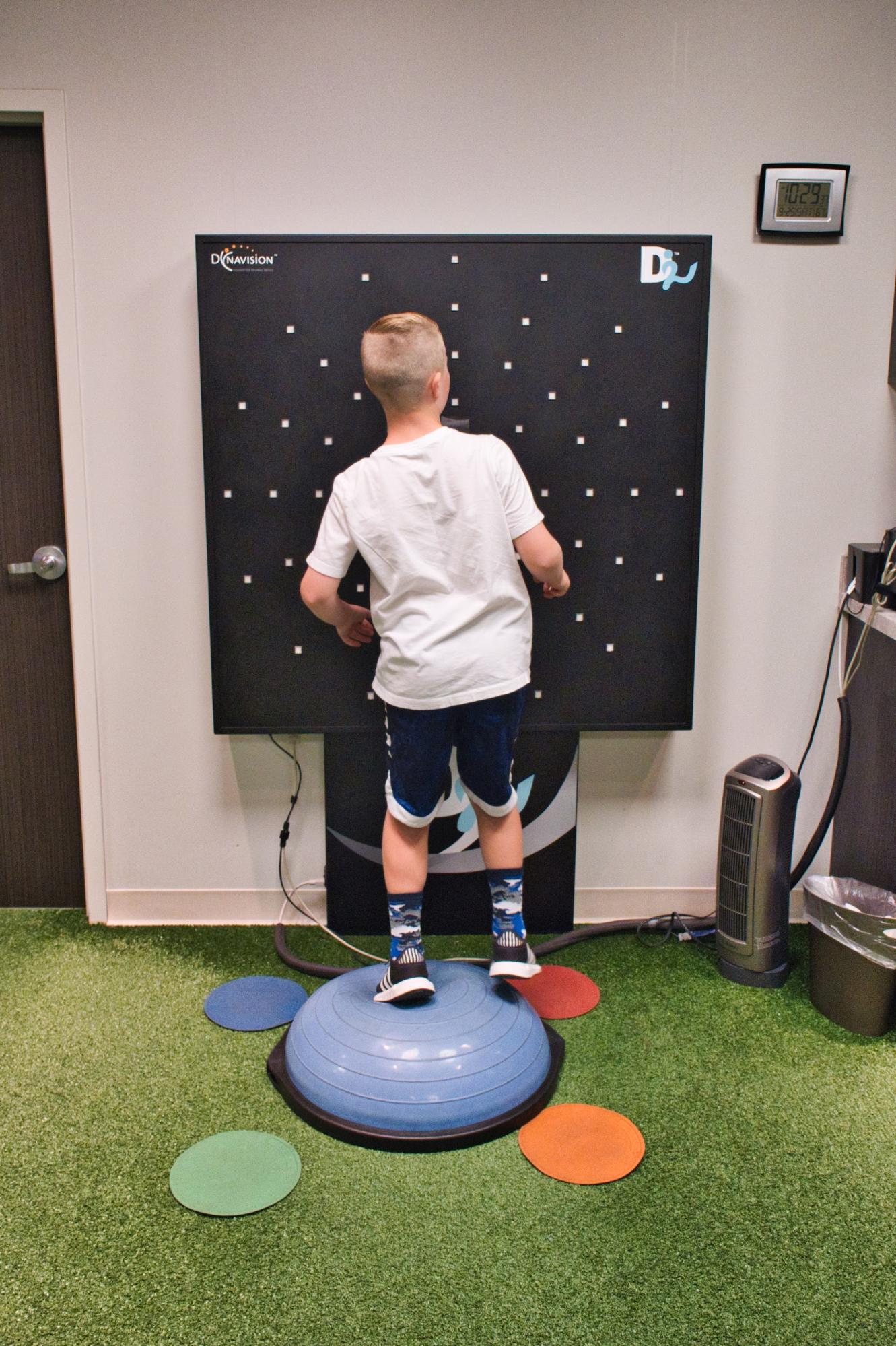
Chris Nicastro, a young man [who sustained head injuries from wrestling](https://www.cognitivefxusa.com/blog/wrestling-concussions-chris-nicastro-story) and accidents, described one of his therapy exercises this way: “You stand on the Bosu ball, and you have to hit the lights when they light up, but you're doing things like reciting the alphabet backwards and all this crazy stuff at the same time. It's hard. Your body and your brain are a lot more powerful than people give them credit for,” he reflected. “You can do something like that and push your brain to the point where it rewires.” 

*![image7-1](https://www.cognitivefxusa.com/hs-fs/hubfs/image7-1.jpg?width=1331&name=image7-1.jpg)Our treatment program is effective both for adults and **pediatric** patients.*

Many patients start to notice a difference mid-treatment. Myrthe shared, "Halfway through the week, I went outside during my lunch break and the world looked totally different — brighter and clearer. My head was calm for the first time ever in all those years. It was an amazing and emotional moment. It gave me faith that this was going to work and would make a difference."

At the end of treatment, you’ll receive another fNCI scan so we can see how much your brain has improved. Each person improves at a different rate, but most report an average symptom improvement of 60%.

“The limitations placed on me by post-concussion syndrome are disappearing. I still have to respect my boundaries — I didn’t turn into a robot capable of working around the clock, and I can’t exercise as strenuously as someone who had never been injured (yet). But the quality of life increase from before to after is significant,” said [one adult patient](https://www.cognitivefxusa.com/blog/figure-skating-concussion-recovery-story) who had sustained a sports-related concussion and orthopedic injuries in childhood.

[Click here to learn more about our EPIC Treatment Program.](https://www.cognitivefxusa.com/concussion-treatment#epic-treatment)

### Cognitive Behavioral Therapy for Brain Injury

[Cognitive behavioral therapy (CBT) is often a helpful addition to neurorehabilitation for persistent post-concussive symptoms](https://www.cognitivefxusa.com/blog/cognitive-behavioral-therapy-for-post-concussion-syndrome). CBT is based on the idea that cognitive, behavioral, and emotional patterns are all connected. Changing one in a good way can influence all the others. 

CBT’s mental health outcomes have been well researched. [Studies](https://psycnet.apa.org/doiLanding?doi=10.1037%2F0022-006X.69.5.756) show that CBT can be used to treat anxiety, depression, insomnia, post-traumatic stress disorder, and a number of other mental health conditions. 

Note that cognitive behavioral therapy and cognitive therapy are not the same. CBT methodically teaches you how to transform your thought patterns and behavior. Cognitive therapy works to correct neurological and cognitive deficits such as poor memory, language processing deficits, and brain fog. 

Not everyone with symptoms after a brain injury needs cognitive behavioral therapy; most *do* need cognitive therapy. If mood disorders persist beyond neurorehabilitation, then we often recommend CBT, as long as you receive it from a certified psychologist. When possible, we will make a referral to treatment providers we trust. You can look for CBT specialists on these websites:

- [Academy of Cognitive and Behavioral Therapies](https://www.academyofct.org/search/custom.asp?id=4410)
- [Association for Behavioral and Cognitive Therapies](https://services.abct.org/i4a/memberDirectory/index.cfm?directory_id=3&pageID=3282)

### [Lifestyle Changes](https://www.cognitivefxusa.com/concussion-treatment#epic-treatment)

Certain changes to your routine can also help minimize the impact of emotional struggles on your life. Here are some of the changes that have the most impact on concussion recovery.

#### [Exercise Regularly (Even if You Have Exercise Intolerance)](https://www.cognitivefxusa.com/concussion-treatment#epic-treatment)

Exercise after a brain injury isn’t always easy. You might find yourself quickly short of breath, suffering from a headache, feeling nauseated, and more. But there *are* safe ways to exercise after a concussion, and they can make a significant impact on your physical and mental health.

*Learn more: *[*The importance of exercise after brain injury (and how to do it safely)*](https://www.cognitivefxusa.com/blog/brain-injury-exercise)

#### Consume a Brain-Boosting Diet

What you eat is always important, but it’s even more critical when your brain is recovering from injury. Focus on drinking enough water; consuming healthy greens, fruits, nuts, and fish; and avoiding processed or sugary foods. You’re likely to notice a positive change in cognition and other aspects of recovery.

*Learn more: *[*A guide to nutrition for **post-concussion syndrome*](https://www.cognitivefxusa.com/blog/nutrition-for-post-concussion-syndrome)

Note: Some people turn to alcohol or pain medications to cope with symptoms after their injury. Not only can that inhibit recovery, but the practice can easily lead to substance use disorders. If you need help with substance abuse, please see [SAMSA’s national hotline](https://www.samhsa.gov/find-help/national-helpline) and educational resources (for those in the U.S.). Recovery is possible and there are people who want to help you get better.

#### Get Better Sleep

Brain injury can interfere with your sleep quality. And while some of those effects may not resolve until you’ve received therapy, there are still steps you can take to encourage a better night’s sleep. Keep a consistent sleep schedule; maintain a clean, dark room; use blue light filters and avoid screens near bedtime; and consider low doses (0.5 mg to start) of melatonin if you need it.

*Learn more: *[*Getting a good night’s sleep after an **mTBI*](https://www.cognitivefxusa.com/blog/post-concussion-syndrome-sleep-what-to-do)

#### Destimulate Your Brain

Taking more breaks during the day is one way to reduce the stress on your brain and emotions. But many people don’t realize when to take a break or how to make it the most effective. Following some simple rules regarding rest will help your recovery and also reduce emotional flare-ups.

*Learn more: *[*Rules for when and how to rest your brain effectively*](https://www.cognitivefxusa.com/blog/brain-rest-concussion/)

## Keep Trying!

![A photo showing a family putting their hands on top of each other.](https://www.cognitivefxusa.com/hs-fs/hubfs/navigating-mental-health-after-tbi-and-concussion-1.jpg?width=900&name=navigating-mental-health-after-tbi-and-concussion-1.jpg)

Not every brain recovers at the same rate, and there’s no set timeline to heal from physical and emotional trauma. Focus on what you can do each day to keep improving your overall wellness. The severity of your injury could impact how much you’re able to recover, but that doesn’t mean you can’t achieve a better quality of life than you have now.

In the meantime, if you’d like to read more about other patients’ experiences, see our post on [what it’s like to live with post-concussion syndrome](https://www.cognitivefxusa.com/blog/living-with-post-concussion-syndrome-patient-stories).

*Over 80% of our patients — adults and **adolescents** alike — have experienced emotional symptoms after **neurotrauma**. Many of those symptoms resolve shortly after treatment at our clinic (although persistent **mental health issues** such as depression and anxiety can take additional therapy to resolve). *

*If you’d like to learn more about how we can help you, *[*book a consultation*](http://cognitivefxusa.com/consultation)*.*

---

![Image of Dr. Alina Fong, Ph.D.](https://www.cognitivefxusa.com/hs-fs/hubfs/Alina_150px.webp?height=150&name=Alina_150px.webp)

### About the author

[Dr. Alina Fong, Ph.D.](https://www.cognitivefxusa.com/blog/author/dr-alina-fong-phd)

Alina Fong, Ph.D. is a clinical neuropsychologist and the Clinical Director and Co-Founder of Cognitive FX. She earned her Ph.D. in Clinical Neuropsychology with an emphasis in Neuroimaging from Brigham Young University, where she received the American Psychological Association Division 40 Graduate Student Research Award for her neuroimaging research. Dr. Fong has over 17 years of clinical experience treating traumatic brain injury, beginning with her work at the VA Salt Lake City Healthcare System and Utah Valley Regional Medical Center, where she directed the neurotrauma rehabilitation and sports concussion clinics. She developed the EPIC Treatment protocol and has personally overseen treatment for nearly 8,000 brain injury patients, including professional athletes from the NFL, NHL, and Olympics. She serves as Vice President of the Brain Injury Alliance of Utah, sits on the board of the United States Brain Injury Alliance, and advises PINK Concussions. Dr. Fong has authored peer-reviewed research on functional MRI and concussion treatment and has presented at over 60 medical conferences, including the Federal Interagency Conference on TBI and the American Medical Society for Sports Medicine.

[Follow me on my website ](https://www.cognitivefxusa.com/dr-alina-k-fong-phd)

## Related Posts

![Common Psychological Effects of Mild Traumatic Brain Injury](https://www.cognitivefxusa.com/hs-fs/hubfs/Common%20Psychological%20Effects%20of%20Mild%20Traumatic%20Brain%20Injury.png?height=175&name=Common%20Psychological%20Effects%20of%20Mild%20Traumatic%20Brain%20Injury.png)

### Common Psychological Effects of Mild Traumatic Brain Injury

![Image of Dr. Diane Spangler, Ph.D.](https://www.cognitivefxusa.com/hs-fs/hubfs/Spangler_150px.webp?height=70&name=Spangler_150px.webp)

[Dr. Diane Spangler, Ph.D.](https://www.cognitivefxusa.com/blog/author/dr-alina-fong-phd)

People who have suffered a mild traumatic brain injury (mTBI) often experience difficulties with their[psychological and emotional health](https://www.cognitivefxusa.com/blog/navigating-mental-health-after-tbi-and-concussion). For example, among the patients we treat at our clinic, it’s...

[Read the full article

](https://www.cognitivefxusa.com/blog/common-psychological-effects-of-mild-traumatic-brain-injury-tbi)

![Depression After a Concussion or Brain Injury](https://www.cognitivefxusa.com/hs-fs/hubfs/Depression%20After%20a%20Concussion%20or%20Brain%20Injury.png?height=175&name=Depression%20After%20a%20Concussion%20or%20Brain%20Injury.png)

### Depression After a Concussion or Brain Injury

[Guest Author - Aimee Mortensen](https://www.cognitivefxusa.com/blog/author/dr-alina-fong-phd)

Depression, one of [the ](https://www.cognitivefxusa.com/grief-after-brain-injury)[five stages of grief](https://www.cognitivefxusa.com/grief-after-brain-injury), may be the most familiar, and frustrating, feeling experienced after a traumatic brain injury (TBI) or concussion. And it’s not a fun one. Depression is a...

[Read the full article

](https://www.cognitivefxusa.com/blog/depression-afer-a-brain-injury-or-concussion)

![Cognitive Behavioral Therapy for Post-Concussion Syndrome: What It Can & Can't Do](https://www.cognitivefxusa.com/hs-fs/hubfs/cognitive-behavioral-therapy-for-post-concussion-syndrome.png?height=175&name=cognitive-behavioral-therapy-for-post-concussion-syndrome.png)

### Cognitive Behavioral Therapy for Post-Concussion Syndrome | Cognitive FX

![Image of Dr. Diane Spangler, Ph.D.](https://www.cognitivefxusa.com/hs-fs/hubfs/Spangler_150px.webp?height=70&name=Spangler_150px.webp)

[Dr. Diane Spangler, Ph.D.](https://www.cognitivefxusa.com/blog/author/dr-alina-fong-phd)

Living with the lingering symptoms of a concussion for months or even years is life-changing. Patients with [post-concussion syndrome](https://www.cognitivefxusa.com/blog/post-concussion-syndrome-and-post-concussion-symptoms-pcs) (PCS) can feel worthless, misunderstood, lonely, and frustrated....

[Read the full article

](https://www.cognitivefxusa.com/blog/cognitive-behavioral-therapy-for-post-concussion-syndrome)

![Can You Recover from Severe TBI? When Doctors Say No, Don't Give Up Hope (Abigail's Story)](https://www.cognitivefxusa.com/hs-fs/hubfs/can-you-recover-from-tbi-patient-story.png?height=175&name=can-you-recover-from-tbi-patient-story.png)

### Can You Recover from Severe TBI? | Cognitive FX

![Image of Kathleen Allardyce](https://www.cognitivefxusa.com/hs-fs/hubfs/kathleen-allardyce.png?height=70&name=kathleen-allardyce.png)

[Kathleen Allardyce](https://www.cognitivefxusa.com/blog/author/dr-alina-fong-phd)

Health care providers often set low expectations after a [severe traumatic brain injury](https://www.cognitivefxusa.com/blog/traumatic-brain-injury-long-term-effects-and-treatment) (TBI). When patients exceed those expectations, it’s cause for joy. At the same time, it’s disheartening to be...

[Read the full article

](https://www.cognitivefxusa.com/blog/can-you-recover-from-tbi-patient-story)

![The Connection Between TBI & Anxiety (and How to Get Help)](https://www.cognitivefxusa.com/hs-fs/hubfs/tbi-anxiety.jpg?height=175&name=tbi-anxiety.jpg)

### The Connection Between TBI & Anxiety (and How to Get Help)

![Image of Dr. Diane Spangler, Ph.D.](https://www.cognitivefxusa.com/hs-fs/hubfs/Spangler_150px.webp?height=70&name=Spangler_150px.webp)

[Dr. Diane Spangler, Ph.D.](https://www.cognitivefxusa.com/blog/author/dr-alina-fong-phd)

Living with the mental health effects of a traumatic brain injury (TBI) can be an isolating and overwhelming journey. Not all patients realize that brain injuries can cause significant emotional...

[Read the full article

](https://www.cognitivefxusa.com/blog/tbi-anxiety)

![](https://www.cognitivefxusa.com/hs-fs/hubfs/car-accident-concussion-attorney-anthony-loubet.png?height=175&name=car-accident-concussion-attorney-anthony-loubet.png)

### After a Car Accident Concussion | Cognitive FX

![Image of Teresa LaFond](https://www.cognitivefxusa.com/hs-fs/hubfs/Teresa%20LaFond.png?height=70&name=Teresa%20LaFond.png)

[Teresa LaFond](https://www.cognitivefxusa.com/blog/author/dr-alina-fong-phd)

"All I remember is hearing screeching and then blackness," Anthony Loubet said as he talked about the car accident that changed his life.

[Read the full article

](https://www.cognitivefxusa.com/blog/car-accident-concussion-attorney-anthony-loubet)

#### Proven Results Improvement in 77% of Participants

 Published peer-reviewed research shows that Cognitive FX treatment leads to meaningful symptom reduction in post-concussion symptoms for 77% of study participants. Cognitive FX is the only PCS clinic with third-party validated treatment outcomes. 

[ READ FULL STUDY ](https://www.tvnp.nl/inhoud/tijdschrift_artikel/NP-19-2-3/Cognitive-FX-behandeling-voor-aanhoudende-klachten-na-een-hersenschudding-Observatie-van-verandering-in-functioneren)

[![Main_Logo_500px](https://www.cognitivefxusa.com/hs-fs/hubfs/Main_Logo_500px.png?width=257&height=78&name=Main_Logo_500px.png "Main_Logo_500px")](https://www.cognitivefxusa.com)

Comprehensive Traumatic Brain Injury Treatment

280 W River Park Drive Suite 110 Provo, UT 84604

[Follow us on Facebook ](https://www.facebook.com/cognitivefx) [Follow us on Instagram ](https://www.instagram.com/cognitive_fx)

#### Quick Links

- [Blog](https://www.cognitivefxusa.com/blog)
- [Sign-Up for Free Consultation](https://www.cognitivefxusa.com/start-here-paperwork-old)

#### Support

- [Contact Us](https://www.cognitivefxusa.com/contactus)
- [Patient Results](https://www.cognitivefxusa.com/treatment-outcomes)
- [Privacy Policy](https://www.cognitivefxusa.com/privacypolicy)
- [Terms & Conditions](https://www.cognitivefxusa.com/terms-and-conditions)

#### Solutions

- [Good Fit Quiz](https://www.cognitivefxusa.com/start-here-paperwork-old)
- [EPIC Treatment](https://www.cognitivefxusa.com/treatment)
- [Post-Concussion Syndrome Information](https://www.cognitivefxusa.com/blog/post-concussion-syndrome-and-post-concussion-symptoms-pcs)
- [fNCI Brain Scan](https://www.cognitivefxusa.com/about-fnci)
- [Online Course](https://cognitivefx.thinkific.com/courses/headaches)

#### Company

- [About](https://www.cognitivefxusa.com/research-history)
- [Press & Media](https://www.cognitivefxusa.com/media)
- [Our Team](https://www.cognitivefxusa.com/our-team)

### Sign Up For Our Newsletter

Copyright © Cognitive FX 2024. All Rights Reserved. | [Privacy Policy](https://www.cognitivefxusa.com/blog/navigating-mental-health-after-tbi-and-concussion#)

```json
{
  "@context" : "https://schema.org",
  "@type" : "BlogPosting",
  "author" : {
    "@type" : "Person",
    "name" : "Dr. Alina Fong, Ph.D.",
    "url" : "https://www.cognitivefxusa.com/blog/author/dr-alina-fong-phd"
  },
  "dateModified" : "2024-07-16T19:03:08.375Z",
  "datePublished" : "2021-01-22T21:02:44.000Z",
  "headline" : "Mental Health After TBI or Concussion: Recovery Is Possible | Cognitive FX",
  "image" : [ "https://www.cognitivefxusa.com/hubfs/navigating-mental-health-after-tbi-and-concussion.png" ],
  "mainEntityOfPage" : {
    "@id" : "https://www.cognitivefxusa.com/blog/navigating-mental-health-after-tbi-and-concussion",
    "@type" : "WebPage"
  },
  "publisher" : {
    "@type" : "Organization",
    "logo" : {
      "@type" : "ImageObject",
      "url" : "https://www.cognitivefxusa.com/hubfs/Cognitive-Final-Logo-BlBlk-Med.png"
    },
    "name" : "Cognitive FX"
  }
}
```

```json
{
  "@context" : "https://schema.org",
  "@type" : "Article",
  "about" : {
    "@type" : "MedicalCondition",
    "name" : ""
  },
  "audience" : {
    "@type" : "Audience",
    "audienceType" : [ "patient", "caregiver" ]
  },
  "author" : {
    "@type" : "Person",
    "affiliation" : {
      "@type" : "MedicalOrganization",
      "name" : "Cognitive FX",
      "url" : "https://www.cognitivefxusa.com"
    },
    "name" : "Dr. Alina Fong, Ph.D."
  },
  "dateModified" : "16 July, 2024",
  "datePublished" : "2021-01-22 21:02:44",
  "description" : "Brain injuries may cause anxiety, depression, mood swings, PTSD, and more. Neurorehabilitation can resolve or improve many of these mental health changes. ",
  "headline" : "Mental Health After TBI or Concussion: Recovery Is Possible",
  "image" : "",
  "mainEntityOfPage" : {
    "@id" : "https://www.cognitivefxusa.com/blog/navigating-mental-health-after-tbi-and-concussion",
    "@type" : [ "MedicalWebPage" ],
    "breadcrumb" : {
      "@type" : "BreadcrumbList",
      "itemListElement" : [ {
        "@type" : "ListItem",
        "item" : "https://www.cognitivefxusa.com",
        "name" : "Cognitive FX Home",
        "position" : 1
      }, {
        "@type" : "ListItem",
        "item" : "https://www.cognitivefxusa.com/blog",
        "name" : "Blog Home",
        "position" : 2
      }, {
        "@type" : "ListItem",
        "item" : "https://www.cognitivefxusa.com/blog/navigating-mental-health-after-tbi-and-concussion",
        "name" : "Mental Health After TBI or Concussion: Recovery Is Possible",
        "position" : 3
      } ]
    },
    "lastReviewed" : "1721156588382",
    "reviewedBy" : {
      "@type" : "Person",
      "name" : ""
    }
  },
  "publisher" : {
    "@type" : "Organization",
    "brand" : {
      "@type" : "Organization",
      "name" : "Cognitive FX",
      "sameAs" : [ "https://www.linkedin.com/in/cognitive-fx-usa/", "https://www.instagram.com/cognitive_fx/", "https://twitter.com/cognitivefx", "https://www.facebook.com/cognitivefx/", "https://www.pinterest.com/cognitivefx/", "https://www.tiktok.com/@cognitivefx" ]
    },
    "name" : "Cognitive FX",
    "url" : "https://www.cognitivefxusa.com"
  }
}
```

```json
{
  "@context": "http://schema.org",
  "@type": "Article",
  "headline": "Navigating Mental Health After Severe TBI & Concussion | Cognitive FX",
  "name": "Navigating Mental Health After Severe TBI and Concussion",
  "url": "https://www.cognitivefxusa.com/blog/navigating-mental-health-after-tbi-and-concussion",
  "mainEntityOfPage": "https://www.cognitivefxusa.com/blog/navigating-mental-health-after-tbi-and-concussion",
  "relatedlink":"",  "image":"https://www.cognitivefxusa.com/hs-fs/hubfs/navigating-mental-health-after-tbi-and-concussion-4.jpg?width=1350&name=navigating-mental-health-after-tbi-and-concussion-4.jpg",
  "datePublished": "22 January, 2021",
"dateModified": "24 January, 2021",
  "articleSection": ["MENTAL HEALTH SUPPORT AFTER A BRAIN INJURY ","TRAUMATIC BRAIN INJURY","EDUCATION & RESOURCES","POST CONCUSSION TREATMENT"],
  "additionalType":[],
  "about": {
	  "@type": "MedicalCondition",
	  "name": ["Concussion"],
	  "sameAs": [""]
	  },
  "articleBody": "Mild and severe traumatic brain injury (concussion and TBI) can cause upsetting changes to your mental health. You may find that preexisting mental illness worsens after your injury or that new symptoms —  such as anxiety, depression, mood swings, anger, post-traumatic stress disorder (PTSD), and more — arise. Don’t give up hope: There are good treatment programs that can help you improve.

83% of the patients we see at our post-concussion treatment clinic report changes in mood or personality after their injury. Many of them describe similar post-injury frustrations and feelings, such as:

“Am I a bad parent because I don’t have positive feelings for my kids anymore?”

“I can’t control my temper. One wrong word and I just lose it.”

“I don’t have any hope for the future. I feel like I’ll never be myself again.” 

“One time I dropped a dish and it shattered. I stared at it but I couldn’t bring myself to do anything, so I went back to bed and cried.”

It’s heartbreaking. Many patients feel guilty for the way they act and feel. They don’t understand why they’re thinking and saying the things they do. Many of them, like attorney Anthony Loubet, were never warned by their doctors that their mental health could change drastically after their brain injury. 

So if you’re wondering if you’re going crazy or are blaming yourself for the emotional turbulence you feel, please don’t! It’s a very common to experience emotional struggle after a brain injury. And with the right help, you can feel better again. The key is to treat the brain injury first, then focus on any stubborn mental difficulties.Treating the root cause makes it much easier to overcome these problems with continued therapy and healthy habits at home.

To help you understand what’s happening in your brain and how to start your recovery journey, we explain:

What causes mental illness after TBI.
What types of mental health struggles you might face after TBI.
Available treatment options for emotional and mental changes after TBI.
Note: Over 80% of our patients have experienced emotional symptoms after a concussion. Many of those symptoms resolve shortly after treatment at our clinic (although serious mental health issues such as depression and anxiety can take additional therapy to resolve). If you’d like to learn more about how we can help you, book a free consultation.

What Causes Mental Illness After Traumatic Brain Injury?
A woman stares pensively out the window with her hand on her chin and someone else's hand on her shoulder.

Traumatic brain injury can cause temporary or long-lasting mental illness or emotional symptoms. Often, these symptoms result from a combination of post-injury dysfunction in the way the brain communicates, post-injury stress on the autonomic nervous system, and the brain’s natural reaction to physical and emotional trauma. 

Mental illnesses are conditions that affect a person’s thinking, feeling, mood or behavior, such as depression, anxiety, bipolar disorder, or schizophrenia. Such conditions may be occasional or long-lasting (chronic) and affect someone’s ability to relate to others and function each day. (Centers for Disease Control and Prevention at CDC.gov)

So how does a head injury change how you feel and think? It starts with the physiological changes caused by brain injury. At the most basic level, even a mild traumatic brain injury can disrupt the relationship between neurons and the blood vessels that supply them with the right amount of nutrients at the right time, a process known as neurovascular coupling.

Dysfunctional neurovascular coupling results in hypoactive brain regions (areas that don’t do their fair share of the work) and hyperactive brain regions (areas that try to do extra work to make up for underperforming regions of the brain, and those that call for more resources than they need for the work they do).

But this dysfunction isn’t structural. Think of it like looking through the window of a business. The building’s intact, everyone has computers, and all the employees seem busy. All the physical components you need for the business are present, just like your brain is physically intact (unless you suffered structural damage from a severe TBI).

But just because all the parts are there doesn’t mean they are working well together. That business could be failing because the software they use is buggy and the employees don’t do their work on time. In a similar way, the brain can look fine on the outside but struggle to function correctly long after your initial injury.

These changes in your brain following injury can contribute directly to mental health issues. However, some of your emotional symptoms may be secondary, e.g., caused by some of the other symptoms of a concussion. Some concussion symptoms that may affect your mental health include:

Sensory sensitivity (to light, noise, crowds, and so forth).
Headaches.
Feeling overwhelmed (which happens because your brain simply can’t process everything it used to before your injury).
Sleep problems (including poor sleep quality, trouble falling asleep, sleep apnea, and more).
Cognitive impairment (such as difficulty following conversations, paying attention, worse short-term memory, difficulty with word-finding — all symptoms that are very frustrating to experience).
Fatigue.
Hormone dysregulation.
Finally, any mild TBI can affect your autonomic nervous system (ANS). The autonomic nervous system reaches throughout the body into every organ system. It’s responsible for many automatic processes — like your heart rate and breathing — and controls your “fight or flight” and “rest and digest” response.

After a concussion, your ANS may become skewed toward “fight or flight.” When that happens, it can also contribute to certain mental health problems such as anxiety and PTSD.

To recap, mental health struggles after a head injury are often neuropsychological, a combination of physical and emotional factors, including:

Physiological changes in your brain.
Your brain’s natural reaction to trauma.
Symptoms such as poor sleep that exacerbate mental symptoms.
Dysregulation of your autonomic nervous system.
What Mental Health Struggles Can a Concussion or Severe TBI Cause?
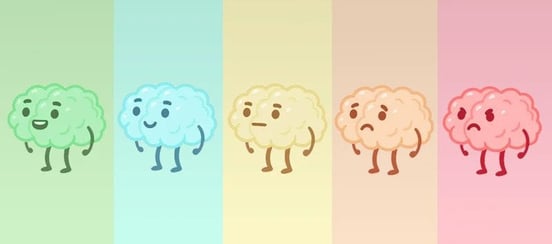
Depression, anxiety, PTSD, anger, teariness, and mood swings are some of the mental health issues you might have after a concussion or severe TBI.

The highest prevalence mental health struggles caused by a brain injury include depression, anxiety, PTSD, and a slew of emotional changes (which patients and their family often refer to as personality changes).

If you suffered from any of these emotional symptoms or mental illnesses before your injury, you have an increased risk of them coming back or worsening after the injury. Patients with a history of psychiatric disorders often need a combination of talk therapy and treatment for their brain injury in order to make the best recovery.

If you haven’t suffered from any of these issues before, you might make a faster recovery than if they were pre-existing issues, but each person’s recovery journey is different. Taking longer to heal does not mean that there is something especially wrong with you.

Depression
Here are a few of the ways post-concussion depressive symptoms can present:

A negative feeling that goes beyond normal sadness (it might feel a bit like grief, but you recognize it as being distinct from grief).
Low or no motivation, such that your ability to do what you need or want is compromised.
The inability to feel pleasure (anhedonia).
A persistent disinterest in things (apathy).
Feeling of emotional heaviness or like you’re moving through mud.
Feeling empty or robotic.
A negative outlook about yourself, the world, and/or the future.
A sense of worthlessness.
Indecisiveness.
Suicidal ideation.
To learn more about why patients experience depression after a brain injury and how it’s treated, read our patient’s guide to post-concussion depression.

Note: If you are experiencing suicidal thoughts, please seek help from a qualified mental health care provider. You matter, and you can get better. In emergencies, call the National Suicide Prevention Hotline at 1-800-273-8255. 

Anxiety
There is more than one kind of anxiety after a head injury. You may experience situational anxiety (for example, worrying about going to the store because it always makes your symptoms flare up). Or you may develop an anxiety disorder (ruminative thinking and hypervigilance). Here’s what it can feel like to patients:

Feeling like you can’t relax.
Feeling like you can’t stop worrying.
Worrying about worrying.
Constantly imagining how something can go wrong (“What if ... ?” thinking).
Difficulty falling asleep (because of worry).
Feeling uncomfortable and being unable to fix it.
Feeling tense, such as tight shoulders or stomach knots.
To learn more about why patients experience anxiety after a brain injury and how it’s treated, read our patient’s guide to post-concussion anxiety.

Post-Traumatic Stress Disorder (PTSD)
The symptoms of a concussion and of PTSD can closely overlap. It’s often difficult to know which symptoms are from the concussion and which are from the PTSD. Post concussion PTSD can involve:

Anxiety.
Panic attacks.
Flashbacks and exaggerated startle response.
Overwhelm.
Difficulty sleeping.
Avoidance.
Depression.
And more.
Patients with PTSD often need PTSD-specific therapy in addition to post-concussion treatment. To learn more about why patients experience PTSD after head trauma and how it’s treated, read our patient’s guide to post-concussion PTSD.

Emotional Changes, Anger, and Mood Swings (“Personality Changes”)
Some patients (or their caregivers) think their personalities changed after the brain injury. If this is you, understand that your personality is likely intact. It’s just buried under the weight of difficult symptoms. Mood disorders after a concussion can include:

Social anxiety.
Teariness.
Irritability and anger.
Mood swings.
Feelings of overwhelm.
Impulsivity.
To learn more about why TBI patients experience emotional changes after a brain injury and how they’re treated, read our patient’s guide to post-concussion personality changes.

Treatment for Mental Health Symptoms After Brain Injury

A client at CFX listening to binaural beats.

Medication is often recommended by doctors who don’t treat the root cause of emotional changes after a brain injury. Sometimes these medications are helpful, but sometimes they can make things worse for your brain. Don’t ignore your doctor’s advice, and don’t stop taking any medications without consulting your doctor. But do make sure your physician knows about any side effects you experience.

Unfortunately, many medications were only tested on neurotypical subjects, aka people without brain injuries. A brain injury makes it easier for things to go wrong, resulting in side effects that may be difficult to distinguish from your head injury symptoms. For example, some headache medicines and depression/anxiety meds (especially SNRIs) can cause dysautonomia symptoms. So while medication can help, it’s always best to treat the root issue rather than relying entirely on meds. 

At CognitiveFX, we provide multidisciplinary therapy to address the underlying brain dysfunction and dysautonomia from your injury, which in turn either greatly reduces your emotional symptoms or clears the way for you to make progress with psychotherapy and medications.

Remember how dysfunctional neurovascular coupling (the relationship between neurons and the blood vessels behind them) is behind the symptoms we discussed earlier in this post?

Functional neurocognitive imaging (fNCI) can see which of your brain regions are experiencing this. We then use that information to prepare a targeted treatment plan to correct it.

What follows is a week of cognitive therapy, neuromuscular and physical therapy, occupational therapy, sensorimotor therapy, dynavision therapy, and more. You’ll also meet at least twice with a psychologist who can assess your needs and make additional recommendations for ongoing, follow-up treatment in your area of residence.

At the end of the week, you’ll receive another fNCI scan so we can see how much your brain has improved. On average, our patients show 75% improvement on their post-treatment scan!

Click here to learn more about our EPIC Treatment Program.

Keep Trying!
A photo showing a family putting their hands on top of each other.

Not every brain recovers at the same rate, and there’s no set timeline to heal from physical and emotional trauma. Focus on what you can do each day to keep improving. The severity of your injury could impact how much you’re able to recover, but that doesn’t mean you can’t achieve a better quality of life than you have now.

In the meantime, if you’d like to read more about other patients’ experiences, see our post on what it’s like to live with post-concussion syndrome.

Over 80% of our patients have experienced emotional symptoms after a concussion. Many of those symptoms resolve shortly after treatment at our clinic (although serious mental health issues such as depression and anxiety can take additional therapy to resolve). If you’d like to learn more about how we can help you, book a free consultation.", 
 "author": {
    "@type": "Person",
    "name": "Dr. Alina K. Fong", 
	"sameAs": "https://www.cognitivefxusa.com/blog/author/dr-alina-fong-phd",
	"description": "Alina K. Fong received her PhD in Clinical Neuropsychology with an emphasis in neuroradiology from Brigham Young University. She received the national American Psychological Association Clinical Neuropsychology Division 40 Graduate Student Research Award in 2004 for her research on 'Cortical Sources of the N400 and The N400 Effect.' Dr. Fong's interest in brain mapping soon turned to functional MRI, and since then, her research efforts have been focused on the clinical applications of fMRI."
  },
  "publisher": {
	  "@type": ["Organization", "MedicalClinic"],
	  "name": "Cognitive FX",
  	  "url": "https://www.cognitivefxusa.com",
	  "id": "https://www.cognitivefxusa.com",
	  "logo": {
		"@type": "ImageObject",
		"url": "https://www.cognitivefxusa.com/hs-fs/hubfs/website/cognitive-logo.png"
	  },
	  "image": "https://www.cognitivefxusa.com/hubfs/CFX-Building.jpg",
	  "address": {
    	"@type": "PostalAddress",
    	"streetAddress": "280 West River Park Drive, Suite 110",
    	"addressLocality": "Provo",
    	"addressRegion": "UT",
    	"postalCode": "84604",
    	"addressCountry": "US"
		},
		"telephone": "+1-385-375-8590",
		"email": "info@cognitivefxusa.com",
	  "sameAs": ["https://www.facebook.com/cognitivefx", "https://twitter.com/cognitivefx", "https://www.linkedin.com/company/cognitive-fx", "https://www.youtube.com/channel/UCEKNDpmHUduo0IbQoTA5Fbg", "https://goo.gl/maps/G2WYhJ8p6Vhaa7oP6"],
	  "hasMap": "https://goo.gl/maps/G2WYhJ8p6Vhaa7oP6",
	  "geo": {
		 "@type": "GeoCoordinates",
		 "latitude": "40.304327",
		 "longitude": "-111.6640834"
		 },
	  "openingHoursSpecification": {
		"@type": "OpeningHoursSpecification",
		"dayOfWeek": ["Monday", "Tuesday", "Wednesday", "Thursday", "Friday"],
		"opens": "09:00",
		"closes": "17:00"
	  },
	  "priceRange": "$$-$$$",
	  "medicalSpecialty": {
		  "@type": "MedicalSpecialty",
		  "name": "Neurologic",
		  "additionalType": ["https://en.wikipedia.org/wiki/Concussion", "http://dbpedia.org/page/Concussion", "https://www.wikidata.org/wiki/Q326921"]
	  }
  }
}
```